More from the episode
The story in 5 beats
- On the plane
On an international flight into the United States, a pale man attacks a passenger in the bathroom and walks out with dark skin. A flight attendant finds the victim, his skin drained of pigment.
- Four missing men
Three months later Skinner tells Scully that four Black men have been taken in Philadelphia. One has been found dead and white, and a CDC specialist wants her on what he thinks is a disease.
- Samuel Aboah
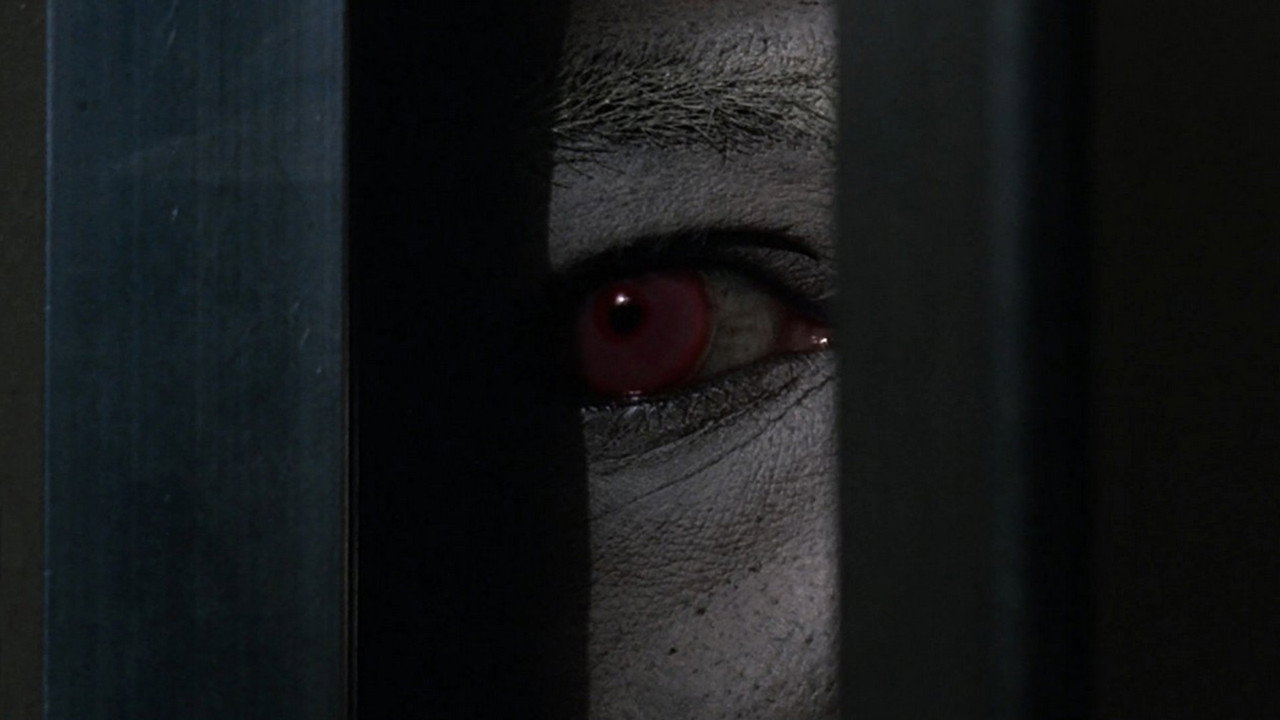
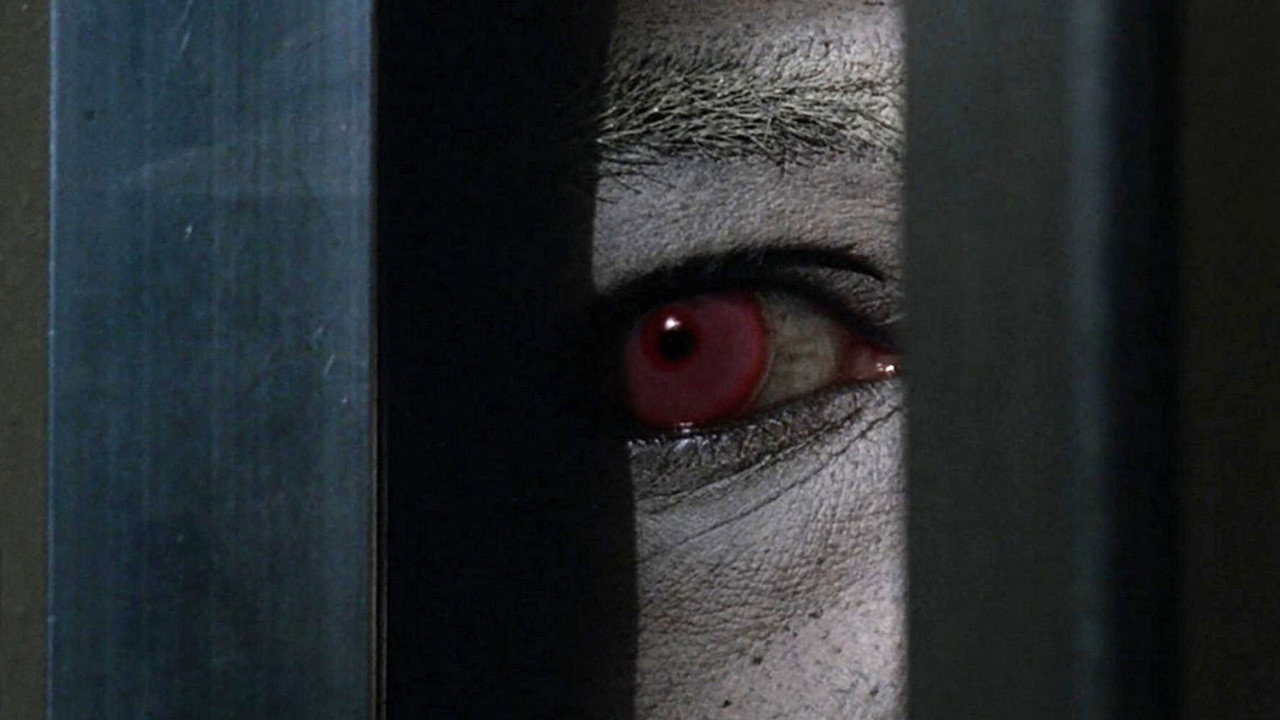
Aboah, an immigrant seeking citizenship with help from social worker Marcus Duff, snatches a young man at a bus stop. Flight records lead the agents to him, and he hides by squeezing into a drainpipe.
An old storySpoiler · tap to reveal
A diplomat from Burkina Faso tells Mulder an old folk tale about the Teliko. A scan shows Aboah has no pituitary gland, and he slips out of the hospital and attacks Duff.
The demolition siteSpoiler · tap to reveal
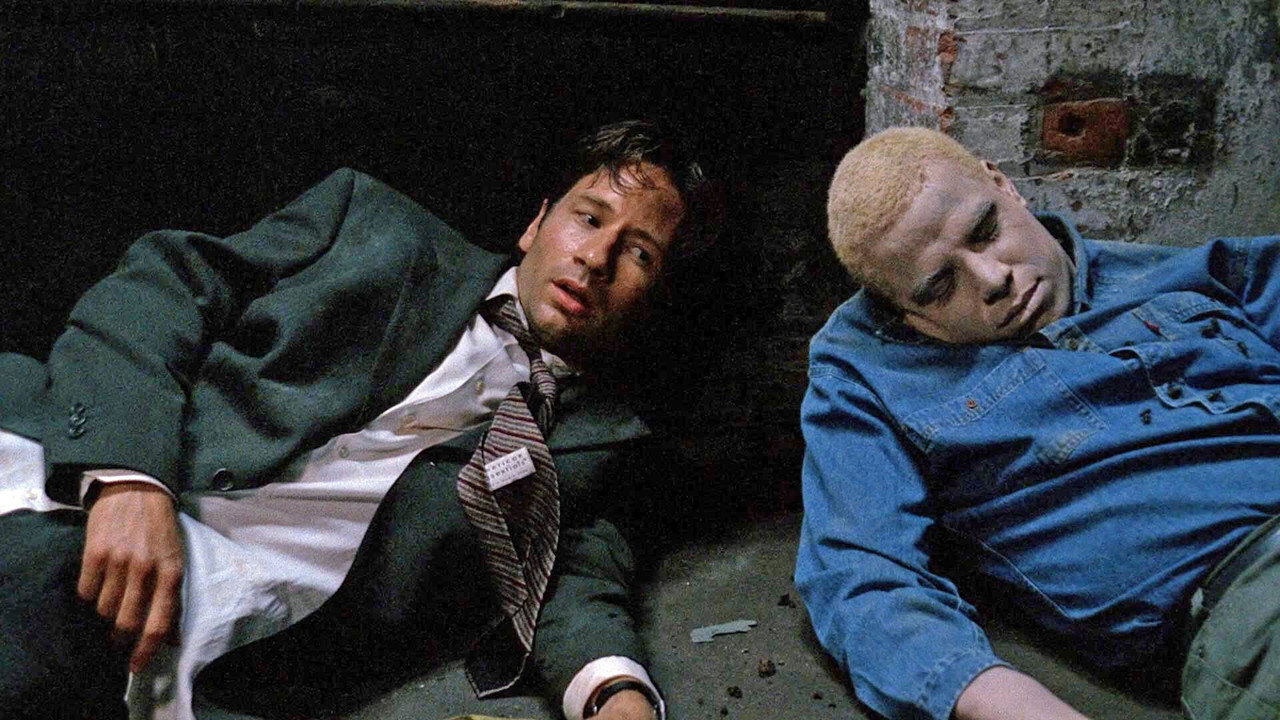
Asbestos fibers on a victim lead the agents to a building being torn down. They split up, Aboah paralyzes Mulder and drags him into a duct, and Scully goes in after them.
Why it still matters
Howard Gordon started out writing about someone who seemed to be immortal. Talking it over with consulting producer Ken Horton, he added xenophobia and what the official guide calls "melanin-sucking albino vampires." The writing staff disliked the first draft and the story was rebuilt, and when Chris Carter asked Gordon to give the script a purpose, Gordon came up with the phrase "deceive, inveigle, and obfuscate." Scully says it, Mulder throws it back at her, and it replaces "The Truth Is Out There" in the opening titles.
That purpose is where the trouble lies. The episode is about fear of the foreigner, and it makes its monster an African immigrant who preys on Black Americans, scored with African drums and chants that Gordon said made the character feel more "exotic." Academic writers have pulled it apart. Allan F. Moore, in Analyzing Popular Music, argues the music sets up a "culturally dangerous slippage between the others"; Zoe Detsi-Diamanti writes that the episode defines a "perfectly normal" Black man by a "certain skin pigment"; Ato Quayson reads Aboah as the illegal immigrant who "lives among the ethnic minorities of his own color and preys upon them."
Reviewers were lukewarm. Entertainment Weekly gave it a C− and found it too much like Season 1's "Squeeze". Zack Handlen at The A.V. Club made the same comparison, gave it a B− and found its racial overtones uncomfortable, though he called the climax "wonderfully tense" and "one of the better climaxes the show's done."
One look
Scully pulls Mulder out of the duct and finds the depigmented bodies of the missing men inside. Aboah comes up behind her, but Mulder's look warns her, and she turns and shoots him. He survives, barely, and waits for trial. In her field journal Scully writes that science may one day explain his condition, but people fear an alien in their midst.
Phil Farrand, in The Nitpicker's Guide for X-Philes, spotted a hole in the timeline: Aboah needed three months to kill four men before the episode starts, then killed two more in a matter of days.
Challenge the DNA
Was Aboah a killer or a man fighting to survive?
Or skip ahead to our reading
Scully writes that science may one day explain his condition, but that people fear an alien in their midst. The episode leaves him a killer and an outsider at once.
Behind the scenes
- "Teliko" is Greek for "end", and in Bambara mythology Téliko is a spirit of the air, sometimes thought of as albino. Writer John Shiban suggested the creature come from Burkina Faso, a country he knew from an old job programming foreign air-mail rates for a software company.
- The producers wanted African actors and auditioned every one they could find, including an African theater troupe that was passing through. Aboah went to Willie Amakye, a Ghanaian Olympic runner just home in Southern California from the 1996 Games in Atlanta. Marcus Duff went to Carl Lumbly, known from Cagney & Lacey.
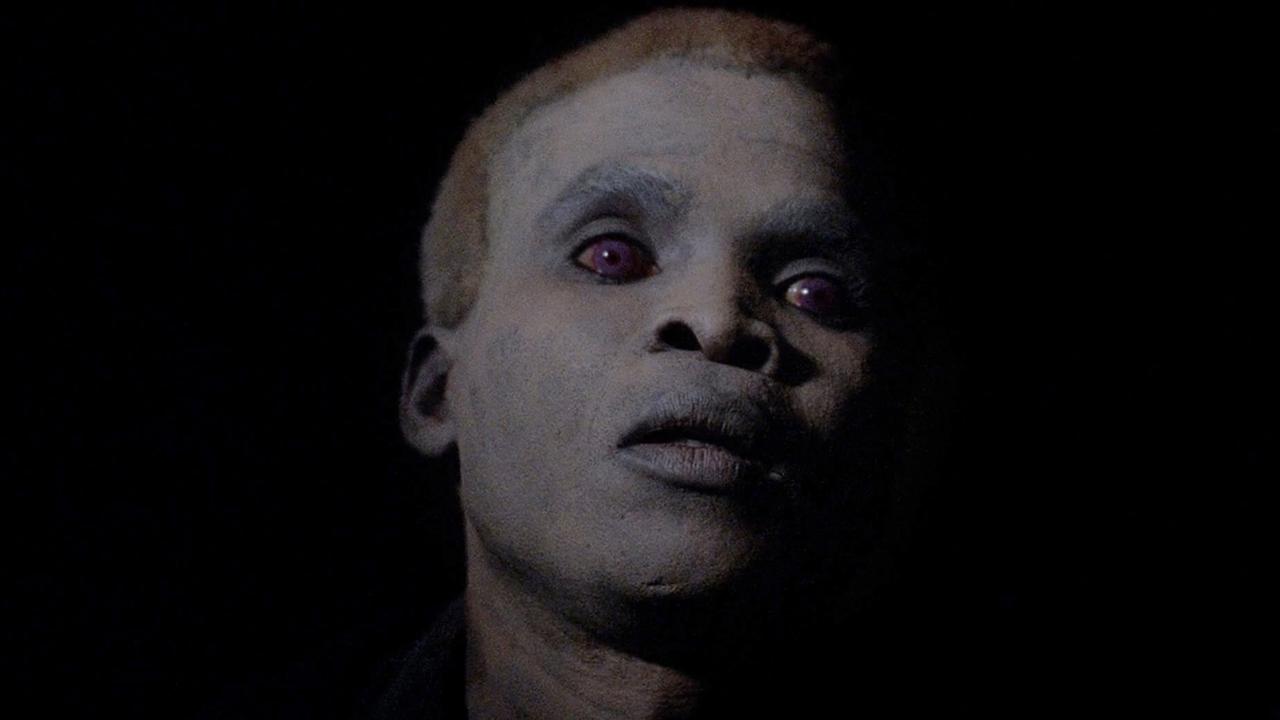
- To make Amakye look albino, the makeup team used layers of cover-up cream and white powder with a touch of pink, plus contact lenses for pink eyes. His hair was dyed orange so the effects team could switch it between black and white.
- Mark Snow's score samples "The Bulgarian Women's Chorus", a recording then familiar in Southern California from a local radio station's promotions.
- It was the series' second appearance by Laurie Holden as Marita Covarrubias, Mulder's contact at the United Nations, who gives him the report on the plane incident.
The thread
Killers who fit where no one should, immigrants caught between old beliefs and new suspicion, and other stories about who gets called the stranger.
Came before
Shares DNA with
DNA strand
Us vs. Them
The episode is built on the fear of an outsider living among us, and Scully names that fear out loud. The uncomfortable part is that the story shares it, since the outsider really is a predator, and the people he hunts are Black men already treated as outsiders themselves.
Every great sci-fi story is built from a handful of strands like this one. Each strand page explains how it works and traces it across shows, books and films.
If this one stayed with you
Where to go next, and why.
Read · Novel
Fledgling by Octavia E. Butler
Butler's vampire looks like a young Black girl and wakes with no memory, and the book takes the questions of race and feeding that "Teliko" fumbles and thinks them through.
Watch · Film
Ganja & Hess (1973)
Bill Gunn's art-house vampire film follows a wealthy Black scholar who acquires a thirst for blood, and it takes its characters seriously as people.
Watch · Film
Get Out (2017)
Jordan Peele's horror film about a young Black man visiting his white girlfriend's family turns the question of who preys on whom right around.
Your next episode
Three directions to go from here, all on Sci-Fi DNA.
More of this feeling
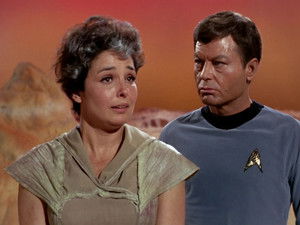
The Man Trap
Star Trek
It shares the uneasy sympathy for a creature that drains its victims to survive while hiding in plain sight.

Same question, different answer
Let That Be Your Last Battlefield
Star Trek
It asks how prejudice about skin colour decides who gets treated as a threat.

Something completely different
Sanguinarium
The X-Files
For a different kind of horror, follow the agents into a clinic where surgeons kill patients on the operating table.