More from the episode

The story in 5 beats
- Car meets tree
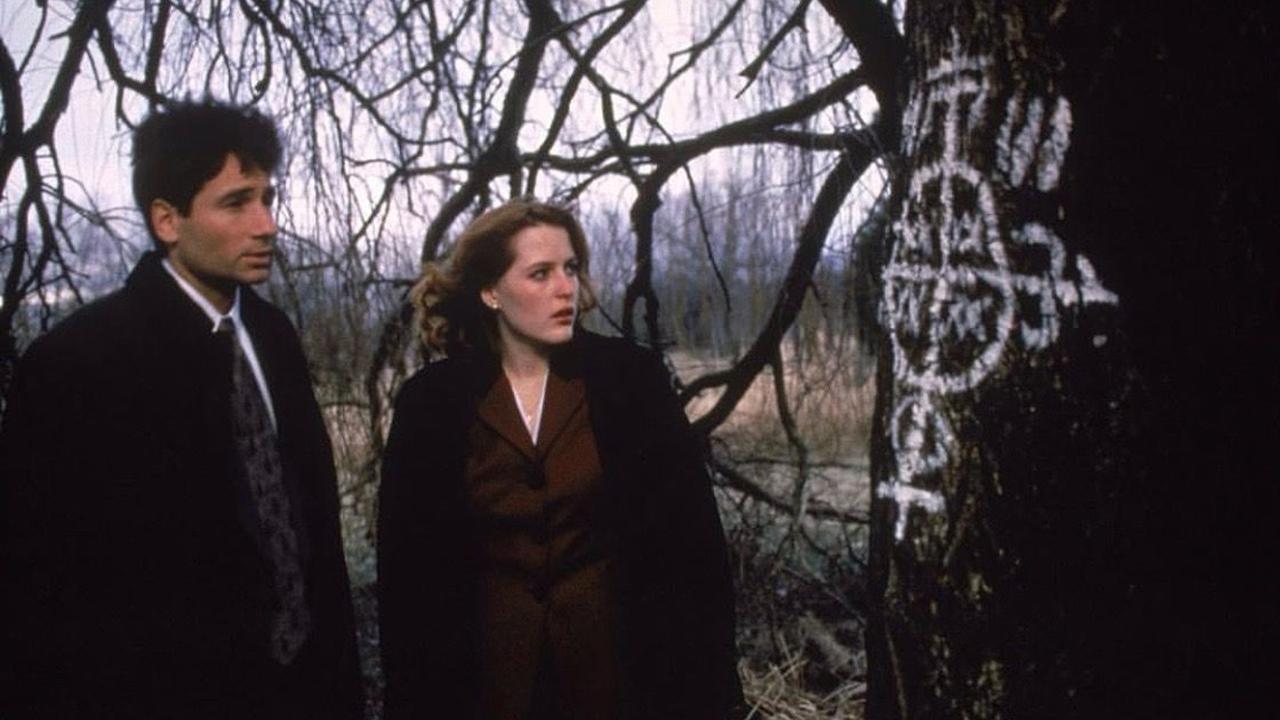
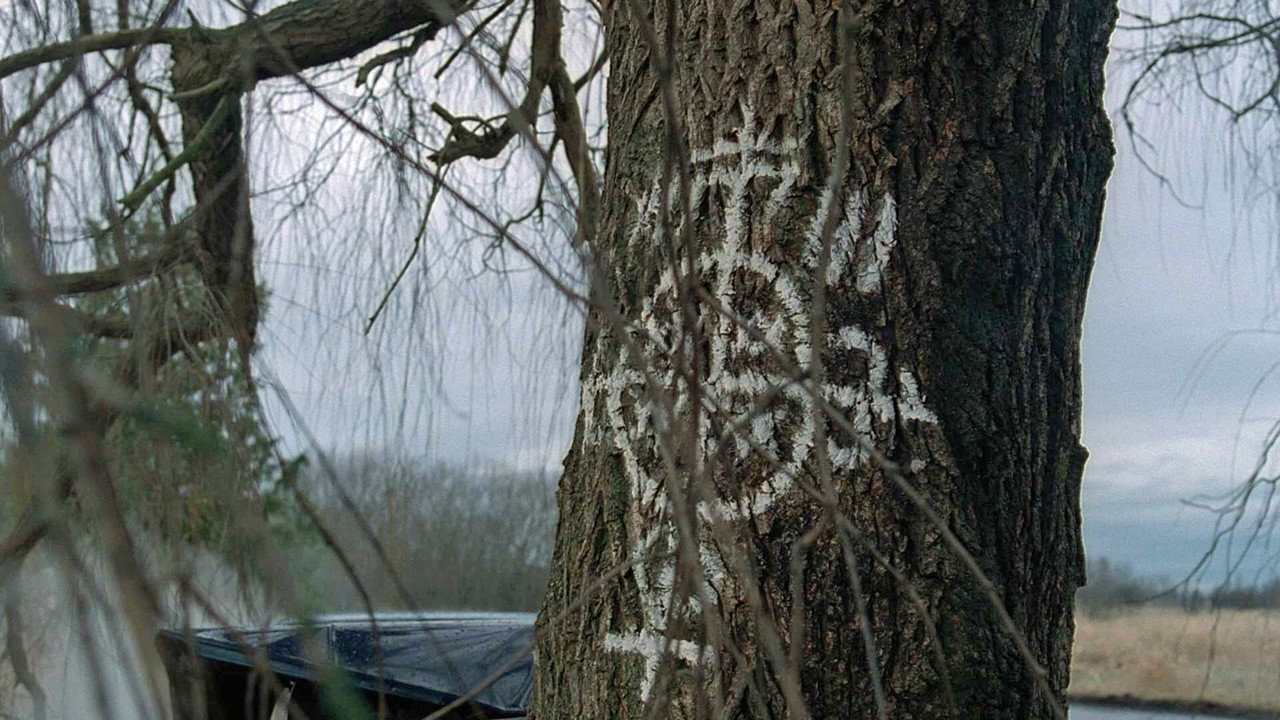
In Folkstone, North Carolina, Private Jack McAlpin has a pair of ghastly hallucinations and drives into a tree. Painted on the bark is a veve, a Vodou religious symbol.
- The compound
McAlpin is the second apparent suicide among troops at an INS camp for Haitian refugees. A boy, Chester, sells Mulder a charm; the agents meet Colonel Wharton and a jailed refugee, Pierre Bauvais.
- The wrong body
Scully goes to the morgue to autopsy McAlpin. In his place she finds the carcass of a dog.
Back from the deadSpoiler · tap to reveal
McAlpin turns up walking by the road with no memory and tetrodotoxin in his blood. Bauvais is beaten to death in custody, X says the agents will soon be pulled off, and another Marine dies.
The cemeterySpoiler · tap to reveal
The agents follow the trail to the graveyard at night, where someone is performing a rite over Bauvais's coffin.
Why it still matters
"Fresh Bones" takes a stock horror subject, the zombie of Haitian folklore, and drops it into a very 1990s setting: a compound in North Carolina where the U.S. government processes Haitian refugees and the young Marines guarding them are cracking. The politics are never far from the horror, and the colonel in charge is accused of treating the people behind his fence as enemies.
Brian Lowry's official guide reports it as the highest-rated episode of the show's first two seasons, and Chris Carter counted it among the second-season episodes he was proudest of, crediting Howard Gordon's script and Rob Bowman's direction. Keith Topping and Paul Cornell, in X-Treme Possibilities, singled out Daniel Benzali's colonel and the final graveyard sequence.
Other critics were cooler. Entertainment Weekly gave it a B− and called it "not one for the ages, despite some jarring moments." Emily St. James, grading it a C for The A.V. Club in 2010, blamed "the lack of focus and the chaotic pacing," saying it rumbles along in first gear for most of its running time before rushing to a finish that "doesn't feel wholly earned."
The colonel's rite
Wharton is the one working the magic. Mulder suspects he has been punishing the refugees ever since some of his men killed themselves on an earlier tour of Haiti. A photo from McAlpin's wife shows Wharton with Bauvais there, and the files in his office show that Dunham and McAlpin had both complained about how he treated the detainees. McAlpin, under Wharton's influence, killed Dunham. At the grave he hurts Mulder through sympathetic magic, while Scully, alone, watches a man push his way out of the cut on her hand and strangle her until she grabs Chester's charm. Bauvais appears and blows tetrodotoxin into Wharton's face, and Scully pronounces the colonel dead. Bauvais's coffin, when they open it, holds his body, intact.
Saying goodbye the next day, McAlpin tells the agents that Chester was a boy who died in a riot six weeks earlier. The last shot is the groundskeeper shovelling earth onto Wharton's coffin, unaware that the man inside is still alive.
Challenge the DNA
Who was the real villain at the camp?
Or skip ahead to our reading
Wharton is the one working the magic, and the episode punishes him. It also leaves the camp itself as a place where cruelty was allowed.
Behind the scenes
- Howard Gordon got the idea from two magazine articles about U.S. servicemen killing themselves while stationed in Haiti.
- The refugee camp setting came about because the producers couldn't film in Haiti itself.
- Daniel Benzali got the part of Wharton even though the producers agreed he didn't "look like a military man"; they were unanimous that he had the quality they wanted.
- The graveyard scenes were shot in such heavy rain that the crew needed a sump pump.
- Toby Lindala built the hand effect from a mechanical hand with gelatin skin. A double pushed his fingers up through it, with tubes on his fingers, so the skin tore and showed plasma.
The thread
Zombie stories from the Caribbean that came before it, and other tales of soldiers whose nightmares lead back to something their own side did.
Came before
Shares DNA with
DNA strand
Us vs. Them
The camp is the whole story: a fence, guards on one side, refugees on the other, and each group sure the other is out to get it. The monster here grows out of how one side treats the other.
Every great sci-fi story is built from a handful of strands like this one. Each strand page explains how it works and traces it across shows, books and films.
If this one stayed with you
Where to go next, and why.
Watch · Film
White Zombie (1932)
Bela Lugosi runs a Haitian sugar mill worked by the walking dead in what is often called the first feature-length zombie film.
Read · Nonfiction
Tell My Horse by Zora Neale Hurston
Hurston's own account of Vodou in Haiti and Jamaica, from someone who went and asked, makes a useful counterweight to an hour of TV horror.
Read · Novel
The Comedians by Graham Greene
Greene's novel of Haiti under Papa Doc Duvalier, where fear of the regime runs deeper than any curse.
Your next episode
Three directions to go from here, all on Sci-Fi DNA.
More of this feeling
The Forms of Things Unknown
The Outer Limits
A dreamlike story where death may not be the end gives it the same strange mood.

Same question, different answer
Duet
Star Trek: Deep Space Nine
It asks who answers for cruelty carried out under military orders.

Something completely different
Colony
The X-Files
Go back to the conspiracy with a crash in the Beaufort Sea and a string of identical doctors.