More from the episode
The story in 5 beats
- Stuck between universes
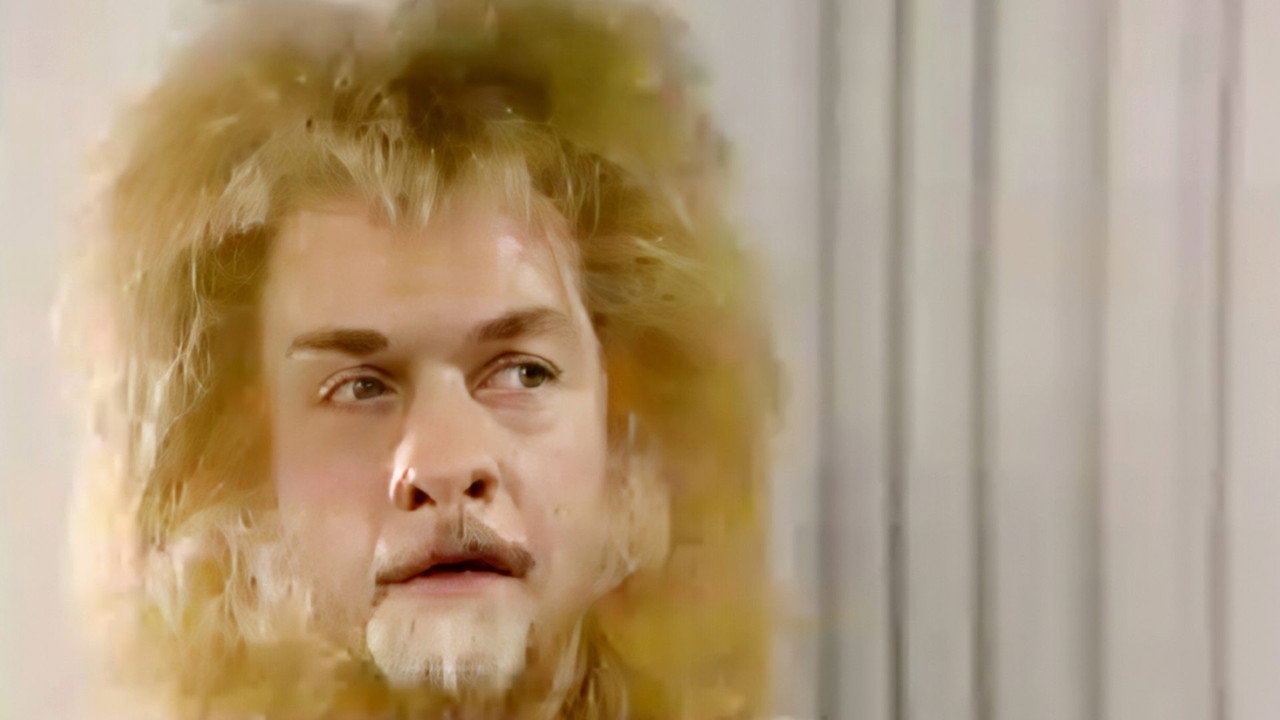
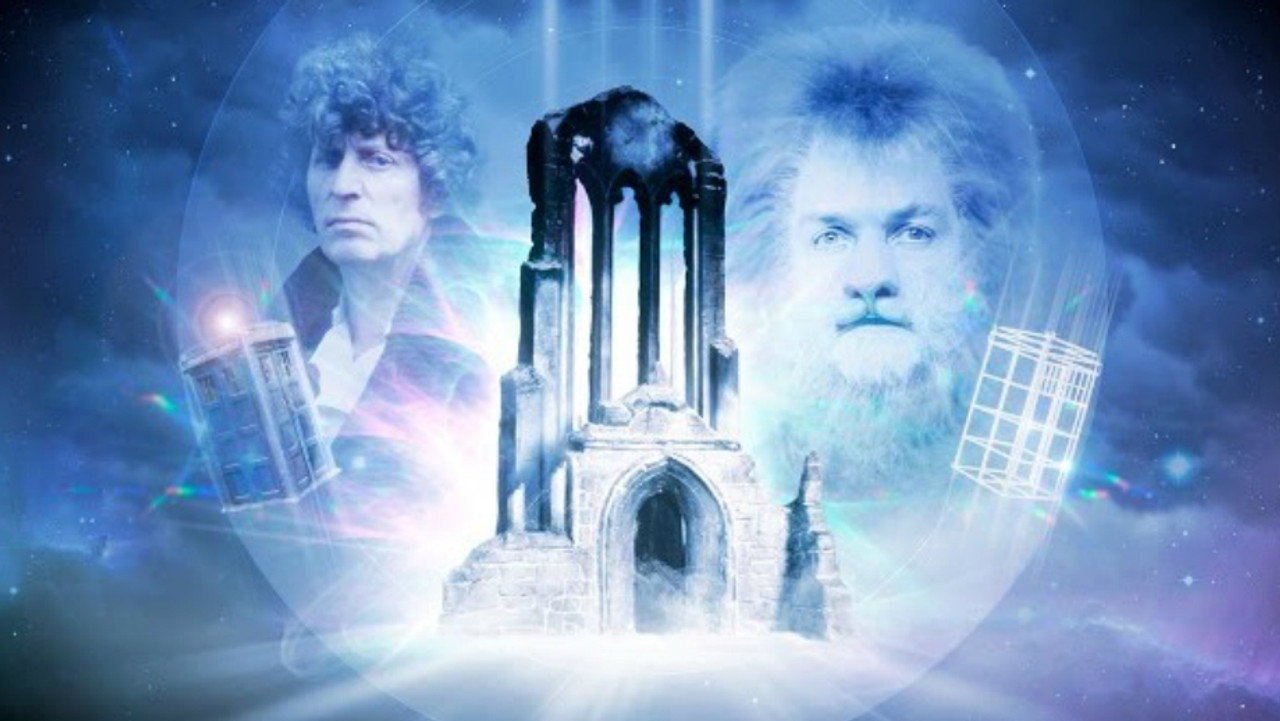
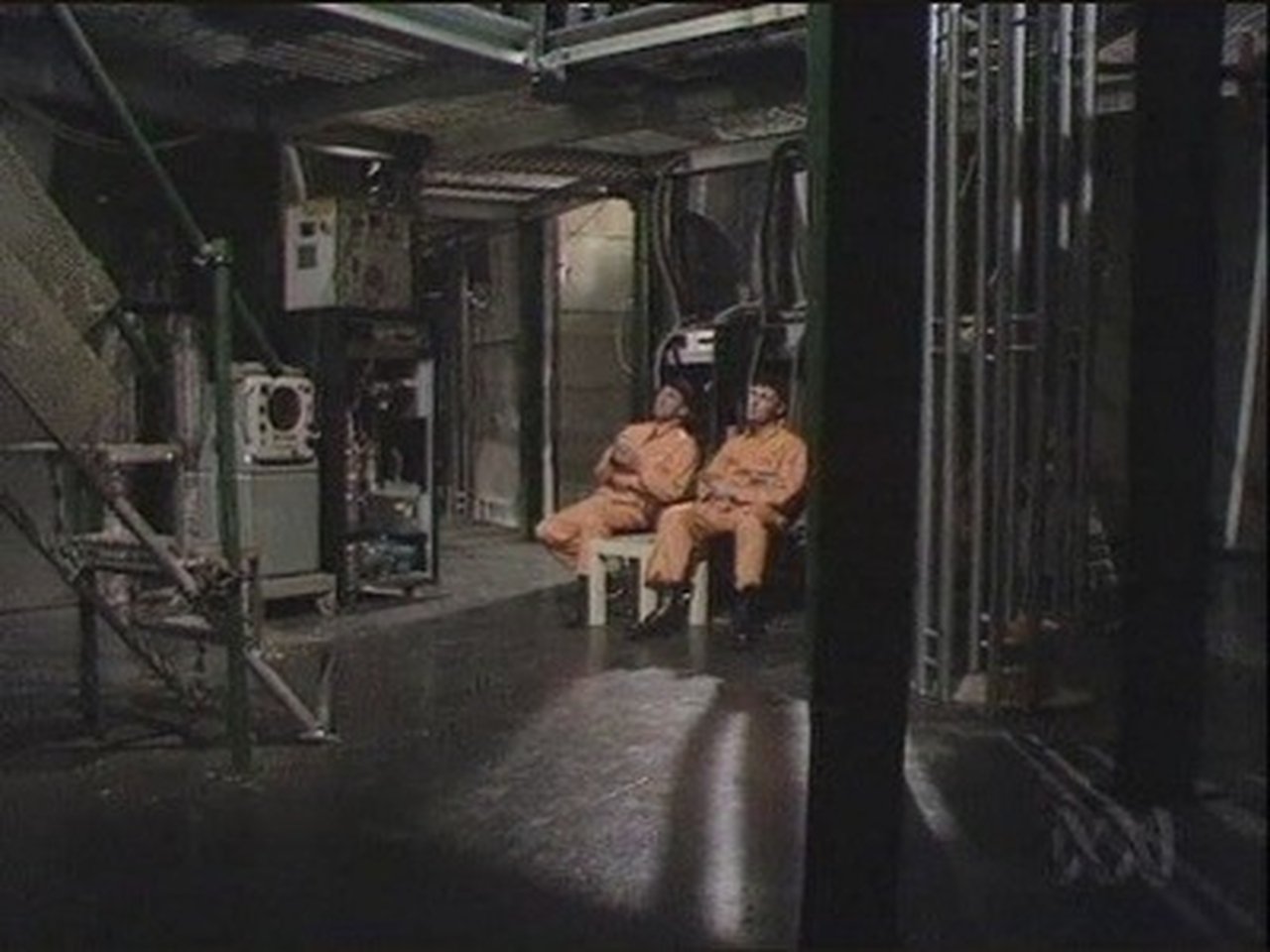
Trying to get out of E-Space, the TARDIS stalls in a featureless white void. A slave ship is stranded out there too.
- Biroc
The ship's Tharil navigator, Biroc, escapes on the winds of time and warns the Doctor about its crew. The same winds scramble K9's memory.
- The hall of mirrors
The Doctor explores an old banqueting hall full of mirrors and robots called Gundans, while Rorvik takes Romana aboard to study the engines.
What the Gundans rememberSpoiler · tap to reveal
Through the mirror, Biroc admits the Tharils once ruled an empire of slaves of their own, until their robots rose against them.
Staying behindSpoiler · tap to reveal
Rorvik's last blast at the mirrors bounces back and destroys his ship. Romana chooses to stay with the freed Tharils, and K9 goes with her.
Why it still matters
Warriors' Gate is the oddest-looking story of its era, and that was the plan. Director Paul Joyce came from documentaries and Play for Today, and before shooting he ordered prints of Jean Cocteau's Orphée and Testament of Orpheus, Robert Aldrich's Kiss Me Deadly and John Carpenter's Dark Star to show the crew what he wanted. He shot many scenes twice, once on handheld camera, and his film habits ran straight into the routines of a BBC studio. The schedule slipped, the lighting director complained, and Graeme Harper ended up writing the camera scripts and directing some scenes himself. What reached the screen is a ship in white nothing, a gateway of mirrors and, in part three, black-and-white photographs of Powis Castle as backdrops.
The script came from a writer who had never worked in television. Stephen Gallagher was a radio dramatist, and script editor Christopher H. Bidmead had commissioned him as a back-up while Christopher Priest's Sealed Orders was being written for the same slot. When Priest's scripts were judged unworkable and he withdrew in April 1980, Gallagher's outline, The Dream Time, moved up. It grew out of an unmade radio play inspired by the Aboriginal Australian idea of the Dreaming, and along the way it picked up Cocteau, Joe Haldeman's The Forever War and, at Bidmead's suggestion, the I Ching.
Under the puzzles sits a plain story about slavery. Captain Rorvik's crew run their ship on Tharils, a leonine, time-sensitive people kept in chains and used as navigators. It closes the season's E-Space trilogy, and Radio Times reviewer Mark Braxton called it "an elaborate experiment with striking results."
Romana stays
Beyond the mirror, Biroc shows the Doctor the Tharils' past: they rode the winds of time to conquer other worlds and enslave their people, until the slaves built the Gundans and overthrew them. Rorvik, sure the mirrors are the way out, turns his engines on them, and the blast reflects back and destroys his ship and crew. As the freed Tharils leave through the gateway, Romana says she will stay to help them rather than go home to Gallifrey. The Doctor gives her K9, whose memory will be restored on the other side, though he can never come back.
The exits were planned months ahead. In March 1980 Bidmead asked Gallagher to write out both Romana and K9; producer John Nathan-Turner and Lalla Ward had already agreed on her departure, and he felt the robot dog had become a "get out clause" for writers, as well as a difficult prop. John Leeson had come back for this season on the understanding that K9 would be written out. Ward pushed back against playing the farewell without emotion, and Bidmead's answer was that the show was not a soap opera.
Challenge the DNA
Were the Tharils victims or villains?
Or skip ahead to our reading
Both, and the story won't let you pick. The Tharils were tyrants and are now slaves. The question is what they do with their freedom, and the story leaves it open.
Behind the scenes
- Christopher Priest's Sealed Orders, a Gallifrey political thriller first developed with Douglas Adams, was commissioned for this slot. His scripts were judged unusable for television, and Priest withdrew in April 1980.
- The Tharils went through five names: the Caliban (after Shakespeare's The Tempest), Tharks, Thars and Tharls. Fan Ian Levine pointed out that the last was too close to the Thals of The Daleks, and Bidmead suggested Tharils.
- Gallagher named Biroc and Lazlo after the cinematographers Joseph Biroc and Ernest Laszlo, Captain Rorvik after the science writer David Rorvik, and the crewman Sagan after Carl Sagan. His working title, The Dream Time, became Warriors' Gate because Frederik Pohl had already used Bidmead's suggestion, Gateway, for a 1977 novel.
- Paul Joyce reworked the scripts with Bidmead and was then paid to rewrite them formally, but refused a credit so as not to offend Gallagher. During recording he handed some scenes to Graeme Harper and John Nathan-Turner to direct. To save on location filming, he photographed Powis Castle in Wales for black-and-white backdrops in part three.
- June Hudson based the Tharils' costumes on buccaneers and on Cocteau's La Belle et la Bête, with fur and a latex nose. Set designer Graeme Story reused parts of the Vogon ship from the BBC's The Hitchhiker's Guide to the Galaxy for the slave ship.
- Clifford Rose wrote to Nathan-Turner asking for the part of a "nasty" and got Rorvik, whom he played with Dad's Army's Captain Mainwaring in mind.
- Part three drew 8.3 million viewers. Gallagher novelised the story in 1982 under the name John Lydecker, and a longer draft came out in 2023 as Doctor Who: Warriors' Gate and Beyond.
The thread
Mirrors that work as doors, navigators in chains, and a void where the usual rules come loose.
Came before
Shares DNA with
Left its mark on
DNA strand
Us vs. Them
Rorvik's crew treat the Tharils as engine parts, valuable only because they can see through time. The story's bigger turn waits below the marker, but from the first scenes it hints that in this void nobody's place on the chain is fixed.
Every great sci-fi story is built from a handful of strands like this one. Each strand page explains how it works and traces it across shows, books and films.
If this one stayed with you
Where to go next, and why.
Watch · Film
Orphée (1950)
Cocteau's mirrors are the doors this story borrows, and both its writer and director went back to the film.
Watch · Film
La Belle et la Bête (1946)
Look at the Beast and then at Biroc. The costume designer took the hint, and so did Gallagher.
Watch · TNG S2
"The Measure of a Man"
Another crew decides it can own a mind it depends on, and this time there's a courtroom to argue it out.
Read · Novel
The Forever War by Joe Haldeman
Gallagher was reading it while he wrote, and its soldiers lost in time sit close to Rorvik's stranded crew.
Your next episode
Three directions to go from here, all on Sci-Fi DNA.
More of this feeling
Where No One Has Gone Before
Star Trek: The Next Generation
Lost at the edge of everything, where the rules stop applying.
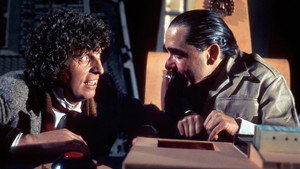
Same question, different answer
The Sun Makers
Doctor Who
Slaves, masters and who gets to be free.
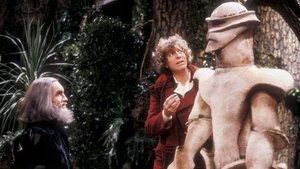
Something completely different
The Keeper of Traken
Doctor Who
A peaceful empire, a statue and a keeper who is dying.