More from the episode
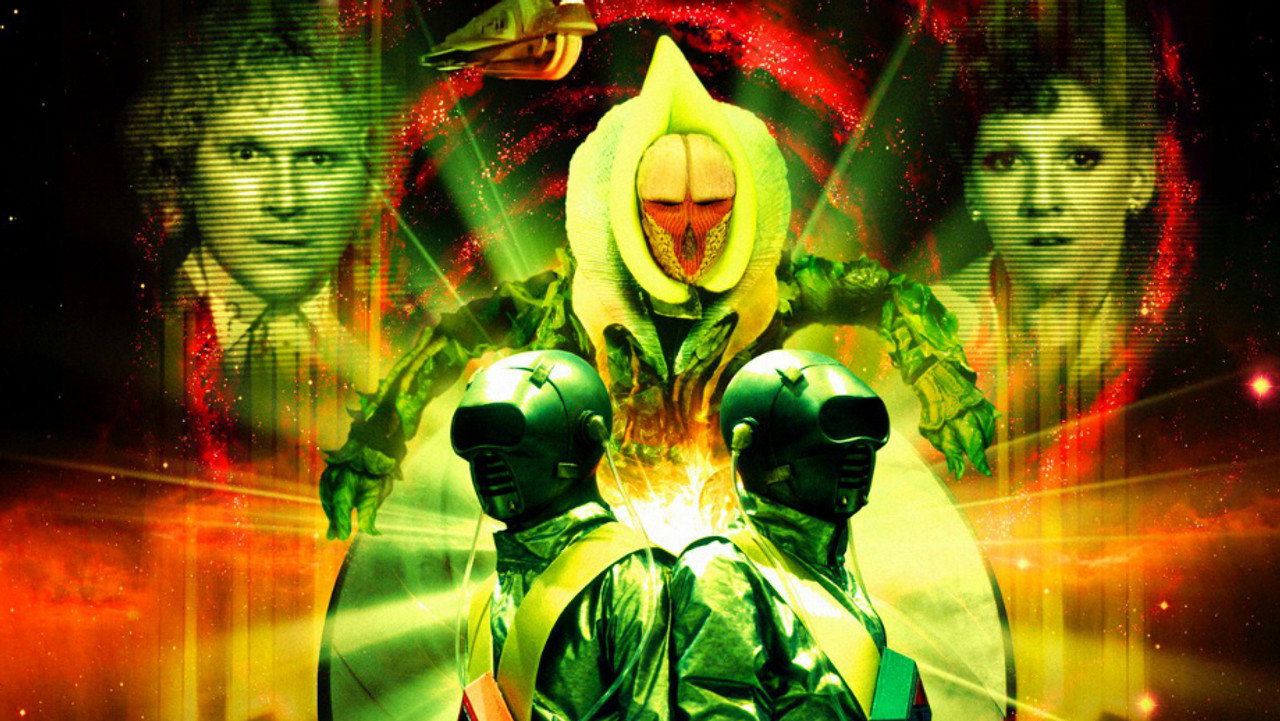

The story in 5 beats
- The case for the defence
Now the Doctor gets to present evidence. He chooses events from his own future, hoping to show he's changed for the better after Thoros Beta.
- Mayday from the Hyperion III
The Doctor and Mel answer a distress call from the freighter Hyperion III. Professor Lasky and her colleagues are guarding a shipment of seeds and some very large flower pods.
- The woman on the table
The Doctor and Mel find Ruth Baxter, Doland's assistant, strapped down and half turned into a plant. Then people on board start dying.
Into TartarusSpoiler · tap to reveal
The killers are Vervoids, plant people who came out of the pods. Bruchner steers the ship toward a black hole, and security officer Rudge hijacks it, after the metal in the vault.
A new chargeSpoiler · tap to reveal
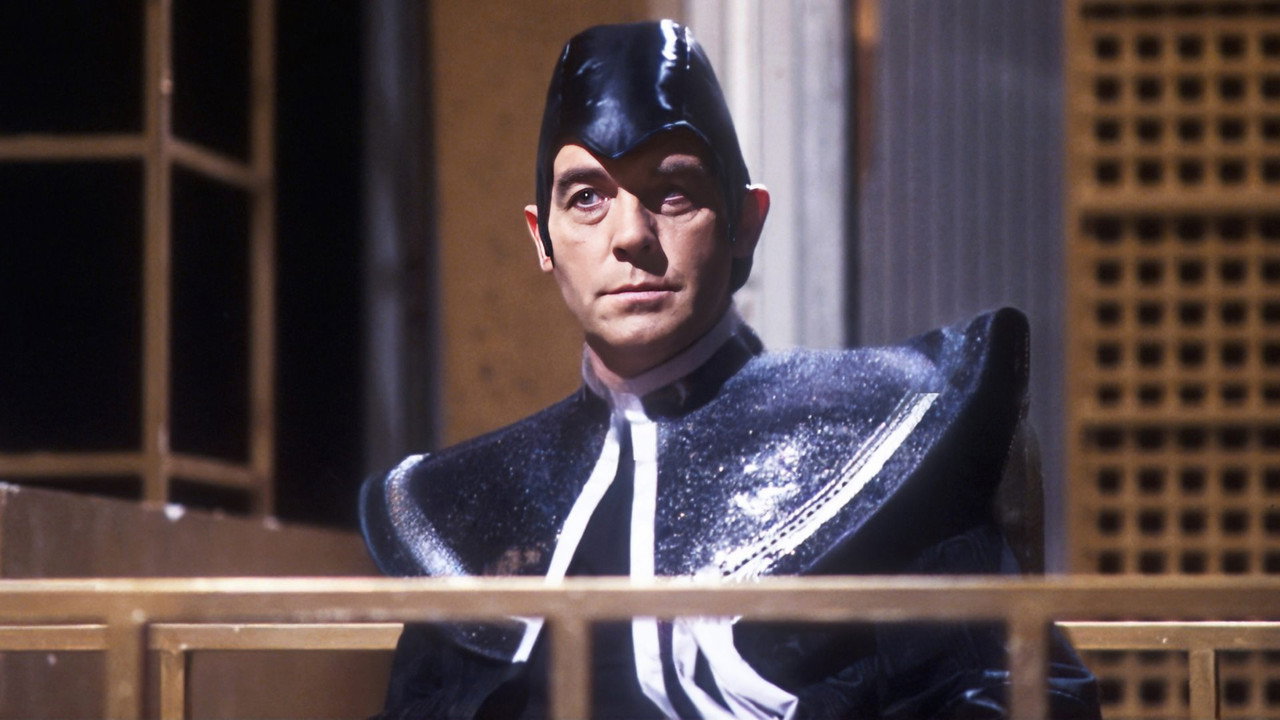
The Doctor finds a way to finish off the Vervoids. In court, the Valeyard has a new charge waiting.
Why it still matters
The Trial's third segment has the best courtroom trick of the four. Saward and Nathan-Turner had planned the season around A Christmas Carol, so after two segments of evidence from the Doctor's past and present, this one comes from his future. The Doctor picks an adventure he hasn't lived yet to prove he's going to turn out all right, which means we meet a new companion, Mel, in the middle of a story she's already part of.
It very nearly didn't exist. The third segment had three false starts: David Halliwell and Jack Trevor Story were paid off, and replacements from Christopher H. Bidmead and P. J. Hammond came to nothing. Pip and Jane Baker, who had written The Mark of the Rani, were commissioned at the beginning of March 1986 and had about a month to write all four parts.
What they turned in is an old-fashioned whodunnit with a body count, set on a freighter carrying a scientist's cargo of strange pods. Honor Blackman plays the scientist. Two standard Doctor Who reference books of the 1990s, The Discontinuity Guide and Howe and Walker's Television Companion, both rated it well written, even if neither loved everything about it.
The defence becomes a charge
The Vervoids hate "animal-kind" and kill to survive. The Doctor realises that vionesium, a rare metal from Mogar stored in the ship's vault, would speed their life cycle to its natural end. Travers turns down the lights and heat to drive them back to their lair, where the Doctor and Mel are waiting with the metal. It kills them, and the survivors on board are safe.
That's the trap. The Doctor chose this evidence to prove he would change for the better, and the Valeyard uses it to charge him with genocide, then asks for the death penalty. It's a neat sting for a defence exhibit, and it leaves the Doctor in more trouble than when he started. Everything is left for The Ultimate Foe, the trial's last two parts, also directed by Chris Clough.
Challenge the DNA
Is the Doctor guilty of genocide?
Or skip ahead to our reading
No, but the charge is clever. He saved the passengers, and the Vervoids were killing to survive. The sting is that his own defence gives the prosecution its best weapon.
Behind the scenes
- The third segment was first meant to be two parts each from David Halliwell and Jack Trevor Story. Both were paid off. Replacements were commissioned from Christopher H. Bidmead and then from Sapphire and Steel creator P. J. Hammond, and neither went ahead.
- Pip and Jane Baker, the husband-and-wife team behind The Mark of the Rani (1985), were commissioned at the beginning of March 1986 and had to write the scripts within a month.
- Nathan-Turner cast Bonnie Langford as Mel in December 1985, seeing her popularity with younger viewers as a way to grow the audience. Saward later said Nathan-Turner wanted a redheaded companion and suggested Langford straight away; several writers have pointed to her strong scream as a factor.
- Nathan-Turner meant to show how Mel first met the Doctor in a later story. It never happened, so she arrives here fully formed, with no on-screen introduction.
- Eric Saward had left as script editor by now, and Nathan-Turner did the job himself, uncredited, on Parts Nine to Twelve.
- The four parts drew between 4.6 and 5.3 million viewers. The Season 23 Blu-ray (2019) includes the broadcast episodes, an extended cut and a "standalone edition".
- The Discontinuity Guide criticised the dialogue, and Howe and Walker were unimpressed by Langford's performance, but both judged the story well written.
The thread
A closed circle of suspects, a cargo that shouldn't be on board, and science that made something it can't control.
Came before
Shares DNA with
Left its mark on
DNA strand
Trapped With Strangers
A ship in deep space, a passenger list full of people with something to hide, and no way off. The Bakers play it as a country-house mystery with plant monsters, and the Doctor has to work out who to trust while the court watches him do it.
Every great sci-fi story is built from a handful of strands like this one. Each strand page explains how it works and traces it across shows, books and films.
If this one stayed with you
Where to go next, and why.
Watch · Doctor Who
"The Seeds of Doom" (1976)
The show's other great killer-plant story: seed pods dug out of the Antarctic permafrost, and a millionaire who loves plants more than people.
Watch · Doctor Who
"The Mark of the Rani" (1985)
Pip and Jane Baker's previous story, also with Colin Baker: another scientist using people as raw material, this time in a 19th-century mining town.
Watch · Film
Alien (1979)
Another ship's crew picked off one at a time by something they carried aboard themselves.
Read · Novel
Murder on the Orient Express — Agatha Christie
The template for a murder among travellers who can't leave. Read it and the Hyperion III's passenger list will feel familiar.
Read · Novel
The Day of the Triffids — John Wyndham
Plants bred to be useful that end up hunting people. The British original of the form.
Your next episode
Three directions to go from here, all on Sci-Fi DNA.

More of this feeling
The Robots of Death
Doctor Who
Another murder mystery on a ship, with passengers dying one by one.
Same question, different answer
The Devil in the Dark
Star Trek
When a new kind of life threatens people, what do you owe it?

Something completely different
Delta and the Bannermen
Doctor Who
A 1950s holiday camp, a coach trip and rock 'n' roll.