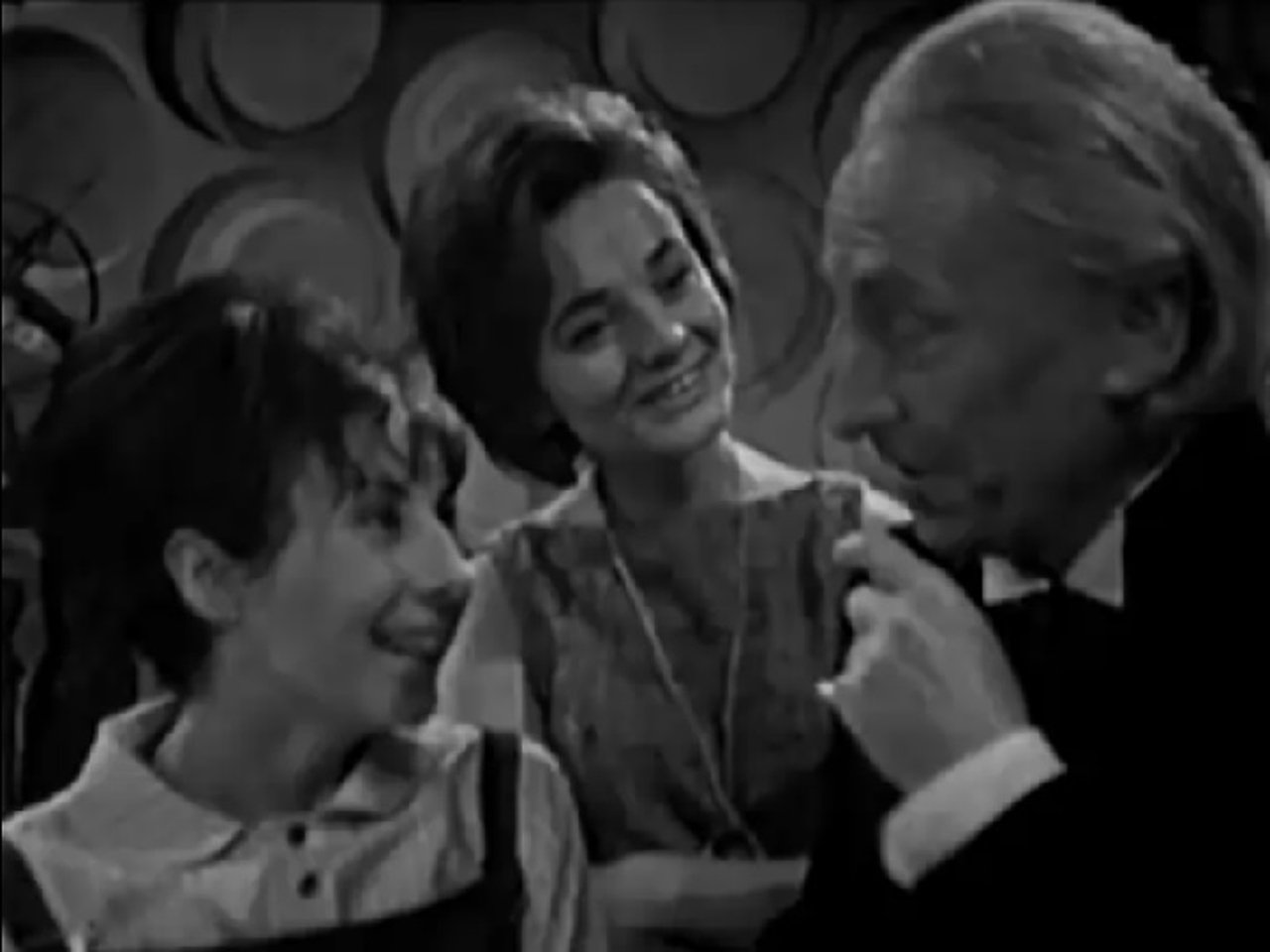
More from the episode
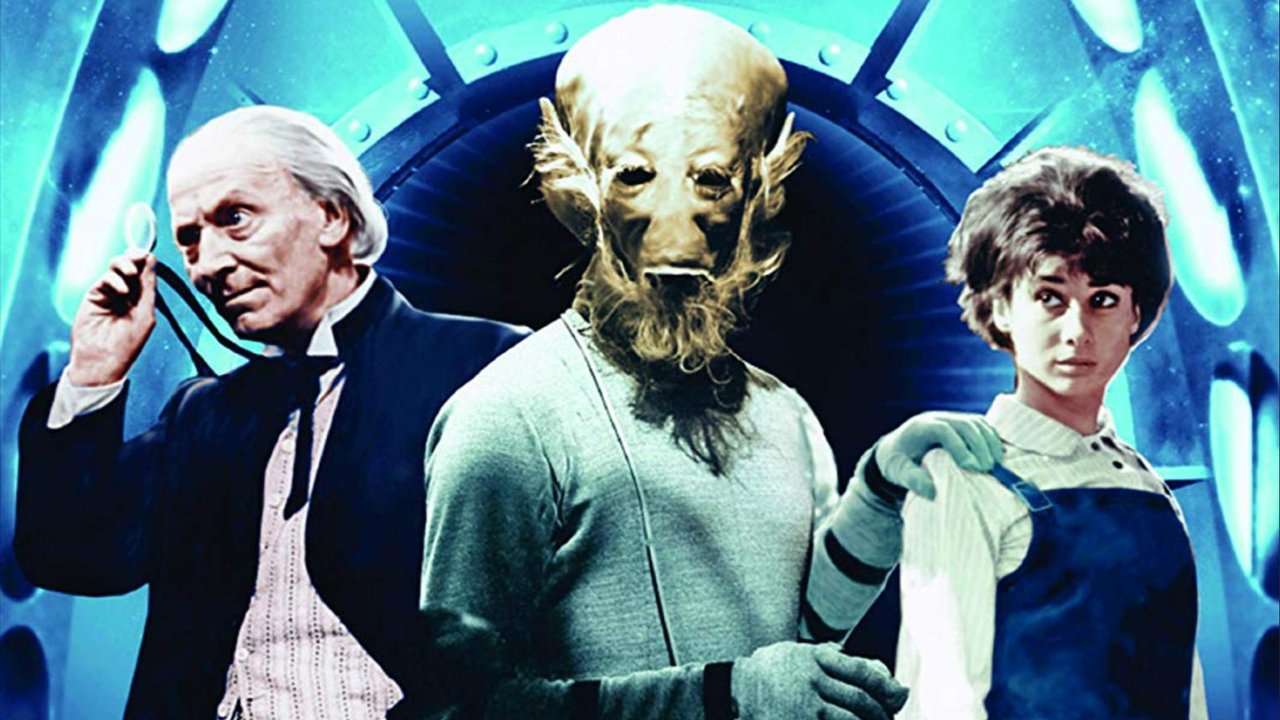
The story in 5 beats
- A ship full of sleepers
The TARDIS lands aboard an Earth spaceship orbiting the Sense-Sphere. Its crew seem dead, until they wake.
- Held in orbit
The Sensorites won't let the ship leave, and they take the TARDIS lock. Carol's fiancé John has had his mind broken by them.
- Voices in Susan's head
Susan picks up the Sensorites' thoughts. They are afraid of humans, and the Doctor agrees to go down to their world and talk.
Sickness in the citySpoiler · tap to reveal
Sensorites are dying of a disease, and Ian falls ill too. The Doctor traces it to the water while plotters on the council work against the visitors.
Down in the aqueductSpoiler · tap to reveal
The Doctor and Ian go down into the dark tunnels to find out who is poisoning the Sensorites.
Why it still matters
The Sensorites are aliens who aren't simply the enemy. They hold a human crew prisoner and break one man's mind, and yet the story keeps turning the question back on Earth: what did the last humans to visit actually do here? In 1999 the critic John Kenneth Muir thought the Sensorites were justified in their hatred of humans and liked that they "are not merely evil because the story demands it of them."
Peter R. Newman, who wrote it, came to the show from war drama. His 1958 BBC play Yesterday's Enemy, which Hammer filmed in 1959, was set in Burma during the Second World War, and Doctor Who: The Complete History traces this serial back to 1950s films about soldiers who went on fighting after their war was over.
It also gives Susan more to do than usual. Her telepathy makes her the bridge between the two sides, and Mark Braxton, reviewing it for Radio Times in 2008, noted what it adds to her relationship with her grandfather. Braxton also called the Sensorites "a triumph of realisation," and the look of the place still impresses: designer Raymond Cusick avoided straight lines and right angles in their city.
The monsters were from Earth
The disease turns out to be poison: deadly nightshade in the aqueduct. The thing in the dark that knocks the Doctor down is no monster at all. It is the survivors of the earlier Earth expedition, the one that came for the planet's wealth, still hiding in the tunnels and still waging their own private war against the Sensorites under a deranged Commander. That is Newman's starting point played straight, people who keep fighting long after any reason for it has gone.
The Sensorites arrest them, and the Doctor's party asks for mercy. The Sensorite leader agrees and sends them back to Earth with Maitland, John and Carol to be treated. The aliens who looked like the threat in part one end the story as the ones who show restraint, which is why Muir thought them worth defending.
Challenge the DNA
Should the old Earth survivors have been sent home instead of punished?
Or skip ahead to our reading
We side with the mercy, as the Doctor's party does. The survivors are dangerous because they never stopped being afraid. The story's quiet point is that the aliens are the ones who can afford to forgive.
Behind the scenes
- Peter R. Newman worked out the idea in January 1964 and script editor David Whitaker commissioned it on February 25. The Complete History says it grew from 1950s films about soldiers who kept fighting after the Second World War ended.
- Mervyn Pinfield directed the first four parts because he was felt to get a lot of atmosphere out of a small budget; Frank Cox took the last two. Cox pictured the mad Commander as a kind of Ben Gunn from Treasure Island and cast John Bailey after seeing him in Pygmalion.
- Raymond Cusick avoided straight lines and right angles in the Sense-Sphere sets, thinking of Antoni Gaudí's Sagrada Família, and designed the spaceship to look like a 1940s Dakota aircraft.
- Costume designer Daphne Dare and make-up artist Jill Summers made the Sensorite masks for short actors and meant them to look like wise old men. The feet were circles of card stretched out at the end of the costume, which made walking hard.
- Jacqueline Hill was on holiday for the recording of parts four and five. To make the spaceship roll, the cameraman simply rocked the camera.
- Part one drew 7.9 million viewers. Part three was knocked back a week by Wimbledon and Ashes cricket coverage, and Juke Box Jury went out in its place.
- The BBC wiped the videotapes in 1967 and 1969, but BBC Enterprises had kept 16mm film negatives, which came back to the archive in 1978, so all six parts survive. The 2012 DVD includes a documentary about Newman.
The thread
Frightened aliens, greedy visitors and a war that doesn't know it's over.
Came before
Shares DNA with
DNA strand
First Contact & Invaders
This is first contact told from the uneasy middle. The Sensorites have already met humans once and it went badly, so they meet the next lot with fear. The story asks the crew to earn trust that someone else spent.
Every great sci-fi story is built from a handful of strands like this one. Each strand page explains how it works and traces it across shows, books and films.
If this one stayed with you
Where to go next, and why.
Watch · Star Trek S1
"The Devil in the Dark"
Another story in tunnels beneath an alien world, where someone has to understand the other side before anyone fights.
Watch · Twilight Zone S5
"The Encounter"
Aired the same spring, with the same question underneath: what happens to people who can't stop fighting a war that has ended.
Watch · Film
Yesterday's Enemy
Newman's Burma war drama, filmed by Val Guest for Hammer. It shows where the writer's head was a few years before he made up the Sensorites.
Read · Novelisation
Doctor Who: The Sensorites by Nigel Robinson
The 1987 Target book of the serial, a quicker way through six slow-burning parts.
Your next episode
Three directions to go from here, all on Sci-Fi DNA.

More of this feeling
Darmok
Star Trek: The Next Generation
Another first meeting with aliens nobody understands, and people trying hard to.

Same question, different answer
The Hunted
Star Trek: The Next Generation
Soldiers who can't stop fighting a war that's over, and a society that would rather not see them.

Something completely different
The Reign of Terror
Doctor Who
From telepathic aliens to revolutionary Paris, with the guillotine waiting.