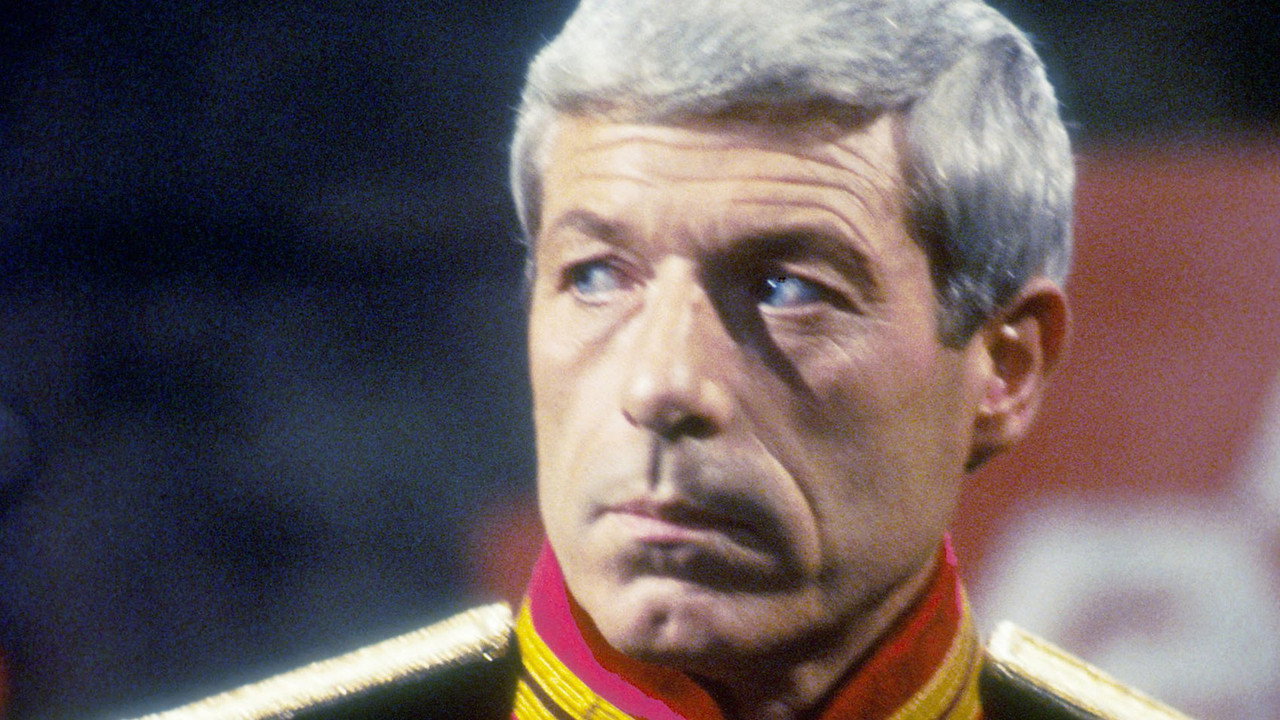
More from the episode
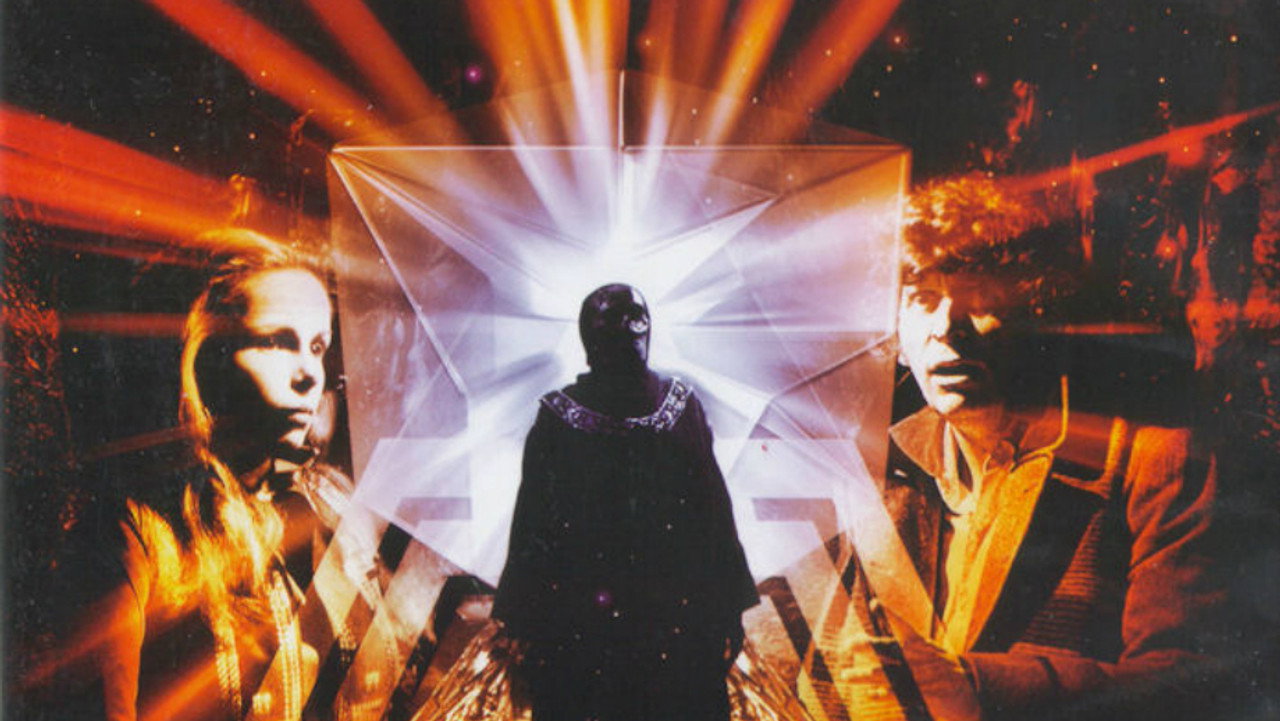
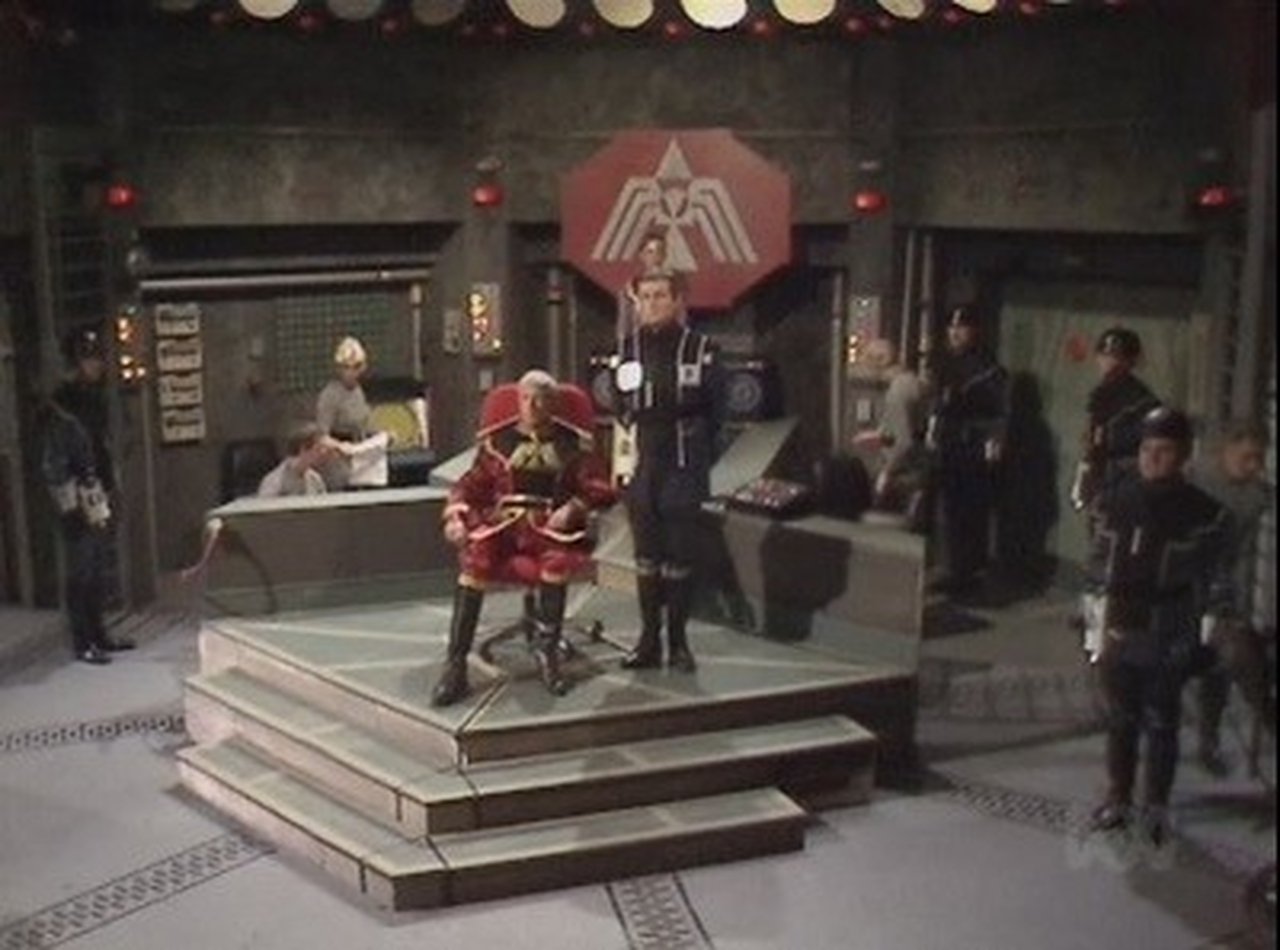
The story in 5 beats
- A war being lost
Atrios is losing its nuclear war with Zeos. Princess Astra tours the wounded in the bunkers while the Marshal insists on victory.
- The last segment
The Doctor and Romana arrive looking for the sixth segment, meet Astra, and see her abducted. The Marshal suspects them at once.
- A third planet
A control device on the Marshal's neck and a skull behind his mirror lead the Doctor to the Shadow, ruling from a world between the two.
The sixth segmentSpoiler · tap to reveal
The Shadow serves the Black Guardian, and the final segment has been in plain sight the whole time: it is Princess Astra.
The wrong GuardianSpoiler · tap to reveal
With the Key complete, a Guardian asks the Doctor to hand it over. He spots the impostor, scatters the Key and runs.
Why it still matters
This is where the season-long Key to Time quest comes to a head. Producer Graham Williams had pitched the Key to Time, a quest for six scattered pieces of a cosmic cube, when he applied for the job in 1976, and he gave the finale to Bob Baker and Dave Martin because he trusted them to deliver it on time. They wrote a Cold War story: two planets locked in a nuclear war that, as the critic Keith Booker reads it, has killed millions for nothing, an underground command bunker modelled on the government's real one at Corsham in Wiltshire, and a Marshal who, according to Radio Times, was drawn from Winston Churchill.
It's also the first Doctor Who job for Douglas Adams, who came in as the new script editor, uncredited here. He gave the story its title and reworked its climax. In the story the Doctor looks at the war machine on Zeos and calls this way of military thinking "the Armageddon factor", which sums up the serial's argument better than any of its explosions.
Critics have argued about it ever since. The Discontinuity Guide called it a dreary, out-of-money finale, while Justin Felix at DVD Talk gave it four stars out of five and called it Mary Tamm's best performance. Even the less friendly reviews, from Howe and Walker's Television Companion to Radio Times, praise William Squire's Shadow.
The princess was the key
Astra is the sixth segment, an idea Douglas Adams suggested to raise the stakes, and in the lair of the Shadow, an agent of the Black Guardian, the Key's power transforms her in front of everyone. The Doctor grabs the near-complete Key, stops Zeos's war computer Mentalis from destroying both planets, and shields Zeos so that the Marshal's missiles hit the Shadow's planet instead. Then the White Guardian appears on the scanner and asks for the Key. The Doctor notices he doesn't care at all about Astra, realises he is the Black Guardian in disguise, and orders the Key to scatter again, which brings Astra back. To keep the furious Guardian off his trail, he fits a randomiser to the TARDIS so that even he doesn't know where it will land next.
Baker and Martin's draft simply had the Doctor break up the Key; Adams added the Black Guardian to give the season a bigger finish. Cyril Luckham, the White Guardian of The Ribos Operation, was meant to play him too but wasn't available, so Valentine Dyall was cast. Critics such as David J. Howe and Stephen James Walker still called the ending a cop-out, and Keith Booker noted that the Doctor undoes his whole quest the moment he completes it. It is also Mary Tamm's last story. Romana leaves in the TARDIS with the Doctor, but Tamm had decided to go, and when the next season opened Romana had a new body, played by Lalla Ward, who had just played Astra. Tamm said in 2007 she would have filmed a regeneration scene and was never asked.
Challenge the DNA
Was the Doctor right to scatter the Key again?
Or skip ahead to our reading
Yes, and it's the most Doctor-ish choice of the season. A full Key would mean giving it to someone, and the story shows why that's a bad idea. Scattering it puts the power out of everyone's reach.
Behind the scenes
- Bob Baker and Dave Martin sent Graham Williams their first draft on December 19, 1977. In early versions both Atrios and Zeos had people on them and the princess was a kidnapped scientist named Reina; to save money, Zeos was emptied and handed to a computer, Mentalis.
- The model spaceship scenes were shot at the BBC's Ealing film studios on October 27, 1978, and the studio scenes at Television Centre between November 5 and December 5.
- Production was rough. Tom Baker wanted a veto over scripts, directors and casting, Williams refused, and Baker handed in his resignation before withdrawing it after meetings with BBC executives. The two agreed to do another season, but stayed on tense terms.
- Baker and Lalla Ward, who plays Princess Astra, began their relationship during production. They married in December 1980.
- Valentine Dyall, for years radio's "Man in Black" on Appointment with Fear, is in the cast. Around the same time he played Gargravarr in Douglas Adams's radio Hitchhiker's Guide to the Galaxy.
- Viewing figures rose from 7.5 million for part one to 9.6 million for part six.
The thread
Mutually assured destruction, a computer at the heart of the war, and the last stop on a season-long quest.
Came before
Shares DNA with
DNA strand
Atomic-Age Anxiety
Baker and Martin wrote a nuclear war that has already killed millions and settled nothing, run from a bunker modelled on Britain's own. The Marshal still wants one more strike, and the machine on the other side is set up to answer it, which makes this the Cold War with the planets' names swapped in.
Every great sci-fi story is built from a handful of strands like this one. Each strand page explains how it works and traces it across shows, books and films.
If this one stayed with you
Where to go next, and why.
Watch · Star Trek S1
"A Taste of Armageddon"
Another endless war between neighbouring planets, kept going by machines and by leaders who can't imagine stopping.
Watch · Film
Dr. Strangelove
Another nuclear standoff with a doomsday machine and a general who wants to win, played as black comedy.
Watch · Doctor Who
"The Ribos Operation"
The start of the quest. The ending here means more once you've seen the Doctor take the job.
Read · Novel
Doctor Who and the Armageddon Factor — Terrance Dicks
Dicks's 1980 Target novelisation, a quick way to revisit the season's finale.
Your next episode
Three directions to go from here, all on Sci-Fi DNA.
More of this feeling
A Taste of Armageddon
Star Trek
Two planets locked in a war that has stopped making sense.
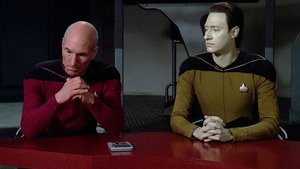
Same question, different answer
The Measure of a Man
Star Trek: The Next Generation
What happens when a person turns out to be part of something else?
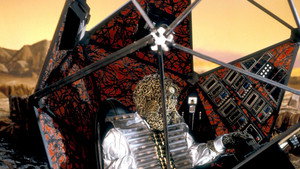
Something completely different
City of Death
Doctor Who
Paris, a time-travelling count and Douglas Adams.