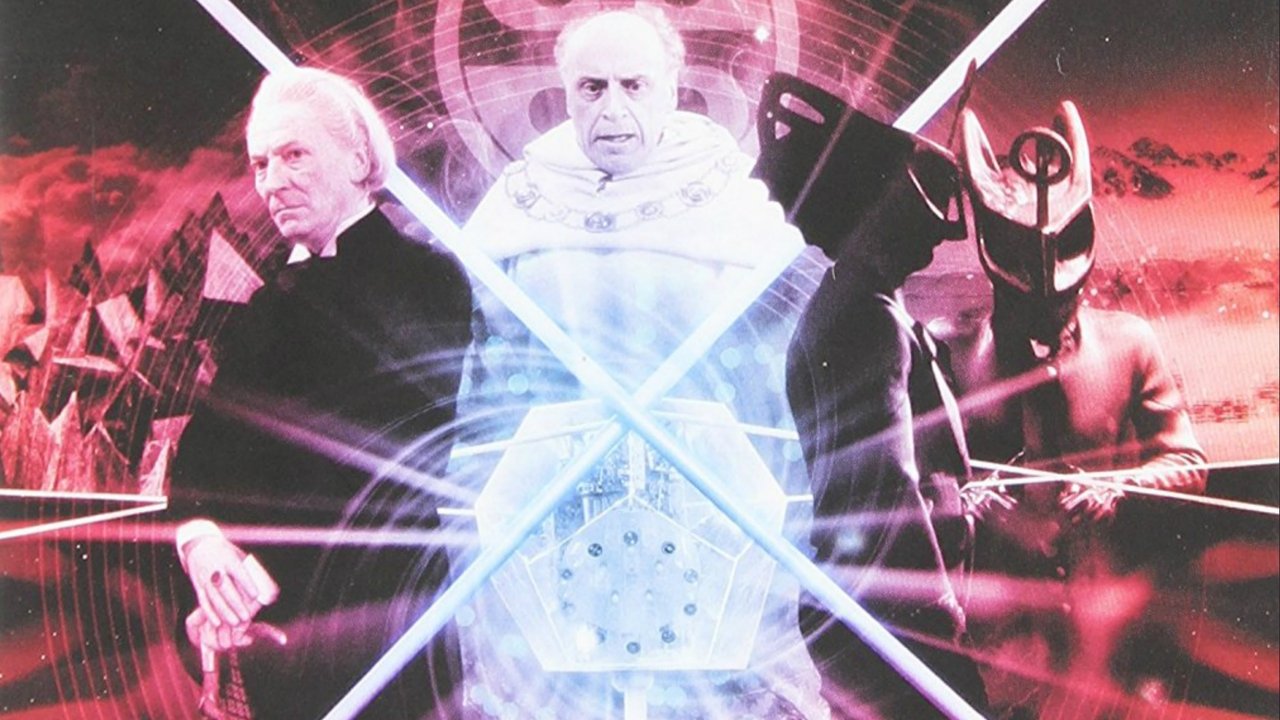
More from the episode
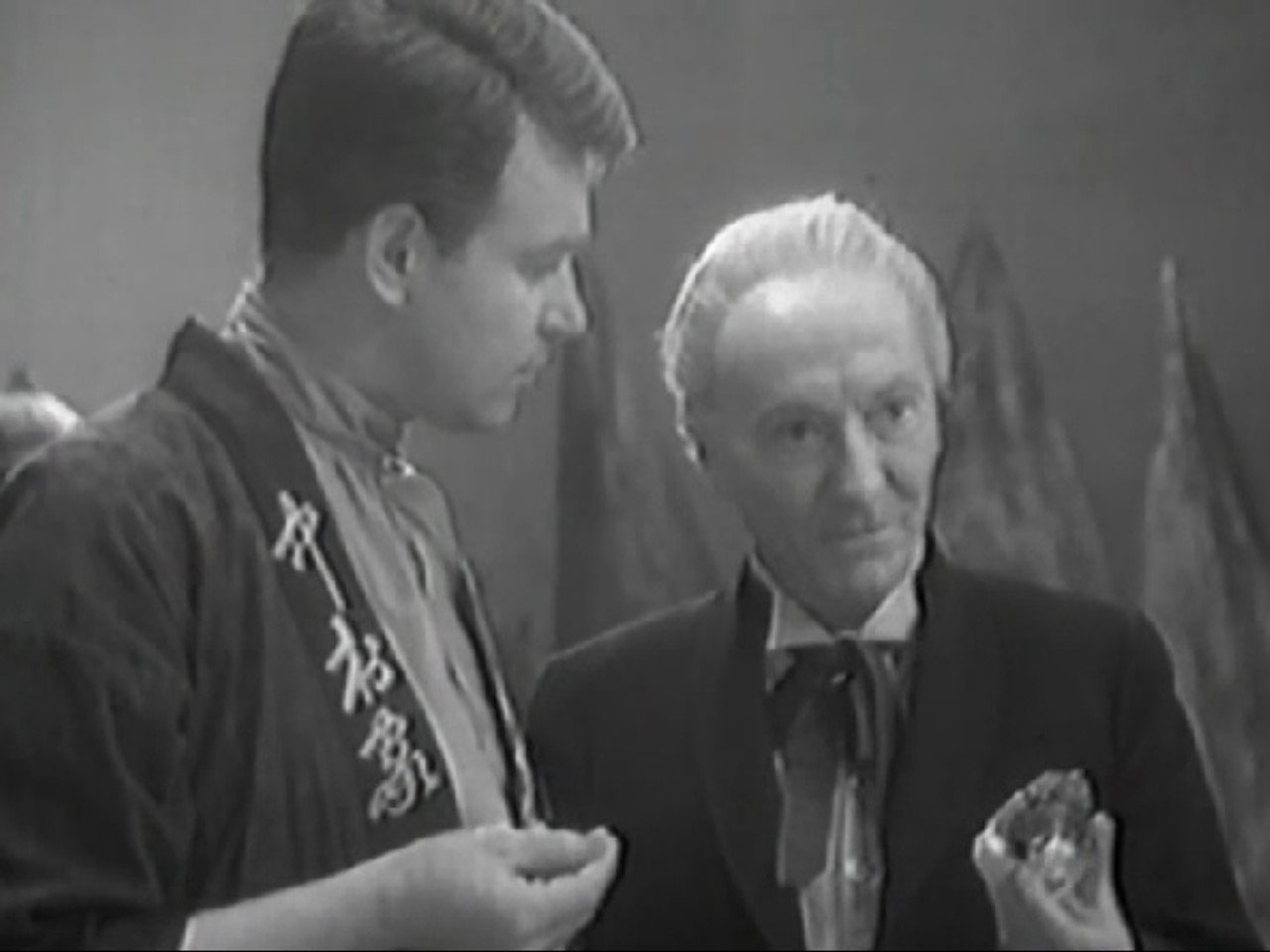
The story in 5 beats
- The island in the acid sea
The TARDIS lands on an island in a sea of acid. In a tower, Arbitan, Keeper of the Conscience of Marinus, forces the travelers to go and find the keys his machine needs.
- Morphoton
The first city offers the travelers every comfort they could want. Barbara is the one who realises they are being hypnotised.
- Jungle, then snow
Ian and Barbara search a jungle where the vegetation moves, then cross a frozen waste where a man named Vasor offers help.
Sentence of deathSpoiler · tap to reveal
In the city of Millennius, Ian is charged with murder, and the Doctor arrives to take on his defence.
The last keySpoiler · tap to reveal
Back at the tower, the Voord are waiting, and the travelers have one trick left to play.
Why it still matters
This is Doctor Who trying out the quest, with one story broken into stops along the way. It was a rescue job. A script by Malcolm Hulke had run into trouble, so the production team went back to Terry Nation, fresh from The Daleks, and needed six episodes fast. Nation and script editor David Whitaker decided to make a virtue of the rush and build the serial out of "mini-adventures," each with its own setting and guest cast. Nation liked the idea of the crew hunting down the pieces of a puzzle.
The result is a sampler. There's a city of luxury where something is off, a jungle where the plants move, a frozen waste with a stranger you shouldn't trust, and a murder trial to finish. Not every stop works, and critics have said so since 1964, when Bob Leeson of the Daily Worker called the fifth episode the show's low point. The Discontinuity Guide felt the format left each story too little room, and Patrick Mulkern in Radio Times thought standards slipped after the first four serials. Others liked the pace: Elliot Thorpe at Den of Geek felt the structure kept each episode fresh.
It also gave Nation's Voord, men in black rubber wetsuits and rubber helmets, a shot at being the next Daleks. They went onto cigarette cards and the cover of the first Doctor Who annual, but the craze never came. Watch it for William Hartnell, whose late rally even the harsher reviewers credit, and for designer Raymond Cusick doing a lot with a budget that was running out.
A machine nobody should have
In Millennius, the Doctor gets Ian's trial postponed, digs up the evidence and frees him, recovering the final key along the way. But when the travelers return to Arbitan's island, they find that Arbitan's killer, Yartek, leader of the Voord, has taken the tower, seized the keys and imprisoned their friends Altos and Sabetha.
Ian hands Yartek the false key he picked up in the jungle. When Yartek fits it into the Conscience, the machine explodes, killing him and the Voord with him, and the travelers escape with Altos and Sabetha as the fire spreads through the tower. The machine built to keep law and order across a planet ends up as the trap that beats the people trying to seize it. Howe and Walker's Television Companion enjoyed the ending.
Challenge the DNA
Should the Conscience of Marinus ever have been switched back on?
Or skip ahead to our reading
We'd leave it off. A peace that works by controlling minds isn't a peace people chose, and the story seems to agree when the machine ends up as the trap that destroys the Voord. Nobody in it asks whether Marinus wanted it back.
Behind the scenes
- The serial replaced Malcolm Hulke's Dr Who and the Hidden Planet, which was judged problematic and needed rewrites. Nation had been due to write a later serial, The Red Fort, and was brought in instead; the quick turnaround is why he and David Whitaker chose the episodic structure.
- Nation set the third episode in a jungle so the designers could get out of interior sets, and Whitaker suggested snow for the fourth as a contrast. Jablite polystyrene stood in for the snow.
- The Voord were only vaguely described in the scripts. Designer Daphne Dare based them on a rubber wetsuit, and prop builders Jack and John Lovell made the heads from vulcanised rubber. Raymond Cusick used leftover fibreglass to finish the Conscience machine because the budget was running low.
- The wolves in episode four came from 14 feet of film the BBC bought from the 1957 Russian thriller The Grey Robber.
- William Hartnell was on holiday for the recording of episodes three and four. Director John Gorrie later said he took the job despite being unhappy with the scripts, and cast George Coulouris, whom he called his hero, as Arbitan.
- Episode three, "The Screaming Jungle," was the first Doctor Who episode broadcast on a channel called BBC1, after BBC TV was renamed for the launch of BBC2. Episode four drew the serial's biggest audience, 10.4 million.
- Amicus Productions bought the film rights, but no Keys of Marinus film was made. Philip Hinchcliffe, a former producer of the show, wrote the Target novelisation in 1980.
The thread
A quest story, a city built on a pleasant lie, and a machine that decides what's right.
Came before
Shares DNA with
Left its mark on
DNA strand
Is Any of This Real?
Morphoton is the stop that fits this strand: a city where everyone seems comfortable and well looked after, and Barbara is the first to see the squalor under the hypnosis. It's an early TV take on the comfortable illusion, and the rest of the serial is built around a machine meant to keep a whole planet in line.
Every great sci-fi story is built from a handful of strands like this one. Each strand page explains how it works and traces it across shows, books and films.
If this one stayed with you
Where to go next, and why.
Watch · Doctor Who · Season 1
"The Daleks"
Nation's first trip to an alien world for the show, and the story that made Marinus possible.
Watch · Star Trek: TNG
"The Game"
If Morphoton is your favorite stop, this is the same trap given a whole hour: pleasure as a way to keep people quiet.
Watch · Star Trek
"Court Martial"
A courtroom story done at full length, for anyone who wishes the Millennius trial had more room to breathe.
Read · Novelisation
Doctor Who and the Keys of Marinus — Philip Hinchcliffe
The serial retold in prose by Philip Hinchcliffe, who had produced the show in the years before, for readers who'd rather picture Marinus than see the 1964 sets.
Read · Epic poem
The Odyssey — Homer
The original quest in stops, island to island, each with its own temptation, including a few that look as pleasant as Morphoton.
Your next episode
Three directions to go from here, all on Sci-Fi DNA.
More of this feeling
The Daleks
Doctor Who
Terry Nation's first story, another long trek across an alien world with the Thals and the Daleks.
Same question, different answer
A Taste of Armageddon
Star Trek
Another society that has handed a machine the job of keeping order, and visitors who doubt it.

Something completely different
Better Than Life
Red Dwarf
Another hop through strange worlds, this time inside a game, and played for laughs.
Sources
- “The Keys of Marinus,” Wikipedia
- “Doctor Who Classic Episode Guide: The Keys of Marinus,” BBC
- “Doctor Who (1963–1996), Season 1, The Keys of Marinus: The Sea of Death,” BBC Programmes
- “The Keys of Marinus,” Radio Times (Patrick Mulkern), 2008
- “Doctor Who: The Keys of Marinus DVD Review,” Den of Geek (Elliot Thorpe), 2009
- “Doctor Who: The Early Adventures,” Wikipedia