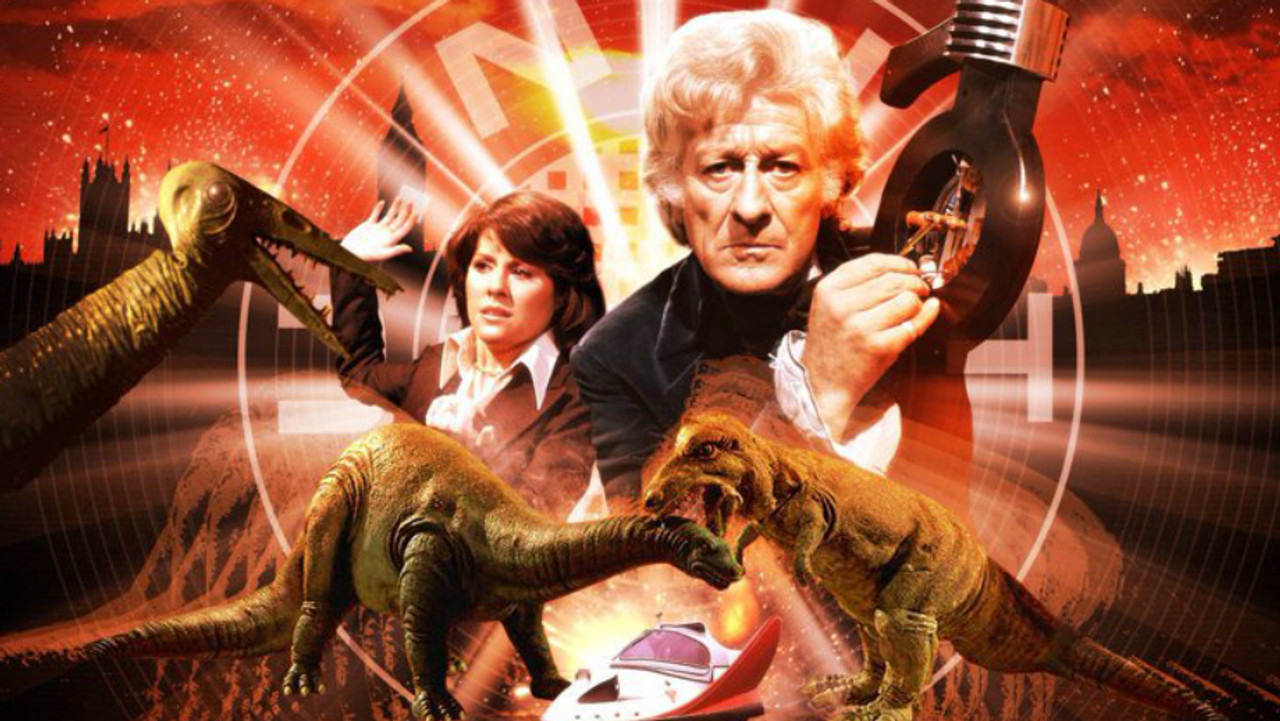
More from the episode
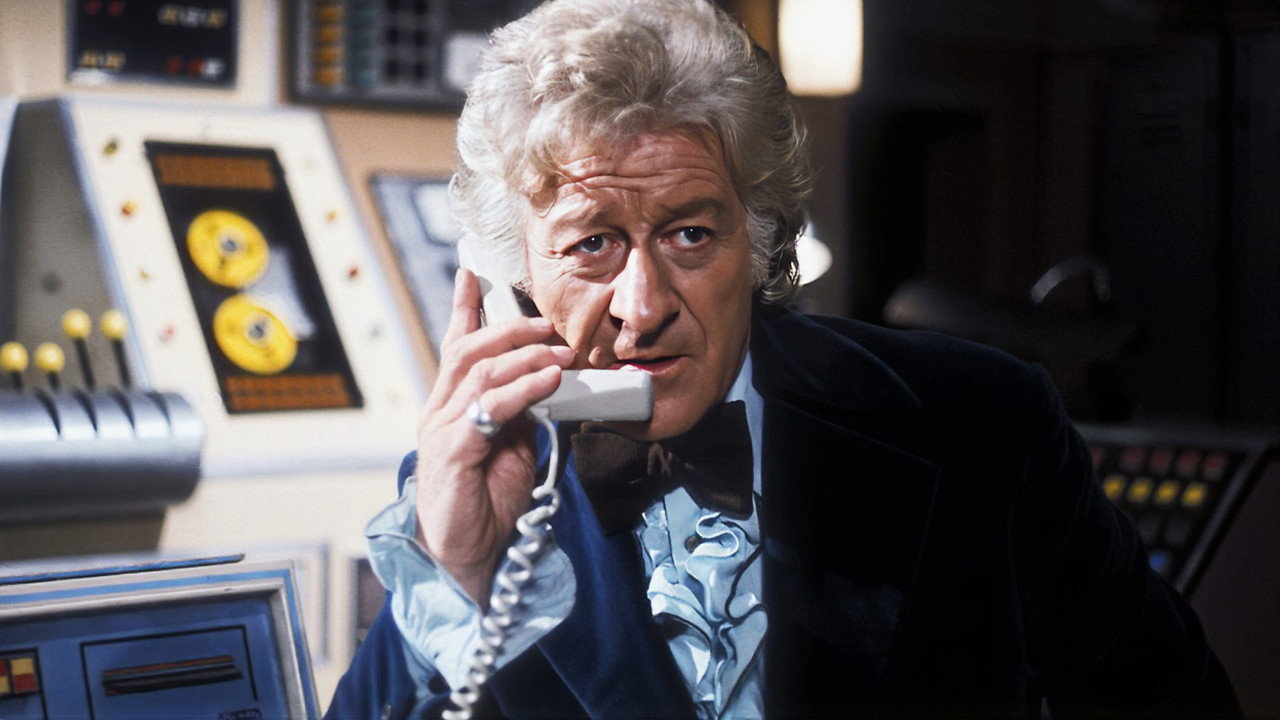
The story in 5 beats
- A city with no one in it
Back from the Middle Ages, the Doctor and Sarah land in a deserted London under martial law and are arrested as looters.
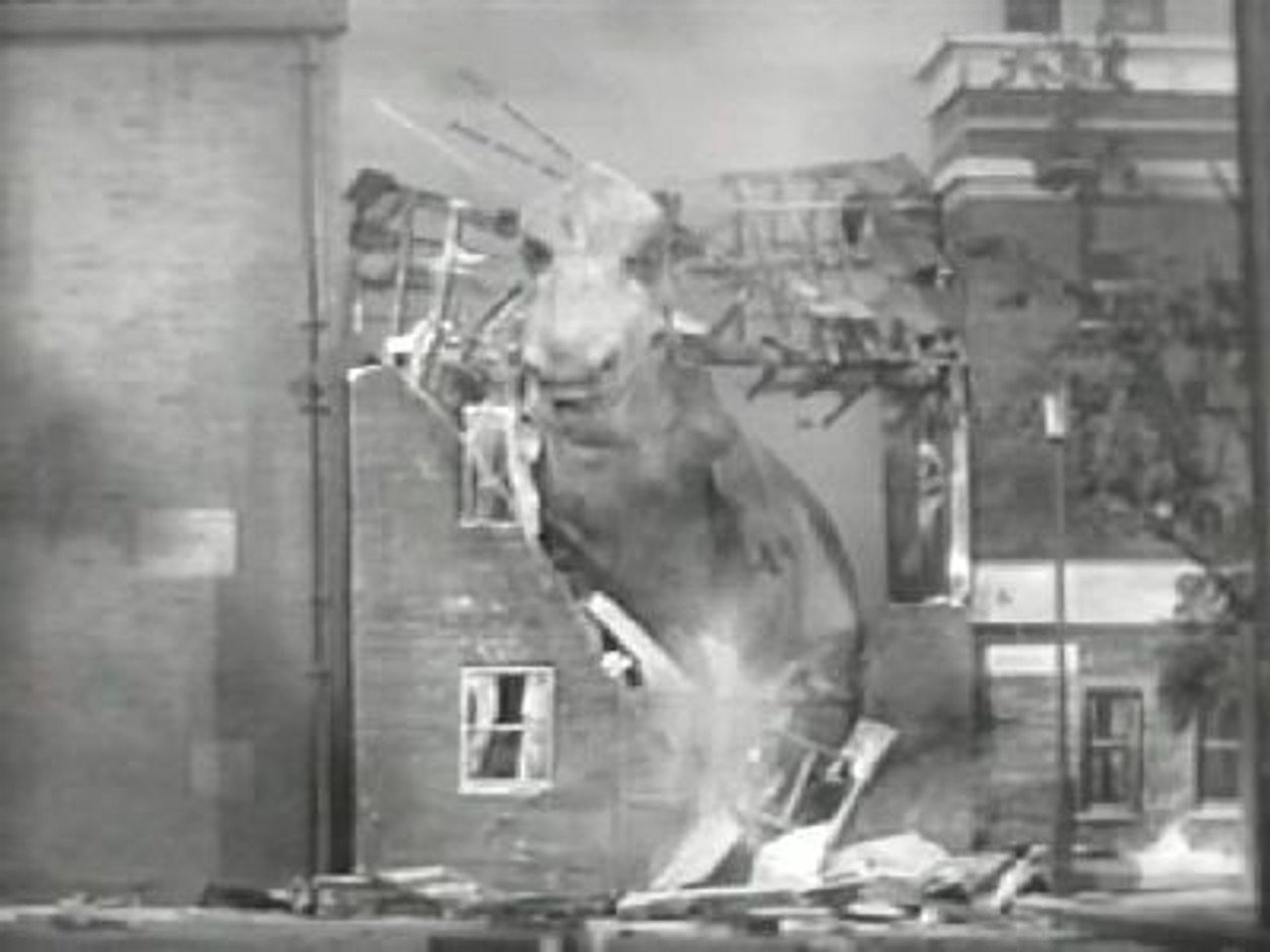
- Something big on the corner
The Brigadier gets them released and explains: dinosaurs have been appearing across the city, so London has been evacuated.
- Sarah goes digging
While the Doctor hunts the creatures, Sarah tracks down a scientist who was working on time travel, in a bunker under the Underground.
The enemy insideSpoiler · tap to reveal
The Doctor finds out who has been working the time machine, and that someone close to UNIT has been helping.
Operation Golden AgeSpoiler · tap to reveal
Sarah learns the truth about the spaceship she wakes up on, and the conspirators try to roll the whole world back in time.
Why it still matters
Everybody remembers the dinosaurs, and mostly for the wrong reasons. Producer Barry Letts said in 2004 that if he could remake one of his stories with modern effects it would be this one, "to get rid of those horrible lumping puppet things." Look past the puppets, though, and there's a sharp political thriller underneath. Malcolm Hulke was a writer known for avoiding simple villains and for not trusting generals, and here he asks what happens when people with power decide they know what's best for the planet and everyone on it.
The best thing in it is London itself. Paddy Russell, who in 1966 had become the first woman to direct Doctor Who, opens the story with long, quiet shots of a capital with nobody in it: Westminster Bridge, Whitehall, Trafalgar Square, Covent Garden. The Discontinuity Guide called the effects woeful and still singled out that "sombre location footage in the first episode" as the story's high point.
It is also Sarah Jane Smith's second story. Letts said she was deliberately made a feisty independent journalist, and here she does her own digging; SFX's Ian Berriman praised how competent she is and how much of the plot she drives. Part one drew 11 million viewers.
Back to a golden age
The dinosaurs are a side effect. Professor Whitaker's Timescoop can pull creatures out of the past, but its real purpose is to roll time back to a "golden age" before humanity spoiled the Earth, while a chosen few are shielded from the change. Behind it are Sir Charles Grover, the MP who ordered London evacuated, and General Finch, the officer running the city. Sarah wakes on what she's told is a spaceship carrying a hand-picked group to a new, unspoiled world. It's a fake, sitting in a bunker underground, and Grover means its passengers to be the people who restart civilisation once everyone else has been erased.
The real shock is Captain Mike Yates. A UNIT regular, he has been helping the conspirators, disillusioned with the world since the battle with the giant maggots in The Green Death. The Doctor overpowers him, Sergeant Benton knocks out Finch, and Sarah persuades the passengers that they've been lied to. The Doctor switches the Timescoop off and sabotages it, and when Grover tries to start it again, he and Whitaker are sent back into the past. Finch faces a court martial, and Yates is put on sick leave so he can resign quietly. As DVD Talk's John Sinnott put it, the villains basically had the right ideas and took them way too far.
Challenge the DNA
Is Operation Golden Age a crime or a dream?
Or skip ahead to our reading
A crime, dressed as a dream. The plotters want to save the planet by deciding who gets to live in it. Hulke's sympathy for their worries makes their solution look all the worse.
Behind the scenes
- Location filming in September 1973 used Westminster Bridge, Whitehall, Trafalgar Square, Haymarket, Covent Garden, Smithfield Market and Moorgate Underground station, plus Southall and Wimbledon Common. Studio recording followed in October and November.
- Working titles included Bridgehead from Space and Timescoop. Hulke wanted to keep Timescoop. Shortening part one's on-screen title to "Invasion" was meant to hide the dinosaurs, until Radio Times ran a dinosaur picture in the listing. Script editor Terrance Dicks later wrote that he regretted the change, adding that "Radio Times are a law unto themselves."
- Barry Letts was so unhappy with the dinosaurs that in a 2004 BBC interview he named this as the story he would most like to remake: "Just imagine what it would have looked like if we had had the resources of Walking with Dinosaurs!"
- Part one's colour master tape was wiped and only a black-and-white 16mm film print survives. Ian Levine, who returned it to the BBC in 1983, had held on to it for two years as a bargaining chip. The 2012 DVD offers a partial colour recovery as an extra: only the red and green colour information could be retrieved from the print, so the blue had to be approximated.
- The BBC actually ordered all six episodes wiped in August 1974. Only part one was. Parts two to six had come back from BBC Wales, which showed the season a day later than the rest of the country, and they sat unnoticed in the engineering department for years.
- BBC Choice repeated the story in 1999 as part of a run of programmes about dinosaurs.
The thread
Empty cities, prehistoric monsters loose in the present, and a government that isn't telling the whole truth.
Came before
Shares DNA with
DNA strand
Time Loops & Timelines
Someone in London has a machine that reaches into the past and drags things out of it, and the Doctor soon works out that a device like that could do far worse than fetch dinosaurs. Hulke uses time travel to ask who gets to decide what history should look like.
Every great sci-fi story is built from a handful of strands like this one. Each strand page explains how it works and traces it across shows, books and films.
If this one stayed with you
Where to go next, and why.
Watch · Doctor Who
"The Dalek Invasion of Earth"
The show's first empty London, from 1964. Watch the two together and see how differently the series imagined a deserted capital ten years apart.
Watch · Doctor Who
"Doctor Who and the Silurians"
Hulke's first go at prehistoric Earth meeting modern Britain, with the same refusal to make anyone a simple monster.
Watch · Twilight Zone S1
"Where Is Everybody?"
For the same feeling as this story's opening episode: walking through a place everyone seems to have just left.
Read · Novelisation
Doctor Who and the Dinosaur Invasion — Malcolm Hulke
Hulke's own 1976 adaptation, with a new prologue about the dinosaurs, and dinosaurs that look exactly as good as your imagination.
Read · Novel
The Lost World — Arthur Conan Doyle
Where the dream of dinosaurs surviving into the modern world starts, with a newspaperman doing the legwork, much as Sarah does here.
Your next episode
Three directions to go from here, all on Sci-Fi DNA.
More of this feeling
Doctor Who and the Silurians
Doctor Who
Another UNIT story where the threat goes deeper than it looks.

Same question, different answer
Nosedive
Black Mirror
A small group decides what a perfect world looks like for everyone else.

Something completely different
Death to the Daleks
Doctor Who
A planet that drains all power, and Daleks without their guns.