More from the episode
The story in 5 beats
- A skull out of time
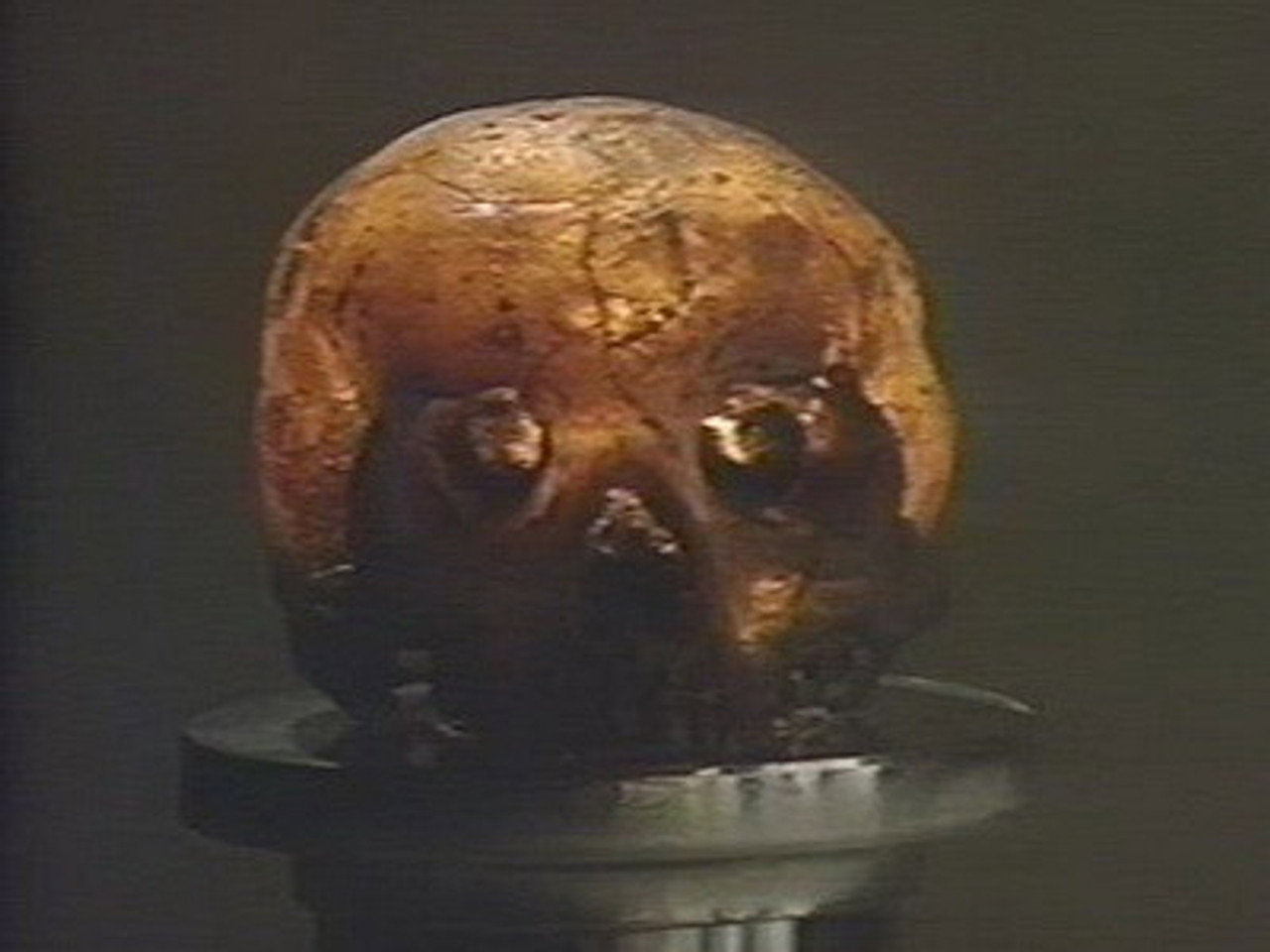
In a priory near the village of Fetchborough, Fendelman's team study a skull that should not exist. His time scanner makes it react, and a hiker in the grounds dies.
- Pulled off course
The scanner drags the TARDIS to Earth. The Doctor and Leela split up, and Leela finds the cottage of old Mrs Tyler, who has the sight.
- Something from Gallifrey's myths
The Doctor recognises the creature in the grounds as a Fendahleen, from a legend of his own people, and goes looking for where it came from.
Thea changesSpoiler · tap to reveal
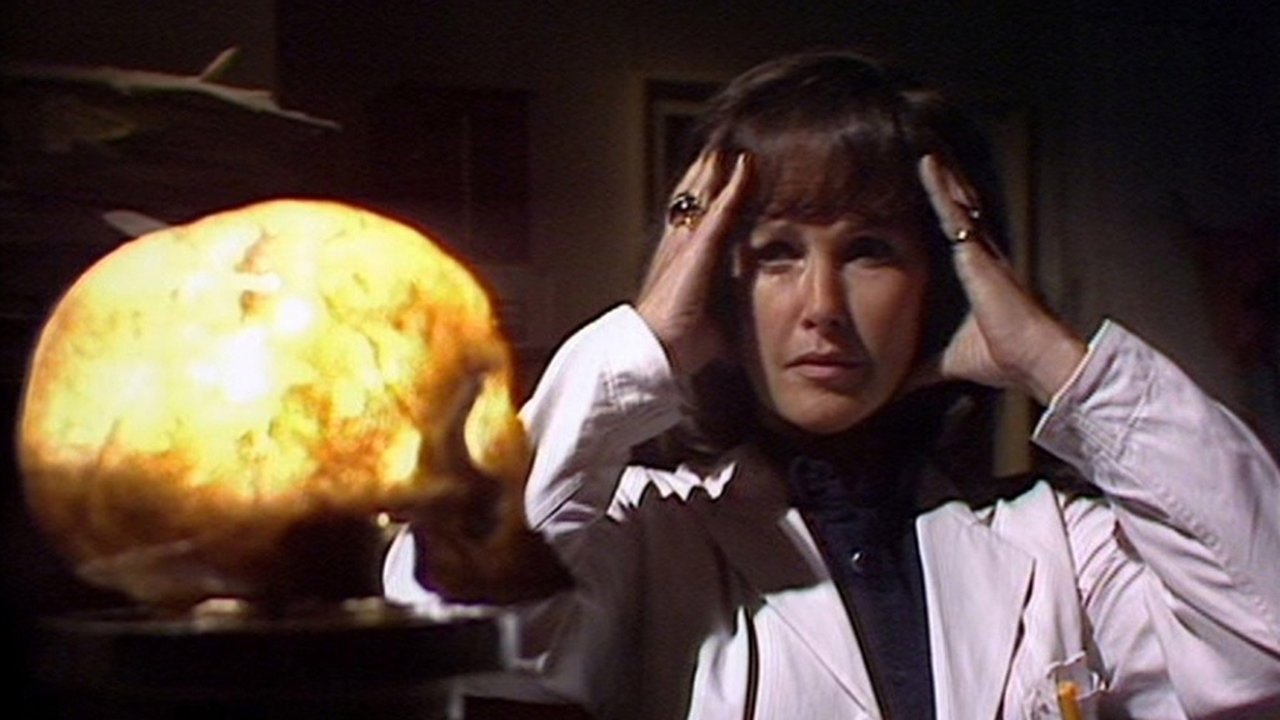
Stael's cult prepares Thea Ransome to become the core of the Fendahl, and Stael believes he can control what comes out of her.
Salt and an implosionSpoiler · tap to reveal
The Doctor finds the creatures' weakness and turns Fendelman's scanner against the Fendahl, getting everyone out just before the priory goes.
Why it still matters
Radio Times called it the story "often cited as the last gasp" of the horror style of earlier seasons, and the production history explains why. Philip Hinchcliffe had just handed the show to Graham Williams, and Robert Holmes, script editor through the Hinchcliffe years, was on his final assignment, with his successor Anthony Read trailing him. The BBC's Head of Serials, Graeme McDonald, read the scripts and objected to one scene; after this serial he had the horror toned down. The Discontinuity Guide later called it "one of the best stabs at outright horror in Doctor Who's history," and David J. Howe and Stephen James Walker called it "one of the last truly frightening Doctor Who stories."
Chris Boucher, who had created Leela, wrote it as his third and last script for the series. He drew on Hammer's 1967 film of Quatermass and the Pit and on Kurt Vonnegut's The Sirens of Titan: an alien skull, occult symbols, and the idea that something from outside nudged human evolution along and is still lying dormant in us. He also had the archaeologist Louis Leakey in mind, and named Colby's dog after him.
The pleasure of it is the setting. A priory at night, a team of scientists sealed in with their guards, and a village witch, Martha Tyler, played by Daphne Heard, whom Howe and Walker singled out as the person most responsible for the tension in the later episodes. Audiences came round to it as it went on: the ratings climbed every week, from 6.7 million to 9.1 million.
Twelve, minus two
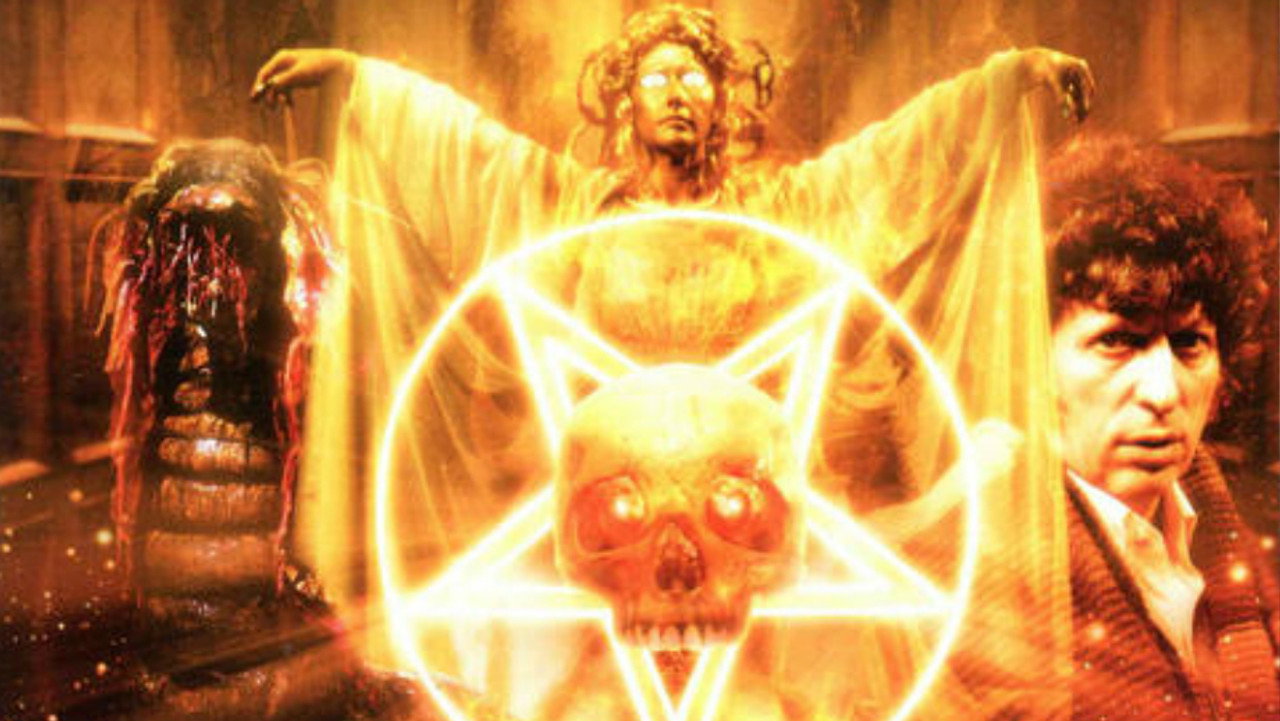
The skull has been working on Thea from the start, and on Fendelman too: his work, it turns out, was steered through his own family line toward bringing the Fendahl back. Stael's cult kills Fendelman, and Stael readies Thea for her final change, convinced he can master the creature. He can't. Thea becomes the Fendahl core and starts turning the cultists into Fendahleen to make up the circle of twelve it needs. Stael shoots himself. McDonald had objected to a shot of Stael raising the gun to his mouth, so Williams had the scene changed and the gunshot is only heard.
The Doctor kills one of the new Fendahleen and finds they are fatally allergic to salt. With the core two short of twelve, he rigs the scanner to implode, grabs the now dormant skull and gets everyone out just before the priory is destroyed. He plans to drop the skull near a supernova. Wanda Ventham had auditioned for Goldfinger and lost the part to Shirley Eaton, so she was excited to be painted gold here.
Challenge the DNA
Were the scientists victims or just reckless?
Or skip ahead to our reading
Both, and the story leans on that uncertainty. The skull had been steering Fendelman's work through his own family line, and the scientists were still curious enough to keep going. It's a horror story about curiosity that doesn't know when to stop.
Behind the scenes
- Chris Boucher was commissioned on May 2, 1977, delivered the first episode two days later and turned in the last on June 17. His influences were the 1967 film of Quatermass and the Pit and Kurt Vonnegut's 1959 novel The Sirens of Titan.
- At the read-through Tom Baker sent the script up, picking out every double entendre. Boucher was upset at the time and combed his scripts for them from then on. He never wrote for Doctor Who again, going straight on to script-edit Blake's 7.
- Producer Graham Williams chose director George Spenton-Foster for his experience with night filming. Exteriors were shot at Stargroves, Mick Jagger's house in Hampshire and already the setting of Pyramids of Mars, from August 1, 1977, with two night shoots. On the first night the generator caught fire, and a replacement from London arrived at 4am. Because the house was listed, no effects or explosions were allowed there.
- Two days after the location filming ended, Tom Baker and Louise Jameson went to the first ever Doctor Who convention, in London. Studio recording ran from August 20 to September 6, 1977.
- Wanda Ventham appeared in Doctor Who exactly ten years apart: The Faceless Ones in 1967, this in 1977 and Time and the Rani in 1987. Spenton-Foster had her wear a dark wig, thinking her natural blonde hair would make her less believable as a scientist.
- Denis Lill was the second choice for Fendelman, after Anthony Bate became unavailable. He and Ventham later played husband and wife in Only Fools and Horses.
- The Sun Makers, broadcast next, was recorded before this story. Part two scored 75 on the BBC's Audience Appreciation Index, a record for the show up to that point.
The thread
Ancient skulls, occult symbols with an alien explanation, and a cult that thinks it can hold a leash.
Came before
Shares DNA with
Left its mark on
DNA strand
First Contact & Invaders
The invasion here happened twelve million years ago, and nobody noticed. Boucher's idea is that first contact already took place and left something dormant in us, so the threat is less a landing than a homecoming.
Every great sci-fi story is built from a handful of strands like this one. Each strand page explains how it works and traces it across shows, books and films.
If this one stayed with you
Where to go next, and why.
Watch · Film
Quatermass and the Pit
The film Boucher drew on most. If the skull and the occult symbols here grab you, this is where they came from.
Watch · Doctor Who
"The Dæmons"
Six years earlier: the Pertwee team in another English village, with a cult beneath the church and an alien explanation for the Devil.
Watch · Doctor Who
"Pyramids of Mars"
Same house, same Doctor, two years earlier, and a high point of the gothic run this story brings to a close.
Read · Novel
The Sirens of Titan — Kurt Vonnegut
Boucher's other source: a comic novel in which all of human history turns out to be someone else's errand.
Your next episode
Three directions to go from here, all on Sci-Fi DNA.
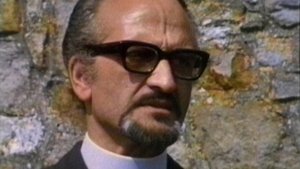
More of this feeling
The Dæmons
Doctor Who
Another English village, another ancient power under the ground.
Same question, different answer
The Architects of Fear
The Outer Limits
Scientists who think they're in control of what they've found.
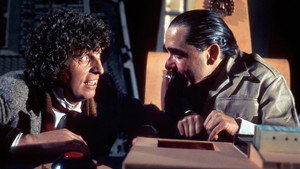
Something completely different
The Sun Makers
Doctor Who
A satire about tax, set on Pluto.