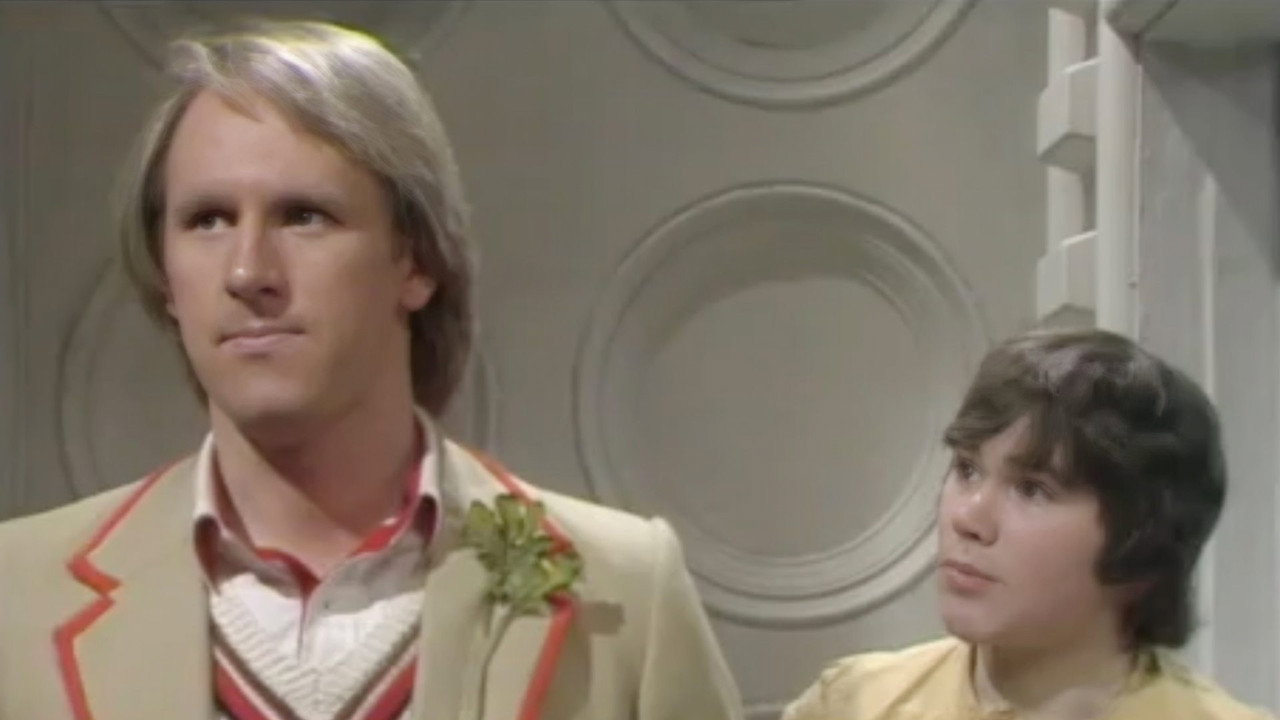
More from the episode
The story in 5 beats
- Bodies in the caves
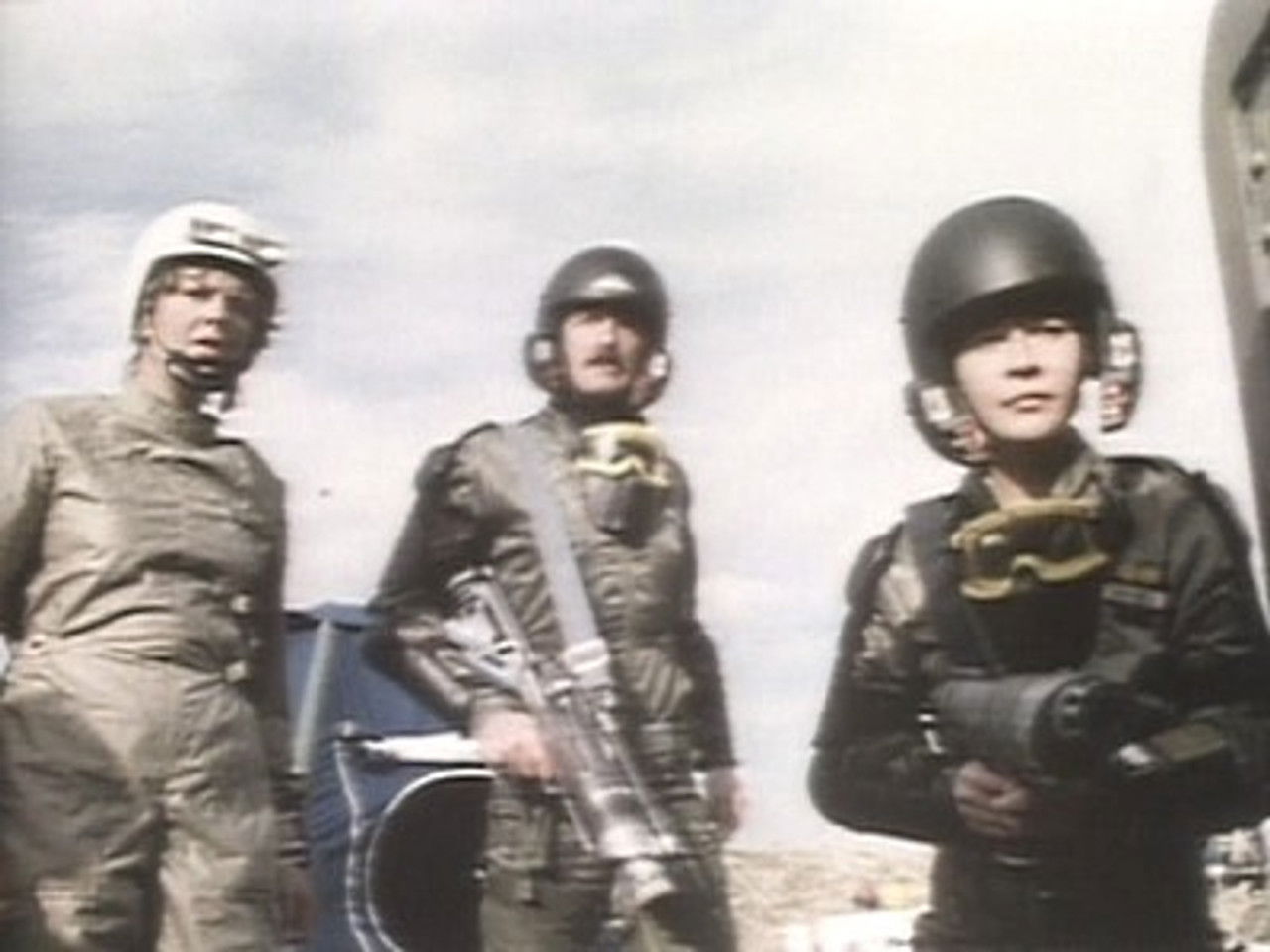
Lieutenant Scott's troopers and Professor Kyle are searching caves for her missing team. They find the Doctor, Adric, Nyssa and Tegan, and Kyle suspects them at once.
- Something in the hatch
Androids guard a hatch deep in the caves. Behind it is a bomb big enough to destroy the Earth, and the Doctor and Adric set about defusing it.
- The freighter
They trace the bomb's signal to a space freighter run by the brisk Captain Briggs. Its crew have problems of their own, and something is stowed away in the hold.
Collision courseSpoiler · tap to reveal
The Cybermen take the bridge and lock the freighter on a course for Earth. They march the Doctor off to the TARDIS, leaving Adric behind, and he sets to work on the lock.
The gold badgeSpoiler · tap to reveal
The Doctor beats the Cyber Leader with Adric's gold badge but can't get back to him. The freighter, already thrown 65 million years into the past, hits Earth with Adric aboard.
Why it still matters
Earthshock is the story people mean when they say the 1980s show could still land a punch. It's fast and loud, with short scenes and more gunfights than Doctor Who usually allowed itself, and producer John Nathan-Turner went to unusual lengths to keep its biggest surprise out of the papers before it aired.
The writer was Eric Saward, whose first commission, The Visitation, had aired a few weeks earlier and who had since taken over as the show's script editor. Peter Grimwade directed, and Part One is the stretch people remember best: a squad of soldiers picking their way through dark caves while something picks them off. The A.V. Club's Christopher Bahn called that episode "nicely tense and mysterious", and The Daily Telegraph later ranked the story 22nd of all Doctor Who stories, saying Davison's first season "was unremarkable until Earthshock descended with a mighty thud."
It isn't flawless, and its fans admit it. The Discontinuity Guide called it "great... for a first draft," and Den of Geek's Andrew Blair argued in 2019 that its success pushed the show into four years of trying to repeat the trick. That's part of why it matters. For better and worse, a lot of 1980s Doctor Who starts here.
The Cybermen, and a silent ending
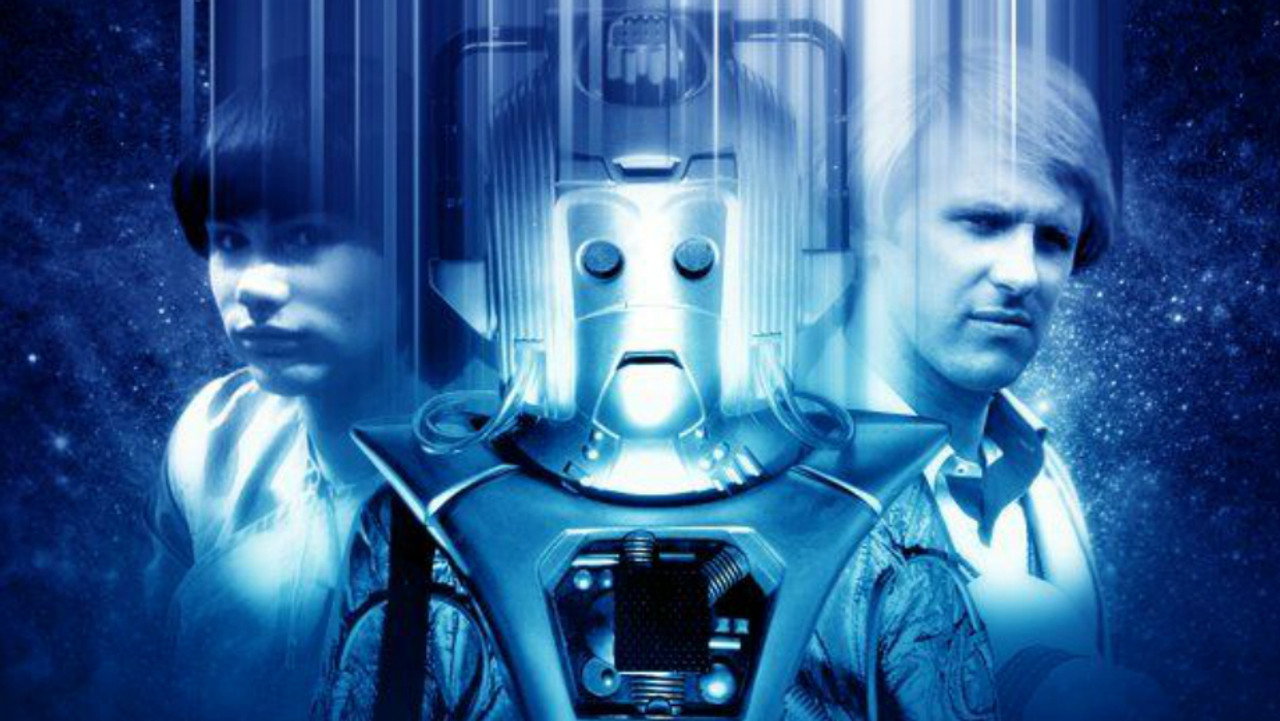
The first surprise is who has been watching: the Cybermen, back for the first time since Revenge of the Cybermen in 1975. John Nathan-Turner kept it secret. Saward was told to keep them out of the title, the studio observation galleries were closed during recording, and Nathan-Turner turned down a Radio Times offer to put them on its cover in advance. Costume designer Dinah Collin gave them RAF flight suits, with a reworked head by Richard Gregory of Imagineering that let you see the actor's jaw moving, and David Banks made the first of his four appearances as the Cyber Leader. A short montage, picked by continuity adviser Ian Levine, shows clips from The Tenth Planet, The Wheel in Space and Revenge of the Cybermen.
The second surprise is Adric. Left on the freighter to undo the Cybermen's lock, he's entering the last code when a dying Cyberman shoots the console. His first attempt has already thrown the ship back 65 million years, so its crash is the one that wipes out the dinosaurs. To mark it, the closing credits of Part Four ran in silence. In 2012 SFX ranked it third among the best companion departures, "a beautifully constructed death scene" for a character it admitted was "loathed by fandom".
Challenge the DNA
Did Adric have to die?
Or skip ahead to our reading
It worked, and it's why people remember the story. Few companions get an ending like that, and the silent credits make the point without a word. Whether Adric needed to be the one is a fair argument, and fans still have it.
Behind the scenes
- The working title was Sentinel.
- Earthshock was Peter Grimwade's last job as a director on Doctor Who. He wrote the very next story, Time-Flight.
- Season 19 moved Doctor Who off Saturdays to two episodes a week, mostly on Mondays and Tuesdays, so the four parts went out between March 8 and March 16, 1982. They drew 9.1, 8.8, 9.8 and 9.6 million viewers.
- Beryl Reid, who won a Tony Award for The Killing of Sister George in 1967, plays Captain Briggs.
- In a 2013 interview with BBC News, Peter Davison said he "loved Earthshock because Cybermen were my favourite monsters." His favourite of all was The Caves of Androzani.
- Ian Marter, who had played the companion Harry Sullivan in the 1970s, wrote the Target novelisation, published in 1983.
The thread
A squad of soldiers in the dark, a planet-sized threat, and a crew that's in over its head.
Came before
Shares DNA with
Left its mark on
DNA strand
Us vs. Them
Earth in 2526 is hosting a conference of planets about to sign a military pact against a common enemy, and somebody would rather it never met. Soldiers, a freighter crew and four travellers end up holding the line together, and the story is about how much that costs.
Every great sci-fi story is built from a handful of strands like this one. Each strand page explains how it works and traces it across shows, books and films.
If this one stayed with you
Where to go next, and why.
Watch · Doctor Who
"The Caves of Androzani" (1984)
Peter Davison's favourite of his own stories, and another tense, grown-up one with soldiers fighting it out in caves.
Watch · Film
Aliens (1986)
If Part One's soldiers in the dark is what grabbed you, this is that feeling for two hours.
Watch · Star Trek S2
"The Doomsday Machine"
Another planet-killer, and another crew working against the clock to stop it.
Read · Novelisation
Doctor Who: Earthshock — Ian Marter
The Target book, written by the actor who played Harry Sullivan. Davison later read it for an unabridged audiobook.
Your next episode
Three directions to go from here, all on Sci-Fi DNA.

More of this feeling
The Moonbase
Doctor Who
A base under siege, a small crew and something trying to get in.
Same question, different answer
The Measure of a Man
Star Trek: The Next Generation
What makes someone worth saving?
Something completely different
Time-Flight
Doctor Who
A Concorde, a missing flight and Heathrow Airport.