
The story in 5 beats
- The Moon, 2070
The TARDIS lands on the Moon and Jamie is hurt. Men from a nearby base carry him in, and the travellers learn the base runs the Gravitron, which controls Earth's weather.
- Space plague
Crew members are collapsing from an illness nobody can name, and some vanish from the sickbay. The base is quarantined and the Doctor starts investigating.
- The Phantom Piper
A feverish Jamie rants about the Phantom Piper, who comes for a McCrimmon before death. Polly sees a figure leave the sickbay, and knows it: a Cyberman.
In the sugarSpoiler · tap to reveal
The Doctor finds the illness is spread through the sugar, and a Cyberman has been hiding among the patients. The Cybermen want the Gravitron, to use against Earth.
Turning the GravitronSpoiler · tap to reveal
Polly mixes solvents that eat into the Cybermen's chest units. As an army of them marches across the Moon, the Doctor turns the Gravitron on them.
Why it still matters
The Moonbase is where the Cybermen became a returning monster. They had appeared once, in The Tenth Planet a few months earlier, and producer Innes Lloyd hoped they could take over from the Daleks as the show's regular foe. This story tested the idea, and it worked: Episode 2 drew 8.9 million viewers, the most in over a year, and the day before the last episode aired, script editor Gerry Davis commissioned Kit Pedler to write what became The Tomb of the Cybermen.
It also gave the Cybermen the look they kept. The cumbersome suits of their first story were replaced by a sleeker, more robotic design, partly so actors would stop fainting inside them, and their voices went electronic to match. The story itself is built for a small budget: Davis asked for one big set, so nearly everything happens inside the base, a crew of scientists sealed in with a quarantine and a killer they can't see.
Critics still argue about it. The Discontinuity Guide found it "illogical and boring", while Patrick Mulkern in Radio Times praised the atmosphere and scripts that "impart dollops of science without jarring". Even the doubters tend to remember the end of Episode 3, which Charlie Jane Anders at io9 listed in 2010 among the greatest cliffhangers the show ever did.
The Polly cocktail
The plague was the Cybermen's doing: they poisoned the base's sugar, and one of them lay among the sick waiting. Polly's answer comes from knowing that nail varnish remover is a solvent and that the Cybermen's chest units are partly plastic. She mixes every solvent in the sickbay, the crew load it into fire extinguishers, and the Cybermen inside the base go down. Then she makes some tea.
Outside, the Cyber army sets up a laser cannon, whose beam is deflected by the Gravitron's field. With Hobson's help, the Doctor angles the Gravitron at the lunar surface and flings the Cybermen and their ships off into space. The travellers slip away, and back in the TARDIS the Doctor tries his time scanner, which shows a giant claw: a preview of the next story, The Macra Terror.
Challenge the DNA
Was it fair that Polly, not the Doctor, worked out how to stop the Cybermen?
Or skip ahead to our reading
Fair and overdue. Polly's nail varnish chemistry is the kind of practical thinking the Doctor usually gets credit for, and the story gives it to her without fuss. That's a good sign for a show still working out what its companions are for.
Behind the scenes
- Innes Lloyd began talking to Kit Pedler about bringing the Cybermen back while The Tenth Planet was still on air. The story was commissioned on November 18, 1966, as Dr Who and the Return of the Cybermen. Gerry Davis helped Pedler shape the scripts, but BBC policy at the time meant he couldn't be credited.
- Davis asked for a story built around one large set to keep costs down, and Pedler took his inspiration from the Space Race.
- The Cybermen were completely redesigned to look more robotic, partly because actors had fainted in the heavy suits of The Tenth Planet. Eleven costumes were made. Peter Hawkins voiced them through a device fitted to a dental plate, whose vibration gave him nausea and headaches.
- Director Morris Barry wanted Patrick Troughton to play the Doctor less like a clown. His baggy trousers were taken in, and on a BBC drama executive's advice the Doctor lost his hat.
- The Cybermen's laser cannon was the first use of optical effects in Doctor Who, with the cannon and its beam filmed separately and combined. The story was the last to use the original title sequence, in use since the very first episode in 1963.
- John Levene is inside one of the Cyberman costumes in Episodes 3 and 4, years before he played Sergeant Benton. Victor Pemberton, one of the scientists, later wrote Fury from the Deep, and assistant floor manager Lovett Bickford went on to direct The Leisure Hive.
- Episodes 1 and 3 are missing from the BBC archive; 2 and 4 survive as film copies. A 2014 DVD filled the gaps with animation by Planet 55 Studios, and the story, animated episodes included, arrived on BBC iPlayer on November 1, 2023.
The thread
A base cut off from home, a sickness in the sickbay, and the monster that keeps coming back.
Came before
Shares DNA with
Left its mark on
DNA strand
First Contact & Invaders
The invaders here don't land with a fanfare. The first sign of them is a sickness among the crew, and the base is under quarantine long before anyone gets a clear look at one. It's an invasion story told as a quarantine story, which is why the march across the lunar surface in Episode 3 lands so hard.
Every great sci-fi story is built from a handful of strands like this one. Each strand page explains how it works and traces it across shows, books and films.
If this one stayed with you
Where to go next, and why.
Watch · Doctor Who
"The Tenth Planet" (1966)
The Cybermen's first story, in their original form. Watch it first to see what this one redesigned.
Watch · Doctor Who
"The Tomb of the Cybermen" (1967)
The third Cyberman story, written by Pedler and Davis on the strength of this one.
Watch · Star Trek S1
"The Devil in the Dark"
Another remote outpost picked off one worker at a time, from the same spring of 1967.
Watch · Film
The Thing from Another World (1951)
The besieged-base story in its classic form: scientists, a cold remote outpost and an enemy that wants in.
Read · Novelisation
Doctor Who and the Cybermen — Gerry Davis
Davis, who helped write the scripts without credit, novelised the story for Target Books in 1975.
Your next episode
Three directions to go from here, all on Sci-Fi DNA.
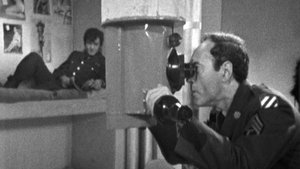
More of this feeling
The Tenth Planet
Doctor Who
The Cybermen's first story, and the base under siege it set up.
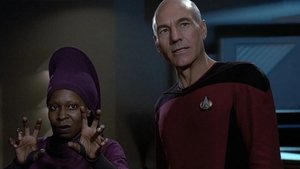
Same question, different answer
Q Who
Star Trek: The Next Generation
An enemy that doesn't hate you. It just wants you to become part of it.
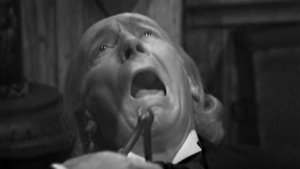
Something completely different
The Gunfighters
Doctor Who
From the Moon to Tombstone, Arizona, and a comedy with a ballad.