More from the film


Who this is for
You've finished 12 Monkeys and want the mystery laid out: who the Army was, what the mission actually was, and how the opening dream fits the ending.
What it covers
- What the scientists in 2035 were really after
- Who released the virus, and who didn't
- How the opening dream and the final scene connect
- Whether anything could have been changed
Spoiler boundary
The whole film, including the ending. Mentions the short film La Jetée (1962), which it is based on, including its ending.
Show the full explanationHide the explanationContains spoilers: The whole film, including the ending.
How to read the labels
- Confirmed in the work
- Shown or stated on screen or on the page.
- Creator explanation
- What a writer or director has said outside the work.
- From another version
- From the book, story or cut it's based on, not the version we're explaining.
- Strong inference
- Not stated outright, but the evidence points one way.
- Interpretation
- A reading of what it means. Reasonable people differ.
- Fan theory
- A popular idea the work doesn't confirm.
- Unresolved
- The work doesn't answer this.
The short answer
The Army of the 12 Monkeys didn't cause the plague. It was Jeffrey Goines's animal rights group, and its big act was freeing the animals from the Philadelphia zoo. The virus came from Dr. Peters, an assistant at Jeffrey's father's virus lab, who boards a plane at the end to carry it around the world.
Cole is shot dead at the airport trying to stop him, in front of a small boy who is Cole himself as a child. That's the dream he's had all his life. On the plane, Peters sits next to Jones, one of the scientists from 2035, who says she's in insurance. The past isn't changed. The future gets what it came for: a way to find the original virus.
What the mission actually was
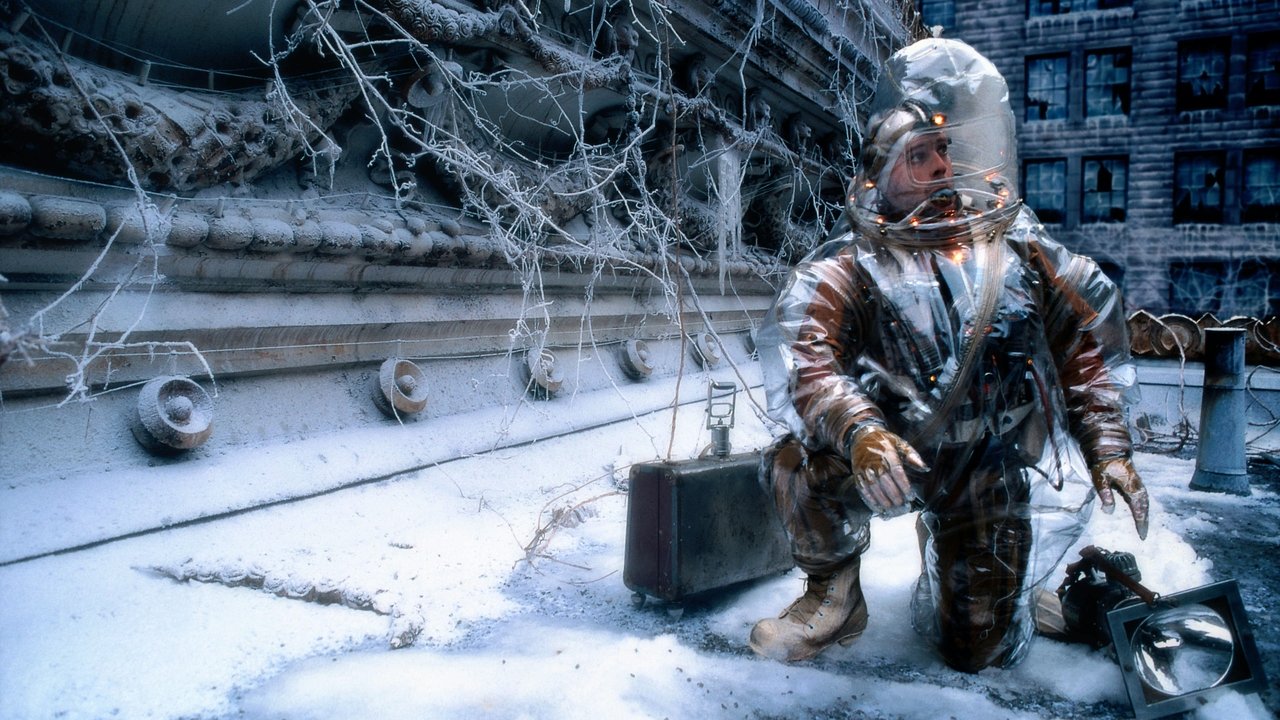
Confirmed in the work In 2035, the survivors of a virus that killed nearly everyone live underground beneath Philadelphia. Scientists send the prisoner James Cole back to gather information about the original strain of the virus.[1]
Strong inference Their goal is a pure sample of the virus to study, so they can find a cure in their own time. Nobody in 2035 talks about stopping the plague. Cole is there to gather information.[2]
Confirmed in the work The machine is imprecise. Cole's first trip lands him in Baltimore in 1990 instead of 1996, and he's committed to a psychiatric hospital, where he meets Jeffrey Goines and the psychiatrist Kathryn Railly.[1]
The Army of the 12 Monkeys
Confirmed in the work The Army is the film's red herring. It is an animal rights group led by Jeffrey, and the "we did it" message the future has been chasing refers to freeing animals from the Philadelphia Zoo, not to the plague.[1]
Confirmed in the work Railly recognises Dr. Peters at the airport from a newspaper photo of Jeffrey's father's lab. Peters is about to fly to a list of cities that matches the order in which the outbreak spread.[1]
The airport
Confirmed in the work The shooting. Cole runs at Peters with a gun and is shot by police. He dies in Railly's arms. A young boy who sees it all is the film's young Cole, which is why the scene has haunted his dreams since childhood.[1]
Confirmed in the work The plane. Peters takes his seat next to Jones, one of the scientists who sent Cole. She introduces herself and says she is in insurance.[2]
Interpretation What "insurance" means. The most common reading is that the future has a back-up plan. Cole failed, as he was always going to, so Jones is there to secure what the scientists wanted: the virus, at its source.[2]
Fan theory Another reading. Some viewers argue that the woman on the plane is just a passenger who happens to sell insurance, and that Cole's whole story is a delusion. The film keeps both possibilities open until late, but the ending is usually read as the time travel being real.
Could anything have changed?
Interpretation The film treats the past as fixed. Everything Cole does in 1996 was always part of 1996, including his own death and the memory it leaves in a child. The critic James Berardinelli put it as Cole observing the past to build a better future, rather than changing it.[1]
Creator explanation Terry Gilliam described Cole as someone from another world confronting a confused society, and asked whether he is mad or we are. He also called the film very much about the twentieth century's flood of information.[1]
Unresolved Whether Jones takes the virus back, and whether a cure ever comes. The film stops on the plane taking off, watched by a boy who will grow up to be sent back.
Behind the scenes
- From another versionIt's based on Chris Marker's 1962 short La Jetée, a story told almost entirely in still photographs that ends at an airport with a man watching his own death.[1]
- Confirmed in the workCole and Railly hide in a cinema showing Hitchcock films, and Railly puts on a blonde wig the way Judy does in Vertigo. A conversation in Muir Woods echoes that film too.[1]
- Confirmed in the workBrad Pitt was nominated for the Academy Award for Best Supporting Actor and won the Golden Globe.[1]
- Confirmed in the workThe making of the film is covered in the documentary The Hamster Factor and Other Tales of Twelve Monkeys.[1]
- Confirmed in the workA Syfy TV series based on the film began in 2015 and ran for four seasons.[1]
The Question Underneath
If you can't change what's already happened, what is the point of going back?
The scientists never expect Cole to save anyone in 1996. They want information that might help them in 2035. Cole, who is treated as a madman in both times, slowly wants something different: to stay, to be with Railly, to have the past turn out otherwise. The film is about the gap between those two hopes, and it doesn't pretend the second one wins.
Connections that give things away
- Similar story mechanismTimecrimes (2007) Help Me Understand
Another time-travel story where everything the hero does turns out to have been part of what already happened.
Where to go next
More of this feeling
Help Me Understand
Another time-travel story where the hero's attempts to fix things keep tangling him in deeper.
Same question, different answer
The City on the Edge of Forever
Star Trek · S1 E28
A trip into the past where the hardest thing is knowing what has to stay the same.
Something completely different
Help Me Understand
A very different film about knowing the future, told with calm instead of chaos.
How it connects
- Adapted fromLa Jetée (1962) Film · Chris Marker
Chris Marker's short is the basis for the film. Universal bought the remake rights. Source
Sources
- 12 Monkeys · Wikipedia · accessed 2026-11-20
- 12 Monkeys time travel ending explained · Collider · accessed 2026-11-20
Plot summaries are in our own words. Labels mark what the work shows, what its makers have said, and what is our reading. Last reviewed 2026-11-20. Spot an error? Tell us.