More from the film


Who this is for
You've finished Primer, possibly twice, and you want someone to lay out how the box works and which version of which character is doing what by the end.
What it covers
- How the box works, in plain words
- The friendship, and where it breaks
- The order of the last act
- What the film never settles
Spoiler boundary
The whole film, including the last scenes. Mentions Shane Carruth's next film, Upstream Color (2013), by title only.
Show the full explanationHide the explanationContains spoilers: The whole film, including the last scenes.
How to read the labels
- Confirmed in the work
- Shown or stated on screen or on the page.
- Creator explanation
- What a writer or director has said outside the work.
- Strong inference
- Not stated outright, but the evidence points one way.
- Interpretation
- A reading of what it means. Reasonable people differ.
- Unresolved
- The work doesn't answer this.
The short answer
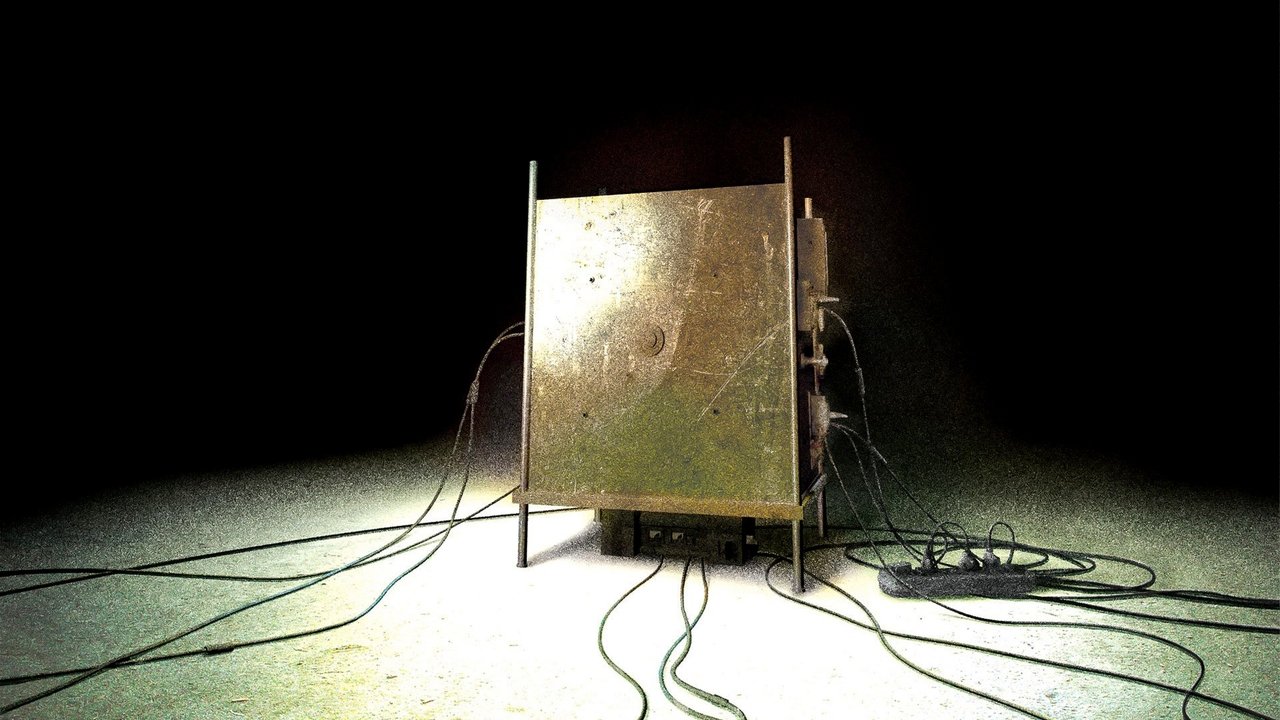
The box lets you go back exactly as far as you're willing to sit inside it. Switch it on at 9 a.m., come back at 3 p.m., climb in and wait six hours, and you step out at 9 a.m. while an earlier you is still out in the world. Abe and Aaron use it to make money on the stock market, and it works.
Then the cautious one and the impulsive one stop trusting each other. Abe uses a second box, one he'd left running from before the experiment, to go back four days and stop the whole thing from starting. Aaron had found that box too, got there first, and has been living the same days more than once. By the end several versions of Aaron are in circulation, the two friends part, and Abe stays behind to sabotage the original experiment while Aaron looks for somewhere new to use what he knows.
How the box works
Creator explanation The box doesn't jump you to a moment. You have to earn the trip: Carruth's own description is that you spend six hours in the machine to go back six hours.[2]
Strong inference You can't go back further than the moment the box was switched on. That's why Abe tests it from a hotel room, cut off from everything: the version of him who went first has to do exactly what he did, without being disturbed.
Confirmed in the work Repeated trips cost them. Their days stretch to something like 36 hours, their ears bleed, and later their handwriting gets worse.[1]
Confirmed in the work A box can be folded up and carried inside another box. That's the detail the whole last act turns on: if you take a box back with you, you can set up a new starting point nobody else knows about.[1]
Creator explanation Carruth says the paradoxes are complicated on purpose, and the technical information is on screen for anyone who wants to work the mechanics out.[2]
What actually happens
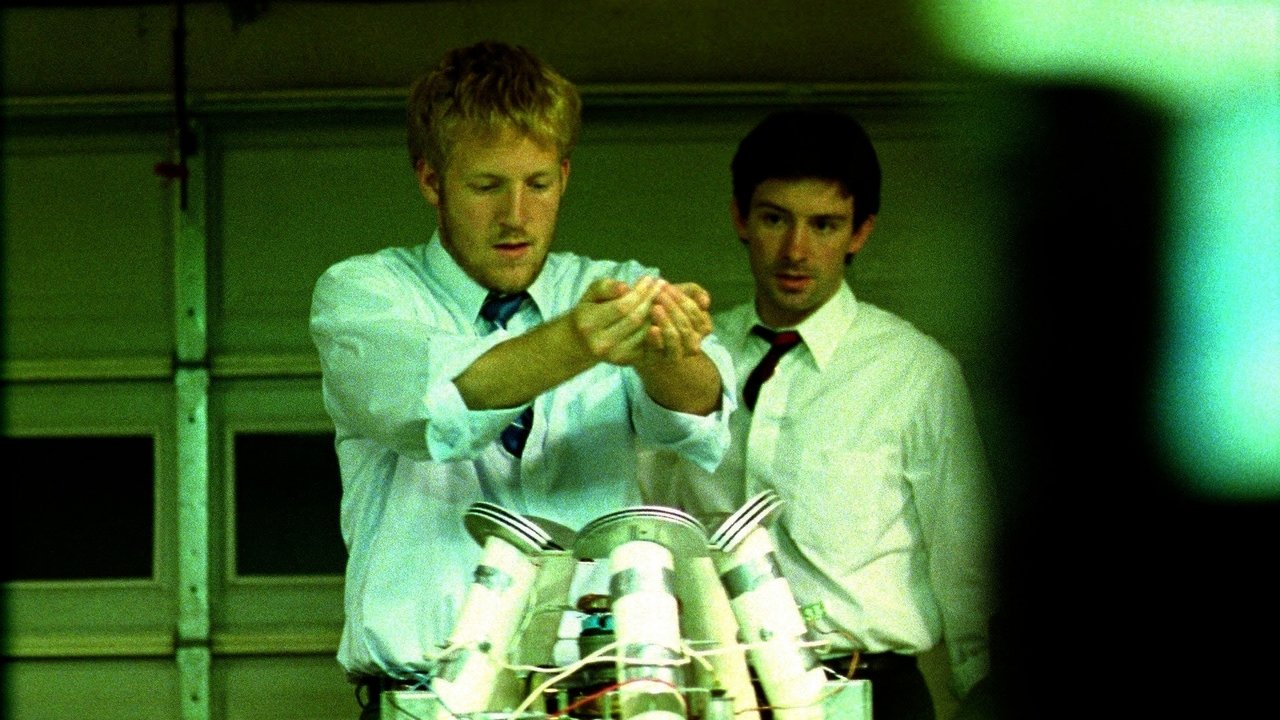
Confirmed in the work The discovery. Aaron and Abe, engineers who build error-checking hardware on the side, notice that things left in a weight-reducing field they've built behave strangely in time. Abe builds a box big enough for a person and tests it on himself.[1]
Confirmed in the work The money. With a day's foreknowledge they make safe trades. Abe stays careful, and Aaron wants more.[1]
Confirmed in the work Granger. Late one night they run into Thomas Granger, the father of Abe's girlfriend Rachel, looking unshaven and out of place while his ordinary self is at home. When Aaron goes after him, Granger falls into a coma. Aaron's theory is that Granger will use a box at some point in the future.[1]
Confirmed in the work The failsafe. Abe decides it's too dangerous and uses his second box, the one that's been running the whole time, to go back four days. He sedates his earlier self and goes to meet Aaron, and finds a later Aaron already waiting. That Aaron had found the failsafe in the original run, carried a folded box back, set up a starting point of his own and drugged his own earlier self. Abe faints when he hears it.[1]
Confirmed in the work The party. Aaron had also been recording every conversation of those days through a hidden earpiece, so he could replay them. The two go back together to a party where a gunman nearly kills Rachel. After many attempts Aaron stops him and becomes a local hero.[1]
Confirmed in the work The split. Abe tells Aaron to leave and never come back, and stays to sabotage the original experiment. Aaron talks about going somewhere he can use what he knows. In one scene an Aaron is directing French-speaking workers building a box the size of a warehouse.[1]
Who's who by the end
Most of the confusion in the last half hour is about which Aaron and which Abe you're looking at.
- Confirmed in the workThe narration that runs through the film is a phone call: a later Aaron explaining what he knows to the original Aaron.[1]
- Confirmed in the workThe later Abe spends the end of the film watching the original Abe and the original Aaron, trying to keep them from learning what's coming.[1]
- Strong inferenceThe exact number of Aarons is never stated. The film shows at least the original, the one who drugged him, and the one making the phone call, and it is happy to leave you unsure whether those are all different people.
- UnresolvedWhich Aaron is building the big box abroad. The film shows the scene and doesn't say.
What the ending means
Confirmed in the work Mechanics. Abe stays to undo the beginning; at least one Aaron leaves to scale up. Nothing tells you whether Abe succeeds.
Creator explanation Carruth has described the friendship coming apart because the device raises the stakes, not because either man is bad. There's simply too much to trust someone else with.[2]
Interpretation Meaning. The last image of a much bigger box suggests the technology has gone somewhere with fewer people watching, carried by the partner who was always more willing to use it. Granger, the original Abe and the original Aaron all end up on the receiving end of that.
Creator explanation Carruth was also interested in how you can change someone's life without them ever knowing, which leaves them vulnerable without understanding why.[2]
What remains unanswered
- UnresolvedWhether Abe manages to stop the original experiment, and what happens to the versions of everyone if he does.
- UnresolvedWhy Granger was there, and who told him about the box.
- UnresolvedHow many times Aaron replayed the party, and how many Aarons that left behind.
- UnresolvedWhat the warehouse-sized box is for.
The Question Underneath
How far can you trust a friend once one of you knows something the other doesn't?
Carruth has said he started with trust rather than science: how much a friendship can hold depends on what you stand to lose if it breaks. Abe and Aaron are not villains. The box raises the stakes until neither of them can afford to tell the other everything, and by the end each is managing the other in secret. They part without either one telling the whole truth.
Where to go next
More of this feeling
Help Me Understand
One afternoon, one house and one machine that sends a man back an hour. Smaller, funnier and just as tightly built.
Same question, different answer
Black Mirror · S1 E3
A couple who can replay every moment of their lives, and what that does to trust.
Something completely different
Black Mirror · S3 E4
A love story set in a beach town in 1987, about as far from Primer's garage as this site gets.
How it connects
- Same creatorUpstream Color (2013) Film · Shane Carruth
Carruth's second film, which he again wrote, directed and starred in. It is just as unwilling to explain itself.
- Similar story mechanismTimecrimes (2007) Help Me Understand
Another machine that sends someone back a short way, and the trouble of sharing a day with an earlier self.
Sources
- Primer (film) · Wikipedia · accessed 2026-11-20
- Shane Carruth (interview) · The A.V. Club · accessed 2026-11-20
- Primer (review) · RogerEbert.com · accessed 2026-11-20
- Shane Carruth on making a movie for $7,000 · CityBeat · accessed 2026-11-20
Plot summaries are in our own words. Labels mark what the work shows, what its makers have said, and what is our reading. Last reviewed 2026-11-20. Spot an error? Tell us.