
More from the film

Who this is for
You've finished Interstellar and want the science, the timeline and the last act put in order.
What it covers
- Why time runs so differently near Gargantua
- What Professor Brand's plan really was
- What Cooper finds inside the black hole
- How the bookshelf, the watch and the ending fit together
Spoiler boundary
The whole film, including the ending. Mentions Arrival (2016) in the spoiler section, without spoiling it.
Show the full explanationHide the explanationContains spoilers: The whole film, including the ending.
How to read the labels
- Confirmed in the work
- Shown or stated on screen or on the page.
- Creator explanation
- What a writer or director has said outside the work.
- Interpretation
- A reading of what it means. Reasonable people differ.
The short answer
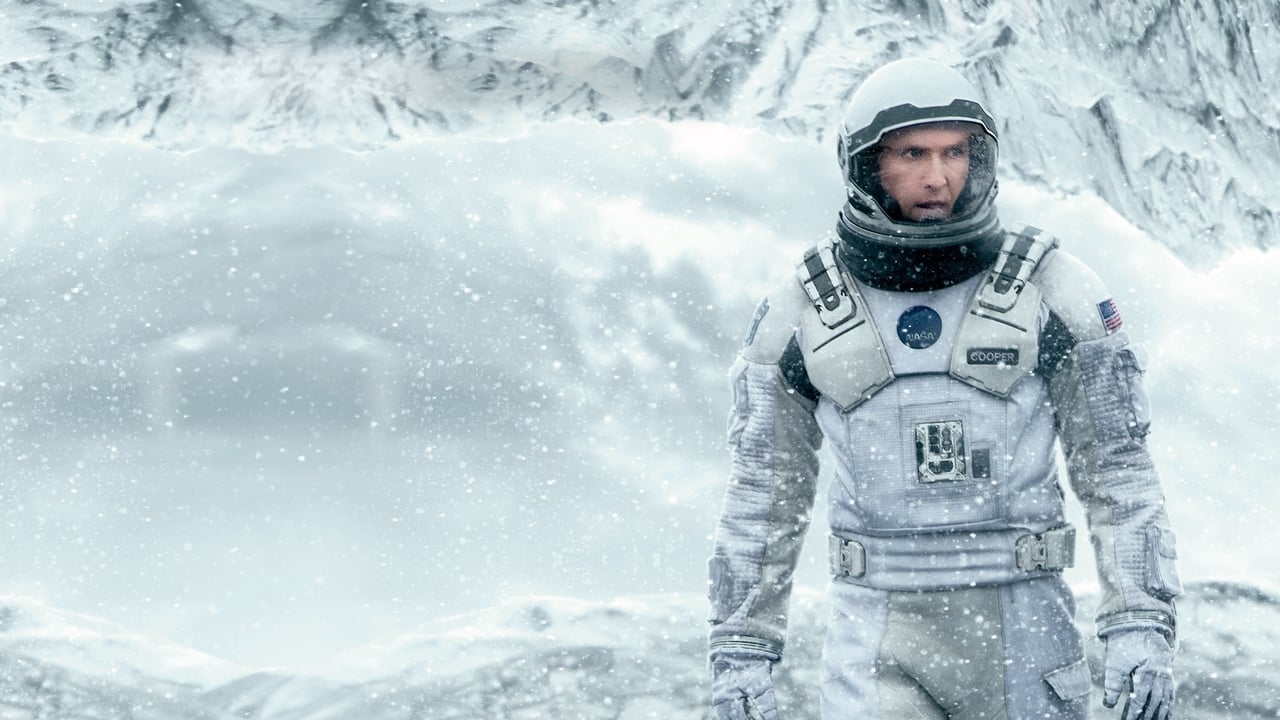
Earth is failing to blight and dust. Cooper finds a hidden NASA base by following coordinates that appeared in the dust in his daughter Murph's room. He leads a mission through a wormhole near Saturn to check three planets that earlier explorers reported on. Time runs very differently near the giant black hole Gargantua, so every stop costs years back home.
Professor Brand never expected the crew to return. Solving the gravity equation he needed to save people on Earth required data from inside a black hole. Cooper falls into Gargantua and finds himself in a tesseract, a space built by humans from the far future, where he can reach Murph's bedroom across time. He was the "ghost" behind the bookshelf all along. He passes the missing data to Murph through the second hand of the watch he gave her, and she solves the equation. Cooper wakes near Saturn, sees Murph once more as an old woman, and sets off to find Brand.
How time works near Gargantua
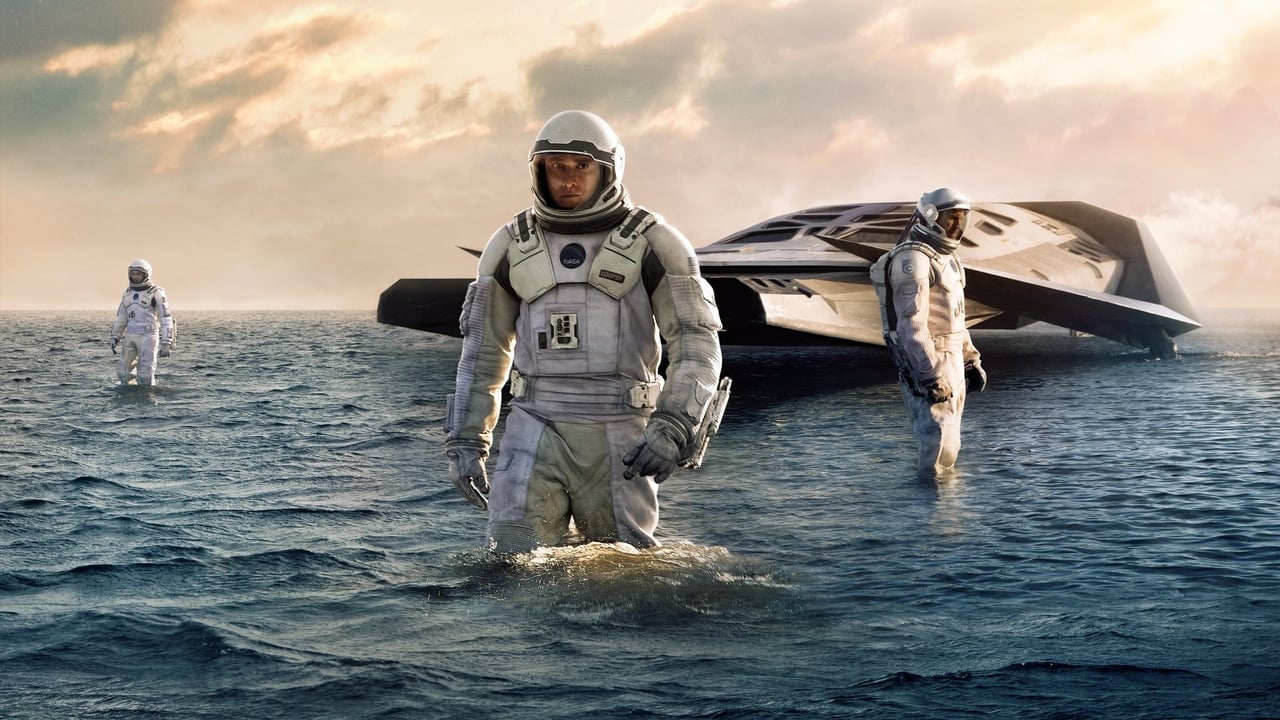
Confirmed in the work The wormhole near Saturn leads to a galaxy with twelve possibly habitable planets around a black hole called Gargantua. Earlier volunteers, the Lazarus missions, reported back on three of them: Miller's, Mann's and Edmunds'.[1]
Confirmed in the work Miller's planet orbits so close to Gargantua that, as Kip Thorne describes it, an hour there equals seven years back on Earth.[2]
Confirmed in the work When the crew leaves Miller's planet, 23 years have passed on the Endurance. Later, a slingshot around Gargantua costs the ship another 51 years.[1]
Creator explanation Thorne has said the hour-for-seven-years idea came from Nolan as a non-negotiable, and he had to work out how physics could allow it.[2]
Mann, and Brand's real plan
Confirmed in the work On Mann's planet, the crew find that Mann falsified his data to be rescued. He tries to kill Cooper, steals a lander and dies in a failed docking.[1]
Confirmed in the work On his deathbed, Professor Brand admits to Murph that the crew was never meant to return. A full solution to his gravity equation needed data from inside a black hole.[1]
Inside the black hole
Confirmed in the work To lighten the ship, Cooper and the robot TARS detach and fall into Gargantua. Inside, Cooper finds a tesseract built by advanced humans in the far future, and realises he was Murph's ghost.[1]
Confirmed in the work He uses Morse code and the second hand of Murph's watch to send her the data TARS collected, which lets her solve the equation.[1]
Confirmed in the work Cooper wakes near Saturn and meets an elderly Murph on her deathbed. She tells him to find Brand, who is starting a colony on Edmunds' planet, and he and TARS set off.[1]
Interpretation The loop. The film is circular: future humans make it possible for Cooper to send the message that lets humanity survive long enough to become those future humans. The film presents this as hopeful rather than paradoxical.
Behind the scenes
- Confirmed in the workThe idea came from producer Lynda Obst and physicist Kip Thorne. Steven Spielberg was attached first, before Nolan took over around 2012–2013.[1]
- Confirmed in the workThorne worked out the equations for how light bends around a black hole and through a wormhole. The effects company DNEG used them to render Gargantua, and Thorne later published three scientific papers from the work.[1]
- Confirmed in the workHans Zimmer's score is built around the 1926 organ at the Temple Church in London.[1]
- Confirmed in the workIt won the Academy Award for Best Visual Effects.[1]
The Question Underneath
What do you owe your children, and what do you owe everyone else's?
Cooper leaves to save humanity, which means leaving his own daughter, and every delay in space costs him years of her life. The film keeps weighing the survival of the species against one father keeping one promise, and in the end it finds a way for them to be the same thing.
Connections that give things away
- Similar themeArrival (2016) Help Me Understand
A parent, a message across time and a choice made knowing the cost.
Where to go next
More of this feeling
Help Me Understand
Another big, quiet science fiction film about a parent, a child and time.
Same question, different answer
Help Me Understand
Another lone worker in space, a long way from family, wondering what he's been told.
Something completely different
The Twilight Zone · S1 E1
Half an hour about isolation and what it does to the mind, from the very first Twilight Zone.
How it connects
- Same creatorInception (2010) Help Me Understand
Nolan's previous original film, also built on time running at different speeds.
Sources
- Interstellar (film) · Wikipedia · accessed 2026-11-20
- Parsing the Science of Interstellar with Physicist Kip Thorne · Scientific American · accessed 2026-11-20
Plot summaries are in our own words. Labels mark what the work shows, what its makers have said, and what is our reading. Last reviewed 2026-11-20. Spot an error? Tell us.