More from the episode

The story in 5 beats
- Lorton
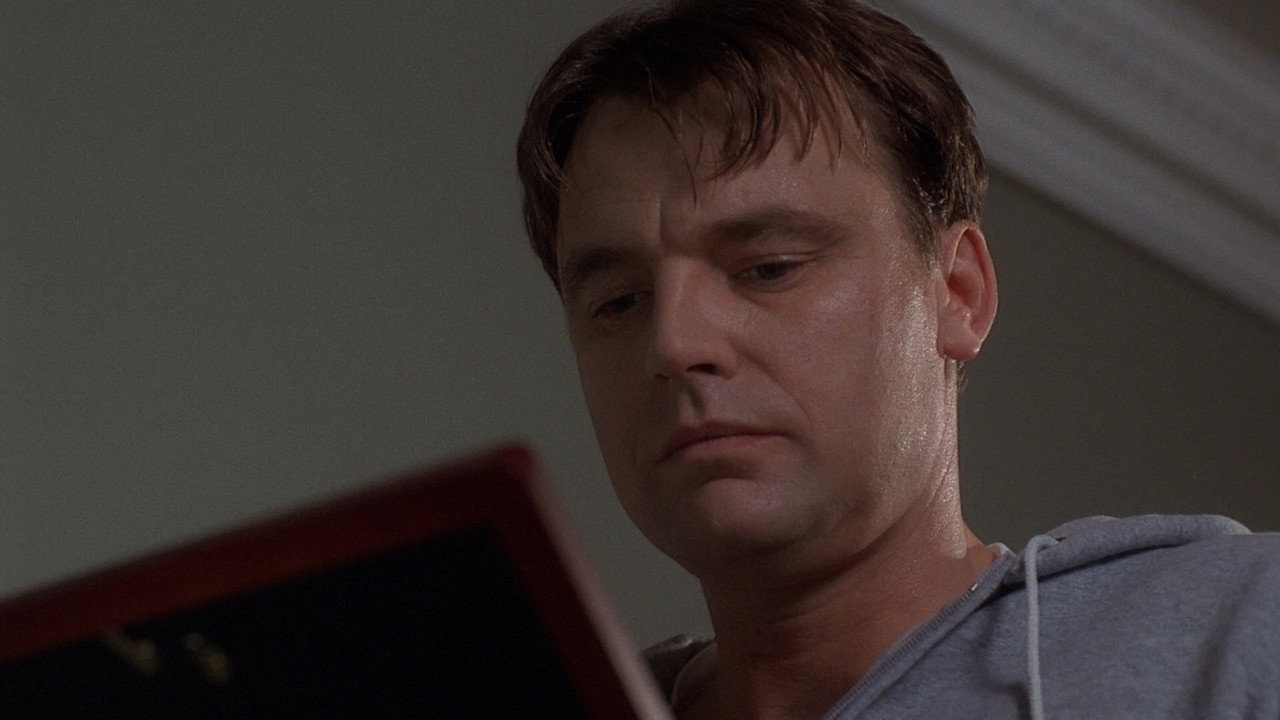
In Lorton, Virginia, Modell talks his way out of a prison hospital. While the agents are at the prison, he phones and asks for Mulder, who refuses to listen.
- Cerulean blue
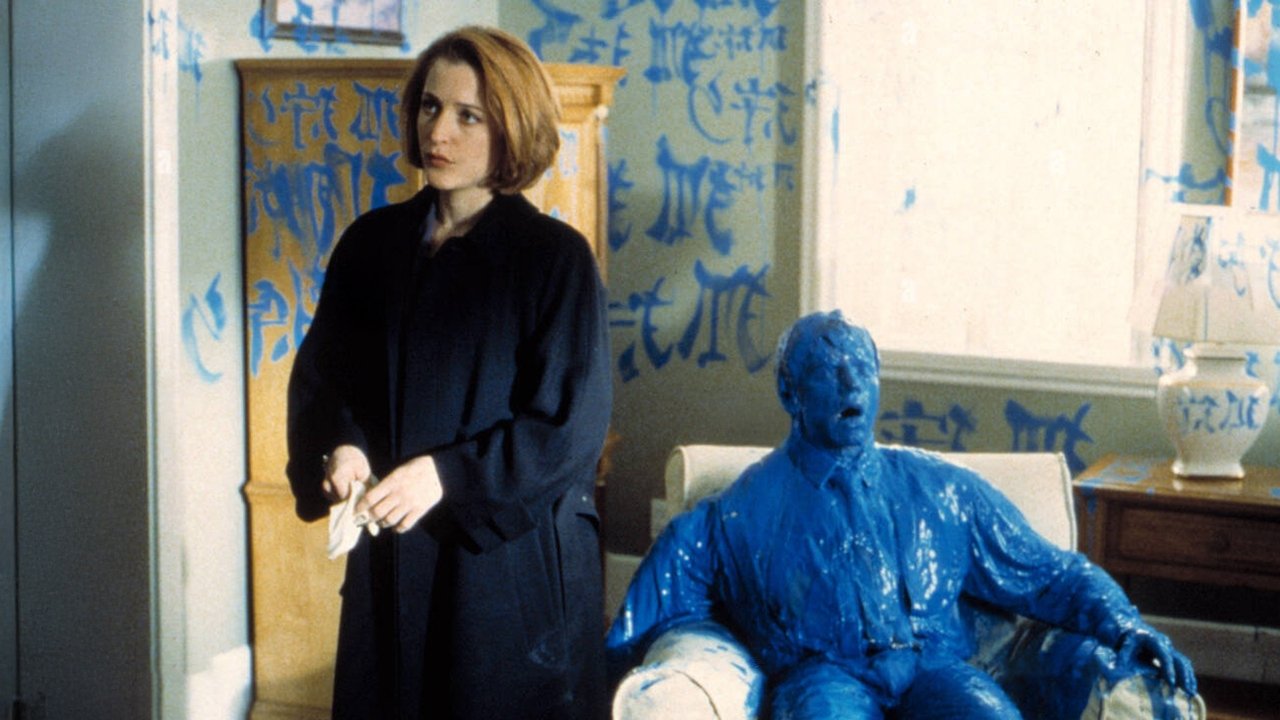
Nathan Bowman, the prosecutor at Modell's trial, is found dead and covered in cerulean blue paint. "Kitsunegari" is painted on the wall.
- The widow
A photo at the scene leads the agents to Bowman's wife, Linda, a realtor. Nearby, Mulder comes face to face with Modell, who wears him down until he listens.
The safe houseSpoiler · tap to reveal
Skinner breaks into a locked room at an FBI safe house, sees a gun in Modell's hand and shoots him. Modell's hand was only curled into the shape of one.
214 Channel AvenueSpoiler · tap to reveal
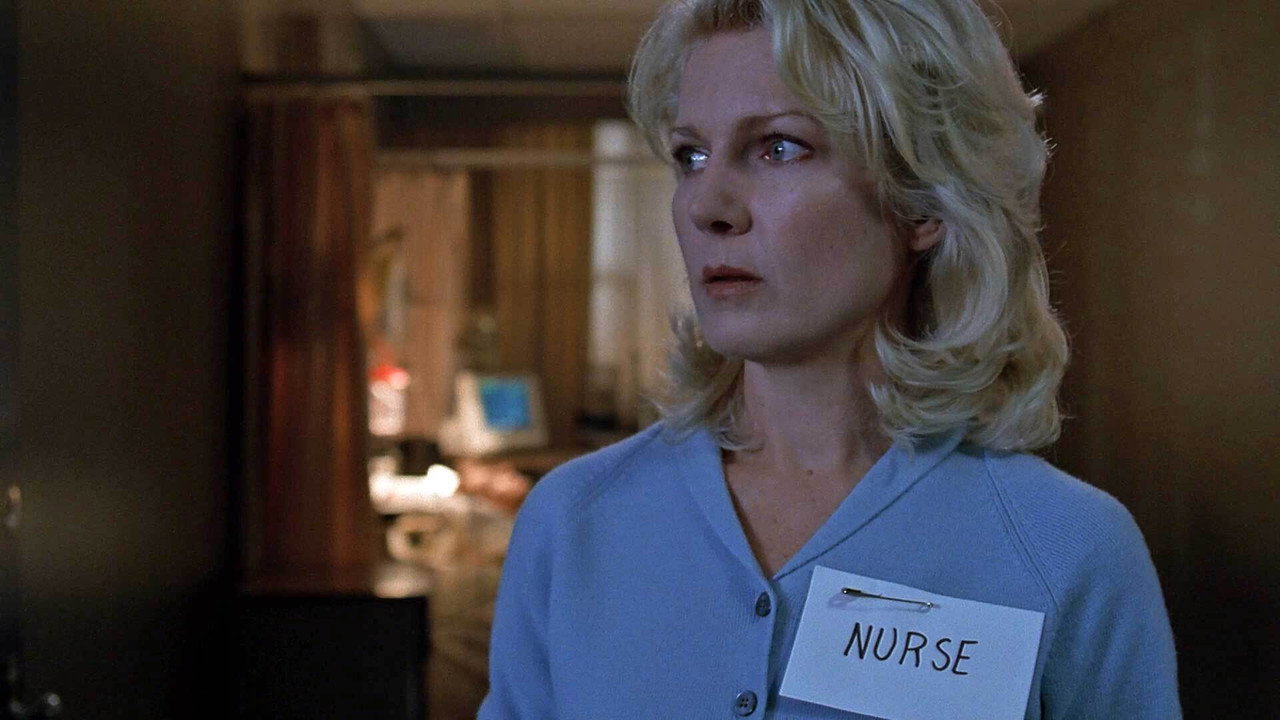
In the hospital, a nurse asks Mulder to step out. When he comes back Modell is dead, and the paper she wore carries an address on its back.
Why it still matters
This sequel exists partly because the writers' room ran short of time. Tim Minear had pitched a different story, about a convicted atheist who hears the voice of God telling him to kill a truly evil man, but "we found ourselves at a point in the year where we needed a script really fast," as he put it. Frank Spotnitz suggested swapping the prisoner for Robert Modell from Vince Gilligan's "Pusher", so Minear set the "Word of God" story aside and wrote this one with Gilligan.
Critics have never quite settled whether bringing Modell back was worth it. Robert Shearman and Lars Pearson, in Wanting to Believe, gave it three and a half stars out of five; they missed "Vince Gilligan's trademark wit" but felt it carried the threads of "Pusher" to their "logical conclusions", and credited Robert Wisden and Diana Scarwid with lifting it "above the average." Zack Handlen of The A.V. Club gave it a C+ and found it "not very well put together". Looking back in 2022, A.J. Black heard in Gilligan and Minear's writing the same zero-sum sadness that would later run through Breaking Bad and Better Call Saul.
Two of them
Modell has woken from the coma he was left in when Mulder shot him at the end of "Pusher", and this time he isn't the killer. After an odd interview with Linda, Mulder decides she has her own version of Modell's gift, and Skinner suspends him for saying so. Modell's physical therapist takes a phone call while Mulder is showing her Linda's picture, then puts her hand into a fuse box. Modell made Skinner shoot him to protect Linda, and the nurse who talks his heart into stopping is Linda herself.
At the Channel Avenue address Mulder finds Scully aiming a gun at him and saying Linda controls her; then she shoots herself. The woman behind him knows things only Scully could, because she is Scully. She fires past him, and the picture breaks: the real Scully in front of him, a wounded Linda behind. A scan shows Linda has the same kind of temporal lobe tumor as Modell, her fraternal twin, separated from her at birth. Mulder can't shake how close he came to killing his partner. Handlen counted Modell's lack of any wish to kill among the episode's weaknesses. Paula Vitaris of Cinefantastique (two stars out of four) found it "tame" next to the original and called the plot "cheesy", while praising Bowman's blue body as "striking" and the scene of Linda stopping her suffering brother's heart as "sensately performed."
Challenge the DNA
Was Modell a villain this time around?
Or skip ahead to our reading
This time he isn't the killer, and the episode lets Mulder believe him. It still keeps him unsettling to the very end.
Behind the scenes
- Robert Wisden, who played Modell in "Pusher", was hired back, and Diana Scarwid was cast as Linda.
- The Lorton Penitentiary cafeteria was really a former hospital storage building. Clearing it meant breaking up several big sump pumps, which were "jackhammered into smithereens".
- "Kitsunegari" (狐狩り) means "fox hunting". Because that isn't an existing term in Japanese, the production hired two Japanese translators to get the wording and the kanji right.
The thread
Minds that can be pushed around by someone else's will, and the people who try to stop the pushers.
Came before
Shares DNA with
DNA strand
Us vs. Them
Modell needs no weapon of his own. Anyone within earshot can be turned into one, so every stranger, nurse and fellow agent near Mulder becomes a possible threat.
Every great sci-fi story is built from a handful of strands like this one. Each strand page explains how it works and traces it across shows, books and films.
If this one stayed with you
Where to go next, and why.
Watch · Film
Scanners (1981)
David Cronenberg's telepaths can overpower other people's minds, and the film is about who gets to use that power.
Read · Novel
Firestarter by Stephen King
A father and daughter on the run, each with a mental power a government agency would very much like back.
Read · Novel
The Demolished Man by Alfred Bester
A murderer plans the perfect killing in a society policed by telepaths who can hear what he's thinking.
Your next episode
Three directions to go from here, all on Sci-Fi DNA.
More of this feeling
Charlie X
Star Trek
It has the same tension of facing someone whose words alone can make people do anything.

Same question, different answer
Brothers
Star Trek: The Next Generation
It asks how much one sibling can be blamed for what the other one does.

Something completely different
Schizogeny
The X-Files
For a different sort of menace, follow the agents to a Michigan orchard town where people sink into the mud.