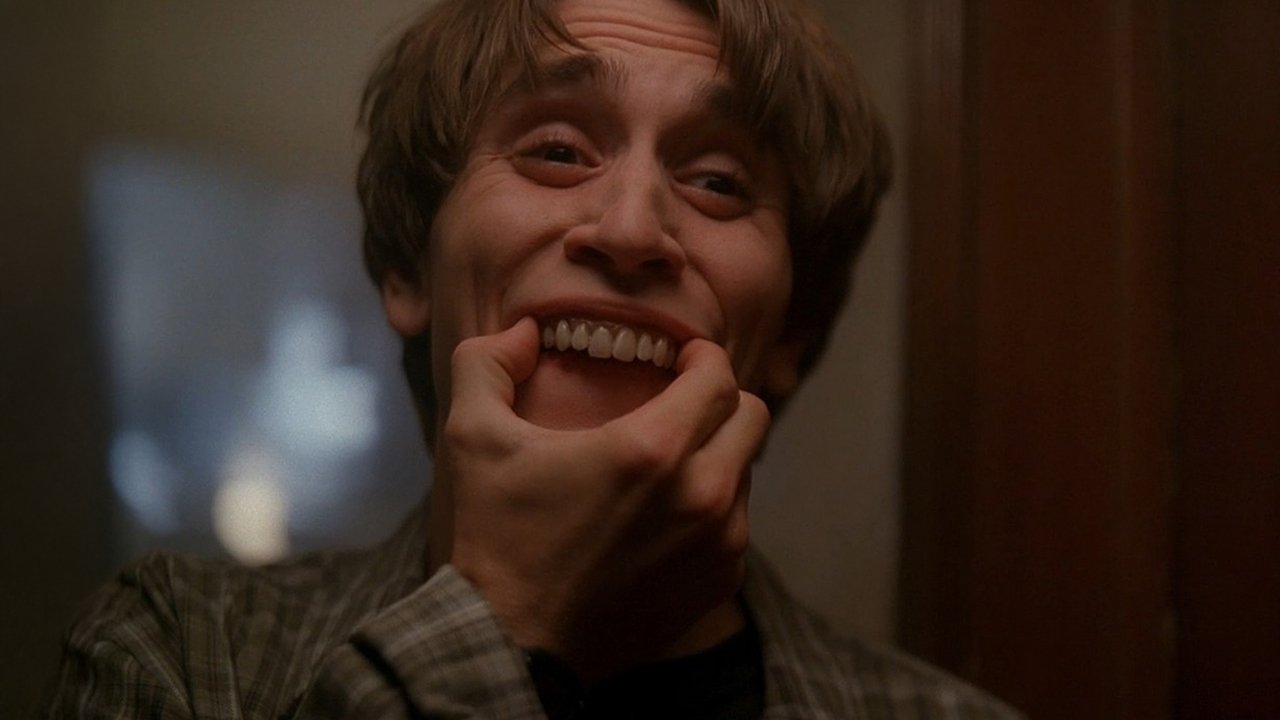
More from the episode
The story in 5 beats
- Closed for the night
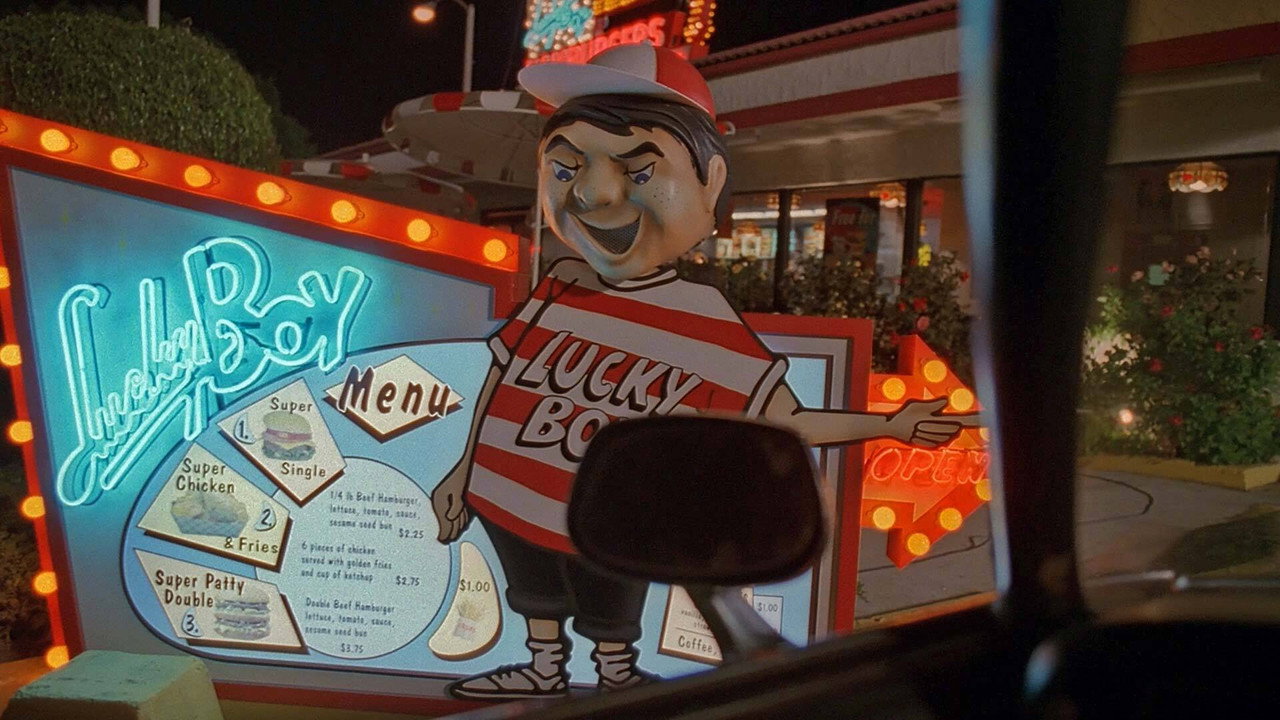
In Costa Mesa, California, Donald Pankow demands service at a closed Lucky Boy drive-through. He's dragged out of his car, and his body is found with the brain gone.
- A button at the scene
The only clue is employee Derwood Spinks's name button. Scully likes his criminal record. Mulder suspects a proboscis, and another worker, Rob Roberts, a mutant who lives on brains.
- Hungrier
His hunger growing, Rob kills a private investigator. Then Spinks turns up with evidence tying Rob to the first killing and tries to blackmail him.
An eating disorderSpoiler · tap to reveal
Rob kills Spinks, then tells counselor Dr. Mindy Rinehart he has an "eating disorder". At Overeaters Anonymous he bonds with his landlady, but hunger wins, and he stages his home to blame Spinks.
A visitorSpoiler · tap to reveal
Rinehart comes to Rob's apartment as he packs to leave town. He shows her what he is, and her sympathy throws him. Then the agents arrive, guns drawn.
Why it still matters
Vince Gilligan wanted to try something different with "Hungry": a monster-of-the-week story told from the monster's side, with Mulder and Scully cast as the antagonists. His stated aim was that by the end "the audience out there [would be] hoping that they would not show up." Chris Carter liked the idea and called the result a "really great monster show." Casting director Rick Millikan picked Chad Donella for his "subtle, interesting quality," and Kim Manners came away calling him a "great little actor."
Robert Shearman later summed up the premise as "Dexter a decade early" and called the episode a "neglected gem". Zack Handlen of The A.V. Club thought the format a "good gimmick" that turned what might have been a forgettable hour into a memorable one, with humor that "is very much on target," though he felt it showed a tired series. Others were cooler. Paula Vitaris of Cinefantastique complained that too many recent episodes told the audience the culprit early, though she found the satire its saving grace, and Kenneth Silber of Space.com thought the new angle couldn't rescue "a familiarity bordering on the mundane."
I can't be something I'm not
The agents have found Sylvia Jassy's body. Rinehart pleads with Rob to be the good person she believes he can be, and he charges at Mulder instead and is shot. It's suicide by cop. As he lies dying, Rinehart asks him why, and he answers, "I can't be something I'm not."
Shearman thought the ending worked, writing that "the sympathy that Donella gives Rob as he shows his true colours is very touching" and calling the final moments "a typically smart touch." Tom Kessenich, in his book on seasons six to nine, was less convinced by Rob as a character and by how fast the killer was given away.
Challenge the DNA
Was Rob a monster or a man who couldn't help it?
Or skip ahead to our reading
He tells Rinehart he can't be something he's not, then charges Mulder. The episode lets us feel for him and still makes clear what he did.
Behind the scenes
- It was the first episode of the season filmed, though it aired third. David Duchovny was making Return to Me and Gillian Anderson The House of Mirth, so the monster's-eye format suited a shoot where the stars could give only two days between them; stand-ins and doubles filled some of their shared scenes.
- Duchovny's stunt double, Steve Kiziak, played the private investigator Rob eats, a character also named Steve Kiziak. "It was a lot of fun to be in front of the camera," he said. He had first turned up as Duchovny's body double in "2Shy".
- Rob Roberts is named after a real helicopter pilot from Indiana who gave Gilligan flying lessons and was promised a character, and the therapist shares a name with the pilot's wife. Gilligan pointed out that the real Roberts "doesn't eat brains"; his coworkers served him brain-shaped Jell-O anyway.
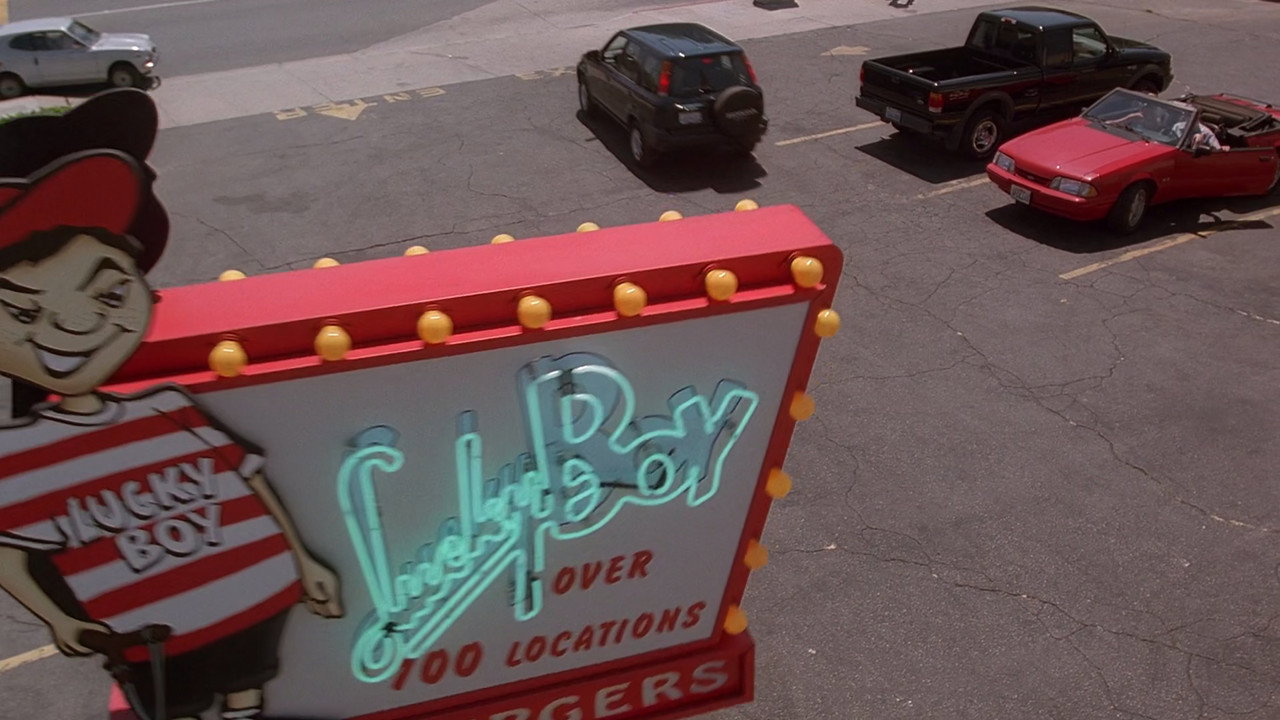
- The restaurant was meant to be called Burgerlishious, but the location the crew wanted had a Lucky Boy sign that couldn't be taken down, so Lucky Boy it became.
The thread
An early mutant killer from the show's first season, fiction's best-known sympathetic monster, and other X-Files episodes that take the outsider's side.
Came before
Shares DNA with
DNA strand
Funny and Creepy at Once
Gilligan plays a brain-eating killer straight and still finds the joke in him: the fast-food uniform, the group therapy, the polite young man trying very hard to pass. The laughs make the hunger worse, because you end up liking him.
Every great sci-fi story is built from a handful of strands like this one. Each strand page explains how it works and traces it across shows, books and films.
If this one stayed with you
Where to go next, and why.
Watch · TV series
Dexter (2006)
Michael C. Hall narrates as a forensic analyst who is secretly a serial killer, and the show keeps you on his side for eight seasons.
Watch · Film
Warm Bodies (2013)
A zombie with a rich inner monologue narrates his own undead life and, between meals of brains, falls for a living girl.
Read · Novel
Grendel by John Gardner
The monster from Beowulf tells the story himself, lonely, funny and bitter, waiting for the hero who will come for him.
Your next episode
Three directions to go from here, all on Sci-Fi DNA.
More of this feeling
The Man Who Was Never Born
The Outer Limits
It has the same sad sympathy for a creature trying to pass as an ordinary man.
Same question, different answer
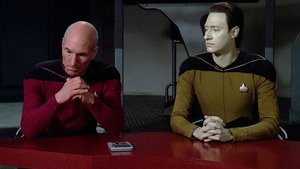
The Measure of a Man
Star Trek: The Next Generation
It asks whether anyone can become more than the thing they were born as.

Something completely different
The Goldberg Variation
The X-Files
For a lighter case, watch the agents meet a Chicago handyman so lucky that the people around him keep dying.