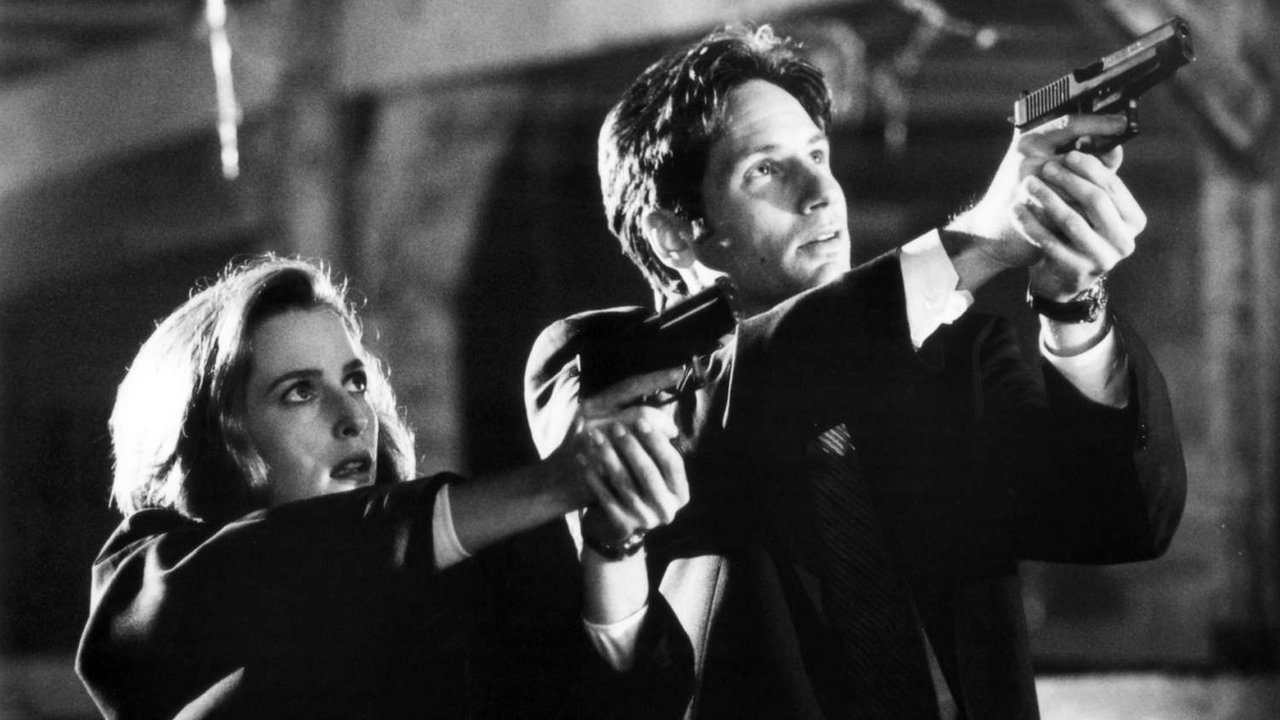
More from the episode
The story in 5 beats
- A letter to Mulder
Shaineh Berkowitz's son Izzy was born 18 years ago after the same thing happened to her. She heard about Mulder on The Jerry Springer Show and wants him to look into it.
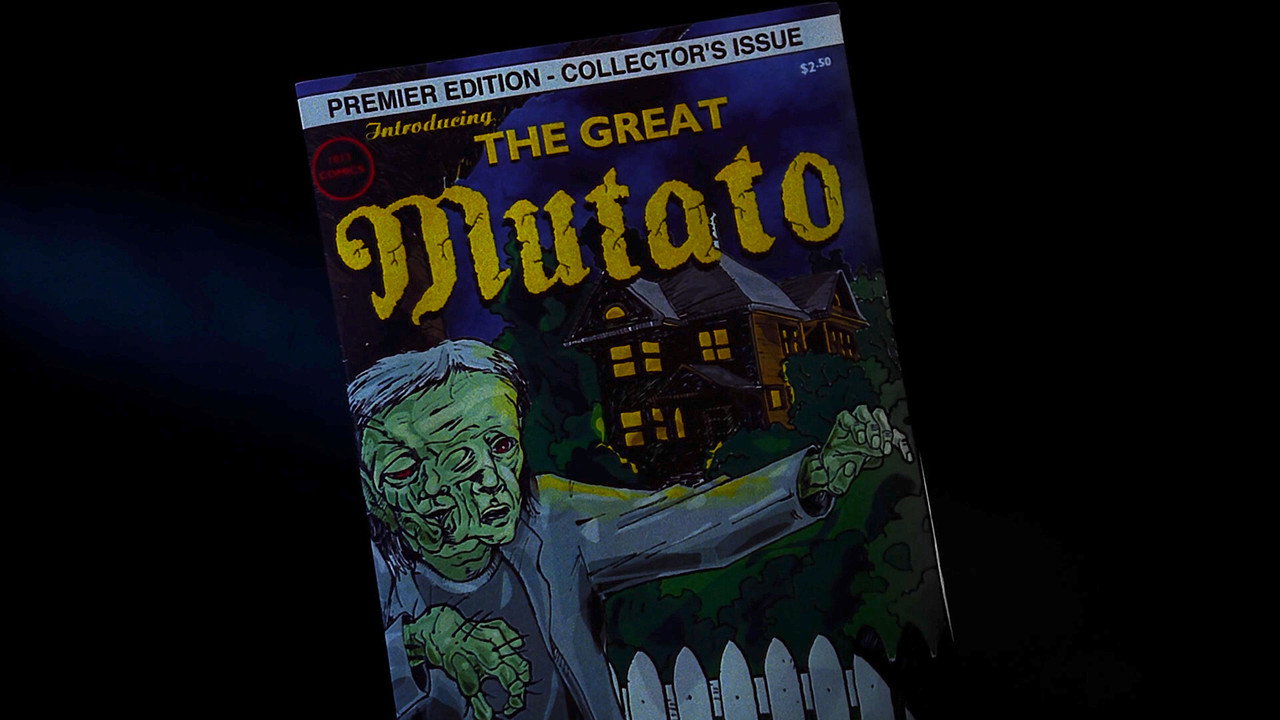
- Izzy's comic
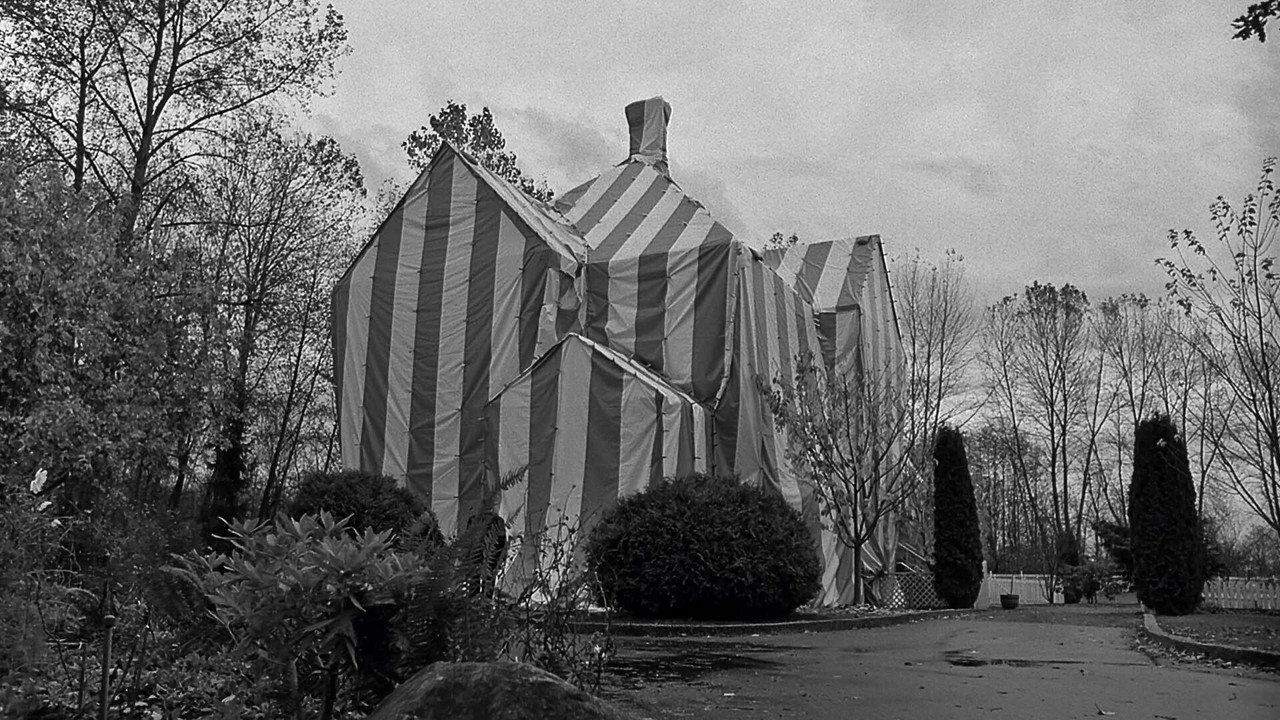
In Albion, Indiana, Shaineh describes her attacker: a lumpy head, two mouths. That's the Great Mutato, a monster Izzy drew from a creature locals keep seeing. He takes the agents to glimpse it.
- The fly man
An angry old farmer sends them to his son, geneticist Francis Pollidori, who shows off fruit flies with legs growing out of their mouths. Mulder decides they've found a modern Victor Frankenstein.
- Another attack
Pollidori's wife, Elizabeth, is attacked in the same way. A residue of an animal anesthetic used on farms points the agents toward Pollidori's father.
The barnSpoiler · tap to reveal
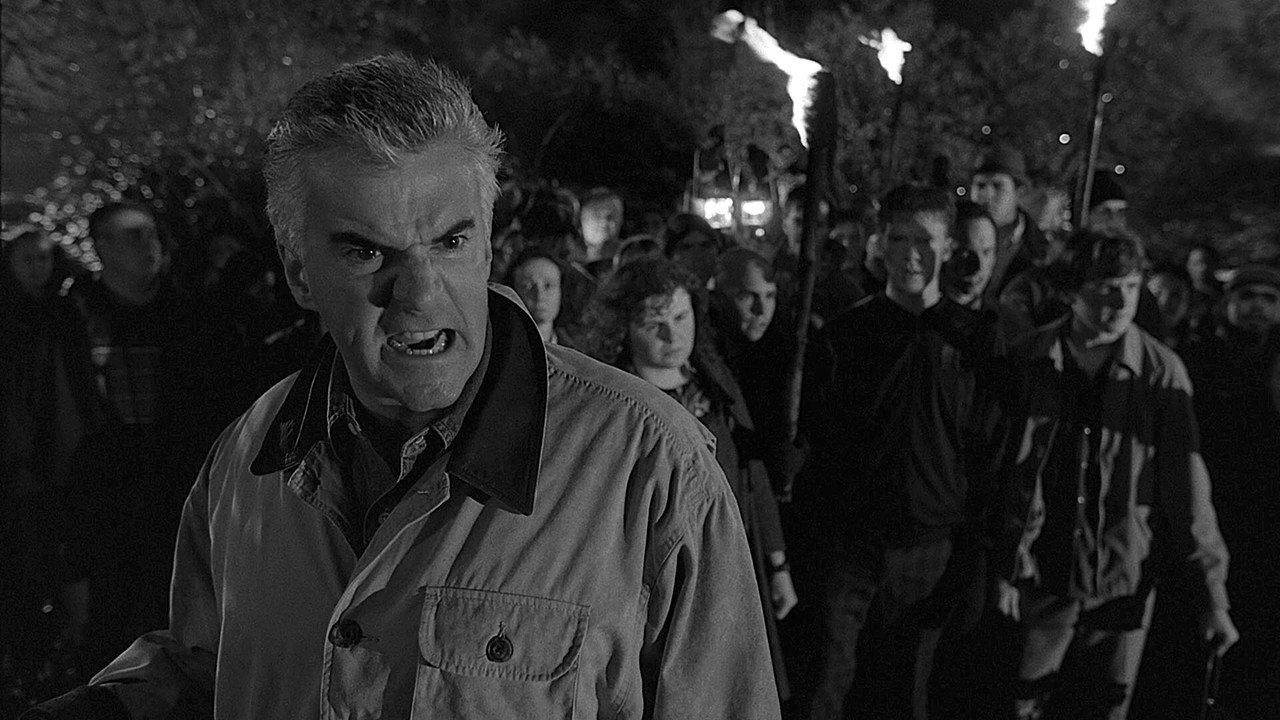
The agents go looking for the old farmer and find a shallow grave and photos of him with the creature. Pollidori arrives with an angry mob.
Why it still matters
Chris Carter wrote and directed this as a love letter to James Whale's 1931 Frankenstein, and for an hour The X-Files drops any pretense of realism. Going into the fifth season, Carter said, the producers knew the mythology episodes would be very dramatic, "and we wanted to lighten, or leaven, the season with quirky episodes." He couldn't make Mary Shelley's story fit the show's usual style, so he wrote one that blurred the real world into a fantasy, mixing Frankenstein with fairy tales and folk tales. The title points two ways: to Shelley's subtitle, The Modern Prometheus, and to postmodernism.
It's built from borrowed pieces on purpose. Several lines come straight out of Whale's film. The scientist is called Pollidori, close to John William Polidori, who was there when Shelley conceived her novel. Jerry Springer appears as himself, and Cher's records run all through it: Carter had spent a summer listening to them and developed a fixation on the singer.
Critics fell for it. Eric Mink gave it four stars in the Daily News, writing that "with Shelley's classic as inspiration, Carter and company have created a classic of their own"; Entertainment Weekly's Michael Sauter called it the most striking stand-alone episode of the season; Empire ranked it fifth of all X-Files episodes in 2013; and FX's 1999 Thanksgiving marathon of fan-picked episodes presented it as the best stand-alone episode. Robert Shearman dissented. In Wanting to Believe he wrote that Carter the writer had come up with something "playful and light and charming" and Carter the director had made it "so arch and obvious and dull that it kills it stone dead."
Mulder wants to see the writer
Pollidori has killed his father, and the Great Mutato, who lived with the old man, buried him in the barn. With the agents hiding him in the basement and the barn on fire, the Mutato tells the crowd his story. Pollidori made him 25 years ago in a genetic experiment, and the old farmer secretly rescued and raised him, even trying his son's methods on his farm animals to make the boy a companion. He never managed it. It was the Mutato who drugged and impregnated Shaineh and Elizabeth. He asks Pollidori for a mate, and Pollidori tells him he can't: the Mutato was a mistake. The town takes the monster's side, and Pollidori is arrested for his father's murder.
Mulder can't accept the Mutato going without a happy ending and demands to see "the writer". So the agents take him, and the townspeople, to a Cher concert, where she picks him out of the crowd to dance to "Walking in Memphis". The last image, Mulder and Scully dancing, turns back into a comic book panel. Emily VanDerWerff of The A.V. Club read the ending as Izzy's own invention after talking to Mulder, the moment where "the episode abandons logic and reality and, for lack of a better word, transcends." Meghan Deans at Tor.com went further and argued that, given the comic framing, none of it happened at all. Cinefantastique's Paula Vitaris called it a "false ending".
Challenge the DNA
Did the town do right by the Great Mutato in the end?
Or skip ahead to our reading
The episode ends with the Mutato at the Cher concert, a comic-book fairy tale. Critics split on whether that ending lets everyone off too easily.
Behind the scenes
- Black and white was harder than Carter expected. Director of photography Joel Ransom needed longer than usual to light each set for grayscale, the stormy Frankenstein skies were added as visual effects, and Carter shot the whole thing on a wide-angle lens, which made the actors play to the camera instead of to each other and let him stage scenes more surreally than the show usually did.
- Carter wrote Shaineh for Roseanne Barr, who wasn't available, and the part went to Pattie Tierce. Cher passed on appearing as herself ("they just wanted me to come on and sing") and regretted it once she'd seen the episode: "Had I [foreseen] the quality of [it] I would have done it in a heartbeat." She let the show use three of her recordings. Onstage she's played by impersonator Tracey Bell, filmed from behind and far off, and fans went online to wonder whether Cher had secretly done it after all.
- The Mutato mask, made of latex with a working second mouth, cost $40,000 and took five to seven hours to apply, plus contact lenses and dentures. Chris Owens remembered seven hours in the chair, three or four more waiting, then a dark set seen through one eye. At his audition Carter had asked if he'd seen The Elephant Man: "What I'm looking for is dignity." The makeup's designer called the black-and-white photography the episode's "saving grace" for the prosthetics.
- Seinfeld regular John O'Hurley had auditioned for other parts on the show, and Carter hadn't thought of him as "an X-Files actor" until Pollidori, for which he was "the absolute perfect casting choice." Izzy was played by Stewart Gale, a non-actor Carter saw sitting in a car on the street, and Izzy's friends by a snake handler from the X-Files film shoot and a worker at a Vancouver coffee shop Carter went to.
- It had seven Emmy nominations, including writing and directing for Carter, and won for art direction (Graeme Murray, Greg Loewen and Shirley Inget). It drew a Nielsen household rating of 11.5 and was watched by 18.68 million viewers.
The thread
The monster movies Carter was paying tribute to, and other stories about a made creature and the town that turns on it.
Came before
Shares DNA with
DNA strand
Technology Outpaces Ethics
Pollidori talks about rewriting genes as if the only question were whether it can be done. The episode plays the mad-scientist story as a fairy tale, and still asks who answers for what comes out of a lab.
Every great sci-fi story is built from a handful of strands like this one. Each strand page explains how it works and traces it across shows, books and films.
If this one stayed with you
Where to go next, and why.
Watch · Film
Young Frankenstein (1974)
Mel Brooks also shot his Frankenstein in black and white to look like the Universal originals, and also played it for laughs and tenderness.
Watch · Film
Edward Scissorhands (1990)
Tim Burton's gentle, unfinished creation comes down from his castle into a pastel suburb that adores him until it doesn't.
Read · Novel
The Island of Doctor Moreau by H. G. Wells
A shipwrecked man lands on an island where a disgraced scientist has been surgically turning animals into something like people.
Your next episode
Three directions to go from here, all on Sci-Fi DNA.
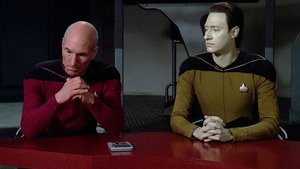
Same question, different answer
The Measure of a Man
Star Trek: The Next Generation
It asks whether a being made in a lab has the same right to a life as anyone else.
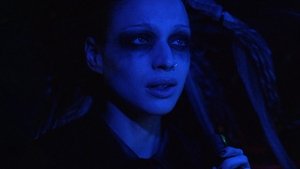
Something completely different
Kill Switch
The X-Files
For a very different kind of creation, follow the agents into the internet and a program that wants to stay alive.
Sources
- “The Post-Modern Prometheus,” Wikipedia
- “The X-Files season 5,” Wikipedia
- Bill Carter, “TV Notes; 'X-Files' Tries Frankenstein,” The New York Times, 1997
- Emily VanDerWerff, “The X-Files: "The Post-Modern Prometheus"/Millennium: "A Single Blade of Grass",” The A.V. Club, 2011
- Meghan Deans, “Reopening The X-Files: "The Post-Modern Prometheus",” Tor.com, 2012
- Michael Sauter, “The X-Files: The Complete Fifth Season,” Entertainment Weekly, 2002
- Nick De Semlyen and James White, “The 20 Greatest X-Files Episodes,” Empire, 2013