More from the episode
The story in 5 beats
- A visit to the ward
Mulder's mother, Teena, comes to his hospital room with the Smoking Man. He gives Mulder a drug that eases his paralysis and takes him out of the hospital.
- Signed out
Back from Africa, Scully learns from Skinner that Mulder's mother signed him out. Security tapes show Teena talking with the Smoking Man, and Scully can't reach her.
- A book in the mail
A package brings Scully a book on Native American spiritual beliefs about one man who will stop a coming apocalypse. She catches Kritschgau with her hacked files on the African find and deletes them.
A new streetSpoiler · tap to reveal
In a strange neighborhood Mulder finds Deep Throat alive, who says he faked his death to get out of the Syndicate. Mulder settles down with Fowley, finds Samantha, marries and has children.
A card under the doorSpoiler · tap to reveal
Krycek kills Kritschgau and takes his laptop. Scully, visited by the spirit of Albert Hosteen, finds a security card slipped under her door and uses it to get into the facility.
Why it still matters
This is the mythology episode David Duchovny helped write. The show's lead actor shares the credit with Chris Carter, and it closes the three-part story that began with "Biogenesis" and an artifact found on an African beach. Executive producer Frank Spotnitz called Duchovny's approach to Mulder a risk; Duchovny thought the character needed it. Spotnitz told Entertainment Weekly that the writers were starting to develop "a conjunction of science and mysticism, of aliens and religion", a deliberate attempt "to help bring all the mythologies together into one story line."
Reviews at the time were mixed. Kenneth Silber of Space.com felt it "adeptly combines surrealism and a sense of impending climax" only to "sputter out in disappointment when nothing much gets resolved at the end," and Paula Vitaris of Cinefantastique was tired of the old setup in which one partner lies comatose while the other hunts for a cure. Later writers warmed to it. Robert Shearman said it "kicks off the seventh season with great style" and praised a "real passion" he rarely found in the mythology episodes. Emily St. James of The A.V. Club called the script "very purple prose", Carter's most overwrought since "The Blessing Way", and still enjoyed it as "entertainingly bad [and] ludicrously over-the-top". Den of Geek's Nina Sordi ranked the whole trilogy fifth among the show's best episodes.
The last temptation of Fox Mulder
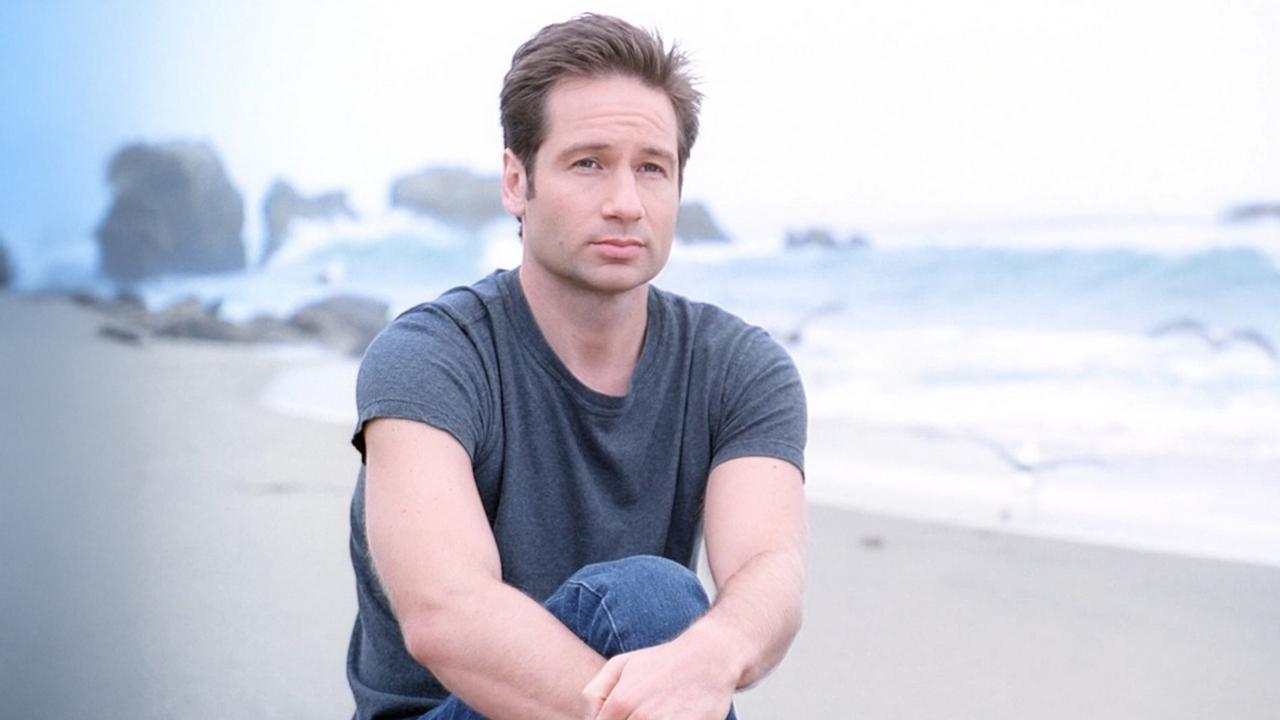
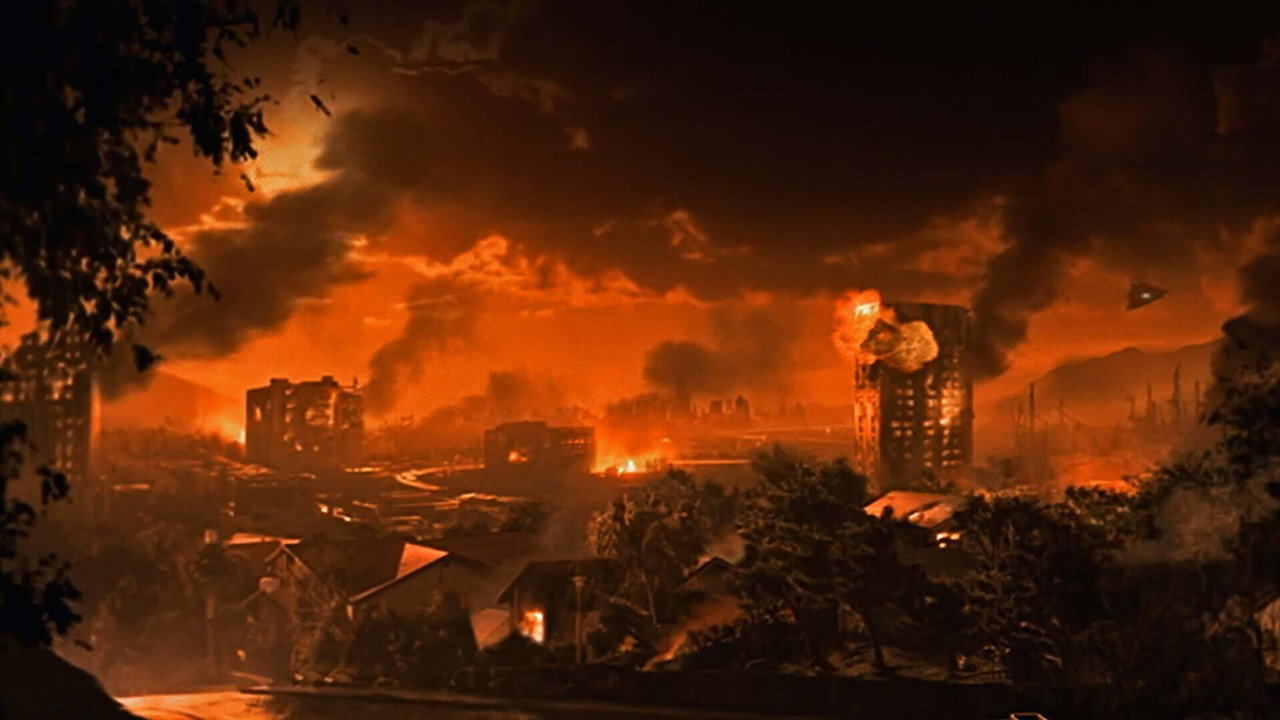
Before taking him from the hospital, the Smoking Man tells Mulder he is his father. The new life is a dream: the years race by, Fowley dies, and an unaging Smoking Man tells an old Mulder that Deep Throat, Samantha and Scully are dead too, then opens a window on cities burning under alien ships. In reality Mulder lies in a government facility, strapped to a cross-shaped table with a metal ring around his head, which Amy Donaldson reads as a crucifixion and a crown of thorns. The Smoking Man, on the table beside him, is having Mulder's infected brain tissue put into his own body, convinced Mulder has become an alien-human hybrid and that this will let him alone survive the invasion. Duchovny, a fan of Nikos Kazantzakis's The Last Temptation of Christ, built the dream on its idea of a savior tempted by an ordinary life, though he said he wanted Mulder to be "an everyman". William B. Davis found the operating-table scene "totally uncomfortable" and joked that at least the author was lying next to him.
In the dream, Scully comes to Mulder's bedside and talks him out of the life he has been given; in the facility, she finds him and gets him out. A week later she tells him at his apartment that Fowley has been found murdered, and Mulder tells her she was his "touchstone". Mimi Rogers saw it coming as she read the script: "I have too much to do. They're going to kill me." It was her last episode. Fans balked at the Smoking Man being Mulder's father, which Davis put down to everyone having their own theory. The closing scene fared better: the Contra Costa Times counted it among the show's most "tender moments" without a kiss, and Entertainment Weekly put it on a list of 25 great TV "I love you"s.
Challenge the DNA
Was the Smoking Man telling the truth when he said he was Mulder's father?
Or skip ahead to our reading
He tells Mulder before taking him from the hospital, and the episode never settles it. It leaves the claim hanging over everything that follows.
Behind the scenes
- It was Duchovny's second on-screen writing credit, after "The Unnatural" the season before. He wrote his part while Carter was busy with the premiere, and Carter added his own sections once that script was done.
- Gillian Anderson struggled with Scully's lines. After everything Scully had seen in Africa, she goes back to arguing against aliens, and Anderson told Carter she didn't "know if [she could] do this anymore." Carter's answer was that the show needed the believer-versus-skeptic conflict to work.
- Spotnitz expected angry letters, since the arc all but says aliens gave humanity the idea of God, and got few. "In 'Amor Fati' we treated the religious side with respect," he said.
- William B. Davis enjoyed playing a harder Smoking Man for once: "We have seen so much softness in him; it was great to play that tough side."
The thread
The two episodes this concludes, and other stories in which visitors from space turn out to have been part of human history all along.
Came before
Shares DNA with
DNA strand
First Contact & Invaders
By this point the invasion is less a question of whether than when, and the show has started treating the oldest human stories, scripture and prophecy among them, as possible evidence. The fight is over who gets to read that evidence first, and what they mean to do with it.
Every great sci-fi story is built from a handful of strands like this one. Each strand page explains how it works and traces it across shows, books and films.
If this one stayed with you
Where to go next, and why.
Watch · Film
Quatermass and the Pit (1967)
Workers digging in a London Underground station uncover an ancient craft, and the find suggests visitors from space shaped humanity's oldest fears.
Watch · Film
2001: A Space Odyssey (1968)
Stanley Kubrick's film starts with an alien monolith nudging prehistoric apes forward and follows the trail to the Moon and beyond.
Read · Novel
Childhood's End by Arthur C. Clarke
Alien Overlords take quiet charge of Earth and steer humanity toward its next stage, and Clarke keeps what they really want out of sight for decades.
Your next episode
Three directions to go from here, all on Sci-Fi DNA.

More of this feeling
The Inner Light
Star Trek: The Next Generation
It has the same ache of a whole life lived inside a single stretch of time.
Same question, different answer
Shadows and Symbols
Star Trek: Deep Space Nine
It asks how a man decides whether to accept the role of saviour that others have chosen for him.

Something completely different
Hungry
The X-Files
For something completely different, watch a monster-of-the-week story told from the monster's side.
Sources
- “The Sixth Extinction II: Amor Fati,” Wikipedia
- “The X-Files season 7,” Wikipedia
- “Amor fati,” Wikipedia
- “Ancient astronauts,” Wikipedia
- Emily St. James, “'The Sixth Extinction'/'The Sixth Extinction II: Amor Fati',” The A.V. Club, 2012
- Kenneth Silber, “The X-Files 'The Sixth Extinction (Amor Fati)',” Space.com, 2000