More from the episode

The story in 5 beats
- The nightclub
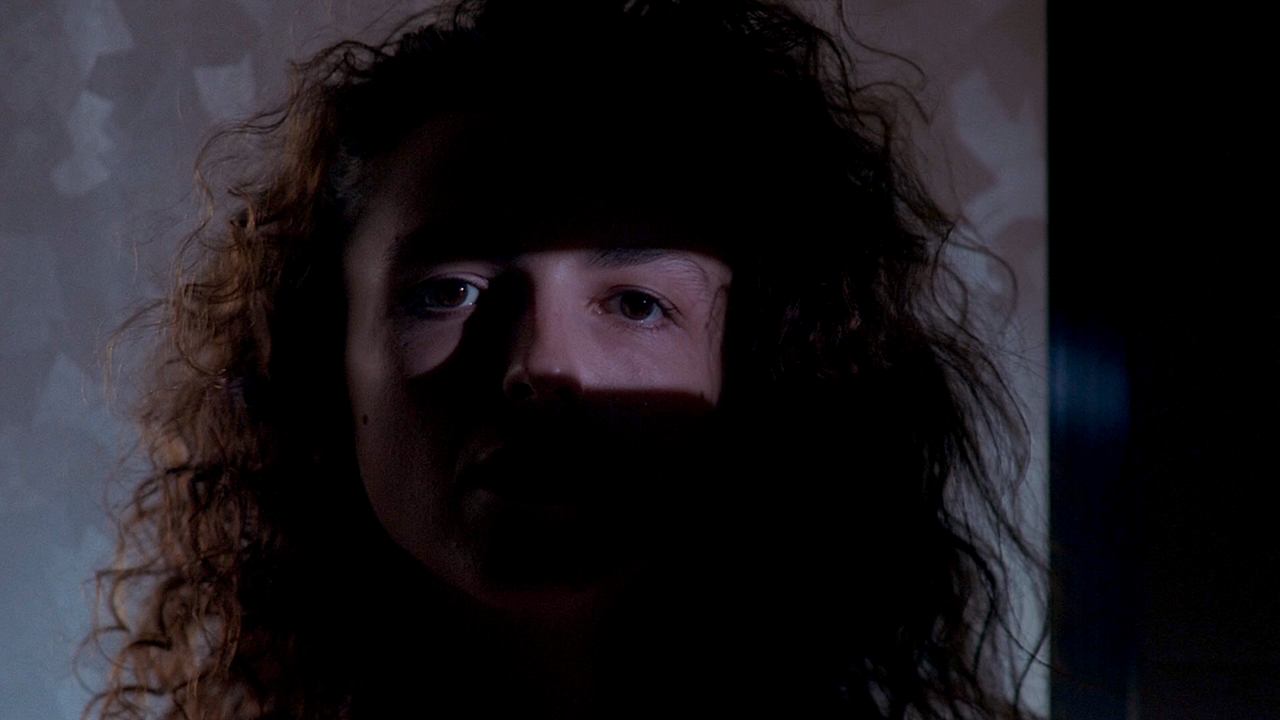
A woman named Marty picks up a young man at a dance club. Afterward he is dead, and the person who walks out of the room is a man.
- The Kindred
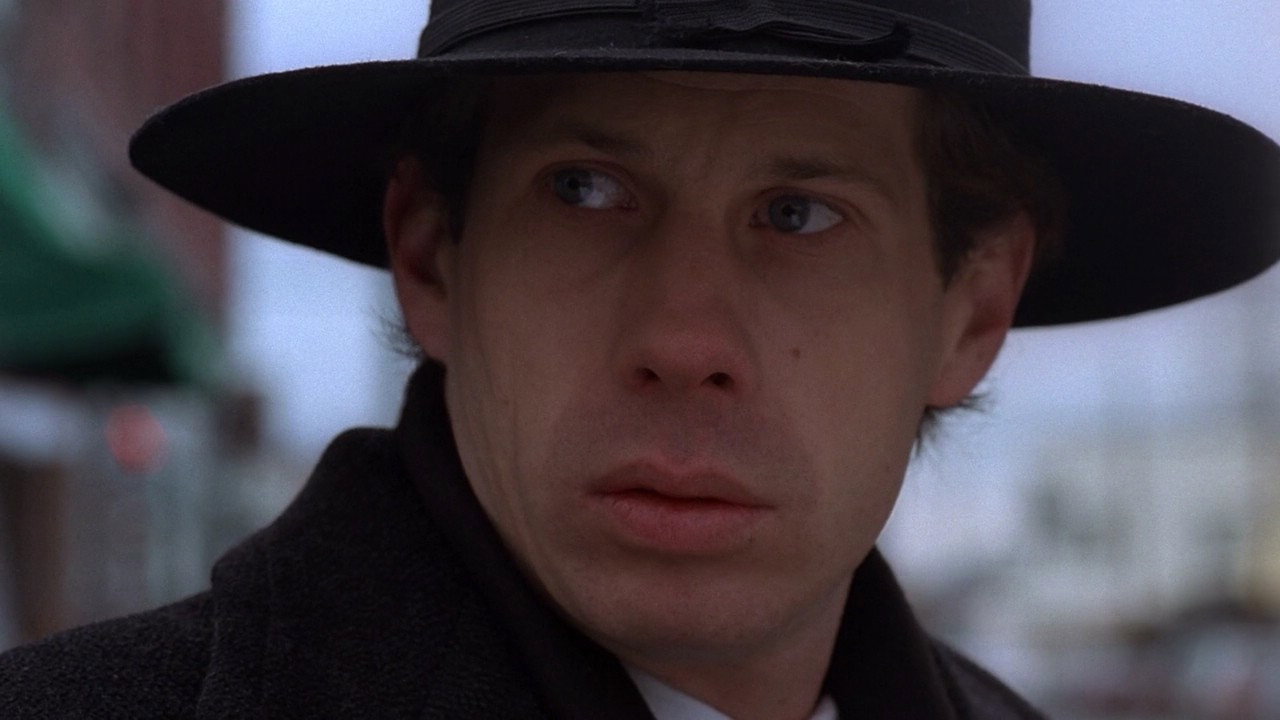
Mulder suspects a lethal dose of pheromones. Clues lead to the Kindred, an Amish-like sect who shun outsiders. When Scully shakes hands with Brother Andrew, she seems to go into a trance.
- Dinner in the village
The agents hand over their guns and stay for supper. The Kindred won't let Scully treat a sick man, Brother Aaron. Mulder notices there are no children, and faces he knows from 1930s photographs.
Under the barnSpoiler · tap to reveal
Back at night, Mulder finds Brother Aaron buried alive in clay beneath the barn, taking on a woman's features. Brother Andrew nearly seduces Scully before Mulder pulls her away.
The alleySpoiler · tap to reveal
Another man, Michel, survives a night with Marty. The agents corner the killer, Brother Martin, in an alley, but the Kindred arrive first and take him away.
Why it still matters
"Gender Bender" takes the oldest warning in horror, that sex can kill you, and gives it a killer who can walk away from a pickup as the opposite sex. Critics who have written about it read that as a sign of its time. M. Keith Booker sees the shape-shifting as a figure for the sexual anxieties stirred up by the changing gender roles of the 1990s, joined to "a basic fear of sexual contact". Antonio Ballesteros González describes its villain as standing for "the fear of sex and reproduction". Robert Shearman, who liked Rob Bowman's direction and the clash between the "decadent" night-life and the Kindred's "restraint and denial", thought the episode handled its themes too conservatively and tamely.
Zack Handlen of The A.V. Club liked it far more, calling the plot "a perfect mixture of scientific theory, unsubstantiated rumor, and memorable visuals". For him it was the ideal X-Files story: ordinary people brush against something unexplained and never find out what it was. Entertainment Weekly called it a "clever idea" undermined by "a bushel of burning questions". It was also Rob Bowman's first episode as an X-Files director, and he went on to become one of the show's most prolific.
A circle in the field
The next morning the village is empty and the tunnels under the barn are packed solid with white clay. In a field nearby the agents find a huge crop circle, which suggests the Kindred aren't human at all. Glen Morgan had wanted "an episode with more of a sexy edge", and because sex proved hard to make frightening, the producers brought in "people like the Amish who are from another planet". Scholars have since read it as one of the show's stories that blur seduction into alien abduction, and Gary Westfahl places it in a line of fiction about outsiders with a powerful touch, next to The Puppet Masters, Communion and E.T.
The crew weren't happy with the ending. James Wong felt it came out of nowhere, "like we tried to play a trick on the audience", with too little connection to the story to pay off. Morgan said the episode "went too far. At what point do we become unbelievable?" Phil Farrand's nitpicker's guide adds that aliens whose pheromones carry human DNA, and who speak English among themselves, don't add up.
Challenge the DNA
Were the agents right to pursue the Kindred?
Or skip ahead to our reading
The village vanishes before the agents can do anything, and the crop circle hints the Kindred weren't human. The episode ends with more questions than answers.
Behind the scenes
- Freelance writers Larry and Paul Barber's first draft set the farm community against a city life "with very sexual connotations", influenced by H. R. Giger's art. Rewrites took out a scene in which someone's crotch rots away. The Kindred's chants weren't in their script; producer Paul Rabwin added them.
- Kate Twa was cast as the female Marty first, and Goodwin chose Peter Stebbings mostly for his "very strong resemblance" to her. That backfired on the morphing shot: Goodwin felt the two looked so alike that the change barely registered and the moment lost its energy.
- Bowman found it a hard shoot. The script's lantern-lit scenes proved unworkable, and the catacomb set under the barn was so awkward to film in that a second-unit crew had to reshoot much of the coverage, adding a day of filming with David Duchovny.
- The Kindred's village was a farm preserved from the 1890s in Langley, British Columbia, with interiors built on a soundstage. The town scenes were shot in Steveston, and the nightclub music was recycled from Mark Snow's score for the TV film In the Line of Duty: Street War.
- Asked about the Kindred's likeness to the Amish, Chris Carter said: "They don't watch TV, so I wasn't worried about it."
The thread
An outsider walks into a closed community with its own rules, and desire turns dangerous. Films from before and after, and one *Star Trek* episode, cover the same ground.
Came before
Shares DNA with
DNA strand
Us vs. Them
The Kindred take care of their own, and the agents keep getting walked to the edge of the village. The episode draws a hard line between the sect and the outside world, setting their quiet farm and its rules against the city's nightclubs and one-night stands.
Every great sci-fi story is built from a handful of strands like this one. Each strand page explains how it works and traces it across shows, books and films.
If this one stayed with you
Where to go next, and why.
Read · Novel
Orlando by Virginia Woolf
A young nobleman lives for centuries and wakes one morning as a woman, and Woolf treats the change with calm curiosity.
Watch · Film
Midsommar (2019)
A group of American students visits a remote Swedish commune whose welcome has conditions they don't understand.
Watch · Film
Picnic at Hanging Rock (1975)
Peter Weir's film about schoolgirls who vanish on a summer outing, which refuses to explain itself and is all the stranger for it.
Your next episode
Three directions to go from here, all on Sci-Fi DNA.
More of this feeling
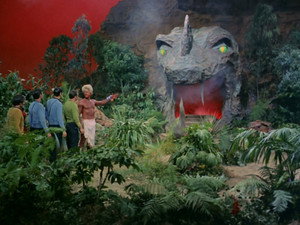
The Apple
Star Trek
A closed community with rules outsiders can't read gives this one its unease.

Same question, different answer
The Outcast
Star Trek: The Next Generation
It asks how a society decides which kinds of love and identity are allowed.

Something completely different
Lazarus
The X-Files
Swap the mystery of who someone is for the mystery of who's inside someone.