
More from the episode

The story in 5 beats
- A peddler in the bar
Pedott works the room, giving a woman a bottle of cleaning fluid and an out-of-work ex-ballplayer a bus ticket to Scranton.
- The phone rings
Moments later the ballplayer gets a call offering him a coaching job in Scranton. The peddler's gift looks real.
- Renard wants his share
Renard demands what he needs. Pedott reluctantly hands him a pair of scissors, and they prove useful sooner than Renard expects.
More, and then moreSpoiler · tap to reveal
Renard wants a steady supply, not a one-off. When Pedott glances at his case, Renard grabs a pair of shoes from it and puts them on.
Wet pavementSpoiler · tap to reveal
The shoes are too tight, with slippery soles. Renard goes for Pedott, slips on wet pavement and is hit by a car. Pedott had foreseen his own death and let Renard take the shoes to stop it.
Why it still matters
Most Twilight Zone episodes hand you a stranger and ask what you'd do in their place. This one hands you two, and they're built as opposites. Pedott (Ernest Truex) is a meek peddler who seems to know what people will need before they do. Fred Renard (Steve Cochran) is a hard-eyed bar regular. Serling's opening narration introduces him as a man with a chip on his shoulder the size of the national debt, thirty-six years old and looking for any way out.
It aired on Christmas Day 1959, which was also Serling's birthday. The small miracles early on are charming, but the pull comes from how far Renard is willing to push them. Watch Truex's face when Renard starts making demands. A lot of the story is in how carefully Pedott chooses what to say and what to hand over.
It's also a good case study in how Serling adapted other writers. The source is a 1945 story by Lewis Padgett, the shared pen name of Henry Kuttner and C. L. Moore, and it runs on a machine. Serling dropped the machine and gave the gift to an unexplained little man, which moves the story from science fiction toward folk tale. That swap is why it still plays as a fable and not a gadget plot.
What the shoes were for
When Renard demands another thing he needs, Pedott glances nervously at his case. Renard takes the glance as a hint and grabs the shoes inside. Pedott insists they really are what Renard needs. Renard advances on him, slips on wet pavement and is killed by a car. Pedott then explains that he had foreseen his own death and let Renard take the shoes to prevent it, so the one who needed the gift most was the giver.
Padgett's story gets there by a different route. The seer, Talley, looks into his machine and sees Carmichael, the man who wants his services, eventually shooting him. He hands Carmichael plastic-soled shoes, and Carmichael slips off a subway platform in front of a train. Serling trades the subway for a car, the machine for a peddler, and the long-range plot for a single night. The result is cleaner and more fable-like.
That leaves a question the episode doesn't settle. Pedott gave Renard exactly what he needed to survive, and also exactly what he needed to die, and he knew both. Whether that's kindness, self-defense or something colder is up to you. Renard is a bully, so it's easy to shrug, but the same kind of gift that saved a ballplayer's career has just been used to end a man's life on purpose.
Behind the scenes
- The story first ran in the October 1945 issue of Astounding Science Fiction under the Lewis Padgett byline, the joint pen name of Henry Kuttner and C. L. Moore.
- Padgett's story had already been adapted for television once, as an episode of the anthology series Tales of Tomorrow. Serling's version removes the science-fiction device in favor of a street peddler.
- Alvin Ganzer directed four Twilight Zone episodes, including "The Hitch-Hiker."
- Van Cleave composed the music and George T. Clemens was director of photography.
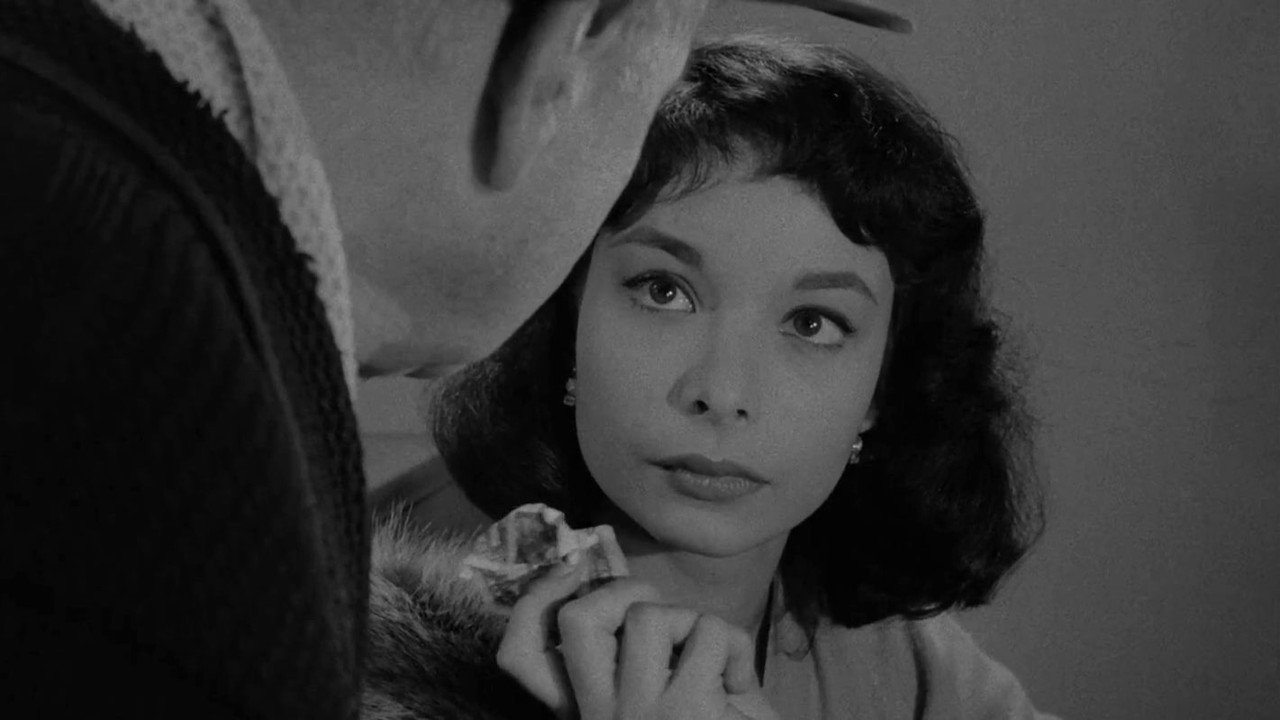
- Arline Sax, who plays the girl in the bar, was later known by the stage name Arlene Martel.
The thread
A seer who sees too much, from a 1945 pulp story to an earlier TV version and a Twilight Zone neighbor.
Came before
Shares DNA with
DNA strand
The Cruel Twist
The set-up promises a kind fable about a man who gives people what they need. The twist turns the same gift into a trap, and it works because Renard builds it himself by grabbing at things he hasn't been offered. The ending only seems cruel until you notice who was holding the case.
Every great sci-fi story is built from a handful of strands like this one. Each strand page explains how it works and traces it across shows, books and films.
If this one stayed with you
Where to go next, and why.
Watch · The Twilight Zone
"One for the Angels"
If you liked Truex's gentle old man, here's another street salesman with a talent and a little more at stake than he lets on. It's from the same first season and has the same fable shape.
Read · Short story
"What You Need" — Lewis Padgett
Read the source and see what Serling kept and what he changed. The set-up will feel familiar, but the machinery and the cast around it differ.
Read · Short story
"Mimsy Were the Borogoves" — Lewis Padgett
If you want more from the Kuttner and Moore pen name, this is a classic of theirs. It's a stranger, more tender kind of science fiction.
Sources
- “What You Need (The Twilight Zone),” Wikipedia
- “The Twilight Zone: Season 1, Episode Twelve "What You Need",” Great Books Guy, 2021
- “Short Story Review: "What You Need" by Lewis Padgett,” Great Books Guy, 2026
- “Twilight Zone: What You Need,” The Logbook
- “The Twilight Zone Vortex: "What You Need",” The Twilight Zone Vortex, 2011
- “"What You Need" Episode Transcript,” The Key of Imagination
- “List of The Twilight Zone episodes,” Wikipedia
- “The Twilight Zone - Season 1,” TheTVDB
- “The Twilight Zone: S1E12 - What You Need (1959) - Cast & Crew,” The Movie Database (TMDB)
- “The Twilight Zone: What You Need (TV) (1959),” Filmaffinity
- “List of The Twilight Zone episodes,” Wikipedia
- “One for the Angels,” Wikipedia
- “Rod Serling at 100: The Twilight Zone Creator Remembered,” SYFY Wire
- “Arlene Martel, Spock's Bride-to-Be on 'Star Trek,' Dies at 78,” The Hollywood Reporter
- “Kuttner, Henry,” The Encyclopedia of Science Fiction (SFE)
- “A Critical History of Television's The Twilight Zone, 1959-1964,” McFarland (book, via dokumen.pub)
- “'Tales of Tomorrow' - What you need (1952),” Internet Archive