
More from the episode
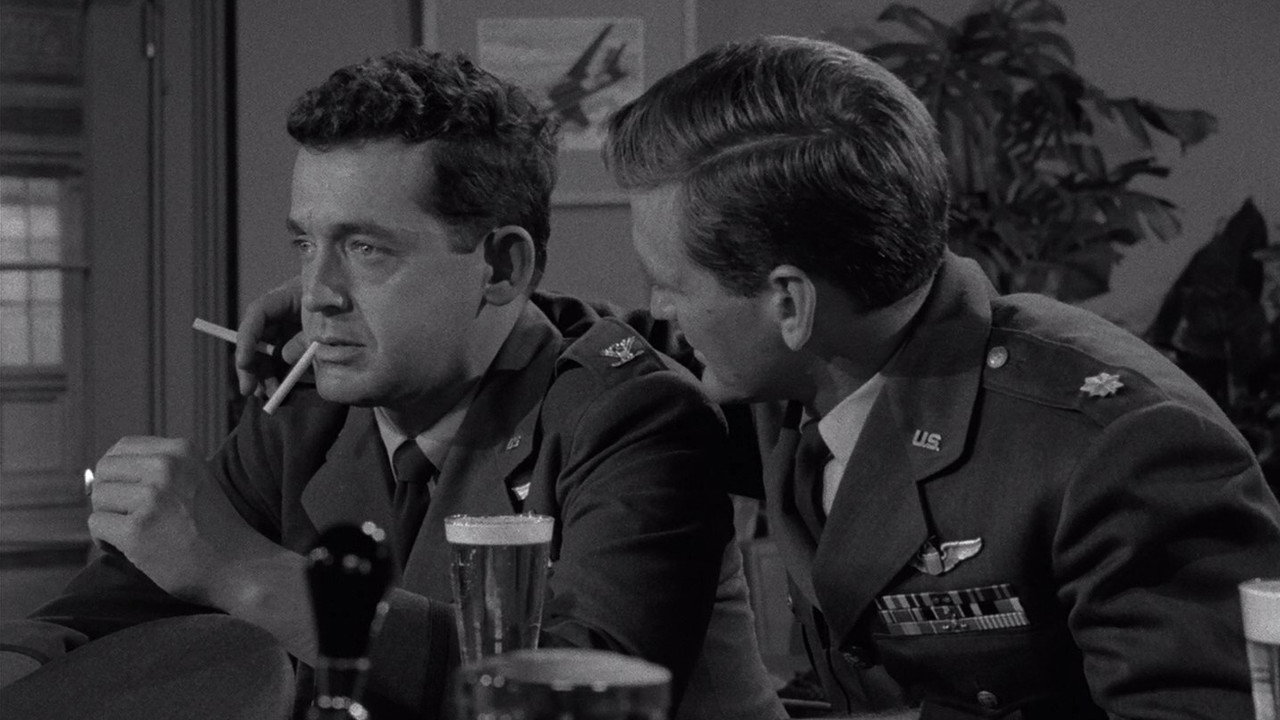
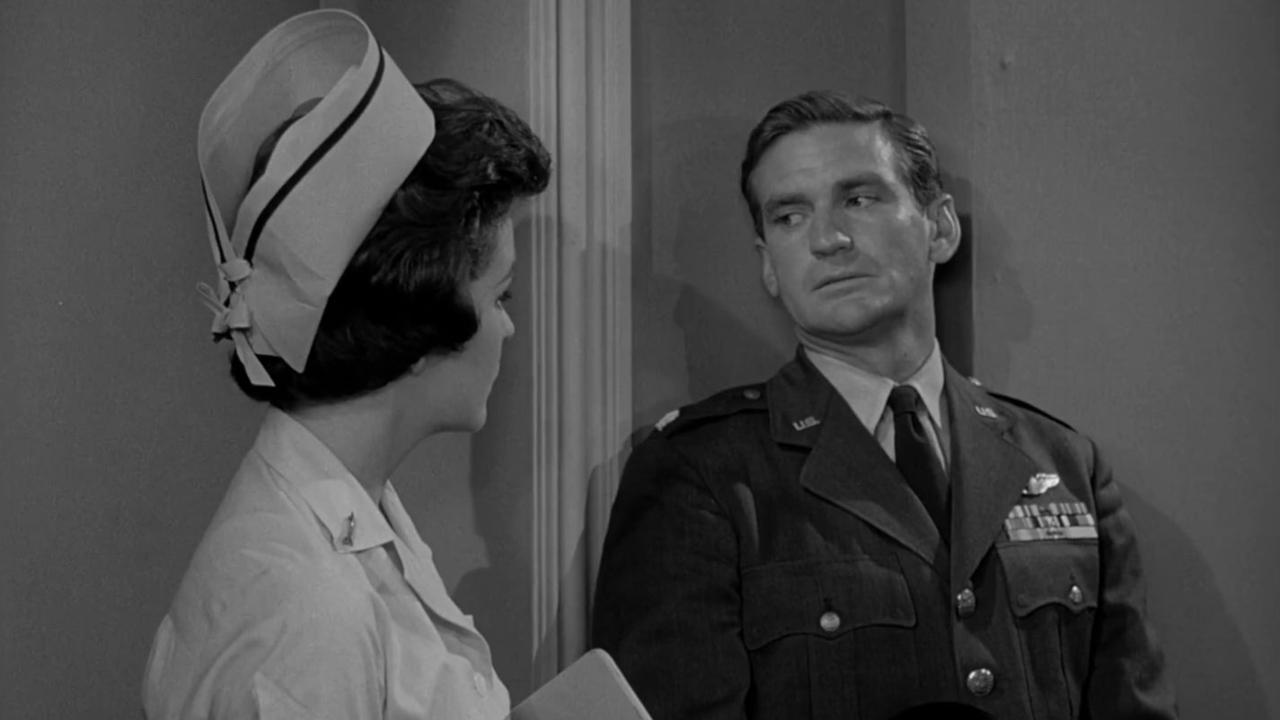
The story in 5 beats
- The hospital visit
Forbes visits his co-pilot Gart in a military hospital and asks how many men flew the X-20.
- A third man
Forbes insists a third crewman, Colonel Ed Harrington, flew with them. Gart says only the two of them did.
- The bar
A flashback shows Forbes and Harrington leaving the hospital for a bar. Harrington feels he no longer belongs, phones his parents and is gone.
No reflectionSpoiler · tap to reveal
Back in the hospital room, Forbes looks in a mirror and sees nothing. He runs from the room in terror and vanishes.
The empty roomSpoiler · tap to reveal
The nurse tells Gart no Forbes was ever there. Then Gart disappears too, and the room and the hangar are left empty.
Why it still matters
Serling opens with a spacecraft and a few facts: the X-20, a thirty-one-hour flight nine hundred miles up, a crash landing in the Mojave, twenty-four hours missing from the radar screen. The crash never appears on screen. The episode plays out in a hospital room and a bar, and the horror comes from conversation: a man asks his friends a simple question about who was on the flight, and the answers keep going wrong.
Rod Taylor plays Lieutenant Colonel Clegg Forbes as someone who knows exactly what he saw and can't get anyone to agree. Jim Hutton, in an early role, plays the friend with the broken leg. Charles Aidman is the third man. The stakes stay small and personal until the episode asks what happens to a person when nobody remembers them.
Serling was a good adapter, and this is a fine example. Richard Matheson's original story has no astronauts. Putting the premise on a spaceship in 1959 gave it a topical setting. Watch how little the episode explains, and what the closing narration chooses to say about it.
Who takes them, and why
The episode never says. The nurse tells Gart that nobody named Forbes was ever in the building, and that Gart was the only man on the mission. She leaves, and Gart vanishes in turn. An officer asks her for an empty room for new patients, and she shows him the one the three astronauts used, which looks as though nobody ever stayed in it. The final shot is the hangar, with the tarp that covered the X-20 on the floor and no aircraft anywhere.
Serling's closing narration says that someone or something took them somewhere, and that they are no longer part of the memory of man. It also says the X-20 does not exist either, and that anyone with questions should speak softly of them, and only in the Twilight Zone. It reads like a ghost story told by a narrator who is the last one to remember, which is exactly the position Forbes and then Gart were in.
The blank is deliberate. Serling said he felt Matheson's story had no rationale, and that outer space let him point at someone or something. The tarp in the last shot is the one thing left to show that the ship was ever there. Whether the tarp means anything is up to you to argue.
Behind the scenes
- Rod Taylor and director Douglas Heyes worked together again later on the series Bearcats!
- An earlier draft called the test ship the X-6 before Serling revised it to the X-20, after the real X-20 Dyna-Soar, a spaceplane the U.S. Air Force was designing for military missions.
- The episode is loosely based on Matheson's story and keeps only the premise. Matheson's version has no astronauts. Serling said he felt the source had no rationale, and that outer space let him point at someone or something.
- Jim Hutton's turn as Gart was an early acting appearance.
The thread
A disappearing-act premise that began in a magazine story and was rebuilt around the first astronauts.
Came before
Shares DNA with
Adapted and echoed
DNA strand
Memory & Identity
The episode shrinks identity to something other people hold for you. Once the people around the astronauts no longer remember them, Forbes is the only evidence left, and he gets less reliable the longer he talks. Serling gives him a space flight to be afraid of and then refuses to explain it, which is why it works.
Every great sci-fi story is built from a handful of strands like this one. Each strand page explains how it works and traces it across shows, books and films.
If this one stayed with you
Where to go next, and why.
Watch · Film
Final Destination (2000)
If the idea of something putting right a mistake it shouldn't have allowed stayed with you, this film turns it into a full horror series. SYFY Wire has also drawn the comparison.
Watch · Twilight Zone
"The Hitch-Hiker"
Another early Twilight Zone about a lone protagonist trying to convince himself and everyone else that something is wrong. It has the same slow tightening of dread.
Read · Short story collection
Born of Man and Woman — Richard Matheson
The collection where "Disappearing Act" first appeared in book form. Read the source and see how much Serling changed, and what he kept.
Sources
- “And When the Sky Was Opened,” Wikipedia
- “The Twilight Zone season 1,” Wikipedia
- “And When the Sky Was Opened,” Wikiwand (Wikipedia mirror)
- “This Classic Episode of The Twilight Zone Was the Original Final Destination,” SYFY Wire
- “The Twilight Zone: Season 1, Episode Eleven "And When The Sky Was Opened",” Great Books Guy, 2021
- “The Twilight Zone Vortex: "And When the Sky Was Opened",” The Twilight Zone Vortex, 2011
- “Serling's Re-Zoning Efforts: "And When The Sky Was Opened",” The Night Gallery (blog), 2015
- “And When the Sky Was Opened (Season 1, Episode 11),” Apple TV
- “And When the Sky Was Opened explained,” everything.explained.today (Wikipedia mirror)
- Joseph Mallozzi, “Twilight Zone rewatch thread, episode 11,” X
- “This Twilight Zone Episode Was Inspired By Experimental Aircraft X-20 Dyna-Soar,” SYFY Wire
- “Disappearing Act (story),” Fiction Into Film Database
- “The Twilight Zone/And When the Sky Was Opened,” The TV IV
- “The Twilight Zone: And When the Sky Was Opened,” Paley Center for Media
- “List of The Twilight Zone guest stars,” Wikipedia