
More from the episode


The story in 5 beats
- Bed rest
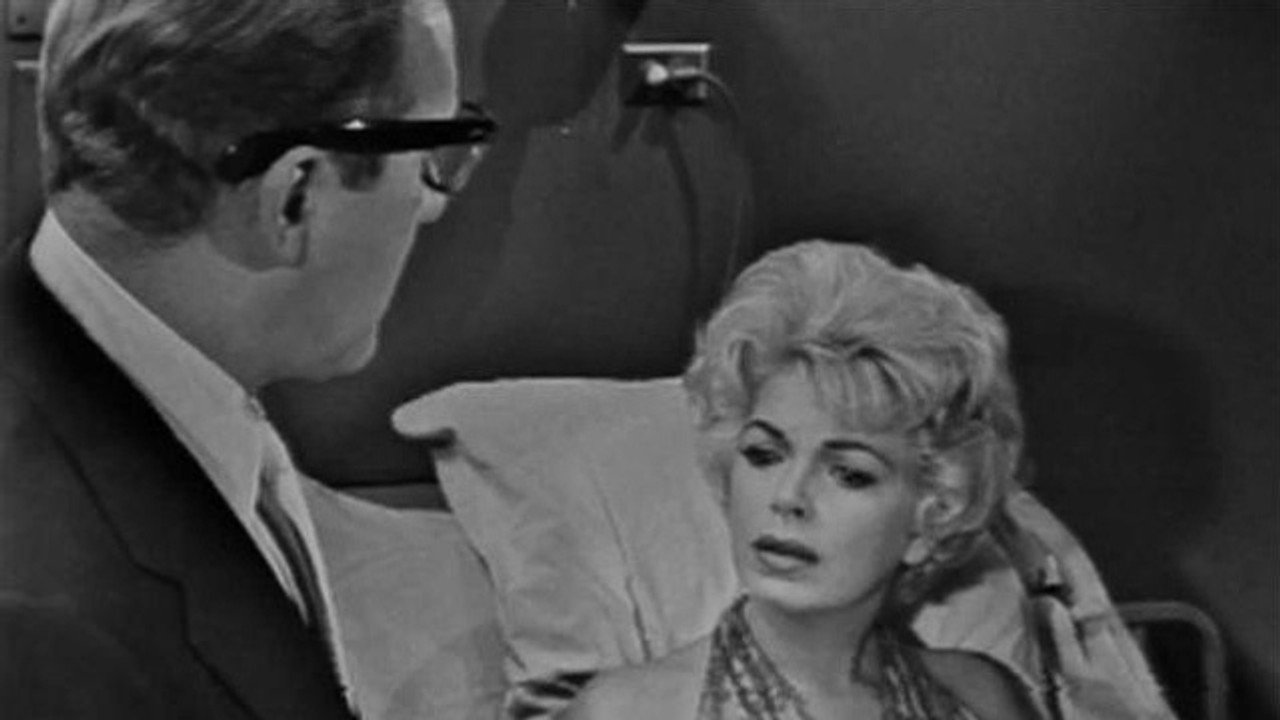
Liz Powell, a dancer hospitalized for overwork and nervous fatigue, is told to rest. Her longtime agent, Barney, and her doctor are on hand.
- Room 22
Each night she follows a nurse down to the basement morgue, room 22. The nurse turns and says, "Room for one more, honey."
- Change one thing
Her doctor suggests she change a single detail of the dream to break it. She does, and it still ends at the same door.
Flight 22Spoiler · tap to reveal
Discharged, Liz goes to the airport to fly to Miami Beach. Her flight number is 22, and the stewardess has a familiar face.
Room for one moreSpoiler · tap to reveal
The stewardess smiles and says the line. Liz runs, and moments later the plane explodes.
Why it still matters
Liz Powell is a professional dancer worn down to nothing and put in a hospital bed to rest. Every night she wakes and follows a nurse down to the basement, to room 22. It's the morgue. The nurse opens the door, smiles, and says, "Room for one more, honey." Her doctor (Jonathan Harris, years before Lost in Space) is sure it's nerves.
Serling built it from a ghost-story anecdote in Bennett Cerf's 1944 collection Famous Ghost Stories, which itself goes back to an E. F. Benson story from 1906. Handlen at The A.V. Club calls the premise a solid urban legend. Barbara Nichols plays Liz as bitter, close to hysterical and rather sad, in Handlen's words, and she's the reason to watch.
It's also one of the six season-two episodes shot on videotape to save money, and you can see it in the flat light and boxy sets of live TV. Critics have mostly found that cheap. TV Obsessive argues the harsh light and buzzing sound make the nightmare scenes more unsettling, and if you watch it in the dark, they have a point.
Flight 22
The nightmare was a warning, and the hospital was only where it found her. When Liz is discharged and goes to catch Flight 22 to Miami Beach, details from the dream start turning up around her. Then she sees the stewardess, the image of the nurse from her nightmare, who greets her with "Room for one more, honey." Liz flees. Moments later the plane explodes. The same actress, Arline Sax, plays both the morgue nurse and the stewardess.
It's the shape of the old anecdote Serling borrowed. In E. F. Benson's 1906 story "The Bus-Conductor," a man sees a figure dressed as a bus conductor driving a hearse, then later sees the same man as the conductor of a bus, which crashes. Cerf's version moved the hearse driver to a Carolina plantation and made him the operator of an elevator that falls. Handlen thought the exploding plane more ridiculous than shocking and noted that nothing explains the dreams. Serling's closing narration diagnoses Liz with acute anxiety, cured in the Twilight Zone.
Behind the scenes
- The series was over its budget of about $65,000 per episode, and by November 1960 only 16 of the season's 29 episodes had been filmed. Six, this one among them, were then recorded on videotape at CBS Television City.
- The tape experiment saved only about $30,000 across all six. Critics compared the results to set-bound soap operas, and it was never repeated.
- The taped episodes were later transferred to 16mm film for syndication.
- The story runs back through Bennett Cerf's 1944 anthology Famous Ghost Stories to E. F. Benson's 1906 story "The Bus-Conductor," first published in The Pall Mall Magazine.
- Benson's story was also adapted in the 1945 anthology film Dead of Night.
- Barbara Nichols started out as a model and burlesque dancer. Jonathan Harris later spent 83 episodes as Dr. Zachary Smith on Lost in Space.
- The episode ends with Serling previewing the next week's show, "The Odyssey of Flight 33," also set on a jet.
The thread
A ghost story people tell as true, passed from a 1906 magazine to a 1944 anthology to CBS.
Came before
Shares DNA with
DNA strand
Dreams & Nightmares
The dream repeats, and everyone tells Liz it means nothing. The episode sides with the dreamer: the nightmare is information, and the doctor's sensible advice is the dangerous part. It's a campfire story told with a hospital corridor and a smile.
Every great sci-fi story is built from a handful of strands like this one. Each strand page explains how it works and traces it across shows, books and films.
If this one stayed with you
Where to go next, and why.
Watch · Film
Dead of Night
The anthology film that put Benson's tale on screen sixteen years earlier, with a handful of other dread-soaked stories around it.
Watch · Twilight Zone
"The Hitch-Hiker"
If the figure who keeps turning up got under your skin, this one runs that feeling along a whole highway.
Watch · Twilight Zone
"The Odyssey of Flight 33"
Serling previews it at the end of this one. Another jet, a very different kind of trouble, and one of the season's best.
Read · Short story
"The Bus-Conductor" — E. F. Benson
The 1906 original. Short and quiet, and you'll recognize the shape at once.
Sources
- “Twenty Two (The Twilight Zone),” Wikipedia
- Zack Handlen, “The Twilight Zone: "Twenty-Two"/"The Odyssey Of Flight 33",” The A.V. Club, 2012
- “Exploring The Twilight Zone, Episode #53: "Twenty-Two",” ScreenAnarchy, 2011
- Timothy Glaraton, “The Twilight Zone: Twenty Two Is the Number of Nightmares,” TV Obsessive, 2022