
More from the episode
The story in 5 beats
- Fifty-five minutes out
Flight 33, London to New York, is nearly home when its ground speed starts climbing far past anything possible.
- The flash
A burst of light, violent shaking, then nothing on the radio. Nobody answers from New York.
Below the cloudsSpoiler · tap to reveal
Farver descends. The crew can see the Manhattan coastline, but there's no city on it, only jungle, and a brontosaurus.
CloserSpoiler · tap to reveal
They climb back into the tailwind. New York reappears, but LaGuardia's tower doesn't understand them, and below is the 1939 World's Fair.
One more trySpoiler · tap to reveal
Fuel low, Farver tells the passengers the truth over the intercom, asks them to stay calm and pray, and climbs one last time.
Why it still matters
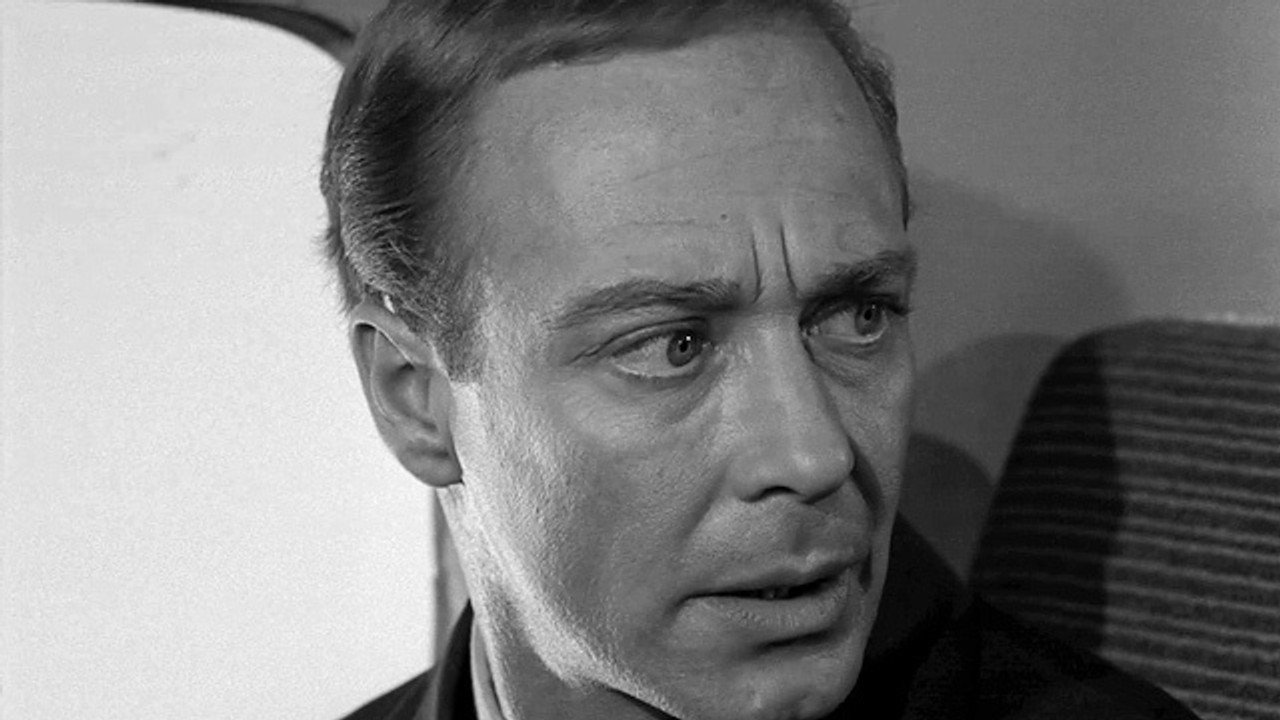
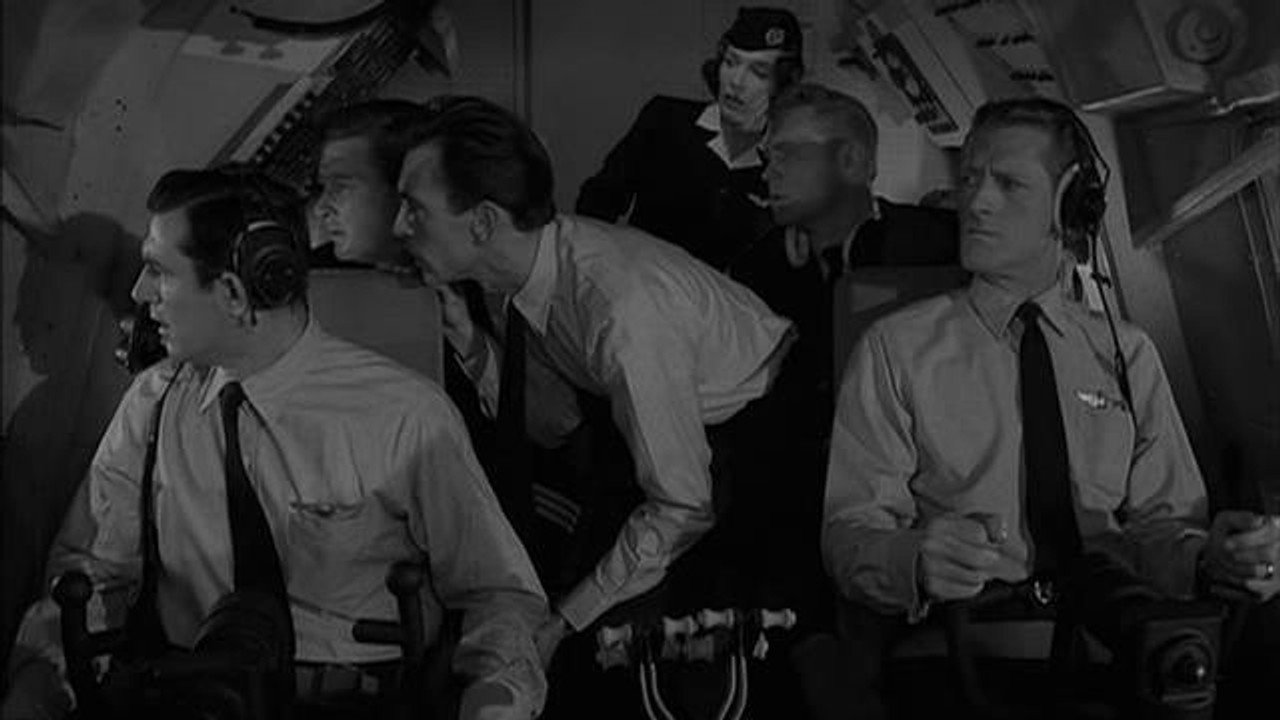
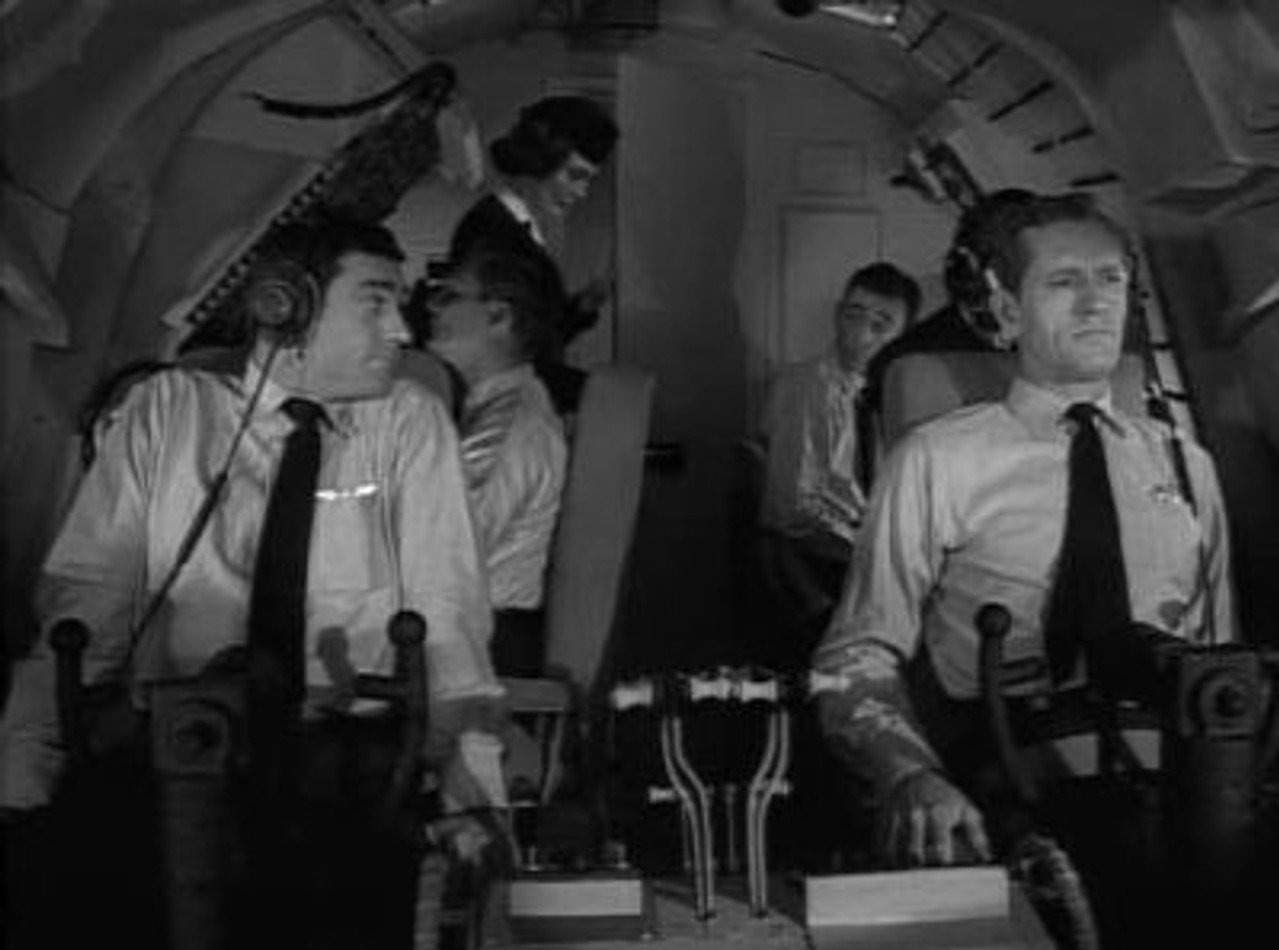
Global Airlines Flight 33 is a Boeing 707 about 55 minutes out of Idlewild when the instruments stop making sense. The ground speed climbs far past anything a jet can do while the airspeed holds steady. Then a flash, heavy turbulence, and silence on the radio. Captain Farver, played by John Anderson, does the only thing a pilot can: he takes her down below the overcast to have a look.
Almost all of it plays in the cockpit, which is why it works. The crew talk like a real crew, in checkpoints, headings and fuel states, and they keep their heads. Serling's brother Robert, an aviation writer for United Press International, worked out that talk with a pilot friend, and pilots later wrote in to praise how accurate it was.
The A.V. Club's Zack Handlen gave it an A and called it a show of everything The Twilight Zone can do right, with deft, controlled pacing. It may be the most grounded story the series ever told about something impossible.
Not far enough
The tailwind has pushed Flight 33 through time. Below the clouds is Manhattan before people, with a dinosaur grazing in the open. Farver reasons that if speed brought them here, more speed might take them back, so they climb to catch the same jet stream. Another flash, more shaking, and New York is there again, but the LaGuardia controller doesn't understand their jet terms and tells the captain to report to the CAA, a name the agency hasn't used in years. The copilot spots the buildings of the 1939 World's Fair. They're in the right place and still in the wrong year.
There's fuel for one more attempt, with no way to know where it will put them. Farver tells the passengers what has happened and climbs. The episode never says whether they make it. Serling's closing narration describes the 1961 search for a missing Global airliner and tells you that you and I know where she is, and that if you hear jet engines above the overcast, it might be Global 33, still trying to get home.
Behind the scenes
- It started with an American Airlines brochure offering studios a mock-up of a 707 cabin, used to train flight attendants. Rod was talking it over with his brother Robert when the idea of a jet breaking a time barrier came up.
- A couple of weeks later Rod phoned Robert for help with the cockpit scenes after they hit the tailwind. Robert worked them out with a pilot friend over a long evening and gave Rod the dialogue by phone.
- Robert Serling said pilots wrote in calling it "the most technically accurate piece that anybody had ever done on an airplane flight." He later wrote the 1967 best-seller The President's Plane Is Missing.
- The brontosaurus model and miniature jungle came from the 1960 film Dinosaurus!, animated in stop-motion. ScreenAnarchy reports the sequence cost $2,500.
- Aerial stock footage of the 1939 New York World's Fair shows where the second jump lands them.
- It was John Anderson's second of four Twilight Zone appearances.
- LaGuardia opened in October 1939, during the World's Fair. Idlewild, the flight's destination, was renamed John F. Kennedy International Airport in December 1963.
The thread
A ship that can't make port, updated for the jet age.
Came before
Shares DNA with
Left its mark on
DNA strand
Time Loops & Timelines
Time travel here is a navigation problem. The crew treat it the way they'd treat a storm or a dead radio: read the instruments, make a plan, try it, and try again with less fuel. The cool procedure is what makes the impossible feel close.
Every great sci-fi story is built from a handful of strands like this one. Each strand page explains how it works and traces it across shows, books and films.
If this one stayed with you
Where to go next, and why.
Watch · Twilight Zone
"The Last Flight"
Another pilot who comes out of the clouds in the wrong time, and has to decide what to do about it.
Watch · Miniseries
The Langoliers
If you wanted more time aboard a plane that's lost track of the clock, King spends a whole miniseries there.
Read · Novel
The President's Plane Is Missing — Robert J. Serling
The thriller by the man who wrote this episode's cockpit talk. Another missing aircraft, told by someone who knew how airlines really work.
Sources
- “The Odyssey of Flight 33,” Wikipedia
- Zack Handlen, “The Twilight Zone: "Twenty-Two"/"The Odyssey Of Flight 33",” The A.V. Club, 2012
- Debopriyaa Dutta, “Rod Serling's Brother Was Responsible For One Of The Twilight Zone's Best Episodes,” /Film, 2023
- Matthew Jackson, “How Rod Serling's Brother Helped Make a Classic Twilight Zone Episode Soar,” SYFY Wire
- “Exploring The Twilight Zone, Episode #54: "The Odyssey of Flight 33",” ScreenAnarchy, 2011
- “13 Sci-Fi, Mystery, And Drama Plots That "The Twilight Zone" May Have Inspired,” Yahoo Entertainment (BuzzFeed), 2022
- “The Twilight Zone (radio series),” Wikipedia