
More from the episode


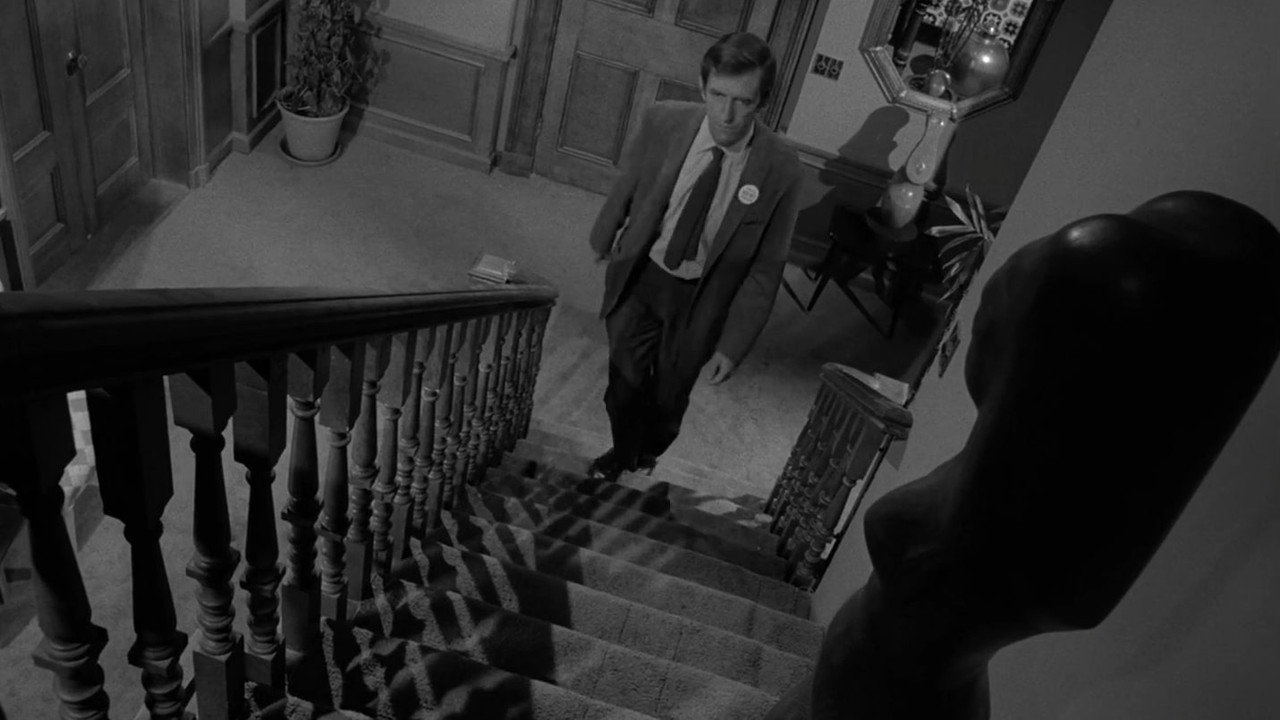
The story in 5 beats
- Bombs by day
Will Sturka makes H-bombs at a military base. Everyone around him seems to be waiting for the war to start.
- The plan
Sturka and test pilot Jerry Riden plan to steal a secret experimental spacecraft and fly their families out, Sturka's daughter Jody among them.
- Watch what you say
A co-worker, Carling, gleefully repeats a rumor that war is 48 hours away. When Sturka looks disgusted, Carling warns him to watch what he says.
- The gate
Carling turns up at card night and hints that he knows. At the launch site he's waiting with a gun, until Jody throws open a car door.
Eleven million milesSpoiler · tap to reveal
Safely away, Riden points out their destination on the viewer: the third planet from its sun, which they call Earth.
Why it still matters
Serling turned Matheson's story into one of the most direct Cold War episodes of the first season. Will Sturka works in a military base's weapons division, makes hydrogen bombs and knows exactly what they are for. He and his friend Jerry Riden have been quietly planning a way out for months. When a co-worker repeats a rumor that war is 48 hours away, the plan stops being a plan and becomes a deadline.
Fritz Weaver plays Sturka as a decent man who has talked himself into being a small part of a large machine, and the episode gives that excuse more weight than you might expect. Much of the tension comes from Carling, a colleague who smiles too much and asks too few questions. Watch the props and the set dressing too: a few odd details are planted early and pay off later.
The A.V. Club's Emily St. James rated it an A and called its twist "justifiably famous." Serling went back to the same kind of ending more than once, and this is the episode where you can see the trick most clearly.
Where they're going
Sturka, Riden and their families are not human beings fleeing Earth. They are people from another planet, and the world they are fleeing to is ours. Riden says the destination is eleven million miles away and that its civilization is similar to theirs. In the final scene Riden points out Earth on the ship's viewer. Serling's closing narration says the ship leaves behind a planet "on the verge of suicide."
The ending works because of what the audience assumes. The Cold War setting, the H-bombs and the suburban living rooms all read as ours, and the odd props are easy to explain away. The twist is a joke on the viewer, and it also asks whether the people on the receiving end of the escape are any more sensible than the ones who left.
Serling liked showing Earth as the alien world. The A.V. Club points out that the very next episode, "I Shot an Arrow into the Air," runs a similar reversal, and that he came back to it in season five with "Probe 7, Over and Out." Of the three, this one is the cleanest.
Behind the scenes
- Matheson's story appeared in the first issue of Galaxy Science Fiction in October 1950.
- The spaceship is the cruiser from Forbidden Planet, which appeared in eight Twilight Zone episodes.
- The story was adapted again for the Twilight Zone radio series, with a script by Dennis Etchison and Fred Willard in the lead.
The thread
A 1950 pulp story, a borrowed spaceship and a trick Serling kept using.
Came before
Shares DNA with
Left its mark on
DNA strand
Atomic-Age Anxiety
The fear is plain on the surface: bombs everywhere, rumors of war, a man who knows what he has built. Serling and Matheson use it to point you at the people deciding whether to press the button. The ending lands because you were so sure of the world you thought you were watching.
Every great sci-fi story is built from a handful of strands like this one. Each strand page explains how it works and traces it across shows, books and films.
If this one stayed with you
Where to go next, and why.
Watch · Twilight Zone
"I Shot an Arrow into the Air"
The next episode in broadcast order, with another trip that doesn't go the way the travelers think. It's tighter and bleaker than this one.
Read · Short story
"Third from the Sun" — Richard Matheson
The original 1950 story. It's worth reading to see how much of Matheson's setup Serling kept, and what he added around it.
Sources
- “Third from the Sun,” Wikipedia
- “The Twilight Zone: S1E14 - Third from the Sun (1960) - Cast & Crew,” The Movie Database (TMDB)
- “List of The Twilight Zone episodes,” Wikipedia
- “Third from the Sun (Q3296789),” Wikidata
- “The Twilight Zone: Season 1, Episode Fourteen "Third From The Sun",” Great Books Guy (blog), 2021
- “It's a cookbook, or something: 14 types of Twilight Zone endings,” The A.V. Club
- “The Twilight Zone (radio series),” Wikipedia
- “The Twilight Zone Vortex: "Third From the Sun",” The Twilight Zone Vortex (blog), 2011
- “Twilight Zone: Third From The Sun,” The Logbook
- “The Twilight Zone: "The Four Of Us Are Dying"/"Third From The Sun",” The A.V. Club
- “Probe 7, Over and Out,” Wikipedia
- “The Little People (The Twilight Zone),” Wikipedia