
More from the episode

The story in 5 beats
- The tiredest man in the city
Edward Hall, awake for days, visits psychiatrist Dr. Rathmann. He says falling asleep could kill him, and staying awake is wearing out his weak heart.
- Dreams in chapters
Hall says he has been dreaming in chapters, as if in a movie serial. Lately the dreams have taken him to a carnival.
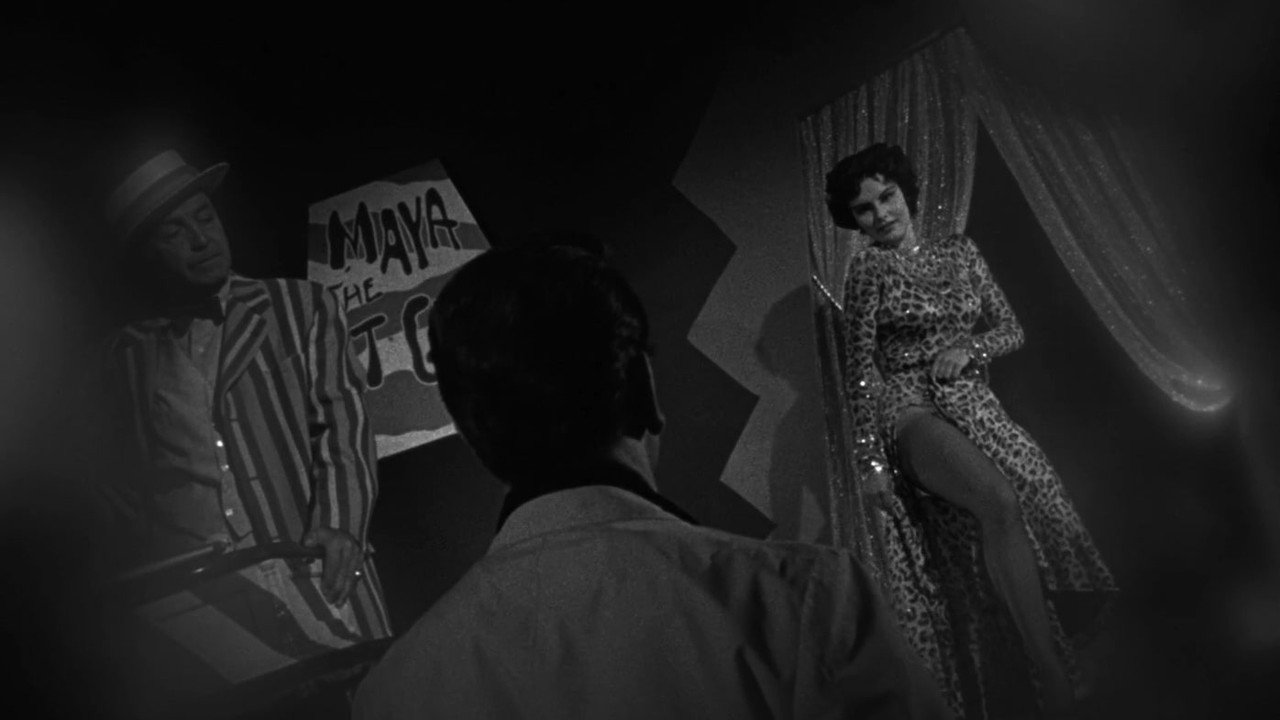
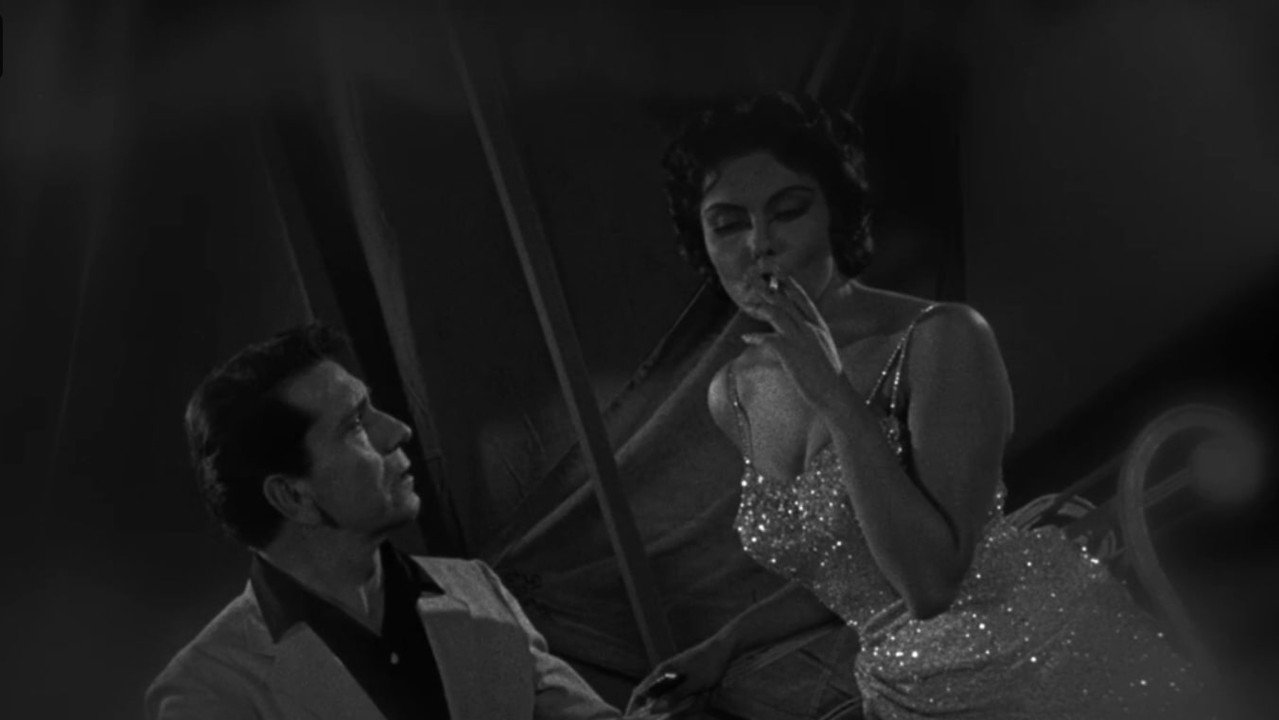
- Maya the Cat Girl
Maya, a carnival dancer, lures him through the funhouse and onto a roller coaster in an attempt to frighten him.
The woman at the front deskSpoiler · tap to reveal
Rathmann can't help, and Hall heads for the door. At the reception desk sits a woman who looks just like Maya.
Never awakeSpoiler · tap to reveal
The ending reveals that Hall's visit to the doctor was part of the dream he feared.
Why it still matters
This is the first Twilight Zone episode that Rod Serling didn't write, and it shows how much room the show was already giving writers. Charles Beaumont had published the story in Playboy, and he adapted it himself for the series. The show was only a few weeks old.
Beaumont's voice is different from Serling's. Serling often builds an episode around a moral; Beaumont builds one around a mind. Edward Hall has a bad heart and an overactive imagination, and he's afraid of sleep. Director Robert Florey gave it impressionist sets that Beaumont said recalled Caligari.
Richard Conte plays Hall as a man running on fumes and nerves. It's also a good place to meet Charles Beaumont, who is credited with 22 episodes of the series.
Where the conversation really took place
Suzanne Lloyd plays the receptionist, Miss Thomas, as well as Maya. The ending turns Hall's visit to the doctor into part of the dream he feared. His fear of the next dream was well founded, but it was the dream he was already having.
Beaumont plants the doubling early: Maya first appears in Hall's rear-view mirror as he drives. She was already in his head. The premise is cruel, too: Hall is trapped between a dream that will kill him and sleeplessness that will wear his heart out.
Serling's closing narration says a dream can take a second and a man can live and die in it, and asks which reality is the greater one. Fans can argue over that for a long time. One reading from The Twilight Zone Vortex is that the moment the lights and music go down in the dream is the moment Hall actually dies, and that the episode then comes back to that moment.
Behind the scenes
- It was the first episode of the series not written by Rod Serling, and the first by Charles Beaumont, who is credited with 22 episodes of the series.
- Beaumont later wrote that he was on the set, watching, unable to believe that any of it was truly happening, and that an author was seeing his work treated with respect.
- Beaumont praised director Robert Florey. He said Florey surprised him with symbols and shadings he hadn't planned, and that the set recalled Caligari and Liliom.
The thread
A line of Shakespeare, a story Beaumont had already published, and the look of silent-era film.
Came before
Shares DNA with
Adapted and echoed
DNA strand
Dreams & Nightmares
Beaumont builds a nightmare with rules: dreams in installments, a heart that can't take a shock, and a villain who is part of the dreamer. Florey's impressionist carnival makes the dream feel physical, so the episode plays fair with the fear even while the ground keeps moving.
Every great sci-fi story is built from a handful of strands like this one. Each strand page explains how it works and traces it across shows, books and films.
If this one stayed with you
Where to go next, and why.
Watch · The Twilight Zone
"Shadow Play"
If you want more of Beaumont's dream logic, this second-season episode is another of his scripts about a recurring nightmare.
Read · Short stories
Perchance to Dream: Selected Stories — Charles Beaumont
This Penguin collection includes several stories Beaumont later adapted for the show, if you want to read Beaumont in his own words.
Read · Novel
What Dreams May Come — Richard Matheson
Matheson, a fellow Twilight Zone writer, takes sleep and death somewhere very different.
Sources
- “Perchance to Dream (The Twilight Zone),” Wikipedia (via Wikiwand)
- “Perchance to Dream (The Twilight Zone),” Wikipedia mirror (en-academic)
- “How This Classic Twilight Zone Episode Represents Groundbreaking Nature of Rod Serling's Anthology,” SYFY Wire
- “How One Writer's Real-Life Fears Inspired an Early Twilight Zone Episode,” SYFY Wire
- “The Twilight Zone Vortex: "Perchance To Dream",” The Twilight Zone Vortex, 2011
- “Book Review: Perchance to Dream: Selected Stories by Charles Beaumont,” The Twilight Zone Vortex, 2016
- Great Books Guy, “The Twilight Zone: Season 1, Episode Nine "Perchance To Dream",” 2021
- “The Twilight Zone, S1E9, "Perchance to Dream",” Media Magpies
- “The Twilight Zone: S1E9 - Perchance to Dream (1959) - Cast & Crew,” The Movie Database (TMDB)
- “Perchance to Dream (The Twilight Zone),” Wikipedia
- “The Twilight Zone/Perchance to Dream,” The TV IV
- “Why One Twilight Zone Legend Had to Rely on Ghostwriters Near the End of the Series,” SYFY Wire
- “The Cabinet of Dr. Caligari,” Wikipedia
- “What Dreams May Come (Matheson novel),” Wikipedia (via Wikiwand)
- “List of The Twilight Zone (1959 TV series) episodes,” Wikipedia (via Wikiwand)
- “Perchance to Dream: Selected Stories,” Open Library