
More from the episode

The story in 5 beats
- The morning after
Gurney wakes up hung over. His wife, Wilma, doesn't know who he is and wants him out of the house.
- Nobody knows him
At work, at the bank, at his mother's: no one has ever heard of David Gurney, and there's no record that he exists.
- The doctor
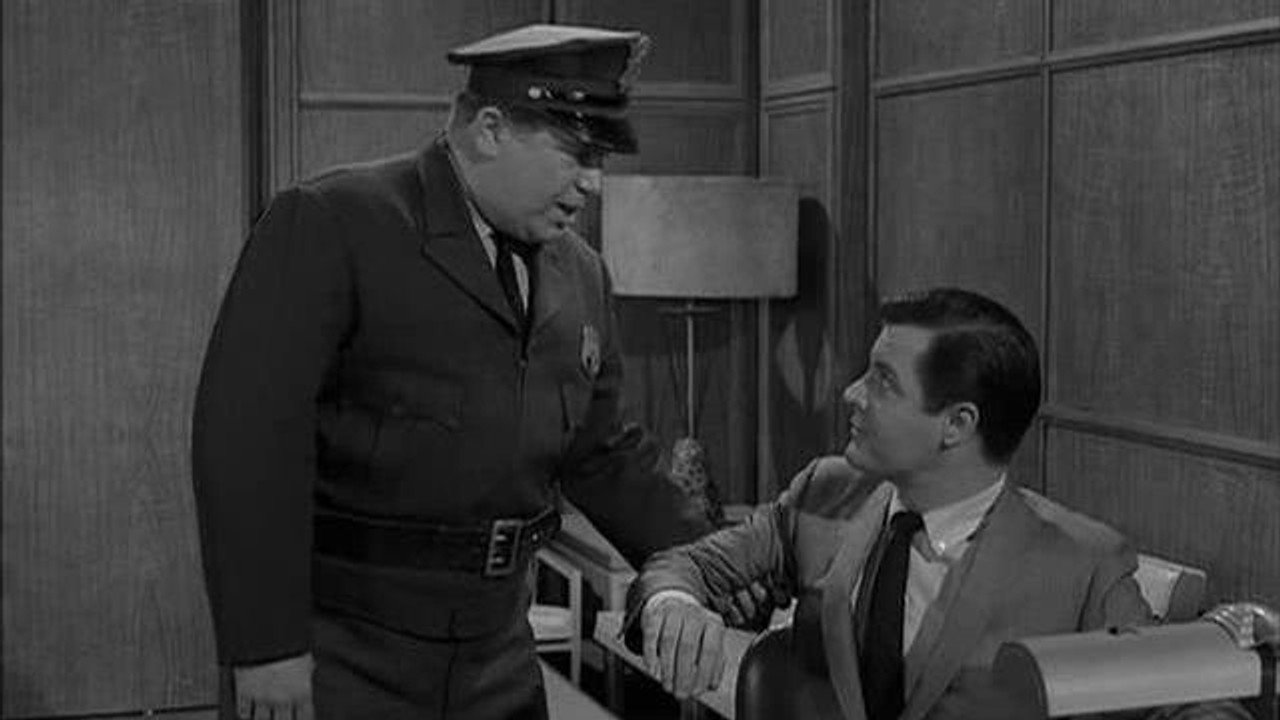
Locked in an asylum, Gurney meets Dr. Koslenko, who calmly explains that there is no such person, so Gurney climbs out a window.
The photographSpoiler · tap to reveal
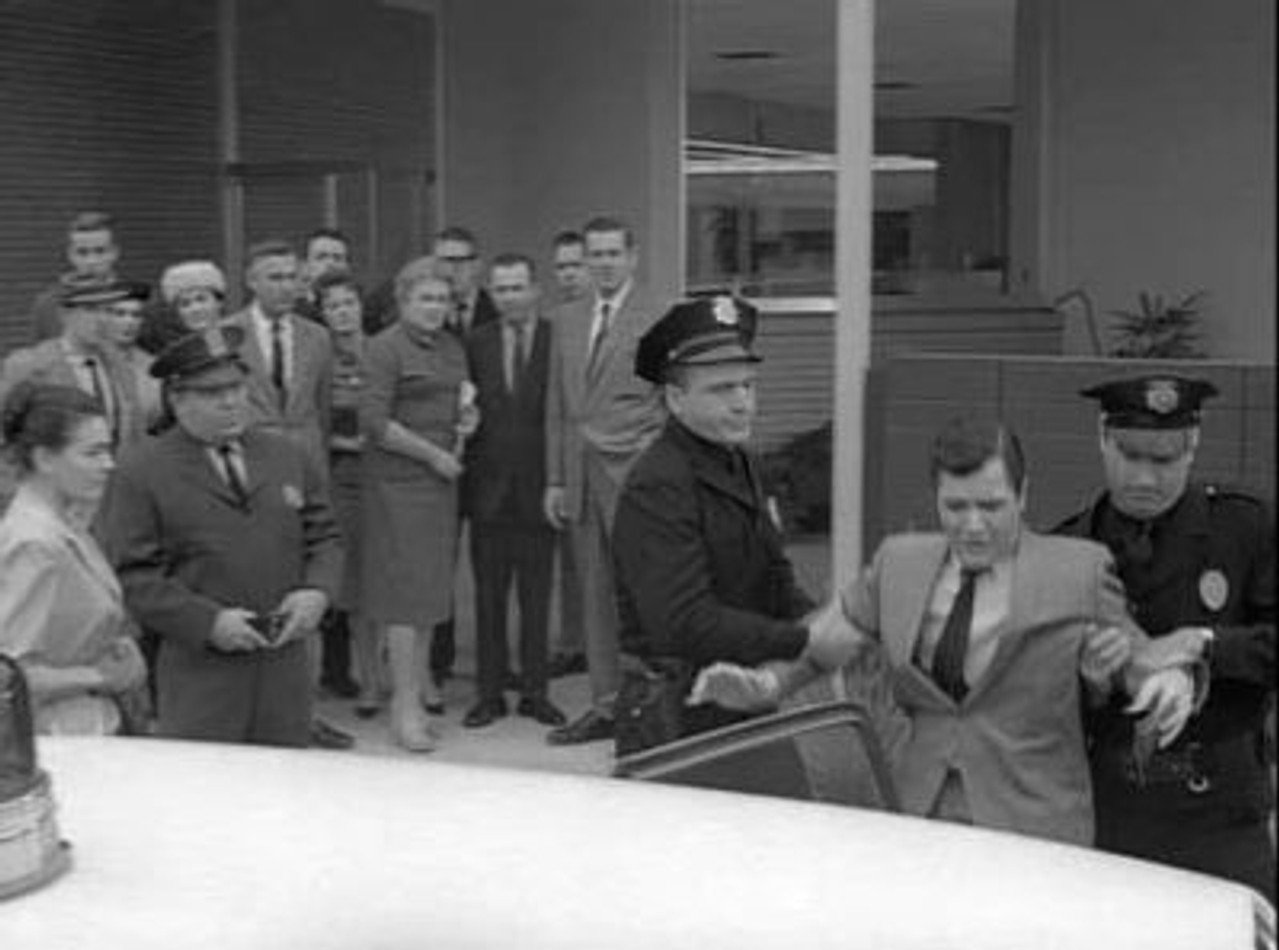
He finds a picture of himself with Wilma. When he shows it to the doctor and the police, he is alone in it.
Wake upSpoiler · tap to reveal
Gurney wakes in his own bed: it was all a dream. Then his wife comes out of the bathroom.
Why it still matters
Your name only works because other people agree to use it. Charles Beaumont takes that away from one ordinary man in a single morning. David Gurney wakes after a big night out, and his wife doesn't know who he is. His friends and coworkers don't know him, and his mother has never heard of him. Every record that he existed is gone, and the psychiatrist who examines him is politely certain that David Gurney is a delusion.
The A.V. Club's Emily St. James gave it an A- and said it plays like a good Philip K. Dick short story, years before Dick wrote a novel on the same idea. It helps that Gurney isn't especially likable. He's pushy and a little arrogant, and that stubborn certainty is what you want in a man the whole world is trying to talk out of existence. Richard Long carries it, and The Twilight Zone Vortex called the episode "vastly underrated."
Out of one nightmare, into another
Gurney's last piece of evidence is a photo of him with his arm around Wilma. When the doctor and the police look, the picture shows Gurney by himself, reaching toward empty air. He collapses, and wakes up in his own bed. It was a nightmare, and the relief is enormous.
Wilma calls to him from the bathroom, as cheerful and ordinary as ever. She steps out, and she is a different woman. She acts exactly like his wife and plainly believes she is. Gurney, horrified, is now the only person who knows something is wrong, all over again. Serling's narration leaves it open: a mistaken identity, or a nightmare, and Gurney may never find out which. The Vortex's Brian Durant put it neatly: he awakens from a nightmare into a nightmare.
The twist depends on recognizing the first Wilma, and both St. James and Durant thought it lands softer than it should. She has very little screen time, and in the Vortex's view her head wrap blunts the hair-color change.
Behind the scenes
- Two actresses play Wilma: Shirley Ballard in the nightmare and Julie Van Zandt at the end.
- John Brahm directed twelve Twilight Zone episodes, more than anyone else, according to The Twilight Zone Vortex.
- It was the first of twenty episodes shot by director of photography Robert W. Pittack.
- The Vortex groups it with "Perchance to Dream" and "Shadow Play" as a Beaumont trilogy of dream stories.
- Richard Long signed with Universal Pictures at 18, and is best remembered for The Big Valley. He came back to the Zone in the fifth-season episode "Number 12 Looks Just Like You." He died at 47 after several heart attacks in 1974.
- The Twilight Zone Vortex lists stories that share the idea: "The Overnight Case" on 'Way Out (1961), Philip K. Dick's Flow My Tears, the Policeman Said (1974), Stephen King's "The Reploids" (1988) and the series Nowhere Man (1995–96).
The thread
The man the world forgot: earlier versions on TV and in Beaumont's own scripts, and the novels and shows that kept erasing people after him.
Came before
Shares DNA with
Later stories on the same idea
DNA strand
Memory & Identity
Gurney's memories are perfectly intact. What's gone is everyone else's memory of him, and Beaumont shows how little a private certainty counts for on its own. The ending turns the screw: once Gurney is the only one who remembers the right wife, being sure is no comfort at all.
Every great sci-fi story is built from a handful of strands like this one. Each strand page explains how it works and traces it across shows, books and films.
If this one stayed with you
Where to go next, and why.
Read · Novel
Flow My Tears, the Policeman Said — Philip K. Dick
If the blank faces got to you, St. James points to this as the same premise, worked out at novel length and with Dick's usual paranoia.
Watch · Twilight Zone S2
"Shadow Play" (1961)
Another Beaumont script about a man who knows exactly what's happening to him and can't get anyone to believe it.
Watch · Twilight Zone S1
"A World of Difference" (1960)
Another Zone businessman whose life suddenly stops agreeing with him, and a good double bill with this one.
Sources
- “Person or Persons Unknown,” Wikipedia
- Emily St. James, “The Twilight Zone: "Person or Persons Unknown"/"The Little People",” The A.V. Club, 2013
- Brian Durant, “Person or Persons Unknown,” The Twilight Zone Vortex, 2017
- “The Twilight Zone Vortex 2016 Halloween countdown: Person or Persons Unknown,” The Twilight Zone Vortex, 2016
- Peter Martin, “Exploring The Twilight Zone, Episode #92: "Person or Persons Unknown",” ScreenAnarchy, 2011
- “Episode guide: The Twilight Zone,” epguides.com