
More from the episode

The story in 5 beats
- Nothing left to win
Feathersmith, 75 and empty, tells janitor Hecate he'd give anything to go back to Cliffordville and start over.
- The 13th floor
The elevator stops at a floor that wasn't there before. Miss Devlin's travel agency will send him to 1910.
- Cliffordville, 1910
Young again, with $1,412 left, he buys land he knows sits on oil and sets out to outsmart the whole town.
The fine printSpoiler · tap to reveal
The oil can't be reached until 1937, he can't invent anything, and he's 75 inside a younger body.
The $40 ticketSpoiler · tap to reveal
Devlin will send him back to 1963 for $40, and he has to sell his land to raise it.
Why it still matters
William J. Feathersmith built his fortune by crushing everyone in his way, and at 75 he's bored. He tells the janitor, Mr. Hecate, that he wishes he could go back to Cliffordville, Indiana, and start all over. Hecate grew up there too. Then the elevator stops at a 13th floor that wasn't there yesterday, where there's a travel agency and the woman behind the desk is called Miss Devlin.
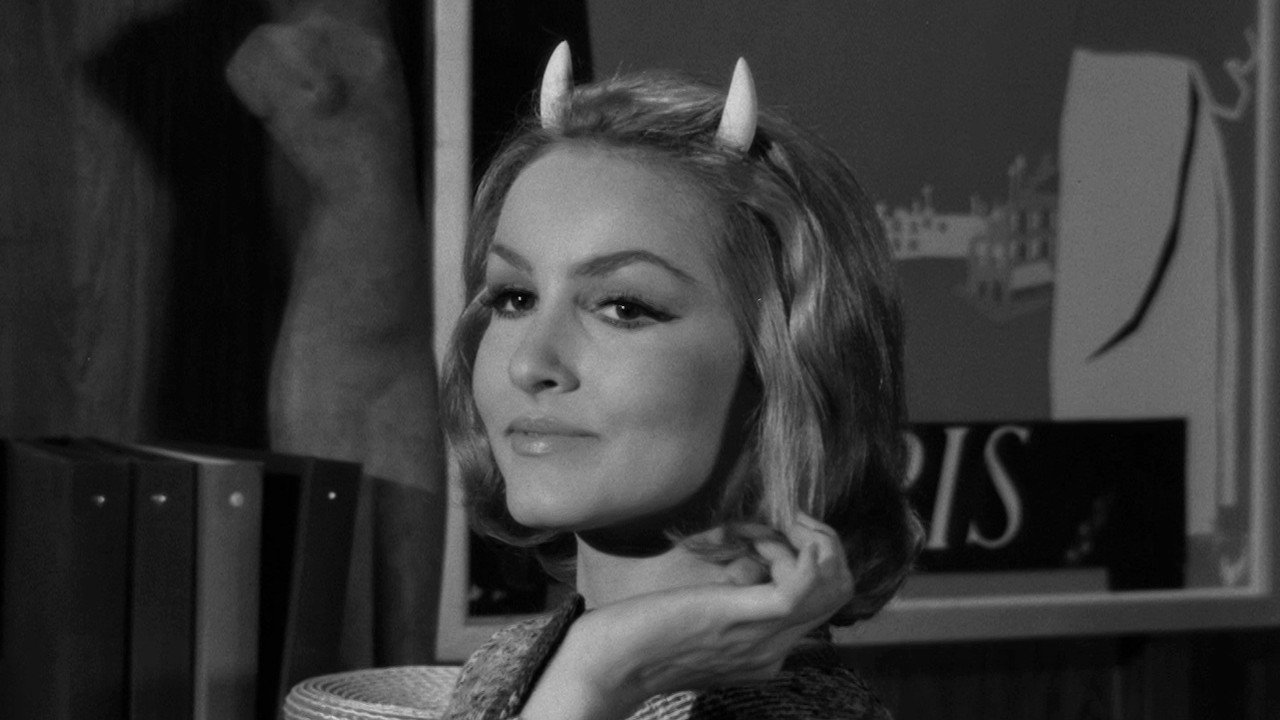
The name is not subtle, and neither is she. Julie Newmar plays the Devil as a bored, amused saleswoman, and Emily St. James at The A.V. Club called her the one thing in the hour worth heartily recommending. Feathersmith gets his trip, his memories and his younger face, and sets off to beat 1910 with what he knows about the next fifty years.
Serling adapted it from a 1943 pulp story, and it arrived late in a season that had already done time travel in "No Time Like the Past" and the Devil in "Printer's Devil." Critics have mostly found it a rehash. It still has a sharp idea at its center, and Newmar is the one who gets to spell it out.
Who owns the building now
Cliffordville isn't the town he remembers. The banker's daughter he once found charming is plain and tiresome. He spends $1,403 on 1,403 acres he knows hold oil, forgetting that nobody can drill that deep until 1937. He tries to invent the automobile self-starter and can't. And Devlin has kept the letter of the deal: he looks 30, but his body is still 75. When he accuses her of changing the past, she says everything is as it was and he only remembers it differently. Then she names his real failing: he's a user, not a bringer, who has lived on other people's work.
Desperate, he buys a ticket back to 1963 for $40, raised by selling his deed to the young Hecate. Back in the present, the 1937 oil strike has made Hecate the company's president, and Feathersmith is the janitor, and has been for more than forty years. Serling's closing narration says Feathersmith tried the track one more time and found it muddier than he remembered, and that some people should quit when they're ahead.
Behind the scenes
- The source is Malcolm Jameson's "Blind Alley," from the June 1943 issue of Unknown Worlds, edited by John W. Campbell Jr. Jameson, a former Navy officer, began writing after throat cancer forced him to retire.
- In the story the town is Cliffordsville and the Devil is Mr. Nibs. Serling toned down Jameson's humor, and Miss Devlin was a male role until a script revision.
- David Lowell Rich directed only this one episode of the series. He used a tilting, spinning camera and double exposures to show Feathersmith's body failing.
- William Tuttle did the aging makeup. St. James thought it was pretty bad, and The Twilight Zone Vortex points out that Salmi's bald cap is visible.
- John Anderson, who plays Dietrich, told Starlog in 1995 that Salmi couldn't land Feathersmith's maniacal laugh. The Vortex suspects the laugh in the first scene was dubbed.
- Bantam reprinted "Blind Alley" in Rod Serling's Triple W in May 1963, the month after the episode aired.
The thread
A pulp bargain with the Devil, and Serling's long habit of sending tired men home.
Came before
Shares DNA with
Left its mark on
DNA strand
Be Careful What You Wish For
Feathersmith asks to be young in 1910, and that's exactly what he gets, down to the 1910 technology and the body he's actually living in. The Devil never lies to him. She only lets him find out that a man who got rich on other people's work has nothing of his own to start again with.
Every great sci-fi story is built from a handful of strands like this one. Each strand page explains how it works and traces it across shows, books and films.
If this one stayed with you
Where to go next, and why.
Watch · The Twilight Zone
"Walking Distance"
If the trip home was the part that got you, this is Serling's gentler first try at it, with a much kinder man at the center.
Watch · Film
Bedazzled (1967)
Peter Cook's Devil grants seven wishes and twists every one. If you enjoyed Miss Devlin's fine print, this is a whole film of it.
Read · Short story
"Blind Alley" by Malcolm Jameson
The 1943 original, broader and funnier than Serling's version, with a male Devil called Mr. Nibs.
Sources
- “Of Late I Think of Cliffordville,” Wikipedia
- JP, “Of Late I Think of Cliffordville,” The Twilight Zone Vortex, 2020
- Emily St. James, “The Twilight Zone: "The New Exhibit"/"Of Late I Think Of Cliffordville",” The A.V. Club, 2013
- “Bedazzled (1967 film),” Wikipedia
- “The Twilight Zone, season 4 episode guide,” TVmaze