
More from the episode

The story in 5 beats
- The bridge
Doug Winter is about to lose the Courier to the Gazette. On a bridge at night, a man who calls himself Mr. Smith finds him.
- The new hire
Smith lends Doug the nearly $5,000 he owes the bank and goes to work as linotype operator and reporter.
- Scoop after scoop
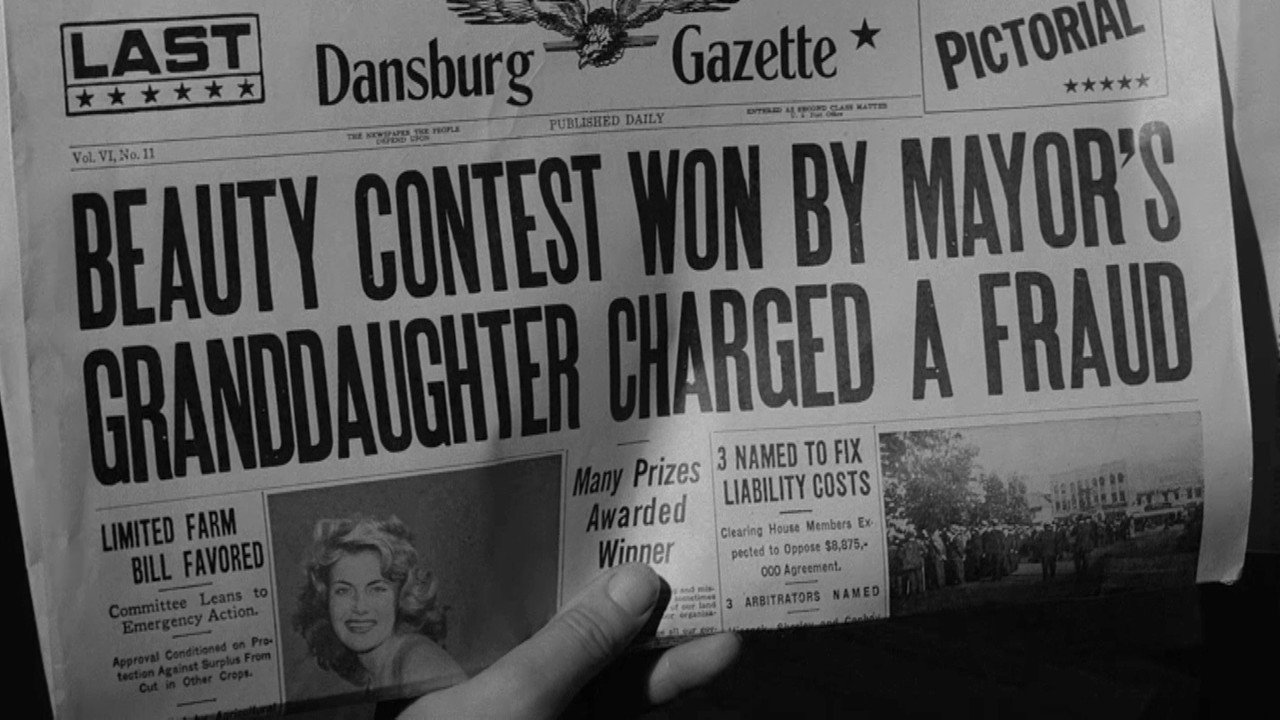
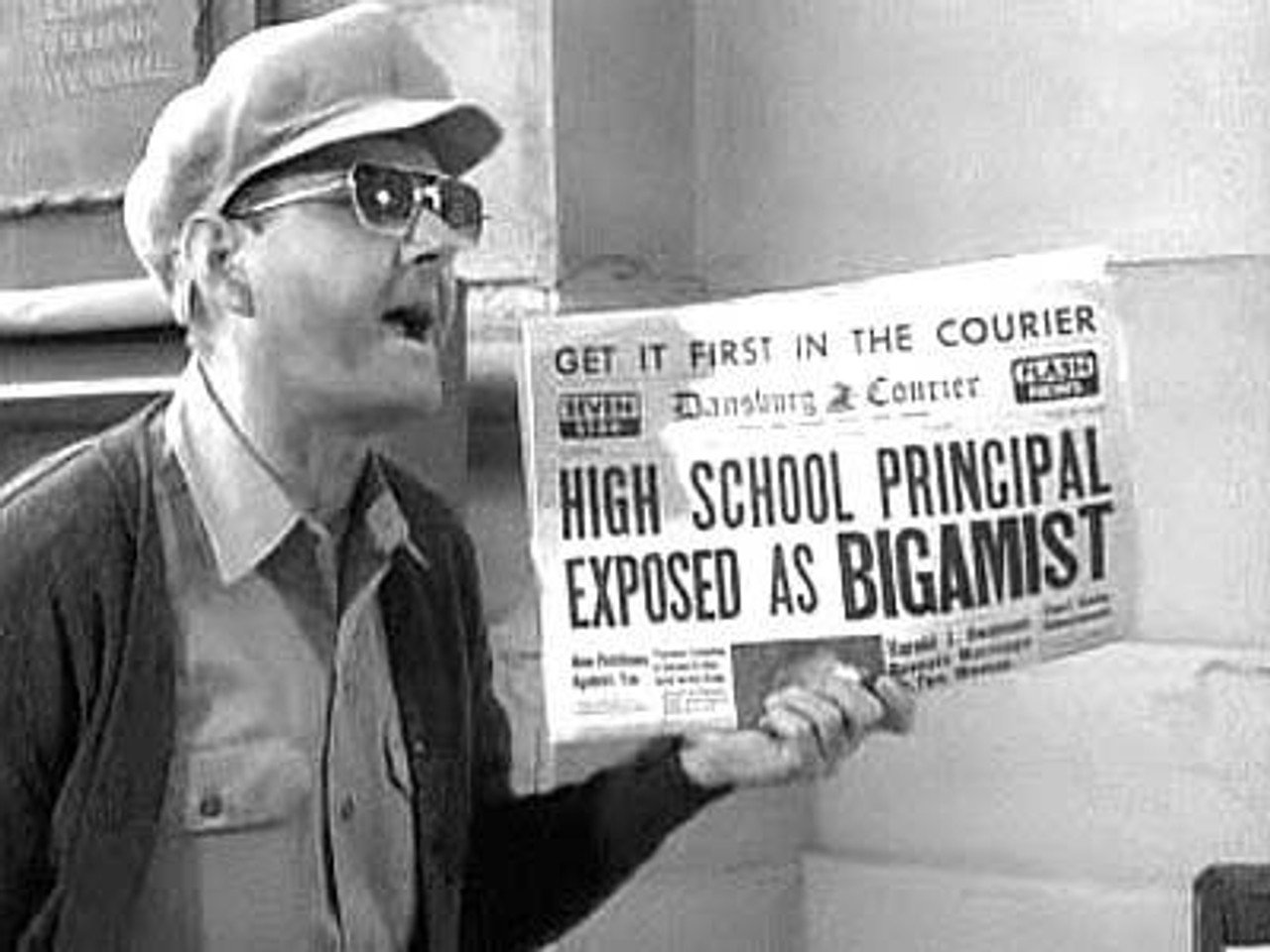
The Courier prints news before anyone else knows it. Then the Gazette burns, and Doug is accused of arson.
The contractSpoiler · tap to reveal
Smith shows his hand: he owns Doug's soul, and whatever is typed on his machine comes true. Jackie is next.
11:29Spoiler · tap to reveal
With minutes to spare, Doug sits down at the linotype himself.
Why it still matters
Douglas Winter's Dansburg Courier is going under, beaten by the bigger Gazette, and he's on a bridge thinking about ending things when a stranger named Mr. Smith turns up. Smith has money to lend, he can work a linotype like a concert pianist, and he wants a job. Soon the Courier is printing stories nobody else has, sometimes before they happen.
The title is a pun: a printer's devil is an apprentice in a print shop. Charles Beaumont turned his own first professional sale into an hour of newspaper noir with a deal-with-the-devil heart, and the fun is all in the newsroom details and in Burgess Meredith. His Smith is chummy, greedy and enjoying himself enormously. Director Ralph Senensky said Meredith's Smith "had charm, intelligence, wiliness" well before the part had to show evil.
The A.V. Club called it minor but "a lot of fun in spite of itself," and that's about right. It's an hour to watch for Meredith, who was making the last of his four Twilight Zone appearances.
Who writes the last story
Doug realizes Smith is causing the disasters he reports. When he asks Smith to leave, the stranger produces Doug's signed contract and explains that he's rigged the linotype so whatever it sets in type happens. He types that Jackie Benson will die in a car crash at 11:30 unless Doug kills himself, then talks Jackie into giving him a ride out of town.
Doug races back to the Courier and types a story of his own. Jackie's car goes off the road, but she walks away unhurt, and Smith is gone. Doug's story says Smith left town at 11:29 and that the contract is void because Doug never fully understood its terms. Doug has the linotype smashed and hauled off, and Serling's narration warns that Smith is gone "for bad" and may be back.
Behind the scenes
- Beaumont's story "The Devil, You Say?" ran in Amazing Stories in January 1951 and was his first professional sale. For TV, Danville became Dansburg, the editor and the devil got new names, and the suicide on the bridge was added. In the story the editor just plans to skip town.
- It was Senensky's only Twilight Zone. Producer Herbert Hirschman had first pencilled him in for a Serling script and then withdrew the offer, and this one came next.
- Cameraman George T. Clemens's contract said his sets had to be green, so the print shop was repainted from dingy gray to green for a black-and-white show.
- For Smith's flaming finger, the effects man numbed his own finger in ice and lit it with lighter fluid. Meredith said he was less worried about getting burned than about freezing to death.
- Senensky later learned that Meredith had received a congratulatory telegram from John Huston after the episode aired.
- Meredith's four leads tie him with Jack Klugman for the most starring roles on the series.
The thread
Bargains with the devil, and the small print that settles them.
Came before
Shares DNA with
DNA strand
Be Careful What You Wish For
Doug wishes for his paper to survive, and the devil makes it the best-read paper in town. The catch is in the contract and in the machine. The way out, fittingly for a newspaperman, is to write a better story than the devil did.
Every great sci-fi story is built from a handful of strands like this one. Each strand page explains how it works and traces it across shows, books and films.
If this one stayed with you
Where to go next, and why.
Watch · Twilight Zone S1
"Escape Clause"
A hypochondriac trades his soul for immortality and thinks he's found the loophole. Serling has fun with the small print too.
Watch · Twilight Zone S1
"Time Enough at Last"
Meredith again, playing the opposite of Mr. Smith: a meek bank teller who just wants time to read.
Watch · Film
The Devil and Daniel Webster (1941)
Walter Huston's Mr. Scratch is the grandfather of every charming devil since, including this one.
Read · Short story
"The Devil and Daniel Webster" by Stephen Vincent Benét
A New Hampshire farmer, a bad bargain and a courtroom fight to get out of it. It's short and funny, and very American.
Sources
- “Printer's Devil,” Wikipedia
- Ralph Senensky, “Printer's Devil (November 1962),” Ralph's Cinema Trek, 2009
- Emily St. James, “The Twilight Zone: "Printer's Devil"/"No Time Like The Past",” The A.V. Club, 2013
- “Printer's Devil,” The Twilight Zone Vortex, 2019
- “Jack Klugman,” Wikipedia
- “The Twilight Zone, season 4 episode guide,” TVmaze