More from the episode

The story in 5 beats
- The bridge at dawn
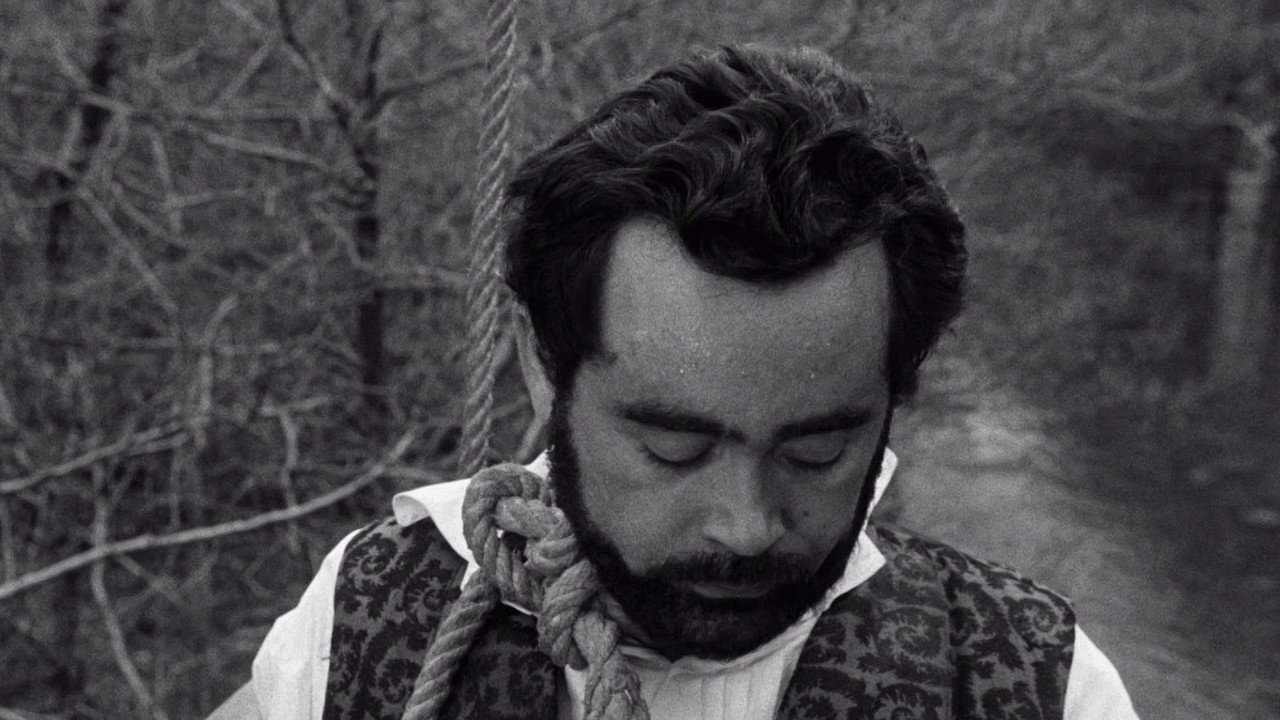
Union soldiers ready a rope on a railroad bridge. Peyton Farquhar, a civilian, stands on a plank with his hands tied.
- The rope breaks
He drops, and the rope breaks. Farquhar plunges into the river below and comes up alive.
- Downstream
The current carries him downstream, away from the soldiers. He climbs out and runs into the forest.
The road homeSpoiler · tap to reveal
Exhausted, he makes his way home, and his wife Abby is there to meet him.
The end of the ropeSpoiler · tap to reveal
As he reaches for her, the rope snaps tight, and Farquhar's body hangs beneath the bridge.
Why it still matters
Robert Enrico made this 28-minute film in France in 1961, adapting Ambrose Bierce's 1890 story about a Southern civilian, Peyton Farquhar, being hanged by Union soldiers from a railroad bridge in Alabama. It won the short film prize at Cannes in 1962. Two years later the Twilight Zone, out of money at the end of its last season, bought the television rights, trimmed it to fit the slot and had Rod Serling introduce it on a soundstage next to a movie camera.
So you're watching something odd: a European art film wearing a CBS anthology's clothes. There's almost no dialogue. The forest, the river and the sound of the water do the work, along with a drum solo by the jazz drummer Kenny Clarke during the run through the woods. Serling told viewers it was a presentation so special that it was the first time in five years the show had done anything like it, and he wasn't overselling.
Watch it for the way time stretches. Enrico lets the escape run long and keeps the camera close to what Farquhar sees and hears. If you know Bierce's story you know where it goes, and the film still holds you.
The whole escape happens in a moment
The rope never broke. Everything after the drop, the river, the run through the forest, the long walk home and the wife waiting at the gate, plays out in Farquhar's mind in the instant before the noose breaks his neck. Bierce's trick is that a long stretch of subjective time fits into a fraction of a second, and Enrico follows him faithfully.
What the film adds is the senses. Because there's so little talk, you take in the escape the way Farquhar does, through the water, the trees and the light, and the detail makes it feel real right up until it stops. Serling's closing words call it the stuff of fantasy, the thread of imagination, the ingredients of the Twilight Zone, which is a generous way of claiming someone else's film as one of the family, and a fair one.
Behind the scenes
- By the end of season five the show had finished 35 of the 36 episodes CBS ordered and was well over budget. Producer William Froug remembered seeing Enrico's short, knew it had little dialogue and was about the right length, and talked reluctant network executives into running it.
- The price depends on whom you ask. Marc Scott Zicree's The Twilight Zone Companion gives $10,000 for the TV rights; Martin Grams Jr.'s book says $20,000, plus $5,000 to edit it down. Either way, Froug said, "With that one airing, we immediately took care of the whole year's overage."
- To fit CBS's slot, more than a minute was trimmed from the 28-minute film and its French voice-over narration was removed.
- The licence allowed two broadcasts in 1964 and no syndication rights, which is why the episode was left out of the show's syndication packages.
- It aired on February 28, 1964. The film won the Academy Award for Best Live Action Short Film a few weeks later, and Variety noted that it had undoubtedly received more exposure than any such candidate in Oscar history.
- It was one of three Bierce adaptations by Enrico, along with "Chickamauga" and "The Mocking-Bird"; the three were released together in 1963 as Au coeur de la vie.
The thread
One story, told again and again: the long escape that takes no time at all.
Came before
Shares DNA with
 ClipOfficial featurette · Netflix · 1:09
Left its mark on
DNA strand
Is Any of This Real?
The film never cheats. Every shot of the escape looks as solid as the bridge. The mind can build a whole world in an instant, and from the inside it feels exactly like being alive.
Every great sci-fi story is built from a handful of strands like this one. Each strand page explains how it works and traces it across shows, books and films.
If this one stayed with you
Where to go next, and why.
Read · Short story
"An Occurrence at Owl Creek Bridge" by Ambrose Bierce
It's short, and it's worth reading once you've seen the film to notice how much Enrico kept and how much he let the pictures say instead of the words.
Read · Story collection
Tales of Soldiers and Civilians by Ambrose Bierce
The 1891 collection where the story was gathered, full of Bierce's other hard-edged Civil War tales, including "Chickamauga," which Enrico also filmed.
Watch · Film
Jacob's Ladder (1990)
If the way the film blurred what was happening and what was imagined got under your skin, this is a feature-length descendant set in a very different war.
Watch · Black Mirror
"Playtest" (2016)
A modern horror story about a man trying to get home, built on the same unease about how much of what he's living through he can trust.
Sources
- “An Occurrence at Owl Creek Bridge (film),” Wikipedia
- “An Occurrence at Owl Creek Bridge,” Wikipedia
- “This Classic Episode Of The Twilight Zone Didn't Win An Emmy – It Won An Oscar,” SlashFilm
- Peter Martin, “Exploring The Twilight Zone, Episode #142: "An Occurrence at Owl Creek Bridge",” ScreenAnarchy, 2012
- “The Twilight Zone: An Occurrence at Owl Creek Bridge's different history explained,” ComicBook.com
- “The Twilight Zone, Season 5 episode guide,” TVmaze