
More from the episode

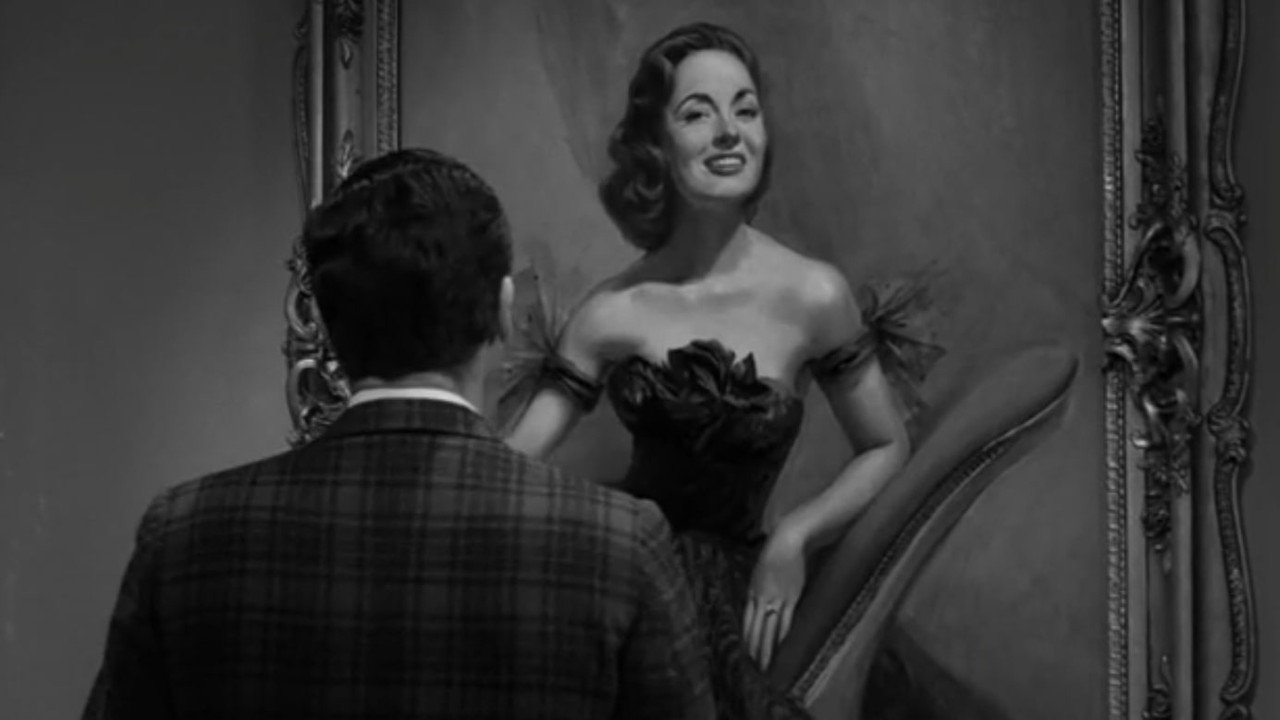
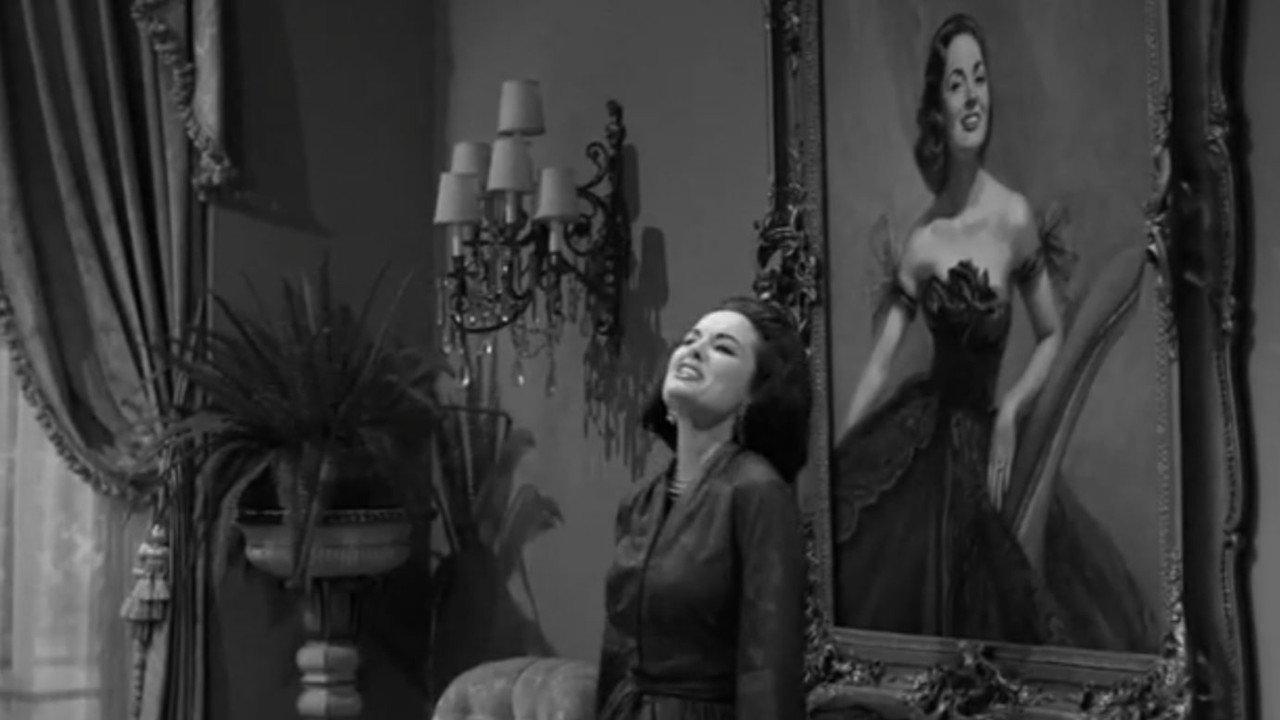
The story in 5 beats
- The interview
Columnist Jordan Herrick visits film star Pamela Morris at her manor. She's charming, and she says she's 38.
- The 1940 portrait
A painting dated 1940 shows Pamela exactly as she looks now. She has a ready explanation for it.
A warning at the doorSpoiler · tap to reveal
As Jordan leaves, the elderly Viola Draper, introduced as Pamela's mother, tells him never to come back. She says she's Pamela's daughter.
The first filmSpoiler · tap to reveal
His editor digs up Pamela's first picture, The Queen of the Nile: a remake of a silent film whose star looked just like her.
The scarabSpoiler · tap to reveal
Pamela drugs his coffee and sets a scarab beetle on his chest. It drains his life into her, and he crumbles to dust.
Why it still matters
Hollywood has always sold the idea of a star who never ages, and this episode takes the sales pitch literally. Pamela Morris is a gracious, beautiful film star who says she's 38. Jordan Herrick, a syndicated Chicago columnist, comes to her manor for an interview, sees a 1940 painting of her that looks exactly like the woman in front of him, and starts doing arithmetic.
There's a sad story behind it, too. The script carries Charles Beaumont's name and was his last credited work on the series, but Beaumont was already too ill to finish scripts, so Jerry Sohl wrote it and the two split the fee.
Ann Blyth is the reason to watch. The A.V. Club's Zack Handlen called Pamela easily the most interesting character in the story, and Blyth plays her warm enough that you half want her to be telling the truth. Keep an eye on Celia Lovsky as the old woman in the house, who knows more than she's saying.
Two thousand years of good reviews
Pamela Morris doesn't age because she takes other people's years. Jordan's editor finds that her first film was a remake of a silent picture whose star, Constance Taylor, supposedly died in a cave-in during filming, and her photos look like Pamela's. Jordan asks for articles on every man Pamela has been involved with, then confronts her. She drugs him, puts the scarab on him, and it ages him to dust before she places it on her own chest.
Viola Draper really is her daughter, grown old while her mother stayed young. Serling's closing narration hints at Pamela's other, more famous Egyptian name, which points to Cleopatra and a life of more than 2,000 years. The final scene sends another young, handsome columnist up the drive to interview her, and the cycle starts again. Serling's advice is that it's best not to be too curious.
Behind the scenes
- Charles Beaumont is the credited writer, but Jerry Sohl wrote it. By the final season Beaumont was seriously ill and could no longer concentrate on his scripts; friends wrote under his name and the fees were split.
- Sohl told Marc Scott Zicree that the idea came from a scarab ring he'd owned years before, knowing it stood for fertility and immortality in ancient Egypt. He worked the story out in about half an hour, then just went home and wrote it, sent it in, and "they shot it the way I wrote it."
- The arrangement broke Writers Guild rules, and Sohl got no pension or health contributions from it. He also wrote "Living Doll" and the hour-long "The New Exhibit" under Beaumont's name.
- It was Beaumont's last credited work on the show. He died on February 22, 1967, at 38.
- Herrick's aging and the dust effect reuse the trick, and the footage, from "Long Live Walter Jameson." ScreenAnarchy's Peter Martin thought the episode can't help but come across as a rehash of that one.
- Production code 2626. Lee Philips plays Herrick, and Frank Ferguson his editor.
The thread
Eternal youth, paid for by someone else.
Came before
Shares DNA with
DNA strand
The Cruel Twist
The episode lets you work out early that she's older than she looks. What's cruel is how ordinary her method is: a chat, a cup of coffee, a reporter who asked one question too many, and then another one coming up the drive.
Every great sci-fi story is built from a handful of strands like this one. Each strand page explains how it works and traces it across shows, books and films.
If this one stayed with you
Where to go next, and why.
Watch · Twilight Zone S1
"Long Live Walter Jameson" (1960)
The episode this one keeps glancing back at: a professor who seems to remember history a little too well, played with real melancholy.
Watch · Twilight Zone S1
"The Sixteen-Millimeter Shrine" (1959)
If the faded-star glamour was the part you liked, Ida Lupino plays an actress who can't stop watching her old films.
Read · Poem
"La Belle Dame sans Merci" by John Keats
A short poem about a knight left pale and wasted by a beautiful stranger, and the oldest version of Pamela you're likely to find on a bookshelf.
Watch · Twilight Zone S5
"The Masks" (1964)
Two weeks later, the same season pulled off another story about faces and what's hidden under them, and it's one of the best of the final year.
Sources
- “Queen of the Nile (The Twilight Zone),” Wikipedia
- Peter Martin, “Exploring The Twilight Zone, Episode #143: "Queen of the Nile",” ScreenAnarchy, 2012
- Zack Handlen, “The Twilight Zone: "Queen Of The Nile"/"What's In The Box",” The A.V. Club, 2014
- “Why Several Episodes of The Twilight Zone Required the Services of Uncredited Ghostwriters,” SYFY WIRE
- “The Twilight Zone, Season 5 episode guide,” TVmaze