More from the episode

The story in 5 beats
- "My children"
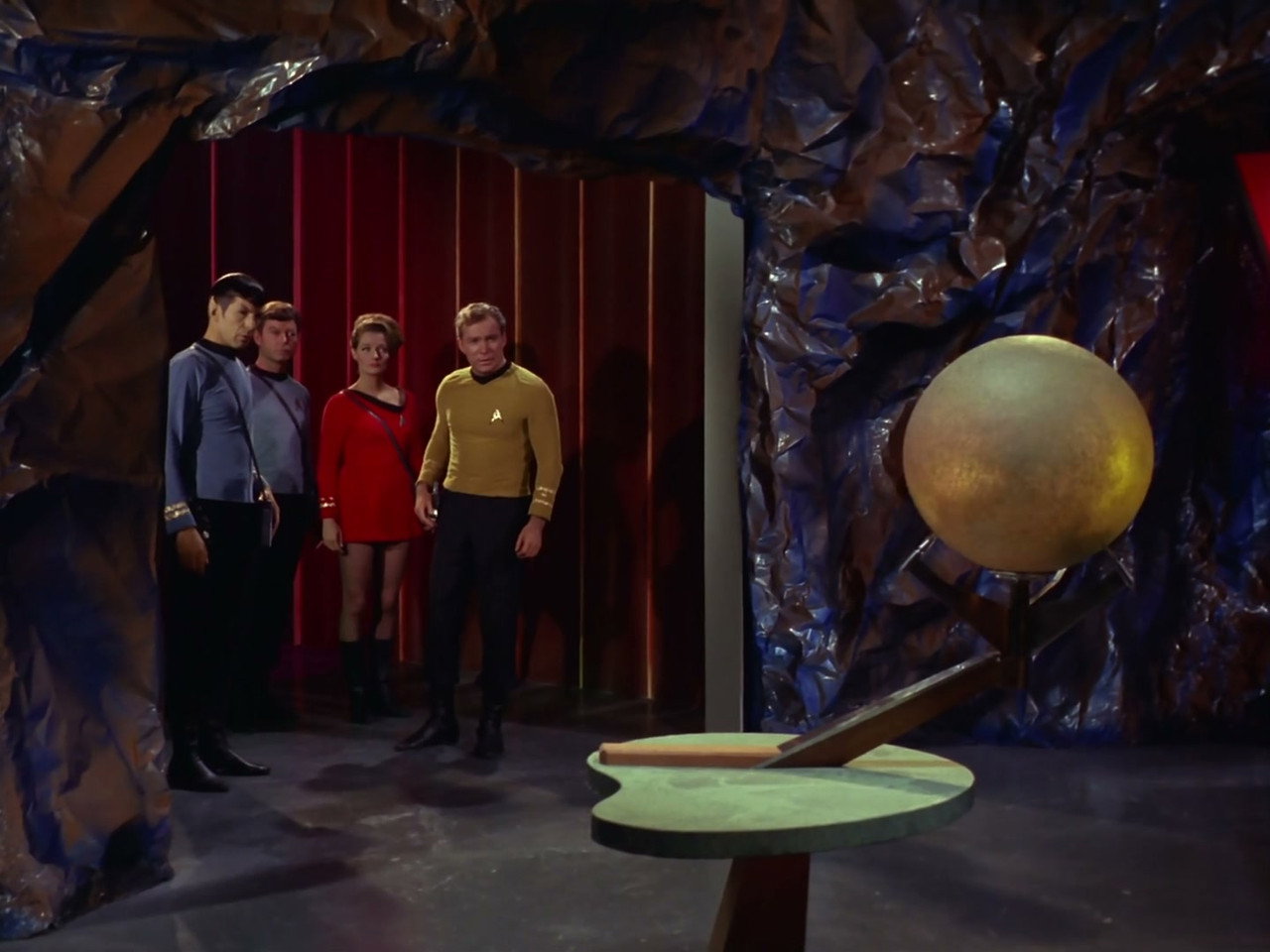
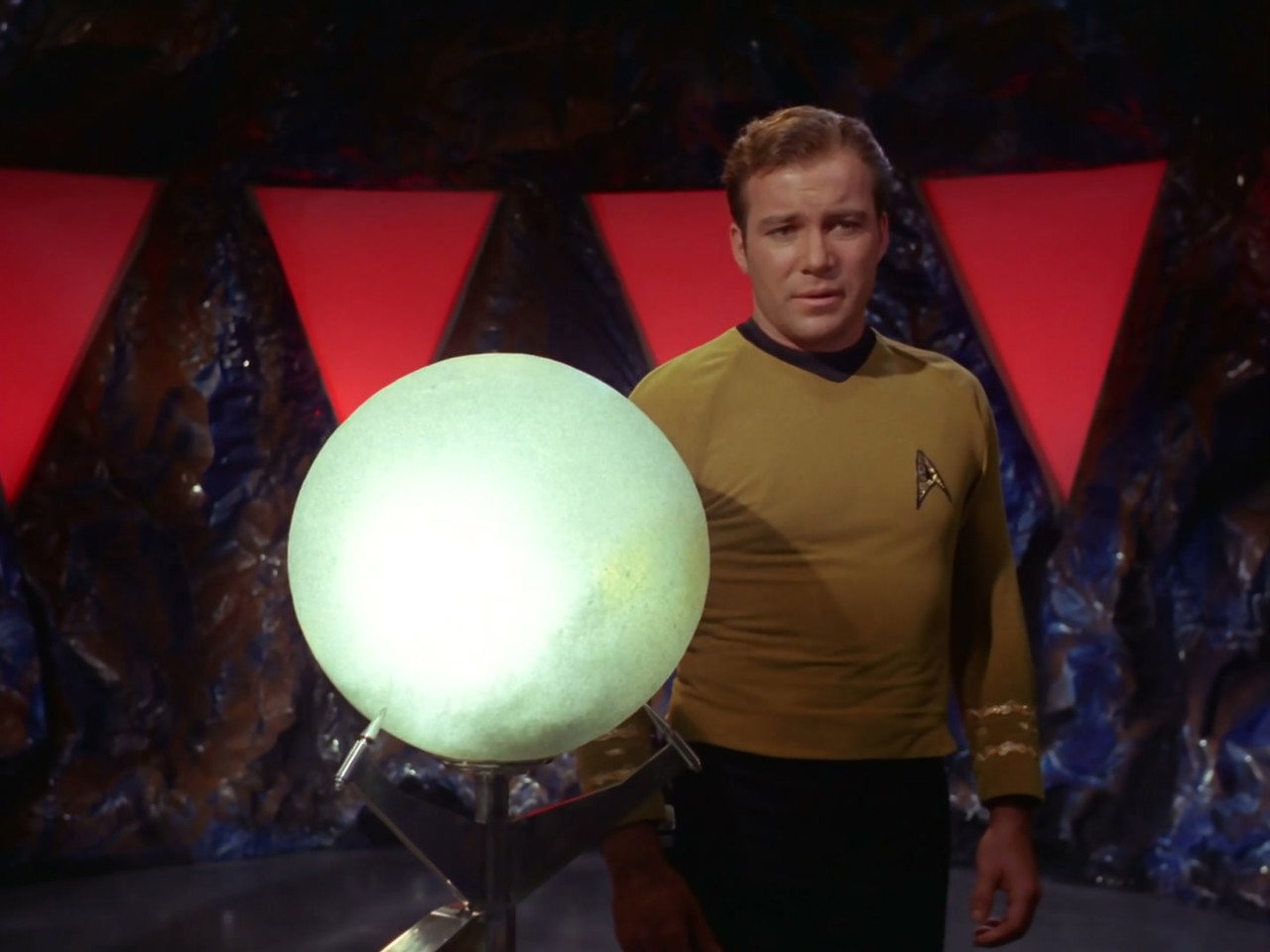
A voice from a dead planet calls the Enterprise down. In a vault deep underground, Sargon speaks to Kirk, Spock, McCoy and Dr. Ann Mulhall from a luminous sphere.
- Kirk lends himself
Sargon moves into Kirk's body to show he means no harm, then gives it back. He and two others need human hosts while they build robot bodies.
- Risk is our business
Kirk persuades his doubtful officers. Sargon takes Kirk, his wife Thalassa takes Mulhall, and his old enemy Henoch takes Spock.
Henoch's planSpoiler · tap to reveal
Henoch has no intention of giving Spock's body back, and starts working to get rid of Sargon. Thalassa begins to wonder whether she wants to give hers back either.
One last kissSpoiler · tap to reveal
Sargon and Thalassa choose not to build android bodies after all, and ask for one last thing before they go.
Why it still matters
A voice calls the Enterprise down to a lifeless planet and addresses Kirk and Spock as its "children." It belongs to Sargon, one of the last three survivors of an ancient race whose minds have been kept in glowing spheres since their civilisation destroyed itself. He asks to borrow human bodies long enough to build android ones. Kirk says yes, and talks his crew round with his "Risk is our business" speech.
The real treat is watching the cast play other people. William Shatner gets to be the dignified Sargon, and Leonard Nimoy plays Henoch, Sargon's old enemy, who takes over Spock's body and enjoys it far too much. Director Ralph Senensky said the part gave Nimoy a chance to break away from Spock. Diana Muldaur, in the first of her three Star Trek roles, plays both Dr. Ann Mulhall and Sargon's wife Thalassa.
It's also a strangely tender episode. Sargon and Thalassa haven't touched in an unimaginably long time, and the question of what they'd give up for a body, and for each other, sits underneath all the body-swap business.
Where Spock went
Henoch tampers with the injections that keep Kirk's borrowed body going, and Sargon seems to die along with it. McCoy revives Kirk's body but can't bring Kirk back. Thalassa, tempted by having a body again, offers McCoy a trade and then thinks better of it. Sargon turns out to be alive after all, hiding in the Enterprise itself. Kirk and Mulhall get their bodies back, but the spheres are destroyed, including the one holding Spock's mind.
Kirk has McCoy prepare a lethal injection for Henoch. Henoch reads McCoy's mind and orders Nurse Chapel to use it on McCoy instead, and she injects Henoch. Sargon blocks his escape into another body, and Spock's body collapses. Then it wakes up as Spock. The injection was never lethal, and Spock's mind had been sheltering in Chapel's body all along. Sargon and Thalassa decide against android bodies and choose oblivion together. Their last request is to borrow Kirk and Mulhall one more time, for a kiss.
The ending wasn't the writer's. John T. Dugan, a devout Catholic, wanted the pair to drift on through the universe without bodies. Gene Roddenberry's uncredited rewrite sent them into oblivion, and Dugan took his name off the script.
Behind the scenes
- John T. Dugan is credited as "John Kingsbridge," a pseudonym he used after Gene Roddenberry rewrote his ending. Director Ralph Senensky later said something about the script didn't work for him, and that the writer and Roddenberry read it very differently.
- It was Diana Muldaur's first Star Trek appearance. She came back as Dr. Miranda Jones in "Is There in Truth No Beauty?" and as Dr. Katherine Pulaski in The Next Generation's second season. Senensky had worked with her several times before and called her "a wonderful leading lady."
- James Doohan provided the voice of Sargon before he takes over Kirk's body.
- The planet is named Arret, "Terra" backwards, but only in the script; nobody says it on screen.
- Kirk's "Risk is our business" speech, written while the real moon landing was still in the future, mentions the first Apollo mission.
- Later Star Trek fiction made more of Sargon's people: a DC Star Trek comic established that they built Vaal, the computer god in "The Apple."
The thread
Minds that outlive their bodies, the old stories it echoes, and the other times someone borrowed Kirk.
Came before
Shares DNA with
Left its mark on
DNA strand
Memory & Identity
Putting a mind in someone else's body tests who that mind really is, and the episode plays it two ways: Henoch turns crueller once he has a body to enjoy, and Thalassa finds out how much she has missed having one. Sargon is the only one who knows the bodies were never theirs to keep.
Every great sci-fi story is built from a handful of strands like this one. Each strand page explains how it works and traces it across shows, books and films.
If this one stayed with you
Where to go next, and why.
Read · Novella
The Shadow Out of Time — H.P. Lovecraft
An ancient race that travels by borrowing other people's bodies. If Sargon's offer made you uneasy, Lovecraft takes the same idea somewhere much darker.
Watch · Star Trek S3
"Is There in Truth No Beauty?" (1968)
Diana Muldaur's second Star Trek role, in another story about minds, bodies and what people can bear to look at.
Read · Novel
Altered Carbon — Richard K. Morgan
A future where a mind can be stored and dropped into any body that's available. Sargon's dilemma, turned into a whole society.
Watch · Star Trek S1
"The Enemy Within" (1966)
Another chance to watch Shatner play two sides of himself, a season earlier and with a transporter to blame.