More from the episode

The story in 5 beats
- Art criticism
Picard is painting when the away team returns. Data offers a review of the canvas that Picard cuts short.
- Boom
Apgar's station explodes moments after Riker beams back. Krag arrives with two witnesses who say Riker threatened Apgar.
- Three stories
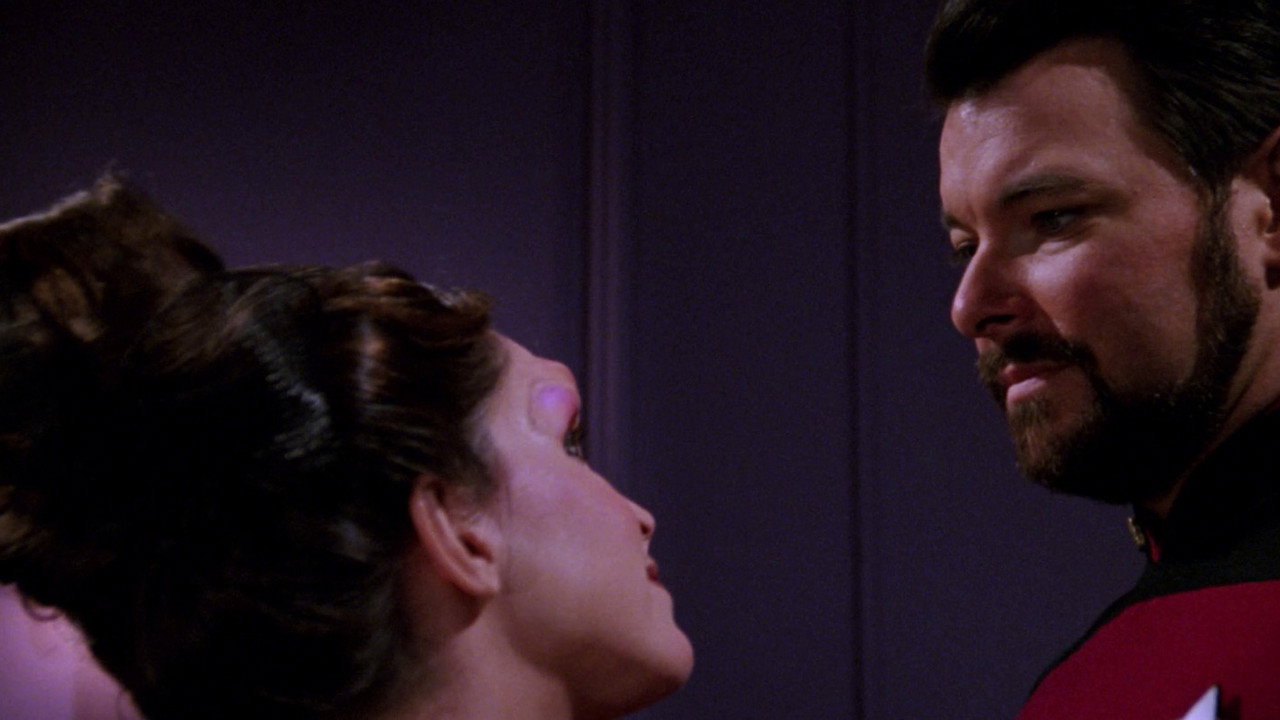
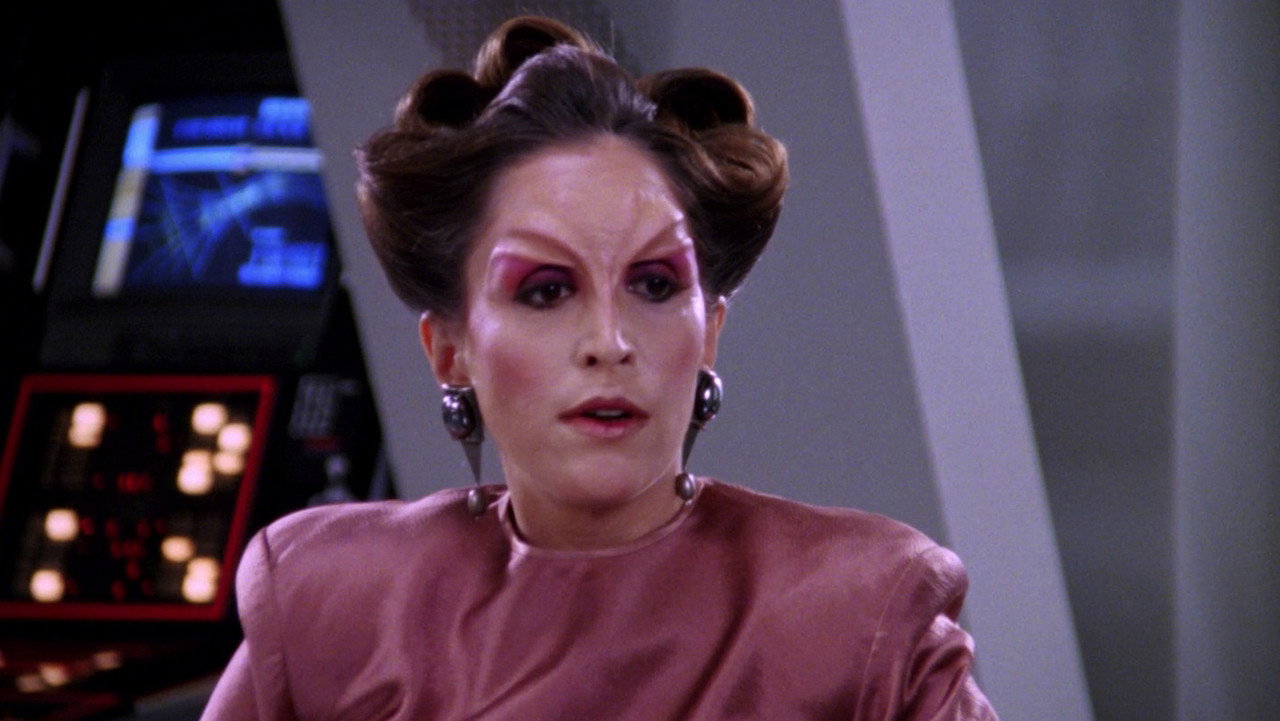
The holodeck plays out Riker's account, then Manua's, then the assistant Tayna's. Each one is different, and two of them make Riker look very bad.
Like clockworkSpoiler · tap to reveal
Radiation bursts hit the Enterprise exactly 5 hours, 23 minutes and 6 seconds apart. Data, Geordi and Wesley trace them to the planet below.
The real culpritSpoiler · tap to reveal
Geordi reruns Riker's last moments on the holodeck with one piece added, and the evidence points somewhere new.
Why it still matters
This is TNG's go at Rashomon, Akira Kurosawa's 1950 film about one crime told several contradictory ways, and the episode makes no secret of it. Dr. Nel Apgar's station orbiting Tanuga IV explodes just after Riker leaves it. Under Tanugan law the accused is presumed guilty, and investigator Krag wants Riker extradited. Picard gets a hearing on the Enterprise instead, with the holodeck replaying each witness's account.
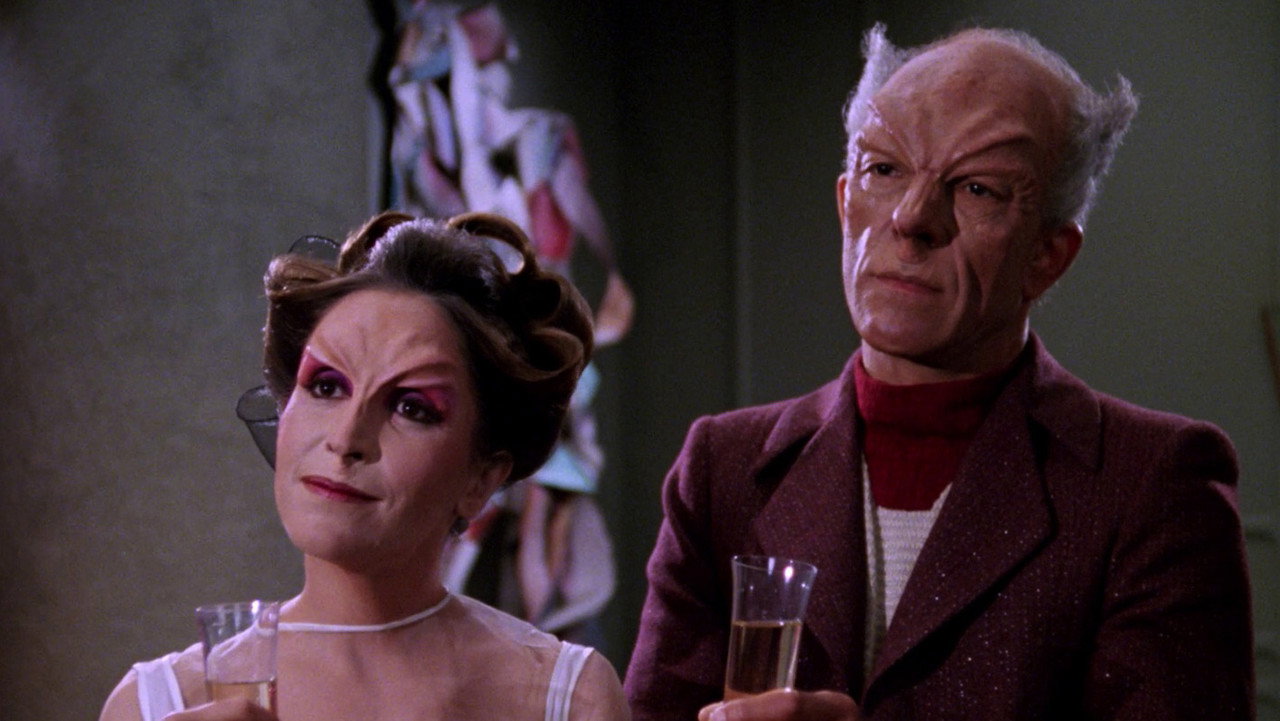
The fun is in watching the same evening shift from version to version. In Riker's, Apgar's wife Manua comes on to him. In hers, it's the other way round. The actors get to play subtly different people each time, and Riker gets to watch a hologram of himself behave badly. Meanwhile, bursts of radiation keep punching holes in the ship, on a schedule nobody can explain.
Opinions split hard on this one. Keith R.A. DeCandido gave it a warp factor rating of 1 on Tor.com, arguing that it borrows Rashomon's structure and fails at what that film does. The A.V. Club was kinder, at B−, and enjoyed Data's critique of Picard's painting.
Apgar's secret
Apgar had been working on Krieger waves, a new energy source, and told Starfleet his converter didn't work. It did. The bursts hitting the Enterprise come from a generator on the planet that was left running, and they turn into Krieger waves when they hit the converter. Apgar, who seems to have had another client in mind besides Starfleet, aimed the beam at Riker as he beamed out, planning to make it look like a transporter accident.
The beam bounced off the transporter field, back into the station, and blew it up with Apgar inside. Krag accepts the reconstruction, and Riker is cleared. The question the witness stories raised, whether Riker and Manua flirted or not, is never settled, which is either the most Rashomon thing about the episode or a loose end, depending on whom you ask.
Behind the scenes
- Ed Zuckerman wrote it, inspired by Kurosawa's Rashomon. Cliff Bole directed; he directed more than two dozen TNG episodes in all.
- The Krieger waves are named after David Krieger, the show's science advisor. According to Tor.com, the converter idea was his too.
- The research station is a reused model from the films: Tor.com identifies it as the Regula I station from Star Trek II: The Wrath of Khan, and Wikipedia ties the design to Star Trek: The Motion Picture as well.
- The original script had Picard splash red paint across his canvas after Data's critique. The moment was cut.
- Juliana Donald, who plays Tayna, auditioned many times for the part, and said the character's stoic manner was the hardest thing about playing her.
The thread
The film it borrows from, and other stories where the truth depends on who's telling it.
Came before
Shares DNA with
DNA strand
Is Any of This Real?
The holodeck turns testimony into a room you can walk around in, and every version looks equally solid: three recreations, all convincing, and at most one of them true. In the end the physics settles it.
Every great sci-fi story is built from a handful of strands like this one. Each strand page explains how it works and traces it across shows, books and films.
If this one stayed with you
Where to go next, and why.
Watch · Film
Rashomon (1950)
Go to the source. Kurosawa's film is the version where nobody, including the audience, gets to know for sure what happened.
Watch · Film
The Last Duel (2021)
If the shifting versions of the same evening were your favorite part, this tells one story three times, from three people, with the differences doing the work.
Read · Novel
The Moonstone by Wilkie Collins
A theft told by a string of narrators, each with their own blind spots and biases. If you liked sorting out the witnesses, this is the long form.
Watch · Star Trek: TNG S2
"The Measure of a Man" (1989)
A shipboard hearing that's far higher stakes: Starfleet argues over whether Data is a person, and Riker is made to argue the side he hates.