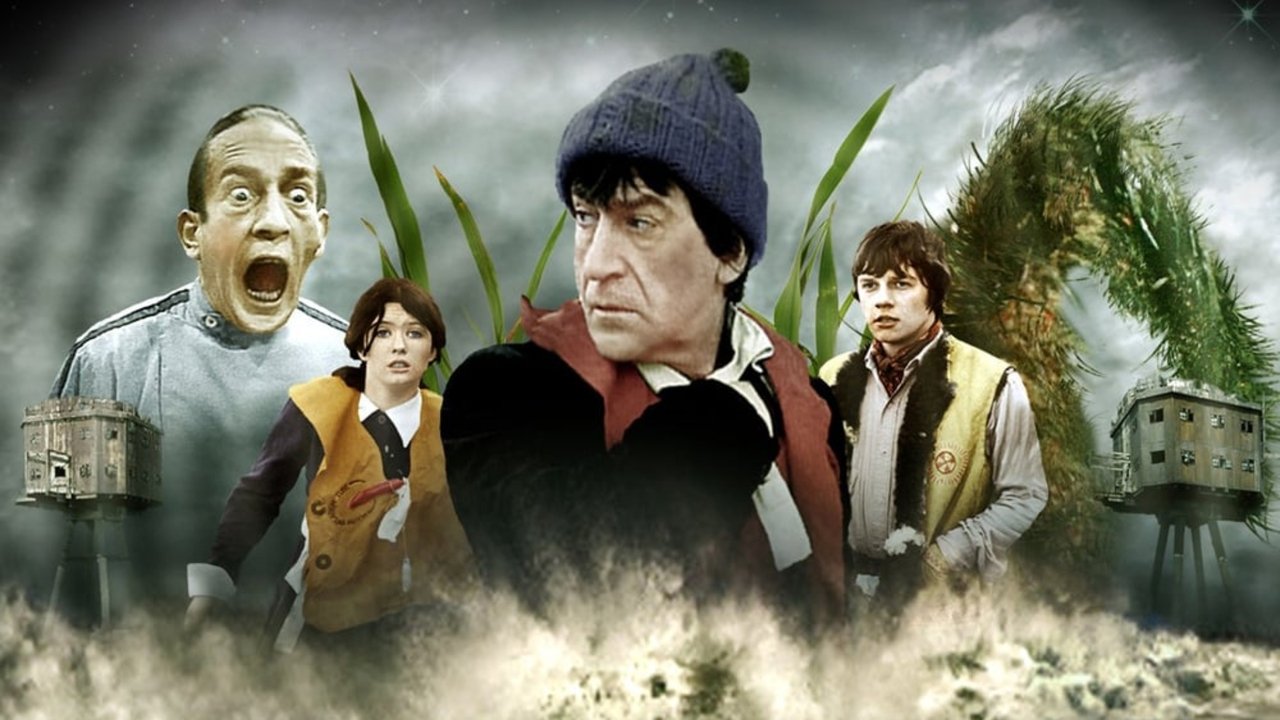
More from the episode
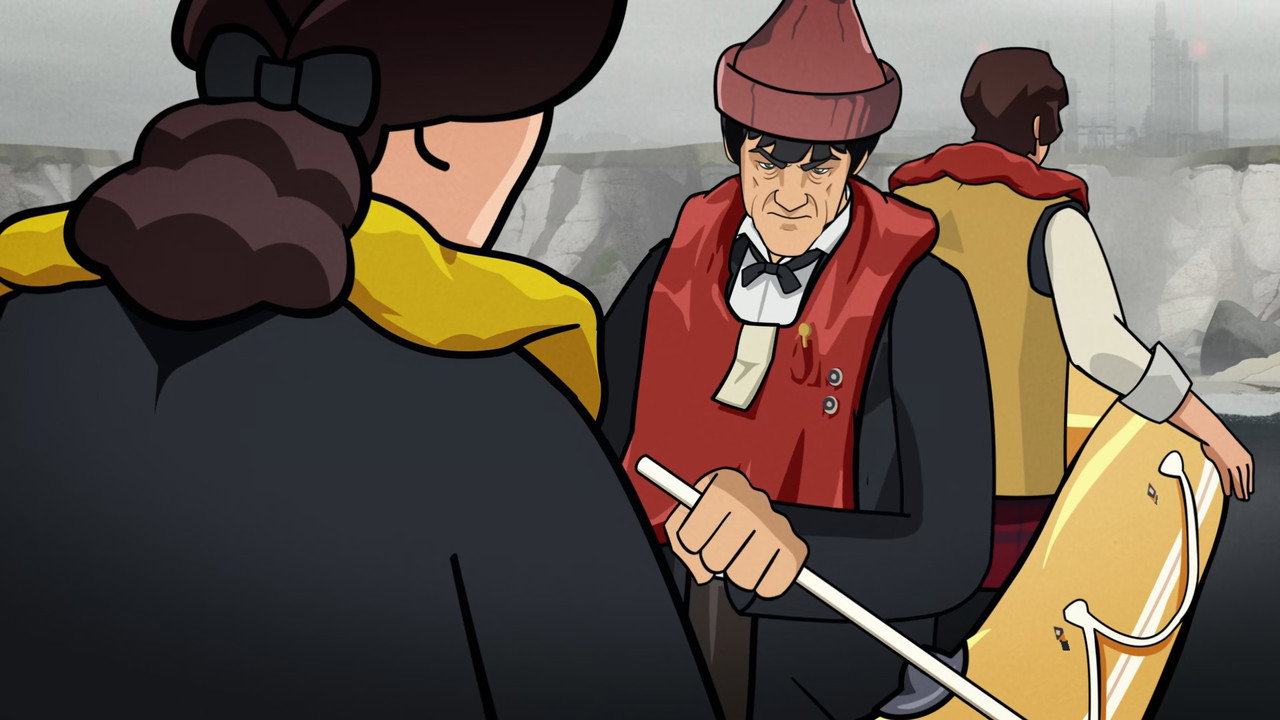

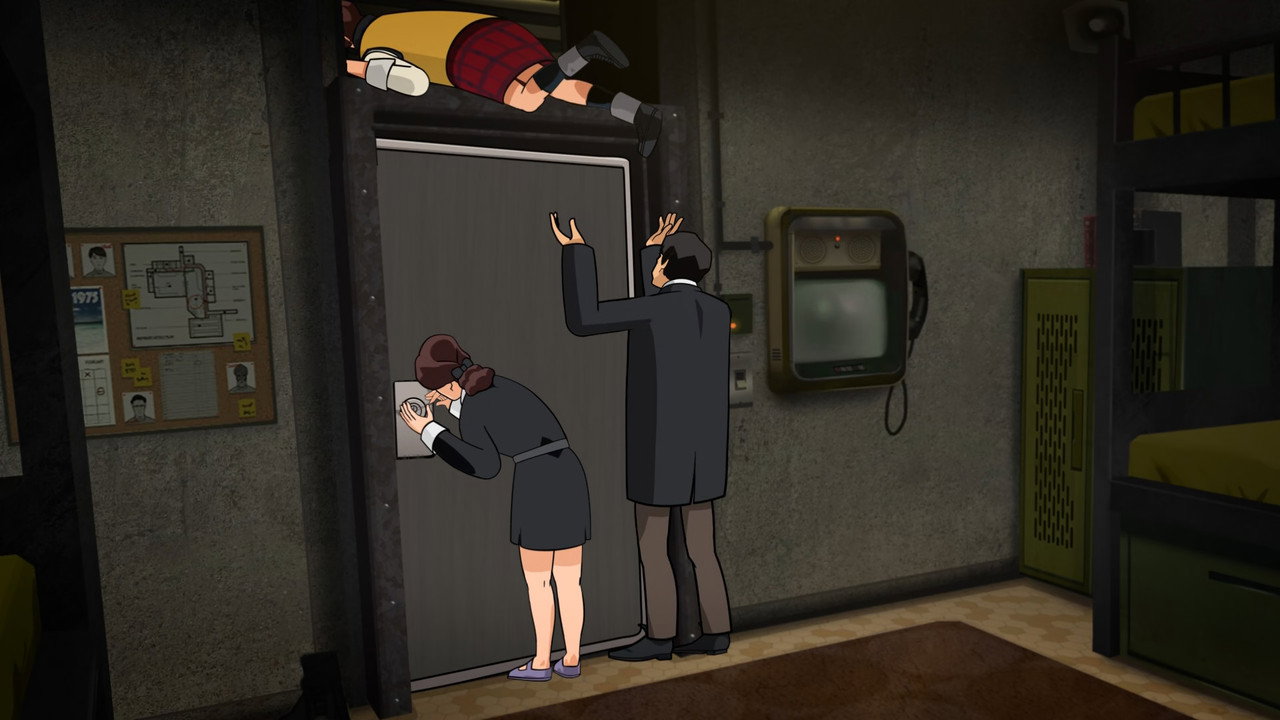
The story in 5 beats
- A heartbeat in the pipe
The TARDIS lands on the sea off the east coast of England. Ashore, the Doctor, Jamie and Victoria hear a heartbeat coming from a gas pipeline.
- Robson won't listen
They're caught by Robson, who runs a network of North Sea gas rigs and has lost contact with one. The Doctor says something is living in the pipes. Robson has them locked up.
- Mr Oak and Mr Quill
Harris's wife Maggie is pricked by a piece of seaweed. Then two technicians who have been taken over by the weed, Oak and Quill, come for her.
The weed takes the refinerySpoiler · tap to reveal
Robson is taken over and kidnaps Victoria. Foam and weed pour into the control centre, and the Doctor works out that the creature can't stand high-pitched sound.
Victoria decidesSpoiler · tap to reveal
Victoria's screams, amplified through the pipes, destroy the weed. Then, worn out by being frightened everywhere they go, she tells the Doctor and Jamie she's staying behind.
Why it still matters
No episode of Fury from the Deep exists. Its videotapes were wiped around late 1974, the last Doctor Who serial to go that way, and yet it kept a reputation as one of the most frightening things the show ever did. David J. Howe and Stephen James Walker called it "one of the most frightening stories ever to be presented by Doctor Who." Russell T Davies, who saw it on its first broadcast, wondered in 2003 whether the tapes would even live up to the version fans had built in their heads.
It's also where the sonic screwdriver comes from. Victor Pemberton's script had the Doctor take out "his own version of a screwdriver" to undo a pipeline box. Peter Bryant, by then the producer, found the ordinary screwdriver prop underwhelming and suggested a special tool. The new prop kept slipping out of Patrick Troughton's cold hands on location, so the crew used the whistle from Deborah Watling's lifejacket instead.
The monster is seaweed and foam, and Pemberton had a reason for both. He took his 1966 radio serial The Slide, about parasitic mud taking over a town, and turned it into a story about North Sea gas, just as gas was coming into wide use in British homes. The heartbeat in the pipes came from Poe's "The Tell-Tale Heart." Together with The Web of Fear before it, it moves the show toward the Earthbound stories of the Pertwee years.
A scream, and a goodbye
Victoria's famous scream finally saves the day. That was Derrick Sherwin's doing: the script editor rewrote Pemberton's scripts over Christmas 1967 and refocused the climax on her screaming, which had earned Watling the nickname "Leatherlungs." The screams in this serial were actually performed by the assistant floor manager, Margot Hayhoe, and topped up with radiophonic effects made for The Underwater Menace. Pemberton disliked the rewrites, softer Oak and Quill especially, and threatened to take his name off the serial.
Victoria stays with the Harrises, and the Doctor and Jamie wait a day to be sure she means it before they leave. Watling had told the production team around the end of 1967 that she would go when her contract ran out, and the story was rewritten to send her off. Her final scene was reused in the first episode of the next story, The Wheel in Space. Howe and Walker said the farewell brings "a distinct lump to the throat."
Challenge the DNA
Is it fitting that Victoria's scream saves the day?
Or skip ahead to our reading
It's a clever turn, and a bit double-edged. The thing that made her a figure of fun becomes the answer. Whether that's a tribute or a final joke at her expense depends on how you read her last scenes, and the story leaves room for both.
Behind the scenes
- David Whitaker turned The Slide down for Doctor Who in 1964. Peter Bryant then commissioned it for BBC Radio, where it ran in 1966, and in October 1967, as the show's story editor, commissioned Pemberton to adapt it as Doctor Who and the Colony of Devils. It was renamed Fury from the Deep in mid-February 1968 over worries about saying "devils" in a family show.
- Location filming began on February 4, 1968 on the cliffs near Botany Bay in Kent. Red Sands Fort in the Thames estuary stood in for a gas platform, and water had to be ferried out to feed the foam machine.
- According to a 1968 Radio Times feature reprinted by the BBC, Jack Kine of Visual Effects designed the creature not to be based on an actor at all, and said his foam would be "about the size of a first division football crowd."
- The videotapes were wiped around late 1974. The full soundtrack survives thanks to fans' off-air recordings, John Cura's tele-snaps were found in 1993, and in 1996 researchers found scenes in Australian archives that the censor had cut, including Oak and Quill's gas attack.
- Fifteen seconds of the TARDIS landing on the sea survive because they were reused in Episode 10 of The War Games.
- BBC Studios released an animated version of all six episodes, made by Big Finish Creative from the original soundtrack, on September 14, 2020.
- It was one of Patrick Troughton's favourite Doctor Who stories. Pemberton's own novelisation (1986) was voted the all-time favourite Doctor Who novel in a 1989 Doctor Who Magazine poll.
The thread
Something alive under the North Sea, and the people pumping gas out of its home.
Came before
Shares DNA with
Left its mark on
DNA strand
First Contact & Invaders
The invader is a living thing from the bottom of the North Sea, and the gas the humans are pumping out comes from its home. It takes over workers one at a time, while the man in charge insists nothing is wrong.
Every great sci-fi story is built from a handful of strands like this one. Each strand page explains how it works and traces it across shows, books and films.
If this one stayed with you
Where to go next, and why.
Watch · Doctor Who
"The Web of Fear" (1968)
The story just before, which also brings an invasion to a place British viewers knew, and survives far better.
Watch · Star Trek S1
"Operation -- Annihilate!"
Creatures that take over a whole colony, and a crew racing to find what hurts them.
Watch · The Outer Limits S1
"Corpus Earthling"
Another invader that looks like part of the scenery: two rocks on a lab shelf, with designs on the people nearby.
Read · Novelisation
Fury from the Deep — Victor Pemberton
Pemberton's own longer telling, sold as a "bumper" edition and voted the all-time favourite Doctor Who novel in a 1989 Doctor Who Magazine poll.
Read · Novel
The Day of the Triffids — John Wyndham
Plants turning on Britain, written with the same grounded, ordinary-people approach.
Your next episode
Three directions to go from here, all on Sci-Fi DNA.
More of this feeling
The Devil in the Dark
Star Trek
Another industrial site under attack from something nobody understands.

Same question, different answer
Metalhead
Black Mirror
How do you fight something that doesn't stop?

Something completely different
The Wheel in Space
Doctor Who
From the North Sea to a space station and a new face.