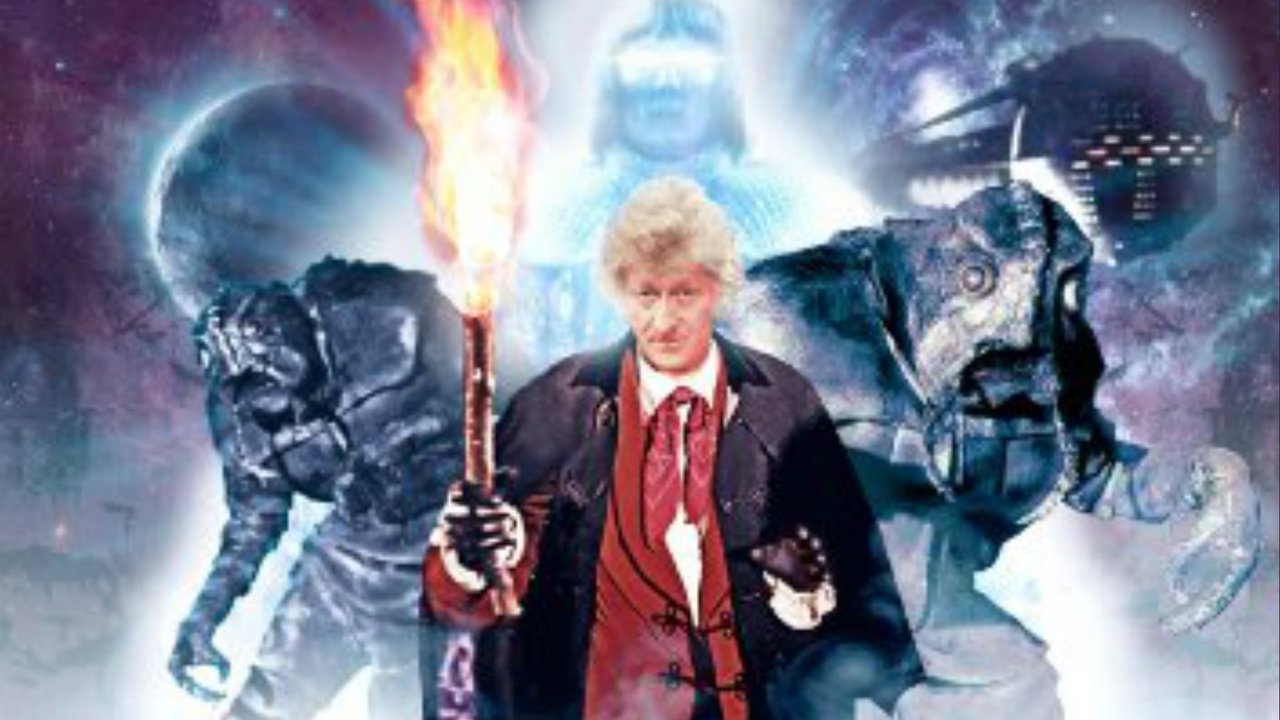
More from the episode
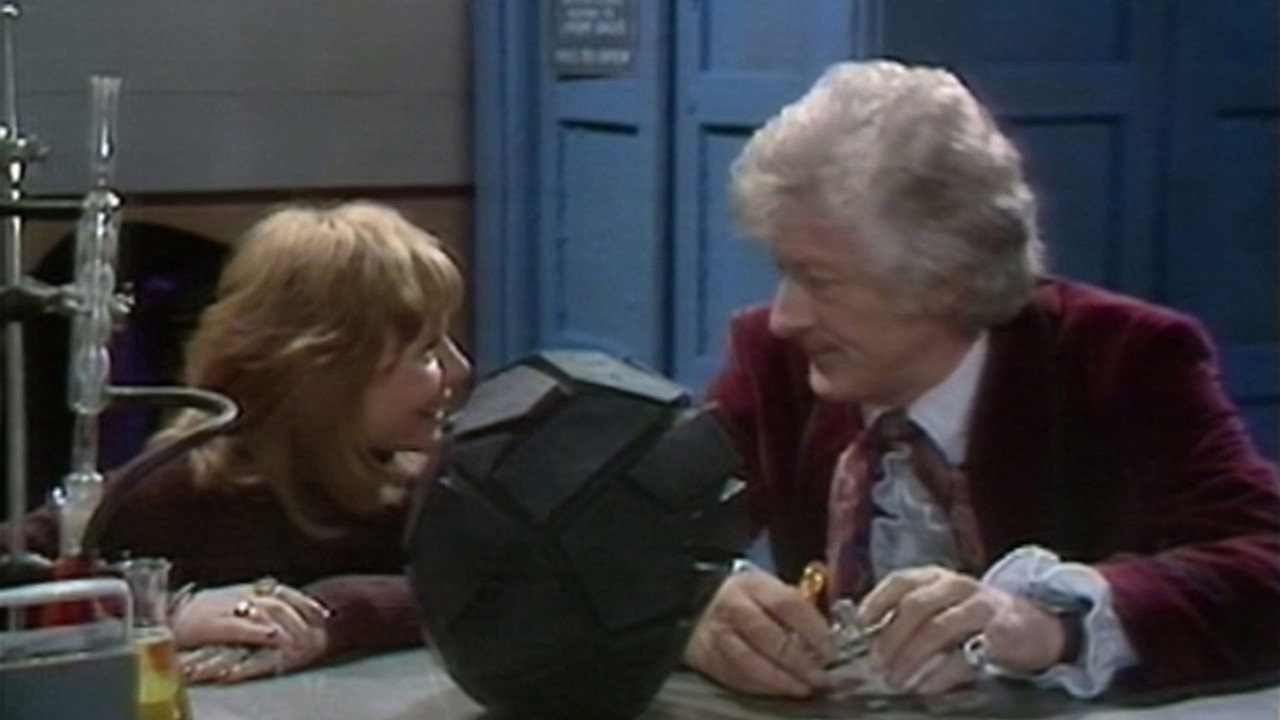
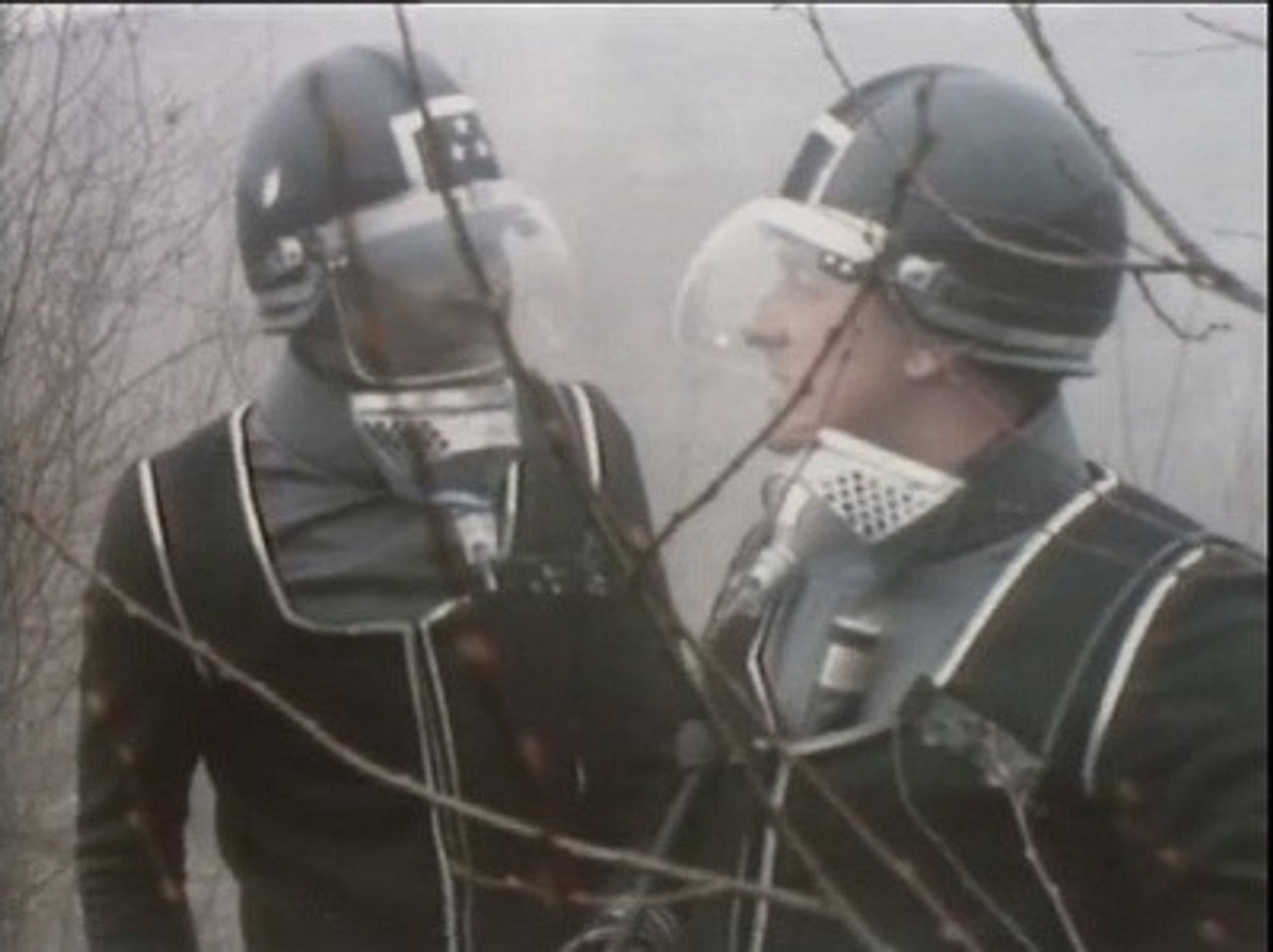
The story in 5 beats
- Skybase One
The Time Lords drop the Doctor and Jo on a space station orbiting Solos with a sealed pod that will only open for the right person. Earth is about to hand the planet back.
- An assassination
The Marshal has Earth's Administrator killed before he can announce independence. A young Solonian, Ky, is framed and escapes to the surface, taking Jo with him.
- Air humans can't breathe
The Doctor learns what the Marshal and his scientist Jaeger are really up to: changing Solos's atmosphere so humans can live there and Solonians can't.
The tablets in the podSpoiler · tap to reveal
The pod holds old tablets nobody can read. With the exiled scientist Sondergaard, the Doctor works out that they are a calendar, and that the Mutts are part of it.
Ky changesSpoiler · tap to reveal
Trapped in a radioactive fuel bay, Ky takes in the radiation through a crystal from the caves and becomes something new, and the Marshal's plan comes apart.
Why it still matters
The Mutants is the Pertwee era's story about the end of an empire, and it was meant to be. Bob Baker and Dave Martin, along with producer Barry Letts, wanted an anti-racist story. Martin was active in the anti-apartheid movement, and Solos, with its human Overlords on Skybase One and its native Solonians on the ground, was written as a picture of South Africa. The chaos on the eve of independence drew on the riots of the 1947 partition of India.
Not everyone on the production agreed with the politics. Script editor Terrance Dicks, who had long wanted a story about the end of the British Empire, later admitted he was "rather pro-British Empire" and softened the script. Baker and Martin kept their main point anyway. When the Doctor talks about an Earth empire that has crumbled and can't afford its colonies, it's set in the 30th century, but viewers in 1972 didn't need it spelled out.
It's an uneven six weeks. Patrick Mulkern of Radio Times called it "peculiarly variable", finding the first episode leaden and the fourth one of the most creative of the Letts years, and he liked the Mutant design. The ideas are among the sharpest the Pertwee era tried.
What the tablets say
The Mutts are not a plague. Mutation is a natural stage in the Solonian life cycle, tied to the planet's long seasons and to radiation from thaesium deposits in the caves. The Marshal's meddling set it off too early, and the Solonians, cut off from their own history by the colonists, could no longer read the tablets that explained it. In the last episode Ky absorbs the fuel bay's radiation through the crystal and emerges as a shining, angel-like being. He kills the Marshal, and Sondergaard and Cotton stay behind to help the rest of the Solonians through the change.
That turns the whole story around. The thing the Overlords wanted exterminated was the Solonians' own future, and the colonists' fear did the damage. Critics Maura Grady and Cecilia Hemstrom count it among the stronger anti-imperialist stories in the series, calling it "a fair warning that, no matter how well intended, interference with indigenous cultures can have dangerous and far-reaching consequences".
Challenge the DNA
Should the colonists have known about the Solonian life cycle?
Or skip ahead to our reading
They should have, and that's the story's charge against empire. The colonists cut the Solonians off from their own history and then blamed them for what they became. Baker and Martin make the point plainly.
Behind the scenes
- Working titles included Independence and The Emergents. The basic idea came from Barry Letts, who had pitched it years earlier; script editor Gerry Davis turned it down for Season 4.
- Dave Martin became active in the anti-apartheid movement after a neighbour in Bristol told him he was moving to South Africa "to be a kind of master". The Earth Empire stands for South Africa's white government and the Solonians for its black population.
- The creatures were first going to be called "munts", short for "mutant natives" and a real slur used by white South Africans. It was changed to "Mutts" because "munt" sounded too close to a much ruder word.
- The Marshal, played by Paul Whitsun-Jones, was based on Benito Mussolini.
- The caves of Solos were filmed at Chislehurst Caves near Bromley. The planet's surface was shot at Western Quarry in Kent, now the site of the Bluewater shopping centre.
- Garrick Hagon, who plays Ky, went on to play Biggs Darklighter in Star Wars (1977). John Hollis, who plays Sondergaard, later played Lobot in The Empire Strikes Back.
- Terrance Dicks novelised the story as Doctor Who and the Mutants, published by Target Books in September 1977.
The thread
An empire packing up, and the people it never bothered to understand.
Came before
Shares DNA with
Left its mark on
DNA strand
Us vs. Them
The Overlords look at the Solonians and see savages, and the Solonians who side with them learn to look at the Mutts the same way. Baker and Martin drew it from apartheid South Africa and the partition of India, and the story is sharpest on how fear spreads down the chain until everyone has someone to hate.
Every great sci-fi story is built from a handful of strands like this one. Each strand page explains how it works and traces it across shows, books and films.
If this one stayed with you
Where to go next, and why.
Watch · Doctor Who
"Doctor Who and the Silurians" (1970)
The Pertwee era's first go at the same question: what happens when humans decide another people are a threat to be removed.
Watch · Star Trek S1
"The Devil in the Dark"
Miners, a creature in the tunnels and a lot of people who want it shot. It shares this story's patience with the thing everyone fears.
Watch · The Twilight Zone
"The Monsters Are Due on Maple Street"
Fear turning neighbours on each other, done in half an hour on a suburban street.
Read · Novella
The Word for World Is Forest — Ursula K. Le Guin
From the same year: colonists from Earth, a native people they refuse to understand, and a planet being stripped for their use.
Read · Novel
Doctor Who and the Mutants — Terrance Dicks
Terrance Dicks, the script editor who didn't share the writers' view of empire, ended up writing the book of their story in 1977.
Your next episode
Three directions to go from here, all on Sci-Fi DNA.

More of this feeling
The Survivors
Star Trek: The Next Generation
Another planet whose truth is stranger than its rulers want to admit.

Same question, different answer
The Hunted
Star Trek: The Next Generation
A government that would rather manage a problem than understand it.

Something completely different
The Time Monster
Doctor Who
From empire's end to Atlantis and a creature from outside time.