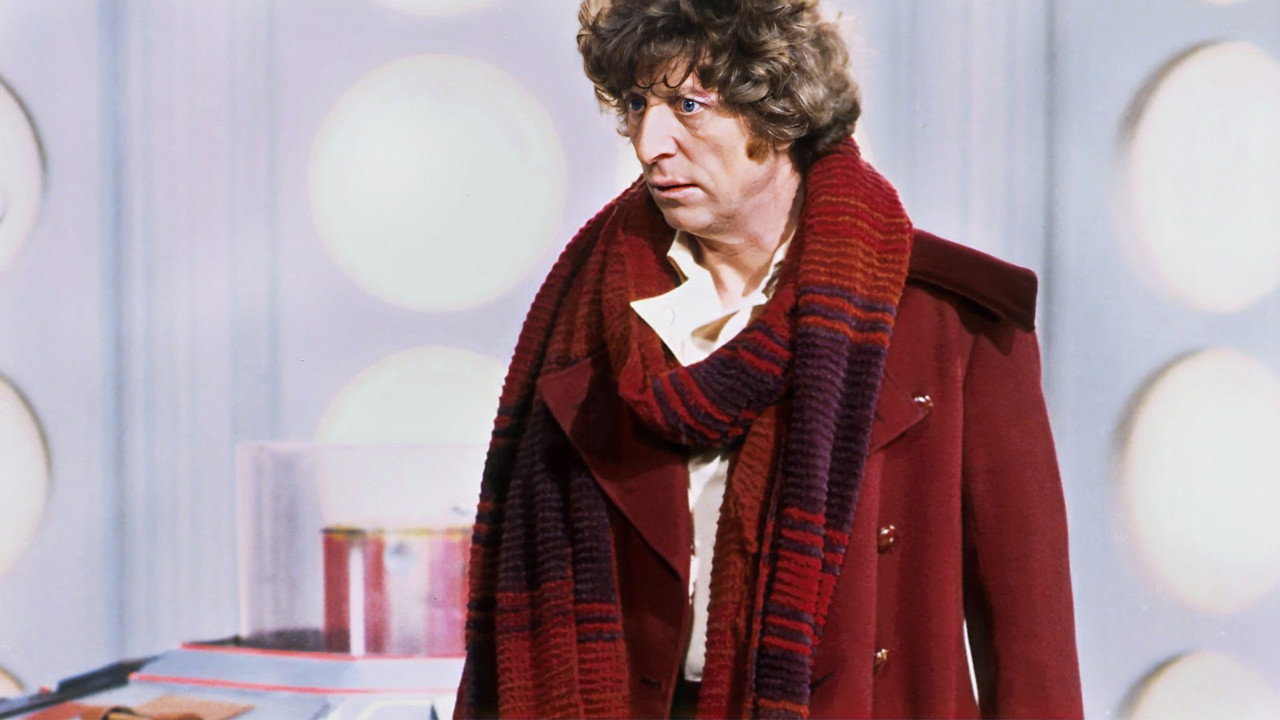
More from the episode
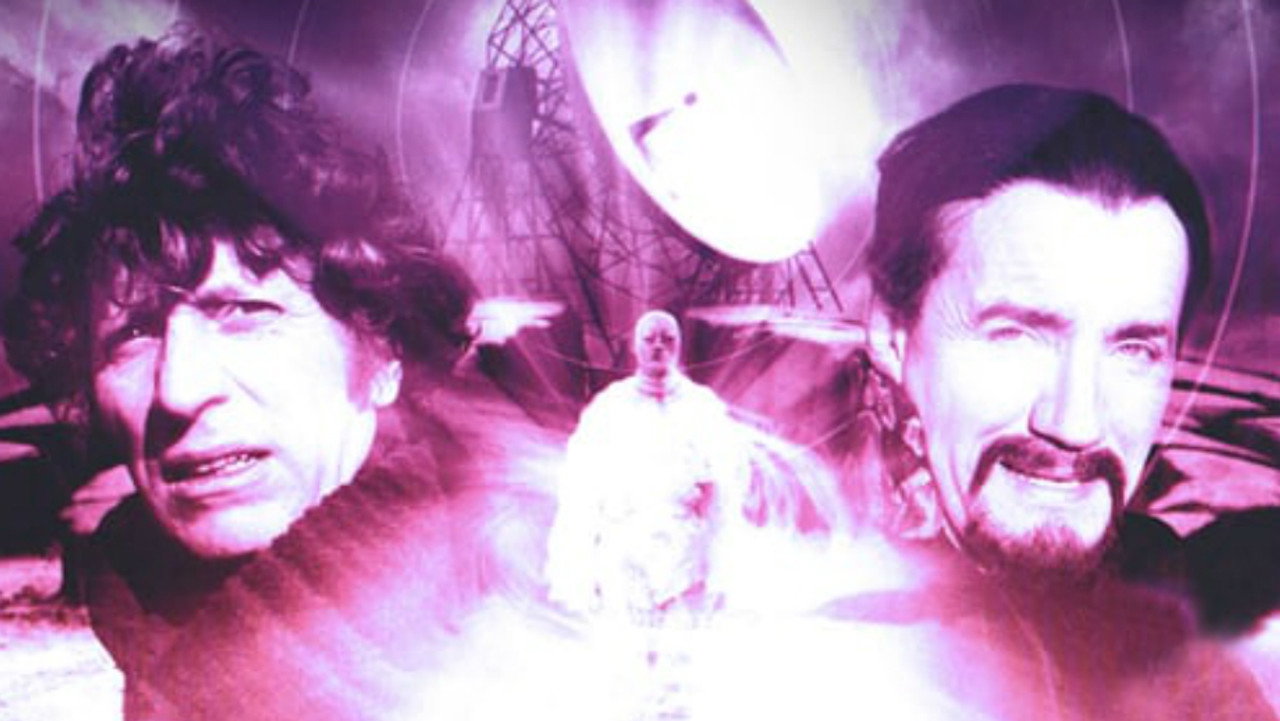

The story in 5 beats
- Measuring a police box
The Doctor lands next to a real police box on a roadside, planning to measure it so the Logopolitans can fix his chameleon circuit. Something else has landed there too.
- Tegan's bad day
Tegan Jovanka, a trainee flight attendant, has car trouble on the same road. Looking for help, she steps into the nearest police box.
- The city of sums
On Logopolis, mathematicians chant calculations that matter more than anyone knew. Someone has been shrinking them, and the planet begins to crumble into dust.
Holding the universe upSpoiler · tap to reveal
Entropy breaks loose and Traken is lost. The Doctor and the Master take a program to Earth's Pharos Project to keep the universe from unravelling.
The moment prepared forSpoiler · tap to reveal
The Master turns on the Doctor at the top of the radio telescope. The Watcher steps in at last, and the Doctor changes.
Why it still matters
Logopolis takes about as big an idea as Doctor Who ever tried and plays it quietly. The universe has been running down for a long time, and the only thing holding off its heat death is a city of robed mathematicians who do sums out loud all day. Christopher H. Bidmead, the show's script editor, wrote it as his first story for the series, and the threat comes straight out of physics: entropy.
It is also a story about arrivals. Nyssa, from The Keeper of Traken, joins the crew. Janet Fielding arrives as Tegan Jovanka, an Australian trainee flight attendant who walks into the TARDIS looking for help with her broken-down car. John Nathan-Turner and Bidmead built her as a companion who seems sure of herself but isn't, and Fielding, who had lost some of her Brisbane accent since moving to Britain in 1977, put it back on to win the part.
And it gives Anthony Ainley his first full outing as the Master, the role he would keep for eight years. The Master here is a vandal who breaks something he doesn't understand, which leaves the Doctor in the odd position of needing his worst enemy's help.
It's the end, but the moment has been prepared for
At the Pharos Project the Master threatens to close the escape route the Logopolitans built and hold the universe to ransom. The Doctor climbs out onto the telescope gantry to pull the power cable, the Master tilts the dish, and the Doctor falls to the ground. His companions find him dying. He sees faces from his past, the Watcher appears, and the Doctor tells them it's the end, but the moment has been prepared for. The Watcher merges with him and he regenerates into Peter Davison's Fifth Doctor. The BBC's own guide says the Watcher was the Doctor himself, apparently halfway between his fourth and fifth selves.
It was Tom Baker's last story after seven years, which the BBC calls the longest unbroken run of any Doctor. The Watcher was played, uncredited, by Adrian Gibbs, so fans would wonder whether Davison was under the white wrappings. Davison appears only in the closing seconds, which earned him a full actor's fee, and Baker's face was taken out of Part Four's closing titles. That episode is also the only time Davison was credited as "Doctor Who"; from Castrovalva on, the credit read "The Doctor".
Challenge the DNA
Is Logopolis too complicated to enjoy?
Or skip ahead to our reading
No. It's dense, and the payoff earns the effort. Bidmead trusted the audience with a big idea about entropy and the universe's survival, and the story ends with real weight.
Behind the scenes
- Christopher H. Bidmead, script editor for Season 18, wrote Logopolis as his first Doctor Who story. He later wrote Castrovalva and Frontios for the Fifth Doctor.
- Nathan-Turner first hoped to bring back an old companion for continuity, but created Tegan when Elisabeth Sladen and Louise Jameson both declined to return for a whole season.
- The roadside scenes were meant for the Barnet bypass, beside one of the last real police boxes in Britain. It was vandalised and removed shortly before filming, so the crew used a lay-by on the Amersham Road near Denham, with an older TARDIS prop standing in for the real box.
- The production couldn't afford to film at Jodrell Bank. The Pharos Project exteriors were shot at the BBC's receiving station at Crowsley Park, with a model telescope, and the gantry scenes on a lighting rig in the Top of the Pops studio at Television Centre. The 2019 Blu-ray added new shots of the Lovell Telescope.
- The story names the chameleon circuit for the first time, and introduces the TARDIS cloister room and the cloister bell, which the show has rung many times since.
- Tom Georgeson, who plays the detective inspector, had played Kavell in Genesis of the Daleks in Tom Baker's first season.
- The four parts drew between 5.8 and 7.7 million viewers. When the show returned in January 1982, the BBC moved it from Saturdays to two weeknight episodes a week.
The thread
A universe running out of time, and the people quietly keeping it going.
Came before
Shares DNA with
Left its mark on
DNA strand
Technology Outpaces Ethics
The Logopolitans' maths holds the universe together, and the Master sabotages it to get at the Doctor without understanding what it does. It's an old idea in a new costume: someone clever pulls a thread to see what happens, and everybody else pays for it.
Every great sci-fi story is built from a handful of strands like this one. Each strand page explains how it works and traces it across shows, books and films.
If this one stayed with you
Where to go next, and why.
Watch · Doctor Who
"The Keeper of Traken" (1981)
Watch it first. It sets up Nyssa and the Master, and the two stories run straight into each other.
Watch · Doctor Who
"Castrovalva" (1982)
The next story starts minutes after this one ends, and Bidmead wrote that too.
Watch · Star Trek: TNG
"Remember Me"
Another story where the universe itself is going wrong, told as a quiet mystery.
Read · Short story
"The Last Question" — Isaac Asimov
Entropy as the final enemy, with a computer instead of a city of mathematicians. A short read with a long reach.
Read · Novelisation
Doctor Who: Logopolis — Christopher H. Bidmead
Bidmead novelised his own script for Target Books in 1982, and read it unabridged for the 2010 audiobook.
Your next episode
Three directions to go from here, all on Sci-Fi DNA.
More of this feeling
The Nth Degree
Star Trek: The Next Generation
A story where mathematics becomes something close to magic.

Same question, different answer
The Inner Light
Star Trek: The Next Generation
How do you face an ending you can see coming?
Something completely different
Castrovalva
Doctor Who
A peaceful town that's harder to leave than it should be.