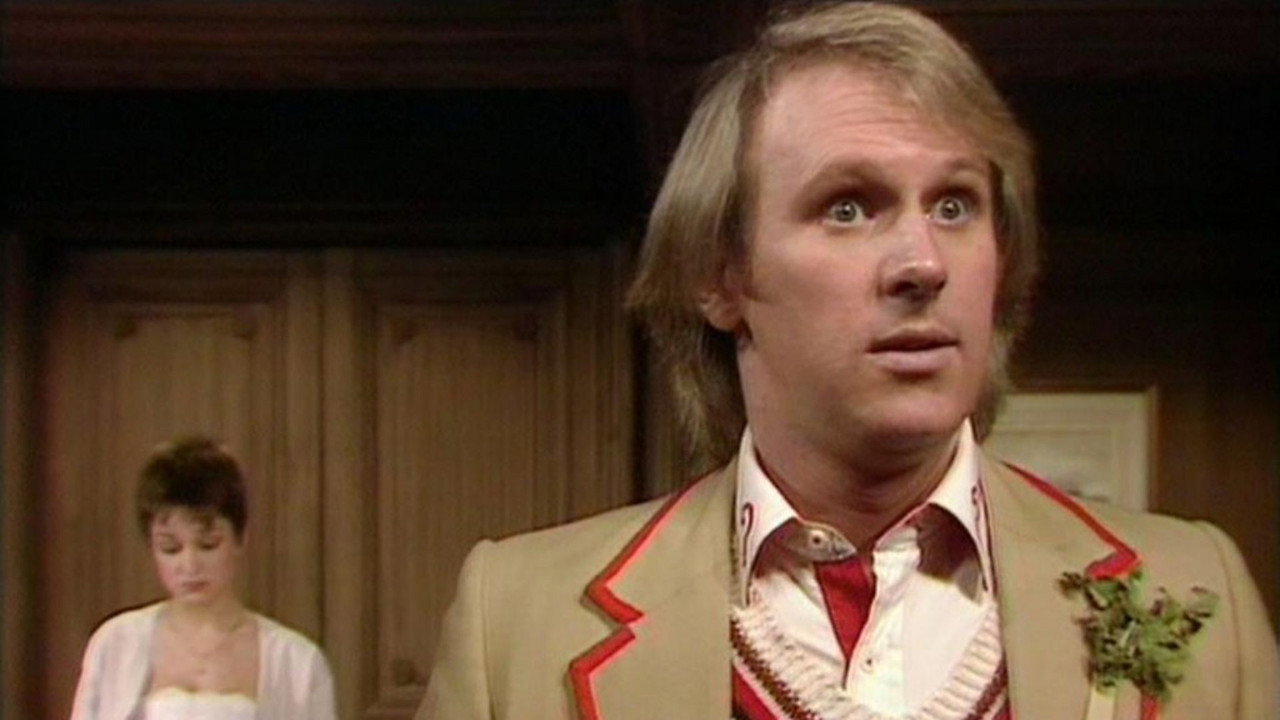
More from the episode
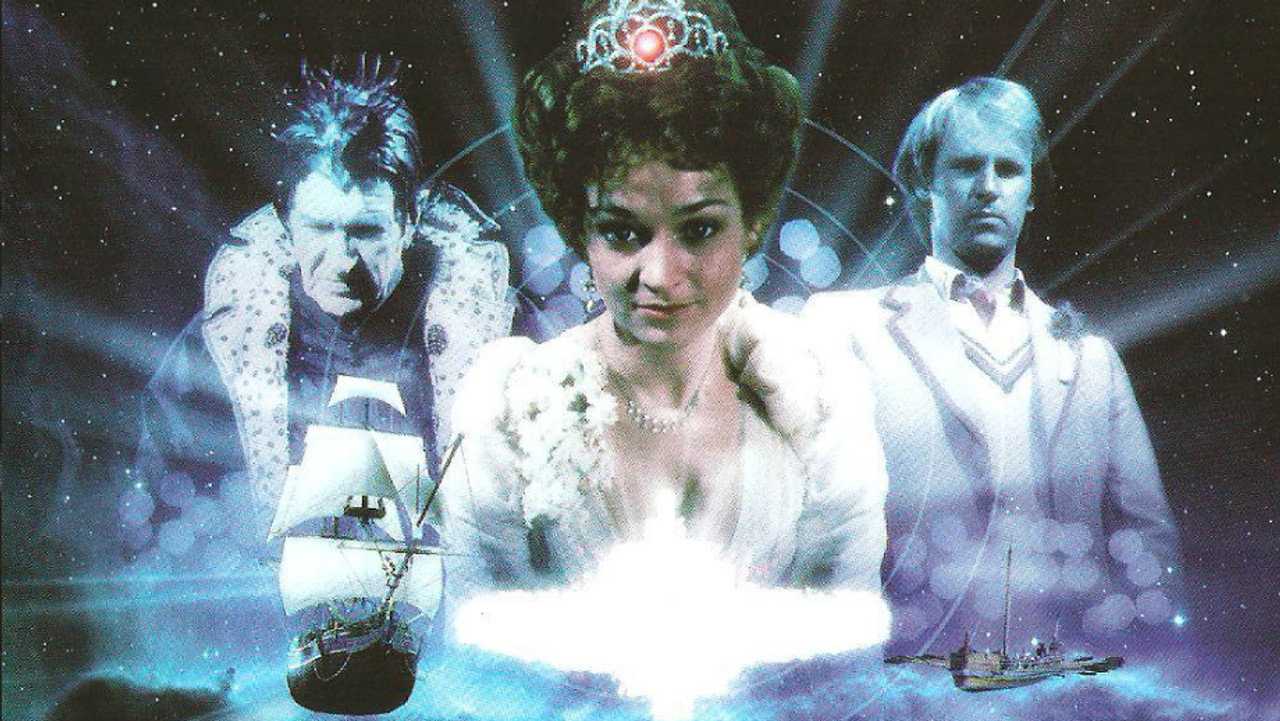
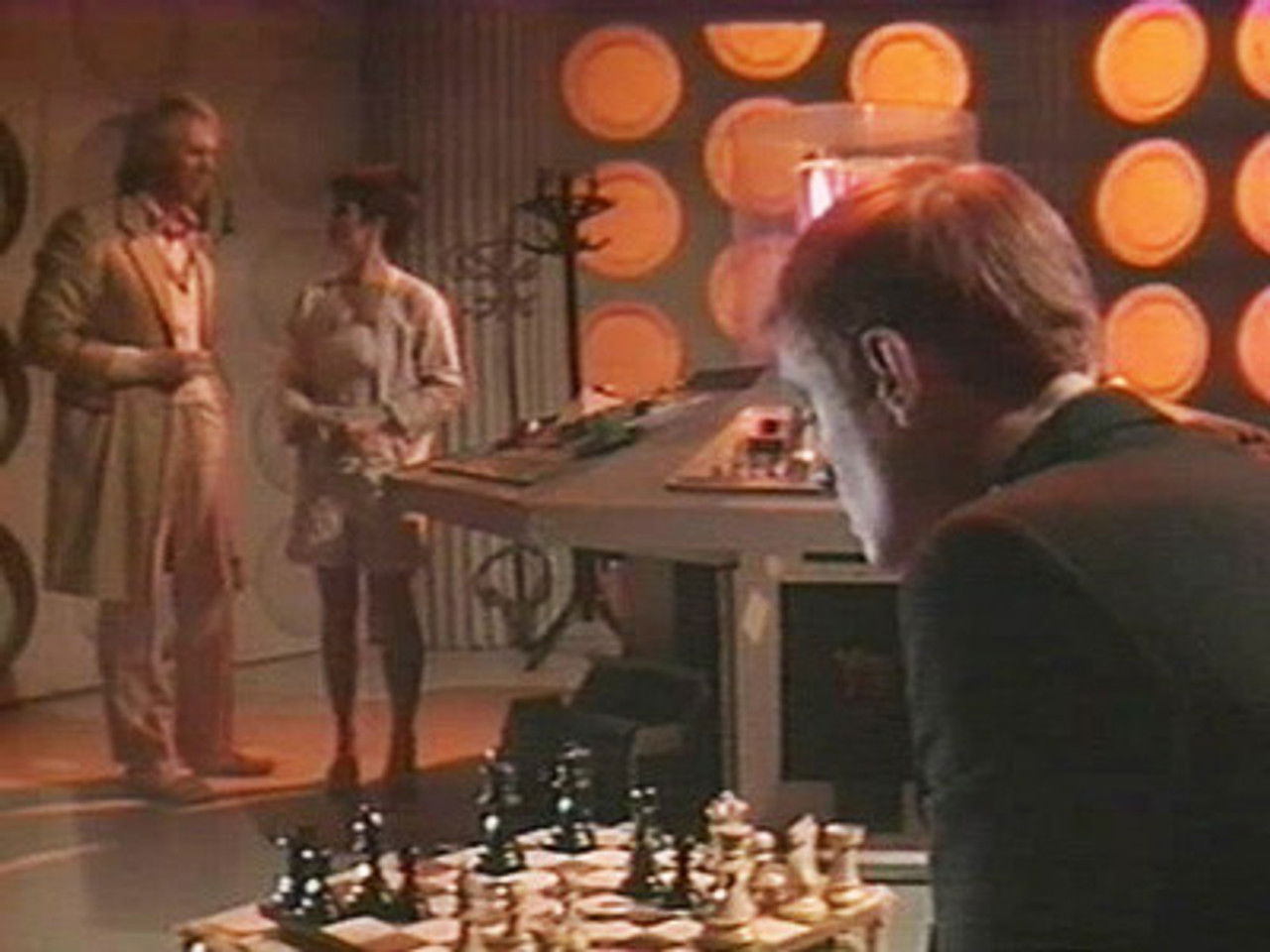
The story in 5 beats
- A yacht with no sea
The TARDIS lands in the hold of an Edwardian yacht. The crew don't know where they are, only that they are racing, and that the officers are odd.
- Sails in space
Up on deck, the Doctor finds that the yacht and a fleet of other historical ships are racing through the solar system under sail.
- Eternals and Ephemerals
The officers are Eternals, immortals who snatched their crews out of time. The Guardians set the race, and the winner gets Enlightenment.
The BuccaneerSpoiler · tap to reveal
Ships start exploding. Turlough ends up aboard a pirate ship whose captain, Wrack, serves the same master he does.
The prizeSpoiler · tap to reveal
Across the line, the prize is a diamond, and the Black Guardian makes Turlough an offer: the diamond, or the Doctor.
Why it still matters
Barbara Clegg was an actress turned scriptwriter, with Crossroads and the radio serial Waggoner's Walk behind her, when she sent script editor Eric Saward a storyline called The Enlighteners: sailing ships from Earth's past, racing through space. When she died in 2025, BBC Radio 4's obituary programme Last Word called her the first woman to write a story for Doctor Who, though Lesley Scott had shared the writing credit on The Ark back in 1966. With Fiona Cumming directing, Enlightenment was also the first story both written and directed by women.
The idea came from home. Clegg had distant relatives to stay who expected to be entertained the whole time, and they became the Eternals, immortals so empty inside that they borrow their thoughts from the human crews they kidnap. She took the prize from the Tree of Knowledge in Genesis and the ships' power from her reading on solar winds, and ended up with a yacht race through the solar system for a prize nobody can quite define.
It nearly didn't get finished. A BBC electricians' strike stopped production halfway, the second recording block slipped to January 1983, and two actors had to be replaced. What reached the screen has kept its admirers: Gary Gillatt in Doctor Who Magazine called it "one of Doctor Who's finest serials," and The Discontinuity Guide called it "a glittering jewel, rather neglected."
The choice was the prize
Just before the Buccaneer crosses the finish line, Wrack and her first mate Mansell are thrown off their own ship, and the Doctor, the captain left aboard, wins. He turns the diamond down. Turlough helped him, so it is his, and the Black Guardian reminds him of their bargain: give up the diamond, or hand over the Doctor and take both Enlightenment and the TARDIS. Turlough throws the diamond at the Guardian, who vanishes in flames, and his hold on Turlough ends. Enlightenment, the Doctor says, was the choice, not the diamond.
That ending closes the season's three Black Guardian stories, and Saward rewrote the final confrontation himself. Critics still argue over it. In About Time, Lawrence Miles and Tat Wood found it "rushed and tacked on" and the moral "perilously close to tweeness," while John Kenneth Muir called it satisfactory. David Bailey, writing for a Doctor Who Magazine special, pointed to the Black Guardian threatening Turlough with immortality as a punishment, which drives Turlough to throw himself over the side of the yacht rather than face eternity.
Challenge the DNA
Should Turlough have taken the diamond?
Or skip ahead to our reading
He was right to turn it down, and the story makes it his turning point. The Black Guardian's deal ends because Turlough chooses his friends. It's a satisfying end to a season-long thread.
Behind the scenes
- Saward and producer John Nathan-Turner commissioned the story in September 1981. Clegg's first draft of Part One had none of the Guardian material and centred on Tegan and the Eternal officer Marriner; she wrote them in at Saward's request when the story became the last of a Black Guardian trilogy. Saward renamed it Enlightenment in September 1982 because he found the title more enigmatic.
- Peter Sallis was cast as Captain Striker and attended rehearsals, but when the strike pushed recording back he was committed to Last of the Summer Wine. Keith Barron took the part. David Rhule, cast as Mansell, was also unavailable, and the singer Leee John replaced him at short notice with no acting experience.
- The strike also cost Saward his own season finale, The Return, which lost its recording slot to Enlightenment and was made the following year as Resurrection of the Daleks.
- Mark Strickson was hurt at Ealing Studios in November 1982 when the Kirby wire holding him broke during the scene of Turlough going overboard. He could only walk with difficulty for several weeks.
- The ship sets were put together from stock in prop warehouses. Cumming had hoped to mount them on rollers so they would rock, but the cost ruled it out, so the cameras moved instead. She also decided the Eternals would never blink, and cast actors she thought could play them detached. Mike Kelt researched the ship models at the National Maritime Museum, and only the Greek ship was built for the serial.
- Lynda Baron, who plays Wrack, had been on Doctor Who before as the voice singing "The Ballad of the Last Chance Saloon" in The Gunfighters (1966). Recording finished so late that composer Malcolm Clarke got the first episode only a week before broadcast.
- The four parts averaged 6.8 million viewers, with 7.3 million for the last. All four survive in the BBC archive. Clegg wrote the novelisation, published in 1984, and the 2009 DVD added a special edition with new CGI effects, introduced by Cumming.
The thread
Bored immortals, borrowed minds, and a race whose prize turns out to be a decision.
Came before
Shares DNA with
DNA strand
Be Careful What You Wish For
Everyone in this race wants the prize, and nobody can say what it is. The Eternals want it to fill the space where their imaginations should be, and Turlough has a bargain hanging over him that makes winning the most dangerous thing that could happen.
Every great sci-fi story is built from a handful of strands like this one. Each strand page explains how it works and traces it across shows, books and films.
If this one stayed with you
Where to go next, and why.
Watch · Doctor Who
"Mawdryn Undead"
Start the trilogy at the beginning and Turlough's struggle in Enlightenment has twelve parts of weight behind it.
Watch · Star Trek
"Requiem for Methuselah"
The comparison Muir drew: a man who cannot die, and what endless time has done to him and to the mortals who visit.
Watch · Star Trek
"The Squire of Gothos"
A godlike host who keeps the crew around for his amusement. Trelane would get on well with the Eternals.
Read · Novelisation
Doctor Who: Enlightenment — Barbara Clegg
Clegg's own retelling, published in 1984, for anyone who wants the race from the writer's side.
Your next episode
Three directions to go from here, all on Sci-Fi DNA.

More of this feeling
The Celestial Toymaker
Doctor Who
Bored, powerful beings playing games with people.

Same question, different answer
The Squire of Gothos
Star Trek
What do immortals want from the rest of us?
Something completely different
The King's Demons
Doctor Who
A medieval castle, a king acting strangely and two parts.