What Roddenberry brings to the story
Roddenberry came to television after a war, an airline career and seven years with the Los Angeles Police Department, writing scripts for westerns and police shows. When he pitched Star Trek to NBC in 1964, he played down the science fiction and stressed its likeness to westerns like Gunsmoke and Wagon Train: a regular crew, a new adventure every week.
What he put inside that format was a hopeful future, with a mixed crew working together and stories that used other planets to argue about the present. The original series lasted three seasons. He then spent years on pilots that didn't sell before the films brought Star Trek back, and in 1987 he created The Next Generation, though his day-to-day involvement fell away after its first season.
His reputation is more complicated than the legend. He rewrote other writers' scripts heavily: one writer, Don Ingalls, put a pseudonym on his episode after it was changed, and Roddenberry's rewrite of Harlan Ellison's "The City on the Edge of Forever" led to a long falling-out. Both sides of that record are part of why Star Trek looks the way it does.
Start here
Franchise
The whole of what he started, with a guide to where to begin.
The City on the Edge of Forever
Star Trek · S1 E28
The original series at its best, and the episode most bound up with arguments about his role.
Selected work
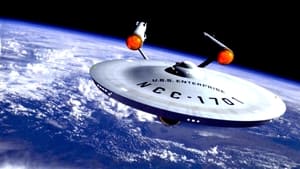
Star Trek 1966 · Creator
The original series, three seasons on NBC, and everything that grew from it.
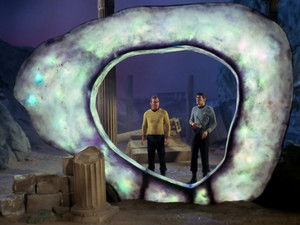
The City on the Edge of Forever 1967 · Executive producer
Harlan Ellison's script, rewritten during production, and the source of their long quarrel.
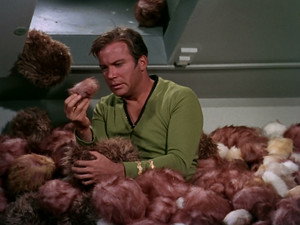
The Trouble with Tribbles 1967 · Executive producer
Proof the format could do comedy too.
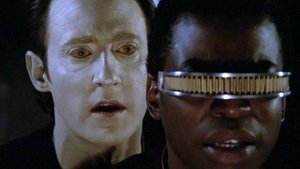
Home Soil 1988 · Creator and executive producer
From The Next Generation's first season, when Roddenberry was most closely involved.
The record
Labels show how solid each item is: On the record · Their own account · Reported · Legend
- On the recordBorn Eugene Wesley Roddenberry on August 19, 1921, in El Paso, Texas. He grew up in Los Angeles and died in Santa Monica on October 24, 1991, aged 70.[1]
- On the recordHe flew B-17 bombers in the Pacific during the Second World War, completing 89 combat missions, and received the Distinguished Flying Cross.[1]
- On the recordAs a Pan Am pilot in 1947 he survived the crash of the Clipper Eclipse in the Syrian desert and helped pull injured passengers from the burning plane.[1]
- On the recordHe joined the LAPD in 1949, became the chief's speechwriter, and left in 1956 to write full-time.[1]
- On the recordNBC rejected the first Star Trek pilot, "The Cage", but ordered a second. The series began in September 1966, and a fan letter-writing campaign in 1968 helped win it a third season.[1]
- ReportedHe reportedly lost a job on the series Riverboat after insisting on including Black characters.[1]
- ReportedHis heavy rewrites caused friction with writers, including Harlan Ellison. Leonard Nimoy said Roddenberry was antisemitic.[1]
- On the recordSome of his ashes flew aboard the Space Shuttle Columbia in 1992, and more were later launched into space by the memorial company Celestis.[1]
Sources
- Gene Roddenberry · Wikipedia · accessed 2026-11-20
- Star Trek · Wikipedia · accessed 2026-11-20
Last reviewed 2026-11-20. Spot an error? Tell us.