
More from the film


Who this is for
You've seen Donnie Darko, probably the theatrical cut, and want the logic of the ending laid out without losing the mystery.
What it covers
- The rules from The Philosophy of Time Travel, the book inside the film
- Who Frank is, both of him
- What happens in the last ten minutes
- What the Director's Cut changes
Spoiler boundary
The whole film, including the ending, and material added in the 2004 Director's Cut. Mentions the sequel S. Darko (2009) by title only.
Show the full explanationHide the explanationContains spoilers: The whole film, including the ending, and material added in the 2004 Director's Cut.
How to read the labels
- Confirmed in the work
- Shown or stated on screen or on the page.
- Creator explanation
- What a writer or director has said outside the work.
- From another version
- From the book, story or cut it's based on, not the version we're explaining.
- Strong inference
- Not stated outright, but the evidence points one way.
- Interpretation
- A reading of what it means. Reasonable people differ.
The short answer
The film runs on a set of rules from a book, The Philosophy of Time Travel, written by the old woman locals call Grandma Death. A jet engine falls out of nowhere at the start, and that creates an unstable copy of the world, a "tangent universe", which will collapse in 28 days unless the engine is sent back where it belongs.
Donnie is the one chosen to send it back. Everything strange that happens to him, Frank's visits, the flood, the fire, Gretchen's death, pushes him towards that moment. At the end he watches a plane carrying his mother lose an engine in a vortex over his house, and the 28 days unwind. He wakes on October 2, laughs as the engine falls into his bedroom, and dies. The world carries on, and the people he touched wake with a faint sense of something lost.
The rules, from the book inside the film
Confirmed in the work Roberta Sparrow, known as Grandma Death, wrote The Philosophy of Time Travel, which Donnie reads. The text of the book is included on the Director's Cut DVD.[1]
From another version Tangent universe. A corrupted copy of the real world, joined to it by a wormhole, which will collapse if it isn't put right.[1]
From another version Artifact. The object that appears in the tangent universe and has to be returned to the primary one: here, the jet engine.[1]
From another version Living Receiver. The person chosen to send the artifact back. That's Donnie.[1]
From another version Manipulated Living and Manipulated Dead. The people around the Receiver who, without knowing it, steer him towards his task. The dead, such as Frank and Gretchen, set up a trap that forces him to act.[1]
Frank, twice
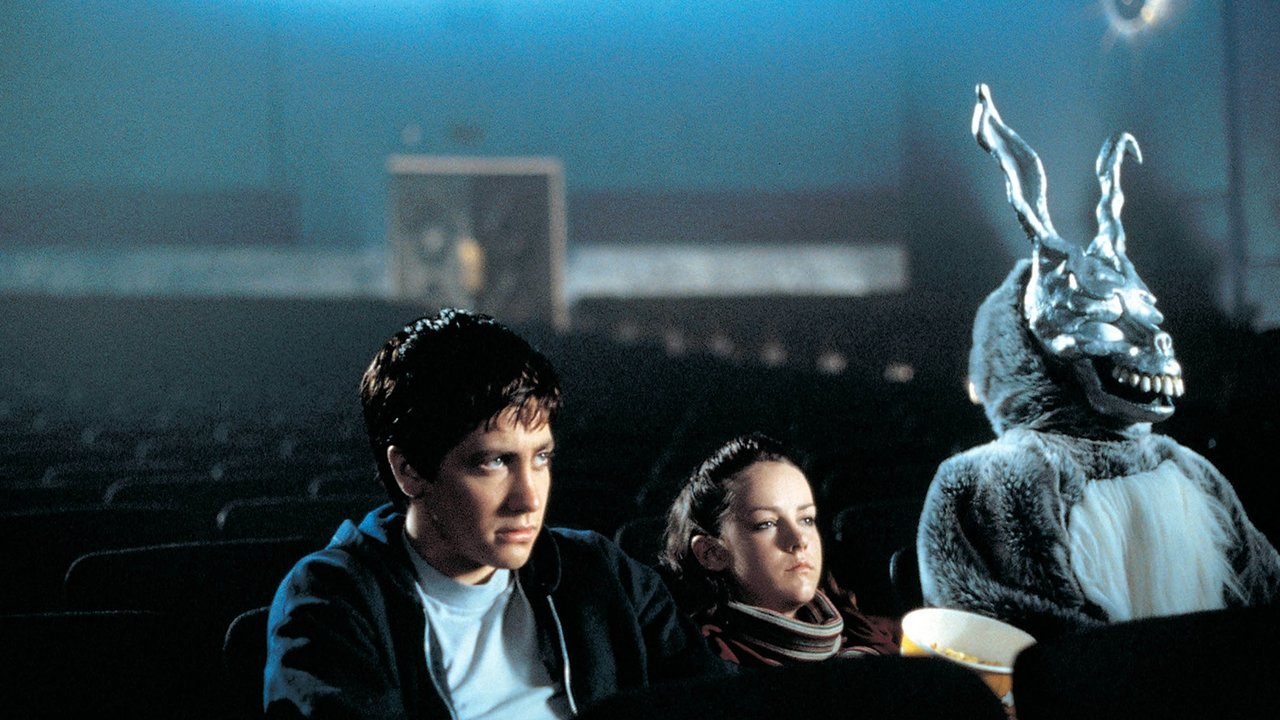
Confirmed in the work The figure in the rabbit costume who tells Donnie the world will end in 28 days, 6 hours, 42 minutes and 12 seconds is Frank Anderson, a real person in the story.[1]
Confirmed in the work Near the end, Frank runs over Gretchen with his car, and Donnie shoots Frank in the right eye. The Frank who visits Donnie throughout the film carries that wound.[1]
Strong inference So the Frank who guides Donnie is the dead Frank, one of the Manipulated Dead, coming back through the tangent universe to make sure Donnie ends up where he needs to be.
The last ten minutes
Confirmed in the work The vortex. A vortex forms over the Darko house. A plane carrying Donnie's mother, Rose, and a dance troupe is caught in it and loses an engine, which is sent back in time.[1]
Confirmed in the work The reset. The 28 days unwind. Donnie wakes on October 2, laughs as the engine falls into his room, and dies.[1]
Confirmed in the work The montage. Other characters wake from troubled dreams. Gretchen and Donnie's mother share a moment of déjà vu.[1]
Interpretation Why he laughs. The usual reading is that Donnie finally understands. He has seen what the 28 days would cost, and chooses a death that saves his mother, his sister and Gretchen. The laugh is relief, or the joke of finally knowing.
What Richard Kelly has said
Creator explanation Kelly has said that explaining the ending further would have made the film collapse under its own pretension, and credited producers Sean McKittrick and Nancy Juvonen and actor Jake Gyllenhaal with insisting there shouldn't be one simple answer.[1]
Creator explanation He has also said there is plenty of him in Donnie.[1]
Interpretation Another reading, which the rules don't rule out, is that the time travel is how Donnie, a teenager with a history of mental illness, makes sense of a world that frightens him. The film keeps that door open on purpose.
Theatrical cut or Director's Cut?
Confirmed in the work The 2004 Director's Cut adds about 20 minutes, changes the soundtrack and puts pages of The Philosophy of Time Travel on screen, which makes the rules above much more explicit.[1]
Confirmed in the work Critics rated the Director's Cut higher, but many fans still prefer the theatrical version, where the rules are only hinted at.[1]
Behind the scenes
- Confirmed in the workKelly began the script at 22, after graduating from film school. It was his first film as director, made for $4.5 million and produced by Drew Barrymore's company, Flower Films.[1]
- Confirmed in the workIt premiered at Sundance in January 2001 but earned only about $517,000 in its first US release, which came six weeks after the September 11 attacks with a trailer showing an aircraft accident.[1]
- Confirmed in the workIt found its audience on home video. A New York cinema ran midnight screenings for 28 consecutive months.[1]
- Confirmed in the workA sequel, S. Darko (2009), was made without Kelly, who said he no longer owned the rights.[1]
The Question Underneath
Would you give up your life if you knew it would put everything else right?
Donnie spends most of the film feeling that the world is broken and that he's somehow responsible for it. By the end he has a choice that makes that feeling literal. The film never says whether he understands what he's choosing, only that he laughs.
Connections that give things away
- Similar story mechanismTriangle (2009) Help Me Understand
Another story where a loop can only be closed by the hero accepting the one thing they've been fighting.
Where to go next
More of this feeling
Help Me Understand
Another hero whose visions of the end of the world are treated as madness.
Same question, different answer
Help Me Understand
Another loop with a woman trying to get home, and a set of rules she has to work out for herself.
Something completely different
The Twilight Zone · S2 E7
A much smaller story about a young man who starts letting a fortune-telling machine make his decisions.
How it connects
- Similar theme12 Monkeys (1995) Help Me Understand
A man everyone thinks is mentally ill turns out to be right about the end of the world.
Sources
- Donnie Darko · Wikipedia · accessed 2026-11-20
Plot summaries are in our own words. Labels mark what the work shows, what its makers have said, and what is our reading. Last reviewed 2026-11-20. Spot an error? Tell us.