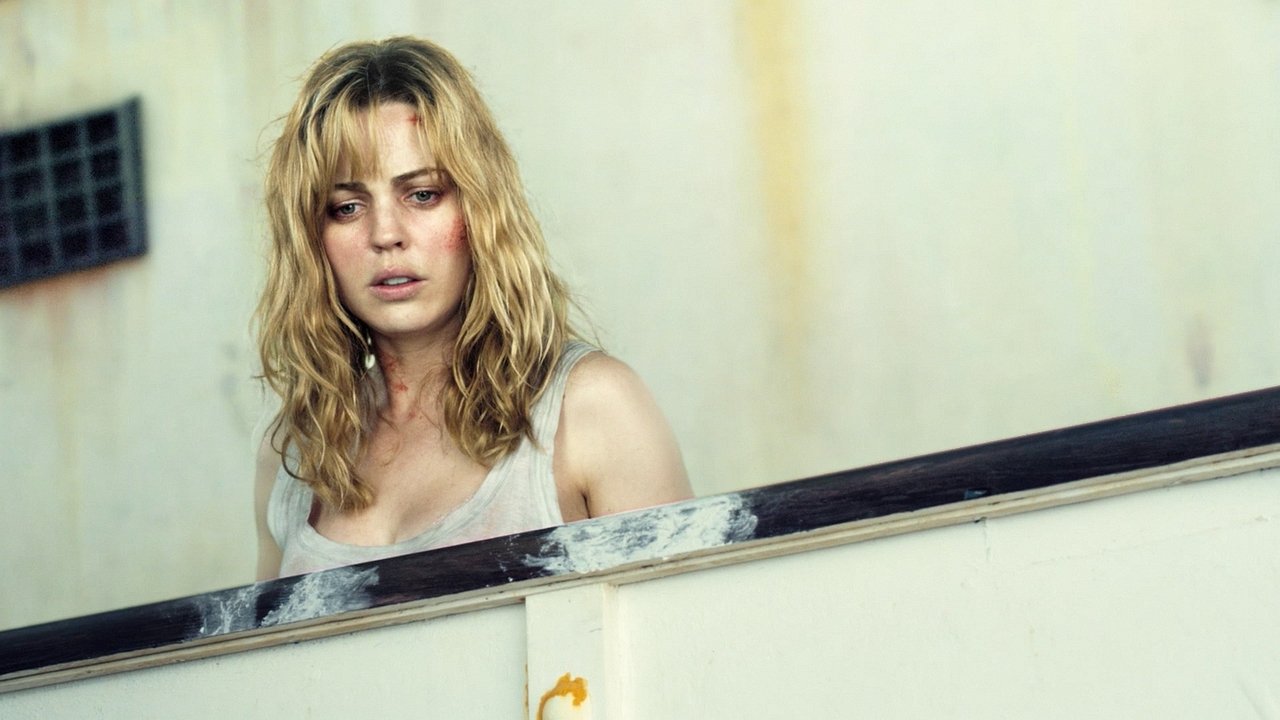
More from the film
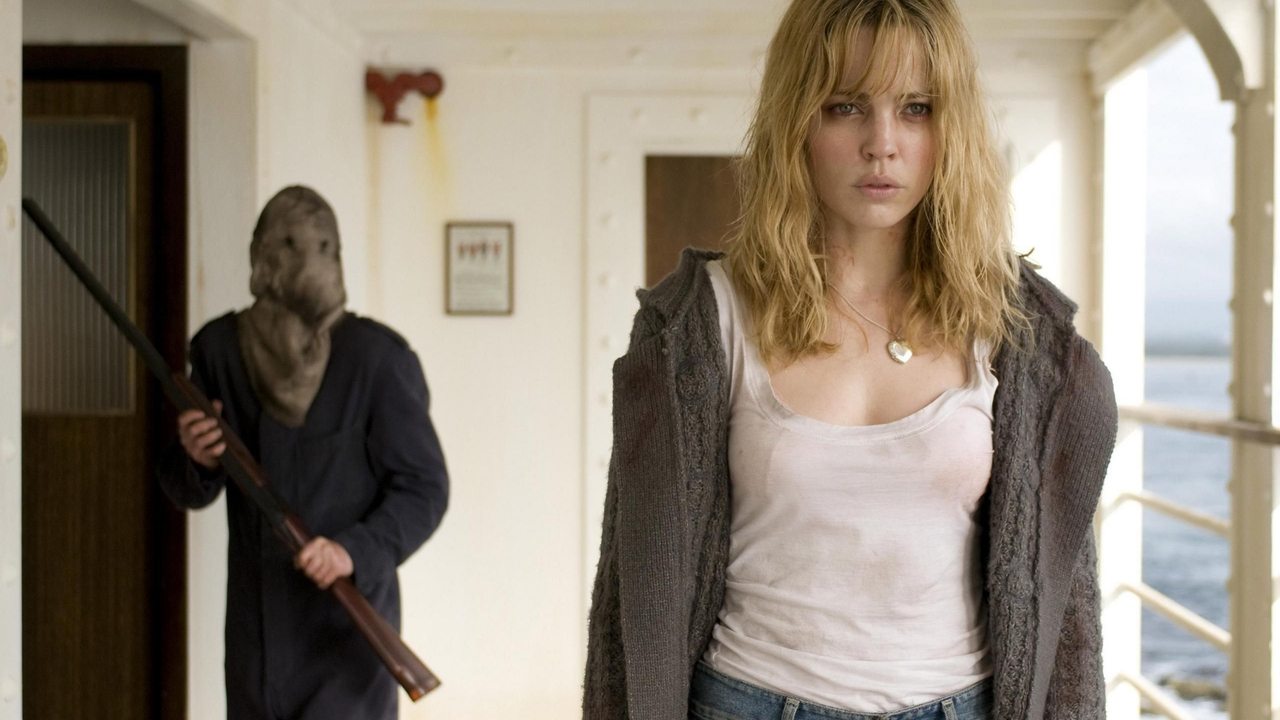
Who this is for
You've finished Triangle, you think you followed the ship section, and the last ten minutes left you with more questions than answers. This guide sorts out the mechanics first, then the meanings.
What it covers
- How the loop on the ship works
- What changes once she gets back to shore
- The clues: lockets, gulls and a Greek myth
- The three readings the director has offered, and which questions stay open
Spoiler boundary
The whole film, including the final scene. Also discusses how Triangle is often paired with Timecrimes (2007), without spoiling it.
Show the full explanationHide the explanationContains spoilers: The whole film, including the final scene.
How to read the labels
- Confirmed in the work
- Shown or stated on screen or on the page.
- Creator explanation
- What a writer or director has said outside the work.
- Strong inference
- Not stated outright, but the evidence points one way.
- Interpretation
- A reading of what it means. Reasonable people differ.
- Fan theory
- A popular idea the work doesn't confirm.
- Unresolved
- The work doesn't answer this.
The short answer
Jess is caught in a loop that runs from a morning at home to a ship called the Aeolus and back. On the ship she meets later versions of herself. The masked killer she fights is her, a few cycles on, killing the group because she believes it's the only way home.
When she finally reaches shore, it's earlier that same morning. She kills the version of herself who is harsh with her son Tommy and tries to drive away with him, but he dies in a crash. A taxi driver takes her back to the harbor. She promises to return, gets back on the yacht, and the cycle starts again. The film deliberately leaves open whether this is literal time travel, punishment or the inside of her head.
What actually happens
Confirmed in the work The morning. Jess, a single mother, leaves her autistic son Tommy at home and joins a day sail with Greg, his deckhand Victor, the couple Sally and Downey, and their friend Heather. She seems shaken and can't explain why.[1]
Confirmed in the work The storm. Greg hears a distress call from a woman saying someone is killing everyone. The yacht capsizes and Heather is lost. An ocean liner, the Aeolus, drifts up and they climb aboard. It looks deserted.[1]
Confirmed in the work The ship. Jess keeps finding things she shouldn't: her own keys, fresh food that has rotted when she comes back, a message written on a mirror. A masked figure starts killing the group. Jess fights the figure and knocks it overboard, and hears it say the killing is the only way to get home.[1]
Confirmed in the work The repeat. The overturned yacht drifts up again with another copy of the group, Jess included, and the whole sequence restarts with her watching. She finds piles of her own locket and notes in her own handwriting. Eventually she decides that the only way out is to play the killer, puts on the mask and does it.[1]
Confirmed in the work The shore. Thrown overboard, Jess washes up on a beach and finds it's earlier that morning. At home she sees her earlier self being harsh with Tommy. She kills that self and drives off with Tommy. A seagull hits the windscreen, she sees a heap of identical dead gulls, and the car crashes into a truck. Tommy dies.[1]
Confirmed in the work The last scene. A taxi driver offers her a ride. She asks for the harbor and promises she'll come back. She boards the yacht, and the day begins again.[1]
How the loop works
Confirmed in the work On the ship, several cycles overlap. At one point there are three Jesses aboard at once: the one we've been following, the newly arrived one, and the masked one. Each new group's arrival seems to depend on the previous group dying.
Strong inference The ship loop and the shore loop are linked. Every Jess who escapes the ship arrives at the same morning, kills the same earlier self, loses Tommy the same way and gets back on the same yacht. The heap of gulls suggests she has done this many times.
Strong inference The dozens of identical lockets and the many copies of the same note on board point the same way. This has happened far more than once or twice.
Unresolved Why the food rots so fast, and what started the cycle at all. The film offers no machine and no physics. It's a loop without an explanation, which is part of how it works.
Clues you may have missed
- Confirmed in the workThe distress call Greg hears at the start is from Sally, on the ship, in a later part of the same loop. It's a message from the end of the story arriving at the beginning.
- Confirmed in the workJess is uneasy before anything happens. She's arrived from the end of a cycle, so the day already feels wrong to her.
- Confirmed in the workThe liner is called Aeolus, and Downey points out on board that in Greek myth Aeolus was the father of Sisyphus, the man condemned to push a rock up a mountain forever. In the myth, Sisyphus is punished for breaking a promise to Death.[6]
- InterpretationThe taxi driver who appears after the crash is often read as a Charon figure, the ferryman of the dead. Jess's promise to him that she'll come back echoes Sisyphus making a deal with Death and breaking it.[2]
What the ending might mean
Christopher Smith has said there are several ways to read the film and that he wanted each of them to work. These are the main ones, with what helps and hurts each.
Creator explanation In an interview with Indie London, Smith set out three readings: a supernatural Bermuda Triangle story, Jess having a breakdown, or Jess having hit her head and "gone off for the day." He said all three should leave you satisfied.[2]
A curse: Sisyphus at sea
Creator explanationJess is being punished for a broken promise to Death, made at the roadside, and the loop is her boulder. Smith said at the premiere Q&A that he meant the film to reflect Sisyphus's deal with Death.[4]
What supports it
- The ship's name and the Sisyphus conversation.
- The taxi driver who waits, and the promise she makes him.
What complicates it
- If the promise causes the loop, the film never shows a first time she broke it.
Guilt and regret
InterpretationThe loop is what regret feels like from the inside: the same morning, the same failure as a mother, the same attempt to fix it with violence.
What supports it
- She murders the version of herself who mistreats Tommy, which is the most literal way of trying to stop being her.
- Every attempt to save him ends in the same loss.
What complicates it
- The other passengers die too, which is hard to read as only about Jess's private guilt.
She died in the crash
Fan theoryJess and Tommy die in the car accident, and everything on the ship is what comes after. The Aeolus is a kind of limbo and the taxi is her ride into it.
What supports it
- The driver's patience, and the dreamlike logic of the ship.
What complicates it
- We see the crash after the ship sequence, and the film shows the loop surviving it.
What remains unanswered
- UnresolvedWhat started the loop, and whether there was ever a Jess who wasn't in it.
- UnresolvedWhether Tommy can be saved in any version, or whether his death is fixed the way the ship's events are.
- UnresolvedWho, or what, the taxi driver is. The film never confirms he's anything more than a driver.
- UnresolvedWhether this is literal at all. Smith left that open on purpose, and the film supports more than one answer.
The Question Underneath
Can you outrun something you've done?
Jess is trying to get back to a morning where she can be a better mother. To get there she does terrible things, and every time she arrives, she brings the same self with her. Triangle doesn't say whether the loop is a curse, a punishment or her own mind. Whichever it is, the trap is the same: she keeps trying to fix the past by force, and the past keeps being where she lives.
Where to go next
More of this feeling
Help Me Understand
A smaller, sharper loop on dry land: one afternoon, one house, one man making it steadily worse.
Same question, different answer
The Twilight Zone · S2 E7
A newlywed and a fortune-telling machine. Another story about being stuck in a pattern you might be able to walk away from.
Something completely different
Red Dwarf · S3 E3
Horror on a ship, played for laughs: a shape-shifter that feeds on the crew's emotions.
How it connects
- Documented influence on thisDead of Night (1945) Film
Smith has named this British portmanteau film, whose framing story ends where it began, as an inspiration, along with Memento and The Twilight Zone. Source
- Editor's pairingTimecrimes (2007) Help Me Understand
Two closed-loop films two years apart, often watched together. Smith has said he had Triangle's idea before he'd seen Timecrimes. Source
On the trail: Time loops that do more than repeat the day (stop 3 of 6)
Sources
- Triangle (2009 British film) · Wikipedia · accessed 2026-11-20
- Triangle: Examining a Modern Classic Horror-Thriller · Den of Geek · accessed 2026-11-20
- Triangle Ending Explained: The Definition Of Insanity · /Film · accessed 2026-11-20
- Triangle (2009) review, FrightFest premiere · Dread Central · accessed 2026-11-20
- Triangle (2009) ending explained, themes analyzed · High On Films · accessed 2026-11-20
- Triangle (2009): "This the same ship" scene transcript · Clip.Cafe · accessed 2026-11-20
Plot summaries are in our own words. Labels mark what the work shows, what its makers have said, and what is our reading. Last reviewed 2026-11-20. Spot an error? Tell us.