More from the episode
The story in 5 beats
- The cable repairman
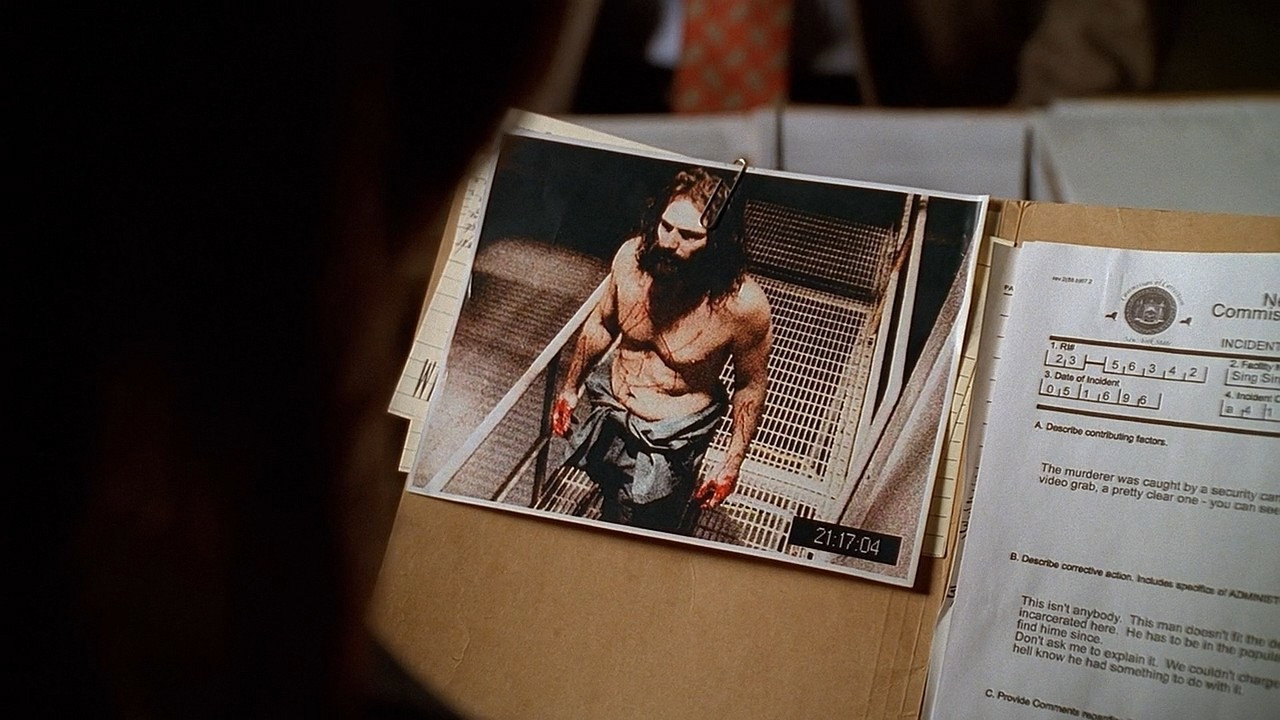
A cable repairman named Robert Fassl knocks on a family's door. Blood spatters the work order in his hand, and when he looks up the family are dead. Police burst in; one of them is a young Doggett.
- Released
In the present, DNA evidence frees Fassl. Scully confirms the results clear him, and Doggett is furious. Outside the courthouse Fassl notices a bearded man watching him.
- The lawyer's house
Fassl stays in a room at the home of his lawyer, Jana Fain, clutching rosary beads and praying hard. Scully finds the DNA points to a blood relative of his, though Fassl is an only child.
A pleaSpoiler · tap to reveal
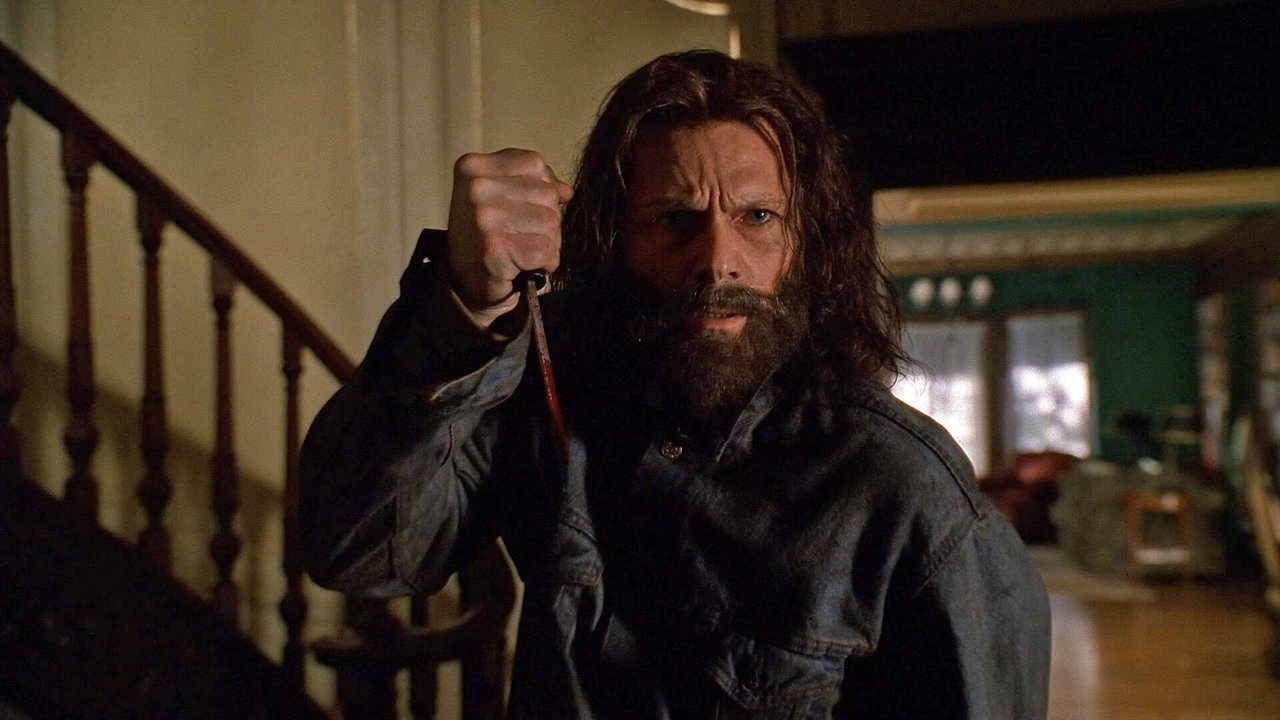
Fassl begs Assistant District Attorney Damon Kaylor to send him back to prison. Kaylor refuses and is killed by the bearded man, who then beats Fassl for refusing to kill Fain.
The sewerSpoiler · tap to reveal
Doggett chases the bearded man, and Reyes falls through into a sewer full of the killer's victims. She shoots him as he holds a knife to Doggett, and Doggett hauls the body from the water. It's Fassl.
Why it still matters
This is the episode that takes Doggett back to his years as a New York cop, and it hands him the worst case a detective can have: a man he caught standing over a murdered family, released because science says he didn't do it. The hour sets Doggett's certainty against the lab's, with Reyes ready to believe in something stranger than either.
It was also a debut. Executive producer John Shiban wrote it and directed it, his debut as a director. The road to air was bumpy: produced ninth but broadcast twelfth, it reportedly had "so many problems" that Fox executives nearly refused to air it, then relented and scheduled it several weeks after its intended date. Robert Shearman and Lars Pearson, in Wanting to Believe, gave it three and a half stars out of five and called it "solid and efficient," writing that "as a director [he] makes 'Underneath' shine" and praising how real Doggett feels here, though they rolled their eyes at familiar moves like "the surprise appearance of a face in the bathroom mirror" and "the climactic fight in a sewer."
Two men in one body
The bearded man and Fassl are the same person. Reyes works it out after Kaylor disappears: Fassl's piety, and his refusal to admit any darker side, have given him the unwanted ability to turn physically into someone else, someone violent. It also explains the first night at Fain's house, when the housekeeper, Mrs. Dowdy, went missing: Fassl found her body himself, cleaned up the blood and cut up her remains to hide what had happened. And when Fain tended to Fassl after his beating, she saw the bearded man in his place.
Doggett is left holding a body that doesn't match the man Reyes shot, and he can't make sense of it. Reyes tells him it doesn't matter as long as the case is solved. Shiban said the staff had "actually talked for some time about doing a Jekyll/Hyde story but never quite found a way to do it," until the DNA idea gave them one.
Challenge the DNA
Was Fassl responsible for what the other man did?
Or skip ahead to our reading
Reyes works out that his refusal to face his darker side gave it a body of its own. The episode makes him both innocent and to blame.
Behind the scenes
- Shiban wanted to shoot the sewer scenes in Los Angeles's real sewers, but the Department of Water and Power said no: "there's a moratorium on shooting there since September 11." Shiban called that "understandable." Art director Corey Kaplan built a replica sewer on Stage 11 at Fox instead, working from the blueprints for the 1952 Les Misérables.
- Arthur Nascarella was a friend of Robert Patrick, who helped get him cast. Patrick joked, "I stole [Nascarella's] New York accent in Cop Land and I stole it to do The X-Files, but I got him cast in The X-Files show."
- M.A. Crang, in Denying the Truth: Revisiting The X-Files after 9/11, thought the story felt "very familiar" but was impressed by the production design on the sewer set.
- It earned a Nielsen household rating of 4.4 and was watched by 7.29 million U.S. viewers, the 71st most watched episode of television in its week.
The thread
A cop's old case that won't stay closed, a city's underworld as the place where the truth comes out, and other stories in the same dark corner.
Came before
Shares DNA with
DNA strand
Technology Outpaces Ethics
A DNA test opens a prison door, and the lab's word outweighs a cop who was in the room. Doggett is told the science is final; Reyes suspects the science is answering the wrong question. The episode keeps asking what a perfect test can actually prove.
Every great sci-fi story is built from a handful of strands like this one. Each strand page explains how it works and traces it across shows, books and films.
If this one stayed with you
Where to go next, and why.
Watch · Film
Memories of Murder (2003)
Bong Joon-ho follows two small-town detectives through a serial murder case that slowly eats away at their certainty.
Watch · Film
The Thin Blue Line (1988)
Errol Morris's documentary reopens a Texas murder conviction and shows how sure everyone was of the wrong answer.
Read · Nonfiction
The Innocent Man by John Grisham
Grisham's nonfiction account tracks an Oklahoma man sent to death row and the DNA testing that finally reopened his case, the real-world side of Fassl's release.
Your next episode
Three directions to go from here, all on Sci-Fi DNA.
Same question, different answer
A Matter of Perspective
Star Trek: The Next Generation
It asks how sure anyone can be that the evidence points at the right man.

Something completely different
Release
The X-Files
For another case from Doggett's past, watch a gifted cadet offer to look into his son's murder.