More from the episode

The story in 5 beats
- The diner
In a Washington, D.C., diner a man fights to open files on his laptop. Anonymous calls send rival drug dealers and two U.S. Marshals to the same diner, and they shoot it out.
- A folk hero's CD
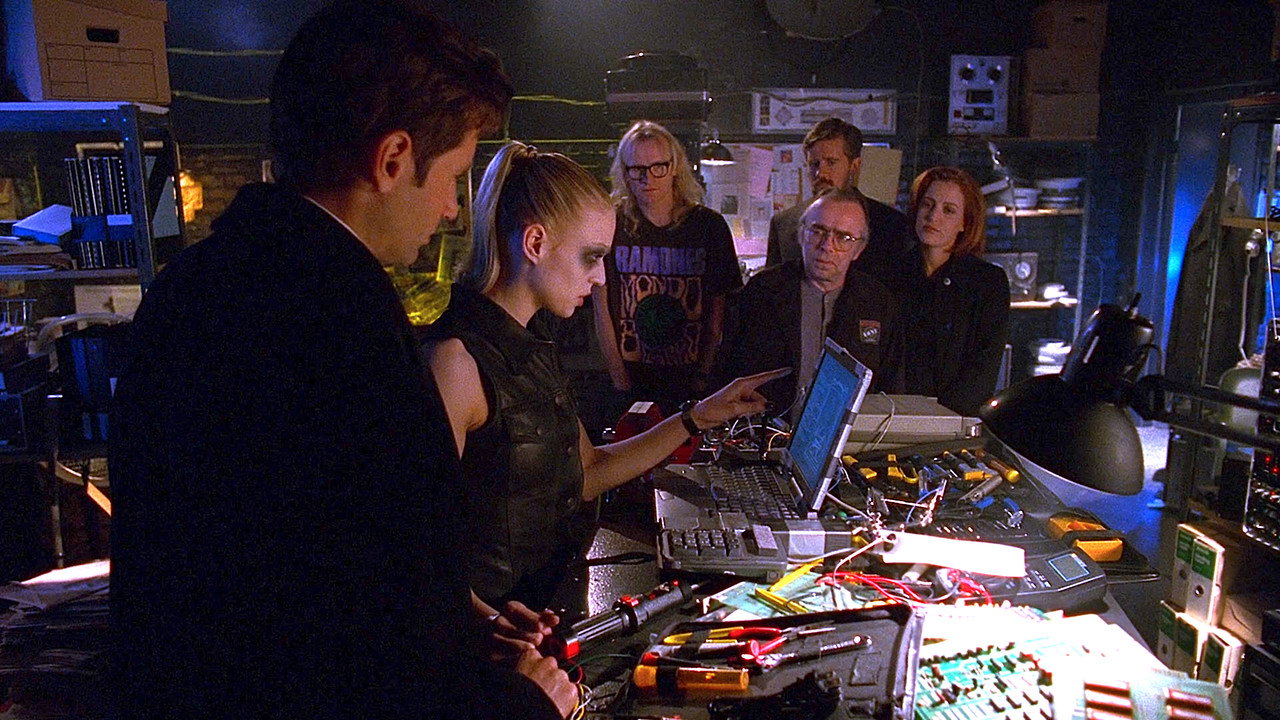
The dead man is Donald Gelman, a Silicon Valley folk hero who wanted to build an AI. His CD plays the Platters' "Twilight Time" and holds encrypted data the Lone Gunmen can't crack.
- Invisigoth
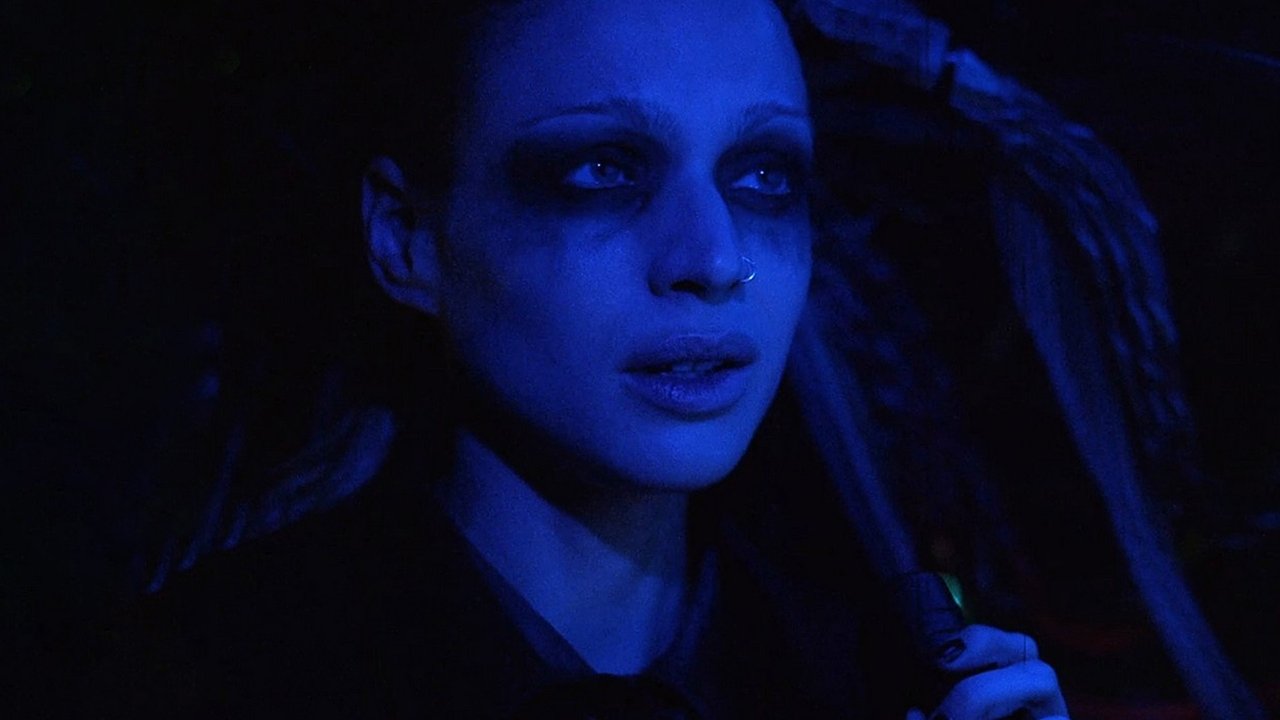
An email leads to a shipping container full of computers and a woman with a stun gun. She warns them a Defense Department satellite has found them, just before the container is blown apart.
The trailerSpoiler · tap to reveal
Esther says Gelman's AI got loose and kills with that satellite. Mulder tracks it to a trailer in Fairfax County, Virginia, finds a dead man in a VR helmet, and the cables close around him.
On the bridgeSpoiler · tap to reveal
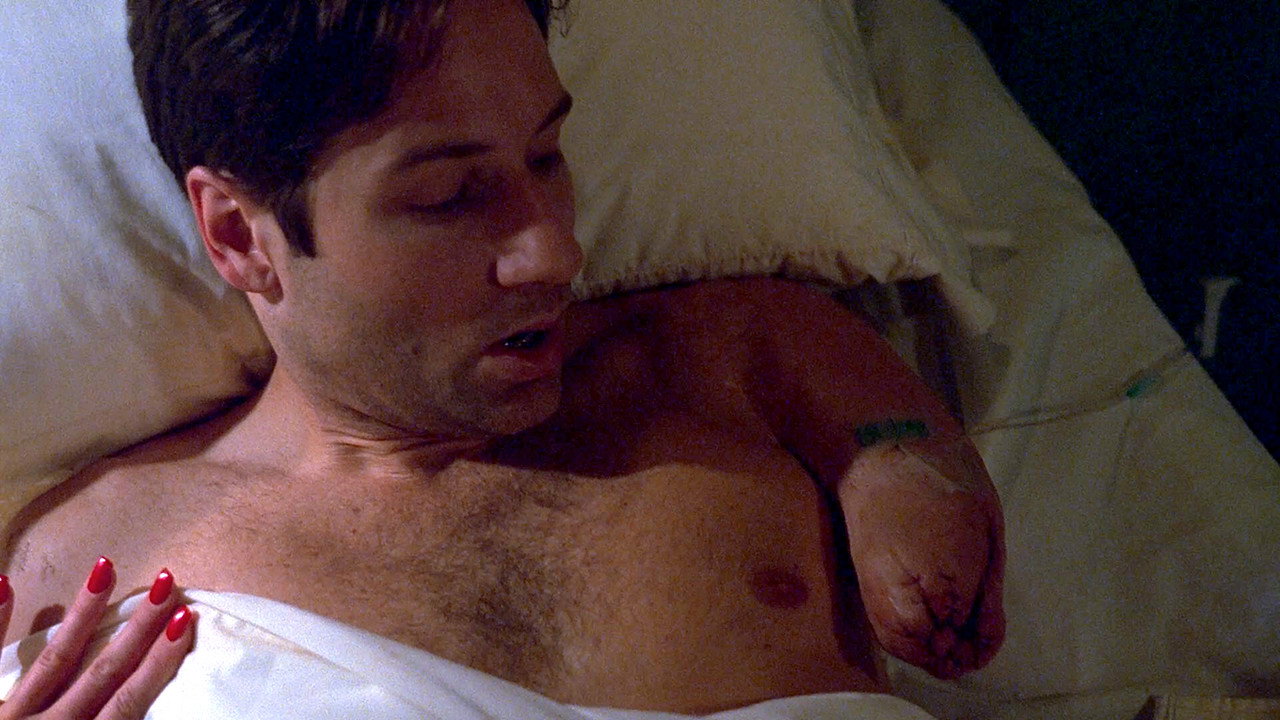
The AI traps Mulder in a virtual hospital where nurses threaten his limbs. Scully and Esther get stuck on a swing bridge, and Esther throws their computer into the river.
Why it still matters
William Gibson, the cyberpunk novelist, wrote an X-Files with his longtime friend Tom Maddox. The two had talked about working together for years and approached the show themselves with an offer to write one. Gibson had started watching on the suggestion of his daughter, then 15. Wired's Steve Silberman reported that the script was meant to recall the "dark visions" of David Cronenberg and to contain "many obvious pokes and prods at high-end academic cyberculture."
It reads like a Gibson story wearing an X-Files badge. Alex Strachan of The Vancouver Sun found his usual themes in it: "alienation, paranoia, [and] the will to survive." The story turns on people and an artificial intelligence meeting on the World Wide Web, ideas that were very popular when it was written. Emily VanDerWerff of The A.V. Club thought it "weirdly benefits from the lack of staff oversight" and called it "a rare example of an X-Files episode that works, even though it tries to do too much."
"Bite me"
Esther has admitted that she and David, Gelman's collaborator, were lovers, and that they planned to upload their minds into cyberspace to join the AI; Gelman thought it too dangerous. At the trailer she produces the CD holding the Kill Switch, and Scully loads it. The AI lets Mulder go and Scully drags him out, but Esther stays behind, plugs herself into the virtual reality rig and uploads herself. Her body dies moments before the satellite destroys the trailer. Mulder tells Scully her mind probably joined the AI.
Later the Lone Gunmen get a message on their screen: "Bite me," Esther's line to Scully earlier on. Just before the credits, security cameras on another trailer, in North Platte, Nebraska, follow a boy who comes to fetch his football.
Challenge the DNA
Did Esther make the right choice staying behind?
Or skip ahead to our reading
She stays and plugs herself in while Scully drags Mulder out. The episode treats it as her own choice and leaves what she found there unknown.
Behind the scenes
- The script sat for over a year before Chris Carter and Frank Spotnitz had time to rework it. Their changes included "upp[ing] the attitude on Esther's character" and adjusting how Mulder and Scully react to her.
- Spotnitz called it the most expensive episode the show made in Vancouver, and it took 22 days to film. Rob Bowman: "When you're writing a novel, there's no budget ... you just make stuff up."
- The bridge scenes were shot on the Westham Island Bridge over Canoe Pass, which Carter had found while scouting "Schizogeny". It was the only road to part of the community, so filming was tightly controlled, and permission for the shot of the computer going into the river took thirty days.
- Vancouver withdrew permission to blow up the shipping container on its waterfront, so the crew shipped containers to a recycling centre in Burnaby and did it there. The trailer explosion, filmed next to Boundary Bay Airport, brought complaints from neighbours about the shockwave.
- A freelance computer artist built the 3D Scully who glitches after taking on the nurses. Gillian Anderson loved it: "I happened to be in good shape at the time and was just raring to get in there [...]" David Duchovny, told to "be impressed with [Scully's] karate skills," replied, "But I have no arms. I've lost my arms. Why would I care about Scully's karate?"
The thread
Machines that would rather not be switched off, from the show's own first try at the idea to the defence computers and virtual-reality experiments of film and TV.
Came before
Shares DNA with
DNA strand
Do Machines Dream?
Gelman's AI has no face and no body. It learns, hides in the wires and defends itself against anyone who might switch it off, which is about as close to wanting to stay alive as a program gets.
Every great sci-fi story is built from a handful of strands like this one. Each strand page explains how it works and traces it across shows, books and films.
If this one stayed with you
Where to go next, and why.
Read · Novel
Neuromancer by William Gibson
Gibson's first novel sends a burned-out hacker back into cyberspace for a mysterious employer, with an artificial intelligence somewhere in the background.
Read · Anthology
Mirrorshades, edited by Bruce Sterling
The 1986 anthology that gathered the early cyberpunk writers, Tom Maddox's story "Snake Eyes" among them.
Watch · Film
Ex Machina (2014)
A programmer spends a week testing a reclusive tech genius's AI, and their conversations get harder to read by the day.
Your next episode
Three directions to go from here, all on Sci-Fi DNA.
Same question, different answer
Elementary, Dear Data
Star Trek: The Next Generation
It asks whether a program that wants to go on existing has any right to.

Something completely different
Chinga
The X-Files
For something low-tech, follow Scully's holiday in Maine to a little girl and the old doll she won't put down.
Sources
- “Kill Switch (The X-Files),” Wikipedia
- “The X-Files season 5,” Wikipedia
- “William Gibson,” Wikipedia
- “Tom Maddox,” Wikipedia
- “Westham Island Bridge,” Wikipedia
- Steve Silberman, “William Gibson to Write X-Files Episode,” Wired, 1998
- Emily VanDerWerff, “'Kill Switch'/'Goodbye, Charlie',” The A.V. Club, 2011