The story in 5 beats
- Flight 549
Over upstate New York, a passenger tailing Max builds a zip gun in the toilet. When he comes out the plane is shaking, light floods the cabin and the door by Max's seat opens.
- A birthday interrupted
Mulder is treating Scully to a birthday drink when Sharon Graffia, who says she's Max's sister, tells them he was flying to Washington to bring Mulder something. His plane has crashed.
- Nine minutes
At the wreck near Northville, safety board investigator Mike Millar waves off Mulder's talk of aliens. But the victims' watches are nine minutes off from the time of the crash.
What the radar showedSpoiler · tap to reveal
Air Force controller Louis Frisch flees commandos to the agents. He was ordered to track Flight 549 as a second aircraft closed in, until an explosion and the plane left his screen.
Two places at onceSpoiler · tap to reveal
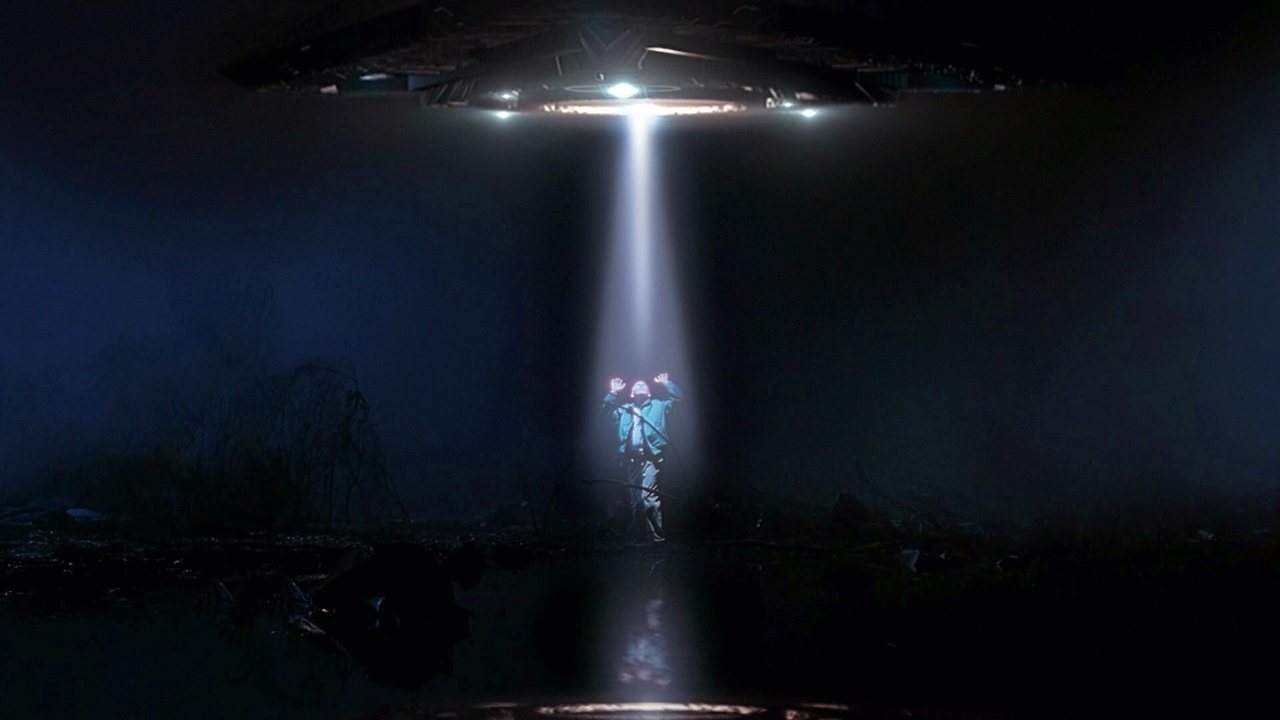
In a bar, a man hunting Frisch shoots agent Pendrell by mistake and Scully shoots back. Mulder dives into Great Sacandaga Lake, finds a craft with a body inside, and light pours down from above.
Why it still matters
"Tempus Fugit" drops the show's conspiracy machinery into an air crash investigation, wreckage, safety board and all. It began with a piece of equipment: a crash rig built by special effects supervisor Dave Gauthier. Chris Carter wanted to use it, and the writers decided the crash would hit harder if Mulder knew someone on the plane, which is how Max Fenig, last seen in the first season, came back.
Most critics liked it. Zack Handlen gave it an A− in The A.V. Club and singled out the cold open. Robert Shearman, in Wanting to Believe, gave it four stars out of five and called it "the best conspiracy episode we've seen in nearly two years," told "very clearly, with remarkably little baggage," with praise for guest stars Tom O'Brien and Joe Spano. Paula Vitaris of Cinefantastique was cooler at two and a half stars of four, but still found it "gripping" with "lots of action."
Three aircraft in the sky
Mulder is sure Max was taken off the plane and his body will never be found. Scully tells him it has already been pulled from the wreck. She learns he'd been working under an alias at a nuclear weapons plant in Colorado and suspects he carried plutonium aboard, which would explain the radiation injuries on Larold Rebhun, the survivor who sat beside him. Mulder reads Frisch's radar story his own way: a third craft, a UFO, approached the airliner, the second aircraft destroyed it, and Flight 549 went down with it. Millar tells Mulder the door was pulled off from outside in flight, and back at the site he sees a UFO and finds Sharon, who had been taken from her hotel room, just returned.
Killing Max in the first half was Spotnitz's idea. He didn't want the character's return "milked" or used for something the show had done before, and he thought dying early was "a bold choice". The man with the zip gun doesn't get a face either: a Man in Black posing as a safety board investigator, Scott Garrett, takes the gun from his body and burns off his face and fingerprints with acid.
Challenge the DNA
Was Max taken off the plane?
Or skip ahead to our reading
Scully has a body and a plutonium theory; Mulder has the radar and his certainty. The episode gives both weight and saves its answer for the second half.
Behind the scenes
- The rig was a Boeing 737 mock-up Gauthier built during the third season. It took 400 US gallons of hydraulic fluid, could roll 22 degrees each way and shift four feet to either side to fake turbulence, and its fuselage opened every six feet to let the cameras in.
- Scott Bellis had auditioned for other parts on the show since playing Max, and was turned down each time because Max was considered too memorable. He first heard the character might come back for a two-parter from David Duchovny, whom he kept running into at a gym.
- Carter said the realism of the crash site left some of the crew "frightened by their work". Rob Bowman admitted the episode went over budget, and said Carter often defended him from Fox officials angry about the cost.
- Twelve members of the post-production crew won the 1997 Emmy for Outstanding Sound Editing for a Series for this episode. Four more were nominated for sound mixing, and Jim Gross for single-camera editing.
The thread
Where Max Fenig came from, the abduction lore behind the missing nine minutes, and other stories of aircraft and lakes where something takes people away.
Came before
Shares DNA with
DNA strand
First Contact & Invaders
First contact arrives here as evidence: wristwatches that disagree, a cabin door open at cruising altitude, a crash the official explanation doesn't cover. The episode treats a close encounter the way a crash team treats wreckage, piece by piece, while somebody keeps carrying the pieces away.
Every great sci-fi story is built from a handful of strands like this one. Each strand page explains how it works and traces it across shows, books and films.
If this one stayed with you
Where to go next, and why.
Watch · Twilight Zone S5
"Nightmare at 20,000 Feet"
A nervous passenger sees something outside his window that nobody else will believe, the old template for terror at cruising altitude.
Watch · Film
Fearless (1993)
Peter Weir follows a man who walks away from an airliner crash convinced that nothing can hurt him now.
Read · Memoir
Communion by Whitley Strieber
The best-selling 1987 account of an alleged abduction, built around gaps in memory like the ones Mulder is chasing.
Your next episode
Three directions to go from here, all on Sci-Fi DNA.
More of this feeling
Tomorrow Is Yesterday
Star Trek
It has the same jittery feel of military aircraft running into something nobody can explain.
Same question, different answer
Improbable Cause
Star Trek: Deep Space Nine
It asks who gets to decide what really happened when the investigators have secrets of their own.

Something completely different
Never Again
The X-Files
For a story that belongs to Scully, follow her to Philadelphia and a lonely man whose new tattoo starts talking.
Sources
- “Tempus Fugit (The X-Files),” Wikipedia
- “The X-Files season 4,” Wikipedia
- Zack Handlen, “"Tempus Fugit"/"Walkabout" | The X-Files/Millennium,” The A.V. Club, 2011
- Andy Meisler, “I Want to Believe: The Official Guide to the X-Files Volume 3,” HarperPrism, 1998
- Ted Edwards, “X-Files Confidential,” Little, Brown and Company, 1996
- “The X-Files,” Television Academy (Emmys.com)