
More from the episode
The story in 5 beats
- Lake Okobogee
A flash of light outside Darlene Morris's RV at a lakeside campground near Sioux City. Her young son Kevin tells her his teenage sister, Ruby, is gone.
- A file Scully hadn't seen
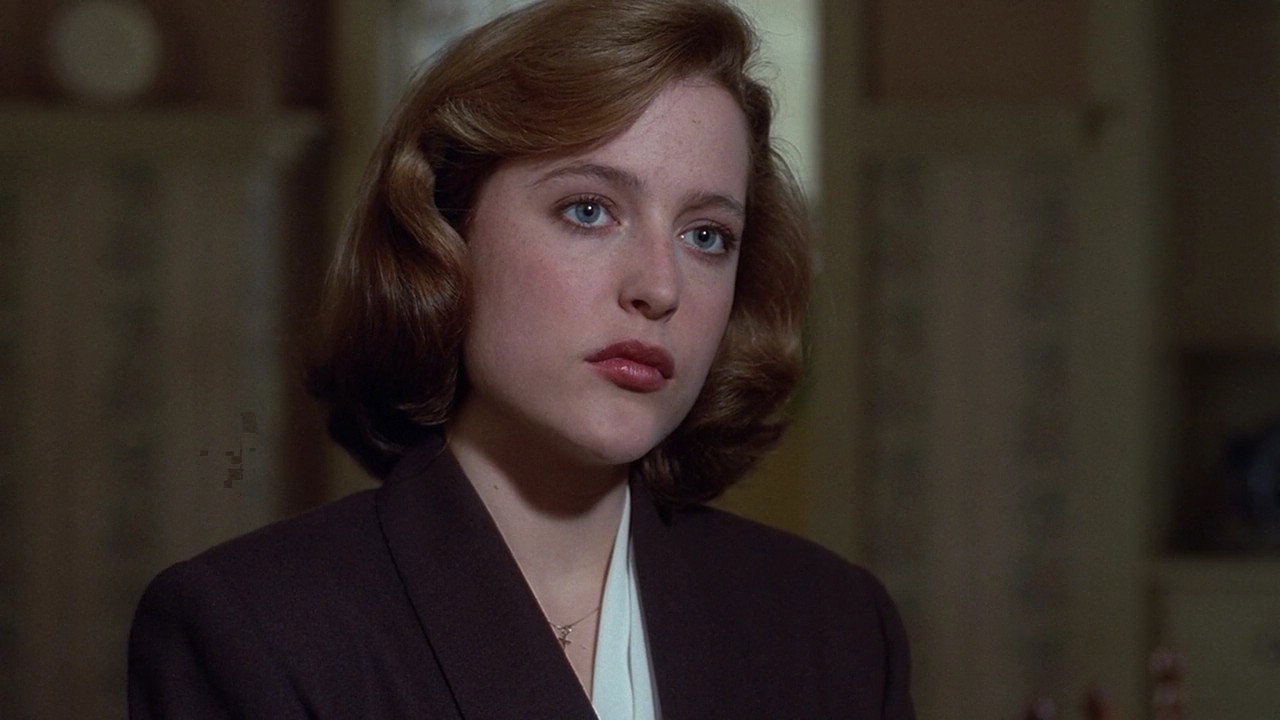
FBI chief Scott Blevins shows Scully the file on Mulder's sister and asks why Mulder wants travel money. Mulder explains: Darlene saw UFOs at that lake in 1967, as a Girl Scout.
- Ones and zeros
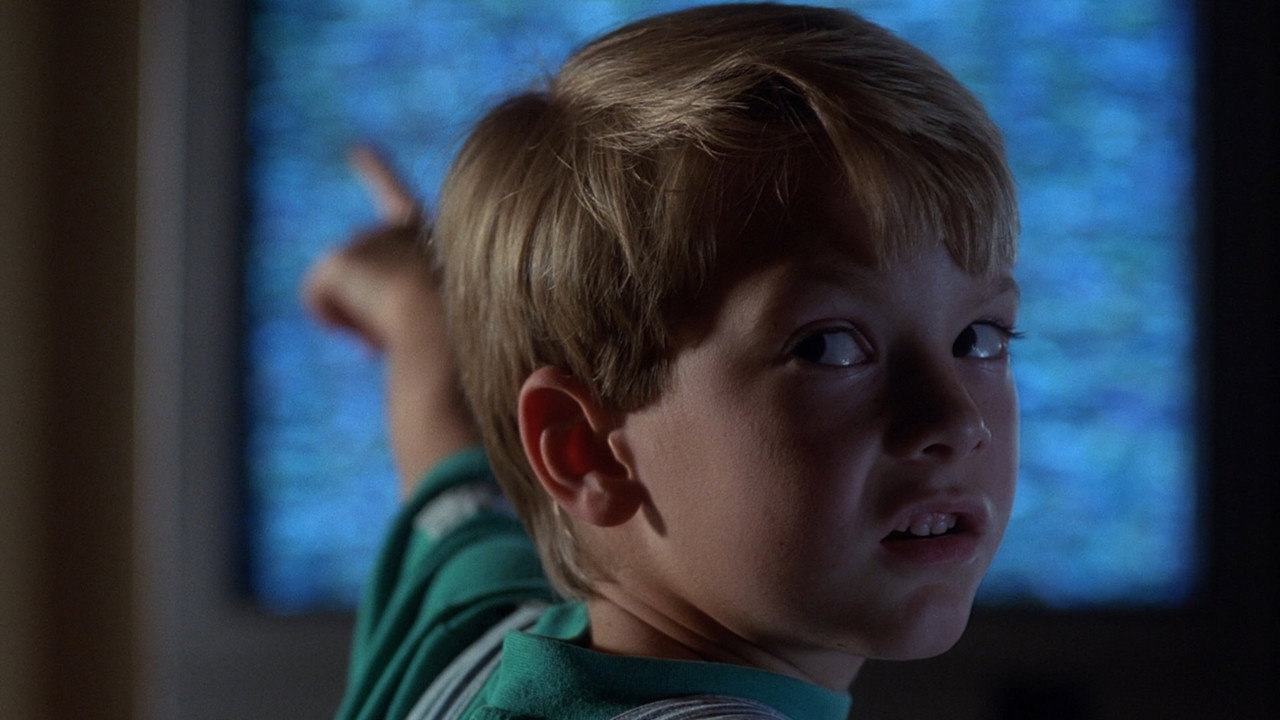
Kevin copies binary code off the static on the TV. It turns out to be part of a Defense Department satellite transmission, and NSA agents tear the Morris house apart and take the family away.
The burned tree lineSpoiler · tap to reveal
At the lake: glassy sand, scorched trees, white wolves, and Ruby's boyfriend Greg in a shallow grave. A note in his wallet points to Tessa, who had said Ruby was pregnant.
The living room floorSpoiler · tap to reveal
Tessa admits she killed Greg. Back at the empty Morris house, Kevin's pages of code are laid out across the floor, and together they make a picture of Ruby's face.
Why it still matters
"Conduit" is the episode that tells you who Mulder is. The pilot mentioned his missing sister; here the writers build a whole case around the night she vanished, and critics have since pointed to it as the foundation for one of the series' main threads. Howard Gordon said he and Alex Gansa "made an effort to play to our own strength, which is character," and producer Glen Morgan felt the episode "really helped define Mulder."
Chris Carter liked it for Scully's sake too. He said its strongest moments were the ending and Scully's realization that Mulder may not be a crackpot, and he pointed to the way she keeps pulling him back from his fringe theories and his feelings about the case as proof that the show was told from her point of view.
Duchovny's quiet, raw turn split opinion. Entertainment Weekly's 1996 season guide gave the episode a B and called it "excellent for background," but said he gave "a performance that makes wood look lively." Academic writers saw the same openness differently: in Deny All Knowledge (1996), Mulder's vulnerability over his sister is read as casting him "in a pattern typically engendered as female," and Brenton J. Malin later set his "emotional and empathic balance" against the male detectives of earlier fiction.
Only his faith
The agents find Darlene and Kevin in the woods by the lake. A motorcycle gang tears through, Mulder pulls Kevin out of their path, and Scully finds Ruby nearby. In the hospital, with Kevin at her bedside, Ruby says she was told not to say anything, and never says by whom. Darlene, who was ridiculed for what she saw in 1967, refuses to cooperate any further.
Back in Washington, Scully plays a tape of Mulder under hypnosis, describing the night his sister vanished. Mulder sits alone in a church, crying over a photograph of Samantha. Gordon said this was the part he and Gansa were proudest of, "Mulder sitting alone in a church with only his faith," and that the boy who serves as the conduit "is essentially Mulder."
Challenge the DNA
Was Mulder too close to this case?
Or skip ahead to our reading
Ruby comes back and won't say who told her to stay quiet. Mulder ends the episode alone, crying over his sister's photograph, and the case is his grief as much as his work.
Behind the scenes
- Gordon and Gansa were afraid Chris Carter wouldn't like their script. He did, and approved it.
- Buntzen Lake in British Columbia played Lake Okobogee. Several crew members got lost on the way to the location, because the van that was supposed to put up the signs got lost itself.
- Gordon called it "a simple abduction story, which was played out behind the shadows," written so that every step could be explained some other way, and said it came out of "frustration on our parts, and creative uncertainty."
- Daniel Sackheim, the NYPD Blue producer who directed it, had worked with Carter on developing the pilot.
The thread
Where Mulder's search starts to take shape, and other stories of children taken, or touched, by something in the sky.
Came before
Shares DNA with
DNA strand
First Contact & Invaders
The contact here happens entirely offscreen. Nobody sees a ship; there's a flash, burned trees, glassy sand and a boy who hears numbers in the static. The episode stays with the people left behind after something comes down from the sky.
Every great sci-fi story is built from a handful of strands like this one. Each strand page explains how it works and traces it across shows, books and films.
If this one stayed with you
Where to go next, and why.
Watch · Miniseries
Taken (2002)
Three American families are bound up with alien abductions across more than fifty years, with children at the centre of it.
Watch · Film
The Fourth Kind (2009)
A psychologist in Nome, Alaska, uses hypnosis on patients who all remember the same owl at the window, and the sessions are as unsettling as anything they uncover.
Read · Book
Communion by Whitley Strieber
Whitley Strieber's first-person account of missing time and visitors in the night makes a good companion to this episode's hypnosis scenes.
Your next episode
Three directions to go from here, all on Sci-Fi DNA.
More of this feeling
Nightmare at 20,000 Feet
The Twilight Zone
A frightened witness whom nobody quite believes carries the same sense of isolation.

Same question, different answer
The Inner Light
Star Trek: The Next Generation
It asks what a single glimpse of something unexplained does to a person for the rest of their life.

Something completely different
Ice
The X-Files
For a tense, sealed-room thriller with no missing children in sight, head to the Arctic.