
The story in 5 beats
- A vision of a heart
Phillip Padgett, a would-be novelist living next door to Mulder, sees himself pull the heart from his own chest. Later he sees a beating heart inside an incinerator.
- Psychic surgery
Scully brings Mulder a case: a man whose heart was taken out with no physical evidence of how. Mulder suspects psychic surgery. Through the wall, Padgett is listening.
- The milagro
A teenager named Kevin is killed the same way while Padgett types. Scully is sent an anonymous milagro charm, then pages describing her own private thoughts.
The manuscriptSpoiler · tap to reveal
Padgett tells Scully in a church that he sent the charm. Mulder reads the manuscript, arrests him, then lets him go after another killing, hoping he'll lead them to the killer.
The incineratorSpoiler · tap to reveal
Padgett realizes the next chapter ends with Scully's death and tries to burn the book. Mulder thinks he is destroying evidence.
Why it still matters
"Milagro" is the episode where the people who wrote The X-Files put themselves on screen. John Shiban and Frank Spotnitz got the idea while talking about how stressful the job was, and Shiban later said the theme, someone thinking about a thing so hard that it becomes real, would be "familiar" to anyone who had ever written a script. They sent a draft to Chris Carter, who was busy shooting the pilot for Harsh Realm and still rewrote parts of it, the ending included. Spotnitz called the result "personal", and because he thought it had been "underappreciated", it was later included on the X-Files Essentials DVD set.
It also gives Scully something she rarely gets: a man who is paying close attention to her, in a way that is flattering and unnerving at once. Critics have never settled on it. Robert Shearman, in Wanting to Believe, gave it five stars out of five, calling it "a study of overwriting with all the mistakes left in" and Gillian Anderson's performance "revelatory". Paula Vitaris of Cinefantastique gave it one and a half stars out of four, arguing it had Scully acting out of character, and Zack Handlen of The A.V. Club settled on a B−, saying it "works far better than it deserves to".
Given what he could not receive
The killer is Ken Naciamento, a Brazilian surgeon from Padgett's own novel, who has somehow come to life through Padgett's writing. While Padgett is down at the incinerator, Naciamento goes after Scully. Mulder finds her covered in blood but alive. Padgett lies dead on the basement floor in front of the incinerator, his beating heart in his hand, having "given what he could not receive".
Writing in The X-Files and Literature, Margaret Kaner reads Padgett as a version of Mulder: a profiler has to think like the criminal, a writer like his characters. She also points out that the partners swap places here, with Scully arguing that every crime has a motive and Mulder arresting a suspect "without a second thought". Michelle Bush, in Myth-X, argues that Padgett finally sees Scully wants Mulder's attention, and gives himself up for her love.
Challenge the DNA
Did Padgett love Scully, or only the idea of her?
Or skip ahead to our reading
His pages are full of her private thoughts, and his character comes to life to reach her. The episode treats his feelings as real and his writing as dangerous.
Behind the scenes
- John Hawkes had auditioned weeks earlier for Pinker Rawls in "Trevor". Carter and Spotnitz thought he was wrong for that part but saw a "dignity and simplicity" in him, so they wrote Padgett for him, hoping he would keep the character from becoming a stock villain.
- The index cards on Padgett's wall are the same format the writers used to work out X-Files stories. Spotnitz wrote them himself, because the prop man "couldn't do it as well as we could".
- Two churches chosen for the shoot withdrew permission just before filming. The woods are Griffith Park in Los Angeles, with the undergrowth added by the crew, and the cemetery with old-fashioned upright headstones was found in Altadena.
- One headstone reads "Salinger", with the names Nicholas and Diana and the year 1994: the parents in Fox's Party of Five. Spotnitz and others had taken it for a joke about J. D. Salinger.
- Mark Snow worked human heartbeats into the score.
The thread
Writers, the people they watch, and stories that leak into the world around them.
Came before
Shares DNA with
DNA strand
Is Any of This Real?
A man types alone in his apartment, and his pages keep matching what the agents find at crime scenes. Then they start matching what Scully is thinking. The case turns on where Padgett's imagination stops and the world begins.
Every great sci-fi story is built from a handful of strands like this one. Each strand page explains how it works and traces it across shows, books and films.
If this one stayed with you
Where to go next, and why.
Watch · Film
The Conversation (1974)
Gene Hackman plays a surveillance expert who listens in on strangers for a living and gets far too involved in what he hears.
Watch · Film
Misery (1990)
A novelist and the reader who adores his books, shut in one house together, with devotion curdling into something far worse.
Read · Novel
The Collector by John Fowles
A lonely man watches a woman from a distance until watching isn't enough, told partly from inside his head and partly from hers.
Your next episode
Three directions to go from here, all on Sci-Fi DNA.
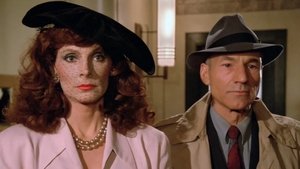
More of this feeling
The Big Goodbye
Star Trek: The Next Generation
It has the same uncanny charge of characters who refuse to stay inside their story.
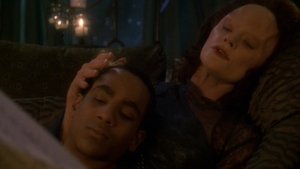
Same question, different answer
The Muse
Star Trek: Deep Space Nine
It asks how close a writer can get to someone before the work starts to consume them both.

Something completely different
The Unnatural
The X-Files
For a warmer story, watch Arthur Dales's brother tell Mulder about a 1947 Roswell ballplayer.