More from the episode
The story in 5 beats
- The shack
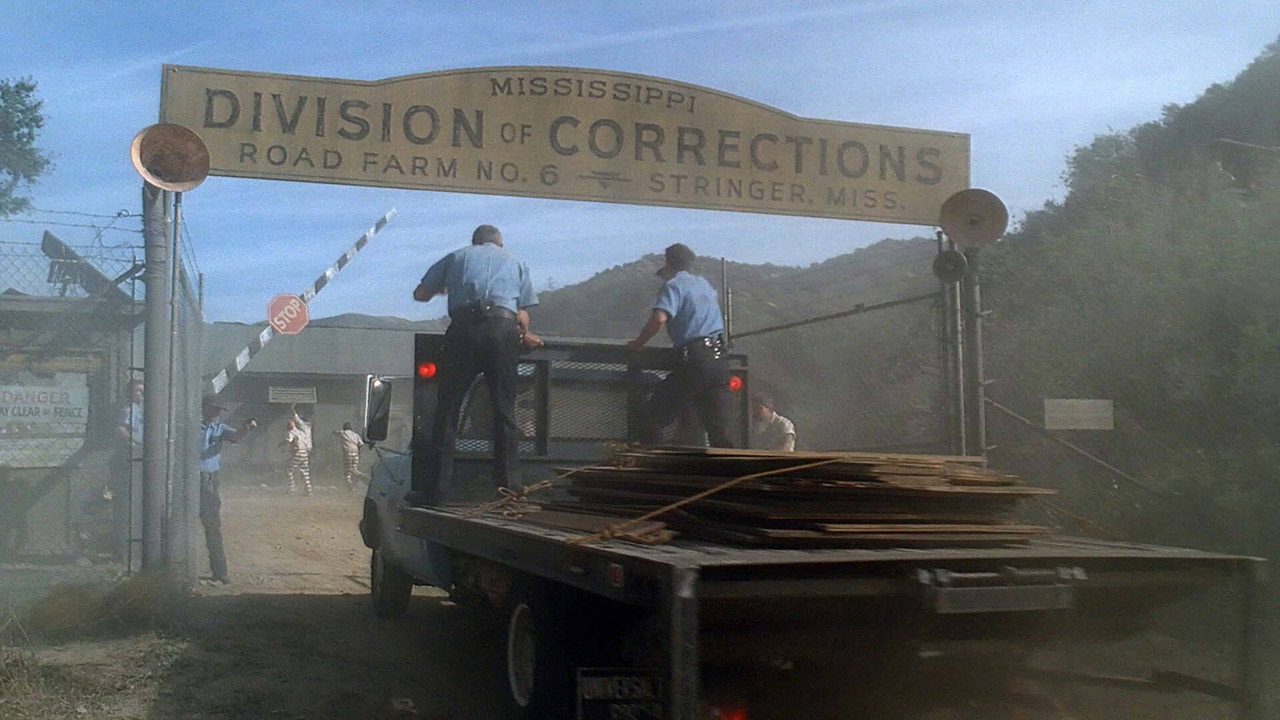
With tornadoes coming through the prison farm in Stringer, Mississippi, inmate Wilson "Pinker" Rawls is locked in an outdoor shack as punishment. Afterward the shack is wrecked and Pinker is gone.
- A brittle wall
The warden is found dead, his body severed at the waist. Examining the scene, Mulder and Scully find that a wall near the body has gone strangely brittle.
- "I want what's mine"
Pinker's old friend Bo Merkle turns up dead. The agents track down June Gurwitch, Pinker's former girlfriend, who has changed her name, and Pinker leaves a message: "I want what's mine."
What Scully findsSpoiler · tap to reveal
Bo's bullets went straight through Pinker. Mulder thinks the lightning let him pass through matter, but not glass. Scully learns June had Pinker's son, a boy he has never met.
The phone boothSpoiler · tap to reveal
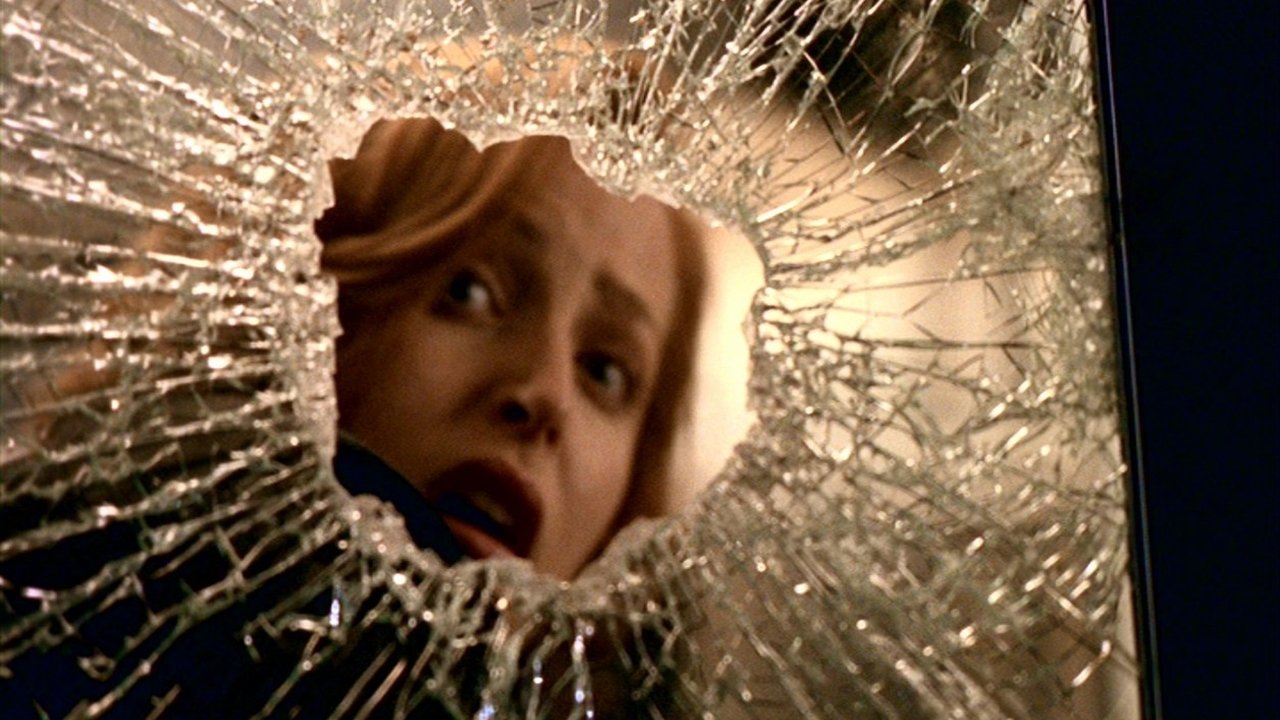
Pinker takes June and learns her sister Jackie raised the boy. Scully locks herself and Trevor in a glass phone booth, and seeing his son's fear, Pinker walks away.
Why it still matters
"Trevor" was written from inside the crew. Ken Hawryliw had been The X-Files' property master through its Vancouver years, 1993 to 1998, writing scripts in his spare time that he never showed the writing staff. Working on Millennium, he became friends with Jim Guttridge, who had a script he wanted to send to The X-Files. Hawryliw liked the premise but thought it didn't read like the show, so they split the job: Guttridge built the story and Hawryliw turned it into an X-Files script.
Most critics found the result routine. Robert Shearman gave it two stars out of five and called it "The X-Files at its most generic," and Emily VanDerWerff of The A.V. Club gave it a C, saying it "almost works" but has "a very manufactured quality," though she admired the death scenes and called the corpses "nicely gruesome." Paula Vitaris of Cinefantastique liked those corpses too, calling the effects "superb" in a two-and-a-half-star review, and Tom Kessenich held it up as "solid proof" that the show "can still deliver a powerful" monster-of-the-week hour when it wants to.
Through the windshield
As Pinker walks off, June hits him with her car. He passes through the metal body, but the glass windshield cuts him in half. Hawryliw said the son was there to humanize him: "There's this unique man who can walk through walls. Now, who would this ability best apply to? Well, a convict obviously... But then we had to give him an even stronger, more compelling reason to want his freedom, and that was where his son came from."
Rob Bowman went further. "Pinker is a crazed killer, but not a monster," he said. "In truth, the real villain of the piece is June, an upwardly mobile woman who basically sold out her boyfriend, then gave up her son so she would be more attractive as a single woman." Not everyone bought the switch: VanDerWerff objected to the episode trying to make Pinker an object of sympathy, and noted that the boy in the title gets about ten minutes on screen.
Challenge the DNA
Did Pinker deserve sympathy?
Or skip ahead to our reading
The son was there to make him human, the writer said. The episode gives him that and still ends him on a windshield, his one weakness.
Behind the scenes
- The first draft put Pinker in a conventional state prison in Oklahoma. Finding a set like that would have broken the budget, so the story moved to a Mississippi prison farm.
- A scene of Pinker taking a shortcut through a motel wall was cut, partly for cost and partly because the writers wanted "to shift the episode's emphasis from the supernatural to the emotional."
- Casting director Rick Millikan auditioned dozens of actors before going to John Diehl of Miami Vice, Stargate and Nixon. "[Diehl] had been on my list to put into the show since Day One," he said, and the producers cast him without a reading.
- Bowman kept the effects cheap with camera angles, breakaway cement and Bondo on Mulder's trunk lid. He was proudest of the wall that crumbles in the shape of a man: "the first time we did it, all we got was a big square hole... but we didn't want it to look like Bugs Bunny with his ears sticking out, either."
- Hair department head Dena Green backcombed Diehl's hair in every scene after Pinker had passed through something solid, a quiet hint at which way he'd come.
The thread
Southern prison farms and the punishments handed out on them, escaped convicts with a child at the heart of the chase, and another time the show's weather turned on a small town.
Came before
Shares DNA with
DNA strand
Love Beyond Limits
Under the manhunt is a story about the life Pinker had before prison and how much of it he thinks he is still owed. The episode keeps asking how far a man will go to take back what he believes belongs to him.
Every great sci-fi story is built from a handful of strands like this one. Each strand page explains how it works and traces it across shows, books and films.
If this one stayed with you
Where to go next, and why.
Watch · Film
The Night of the Hunter (1955)
Robert Mitchum's ex-con preacher hunts two children down the Ohio River for the stolen money their father hid, in Charles Laughton's only film as director.
Watch · Film
The Fugitive (1993)
A convicted man slips away in the chaos of a crash and stays one step ahead of a federal manhunt while he hunts for the man who killed his wife.
Read · Novel
The Green Mile by Stephen King
Stephen King's novel is set on a Southern prison's death row in the 1930s, where a guard tells the story of an inmate who can do things nobody can explain.
Your next episode
Three directions to go from here, all on Sci-Fi DNA.
More of this feeling
Necessary Evil
Star Trek: Deep Space Nine
It has the same noir feel of an old crime coming back to the people it touched.
Same question, different answer
Ties of Blood and Water
Star Trek: Deep Space Nine
It asks what a man owes to family he has only just found.

Something completely different
Arcadia
The X-Files
For something lighter, watch Mulder and Scully go undercover as newlyweds in a planned community.