More from the episode
The story in 5 beats
- A funeral
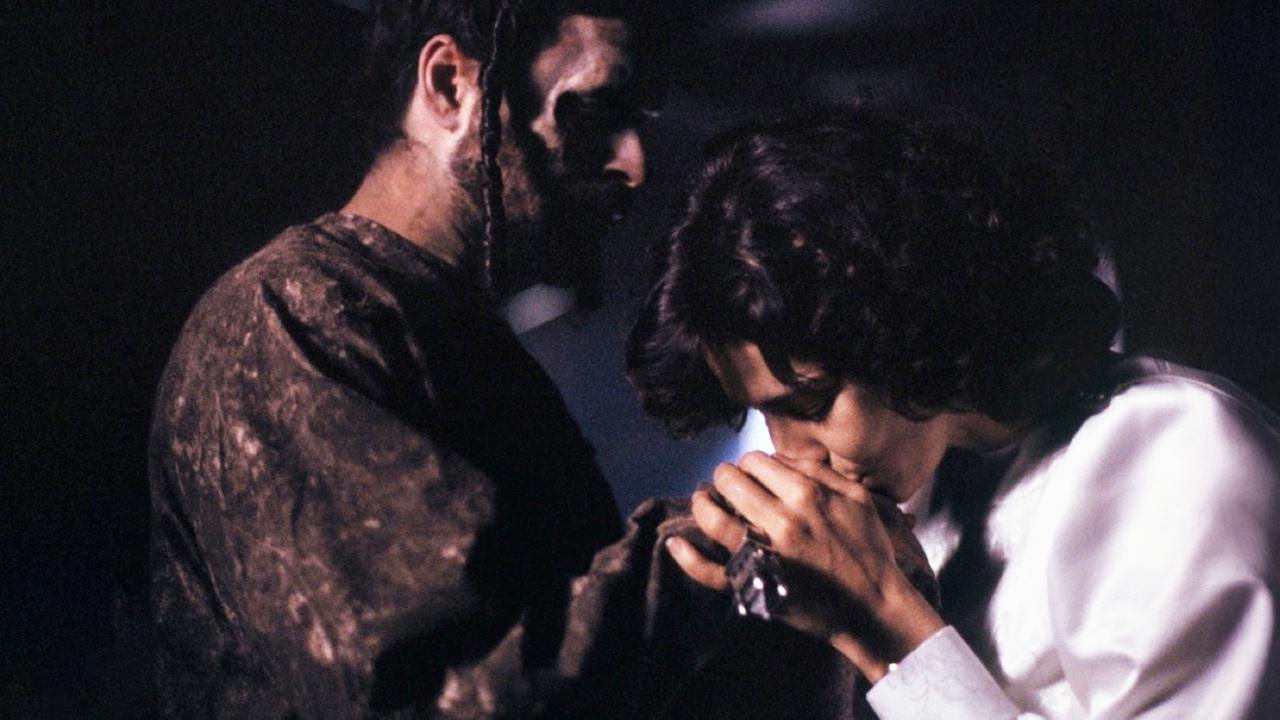
Hasidic mourners in Brooklyn bury Isaac Luria, beaten and shot by a gang of young neo-Nazis. The last to leave are his betrothed, Ariel, and her father, Jacob Weiss.
- Mud at the grave
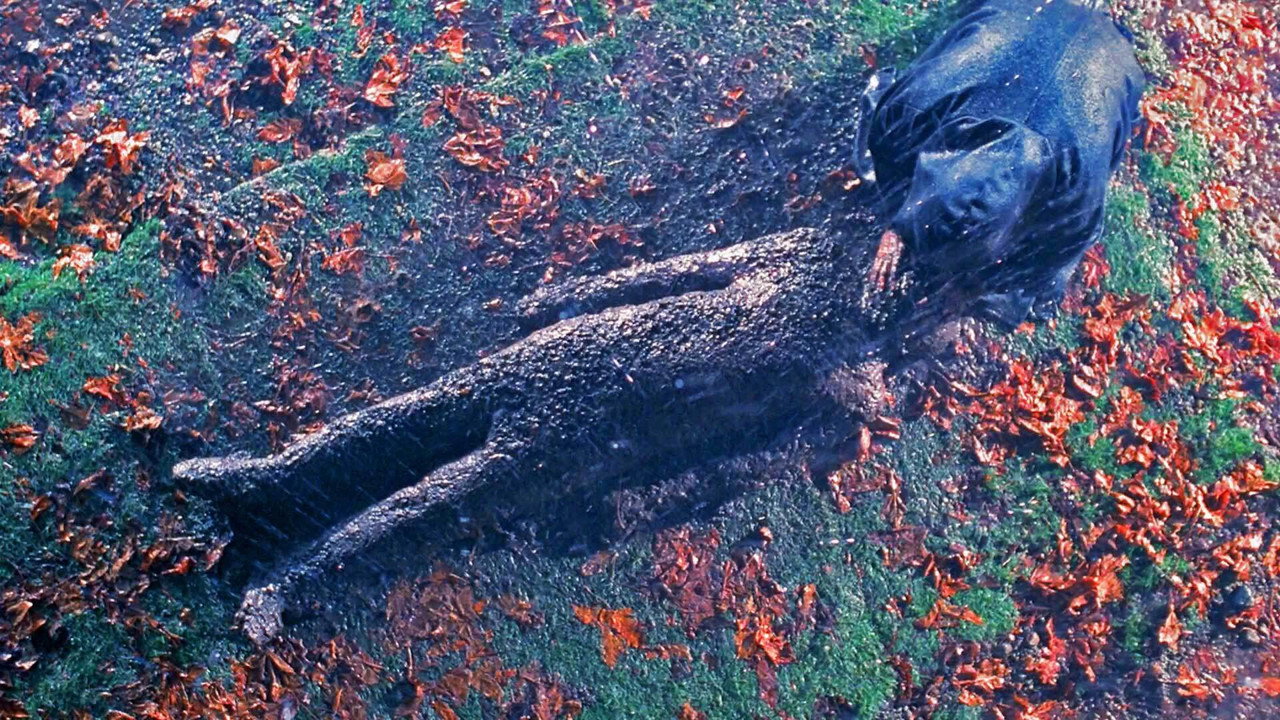
After dark, a figure slips into the cemetery and shapes a man out of mud. When the first killer dies, Mulder and Scully are called in, and asking to exhume Isaac angers Jacob.
- The copy shop
Scully suspects a staged revenge killing. The agents question Curt Brunjes, a racist who runs a copy shop across from Isaac's workplace, while the two boys he employs overhear that Isaac has risen.
- The open grave
The boys dig up Isaac and find his body intact; one is killed at the car. In the grave the agents find a book of Jewish mysticism with Jacob's name on it, and it bursts into flames.
In the synagogueSpoiler · tap to reveal
The agents find Jacob beside the third boy, hanged, and Jacob confesses to both killings. Brunjes is murdered next, and his shop's security tape shows a creature with Isaac's face.
Why it still matters
Howard Gordon wrote this one from his own heritage. "We had never dealt with the horrors of antisemitism and the power of the word," he said, "and because I'm Jewish, it was something that was really compelling to me personally." A golem story had been pitched before by, in his words, "probably every Jewish writer who's passed through" the show, and Gordon had circled the idea himself since the first season without finding his way in. The finished episode is dedicated to the memory of his grandmother, Lillian Katz.
It is one of the season's standouts outside the mythology. Andy Meisler's official guide called it "one of the best non-mythological episodes of the fourth season" for its "seamless integration of character development, social commentary and the supernatural", and Juliette Harrisson of Den of Geek named it the best stand-alone episode of the season. Robert Shearman, in Wanting to Believe, gave it three stars out of five, said the plot offered "nothing unexpected", and still called it one of Gordon's best for the "real anger" in the script.
A wedding in the synagogue
Mulder works it out: Isaac and Ariel were never formally married in a synagogue, and Ariel, not her father, raised the golem, out of love, as a stand-in for the husband she lost. The agents arrive to find her exchanging wedding vows with the creature. In the struggle that follows both Jacob and Mulder are hurt, until Ariel tells the golem she loves Isaac and returns it to dust.
Gordon said he took "some liberties" with a legend whose creature has no soul, because he wanted the episode to "literally be about resurrection". He compared Ariel to Victor Frankenstein, except that her flaw is loving Isaac too much to let him go. Paula Vitaris of Cinefantastique gave it three stars out of four and read the golem crumbling as "a reminder of death, a beautiful way to translate into visual terms the depth of Ariel's grief". Shearman thought Gordon makes a "very convincing point" that a man like Brunjes, who preaches hate but would never lift a hand himself, is "just as guilty" as the thugs who did the killing.
Challenge the DNA
Was Ariel wrong to raise the golem?
Or skip ahead to our reading
She raised it out of love for the husband she lost and ends it by telling it she loves Isaac. The episode sees the killing and the grief at the same time.
Behind the scenes
- The story took shape at a friend's wedding, where the rabbi, a Holocaust survivor, used a real communal Jewish wedding ring. That ring appears in the episode, and it gave Gordon the idea for what he called a "Romeo and Juliet-like" story about love and wanting the dead back.
- Gordon's first draft made both the heroes and the villains African American, with a "Louis Farrakhan-like" figure at the centre. He rewrote it, saying "black anti-Semitism is a very subtle and difficult subject and not what I needed in my dramatic structure." Brunjes's hate literature is real material from the Anti-Defamation League's archives, reproduced with only "minor alterations".
- No synagogue in Greater Vancouver would lend its space, so Shaughnessy Heights United Church was booked for two weeks and redressed with new pews, carpet, light fixtures and an altar. The on-set Hebrew advisor wasn't available for the Ten Commandments on the altar, and art director Gary Allen admitted the crew "ended up faking it".
- Gastown stood in for many of the Brooklyn exteriors. When the Weisses' building, the Winter's Hotel, turned out to have a neon sign, Kim Manners skipped the "prohibitive" cost of removing it and moved the camera "another five feet".
- Mark Snow built the score on clarinet, violin and cello solos and borrowed Bach's "Little" Fugue in G minor. "The aim was to wind up somewhere between a Klezmer band and Schindler's List."
The thread
The legend Gordon finally got to tell, and other stories where the dead, or something wearing their face, come back for the living.
Came before
Shares DNA with
DNA strand
Us vs. Them
A close Hasidic neighbourhood keeps to itself, and across the street a man sells copies and hands out hate. His boys kill Isaac for being Jewish, and what comes after them is the golem, the oldest story that community tells about defending itself.
Every great sci-fi story is built from a handful of strands like this one. Each strand page explains how it works and traces it across shows, books and films.
If this one stayed with you
Where to go next, and why.
Watch · Film
The Golem: How He Came into the World (1920)
Paul Wegener co-directs and plays the clay giant in this German silent take on the Prague legend.
Read · Novel
The Amazing Adventures of Kavalier & Clay by Michael Chabon
A young magician escapes Nazi-occupied Prague with help from the city's golem and ends up drawing comic-book heroes in New York.
Read · Novel
The Puttermesser Papers by Cynthia Ozick
A New York city lawyer makes a golem of her own, and it reshapes her life in ways she never planned.
Read · Novel
He, She and It by Marge Piercy
A cyborg built to guard a Jewish free town is set beside the story of the Prague golem, told chapter by chapter.
Your next episode
Three directions to go from here, all on Sci-Fi DNA.
More of this feeling
The Wounded
Star Trek: The Next Generation
It has the same raw grief and anger of people who can't let go of what was done to them.
Same question, different answer
Deaths-Head Revisited
The Twilight Zone
It asks whether the victims of hatred ever get justice, and who gets to deliver it.

Something completely different
El Mundo Gira
The X-Files
For a lighter folklore case, head to a California camp where the workers blame the chupacabra.