More from the episode
The story in 5 beats
- The witness
In Winston-Salem, Skinner guards Dr. James Scobie, a former Morley researcher. Scobie shrugs off a cough. In the morning Skinner and Scobie's wife find him on the bathroom floor, his face ripped away.
- A better tobacco
Morley has made a "super-tobacco" carrying a genetically engineered tobacco beetle, whose eggs survive manufacture and ride out in the smoke. Scobie tested it with his colleague, Dr. Peter Voss.
- The last test smoker
Of the four people in the trial, only chain smoker Darryl Weaver is alive. Scobie bought his silence with free cigarettes for life, and now Weaver leans on Voss to keep the deal going.
The interviewSpoiler · tap to reveal
Interviewing Weaver, Mulder breathes in his smoke. He starts coughing blood, and doctors have to clear his lungs as the beetles hatch inside him.
At the hospitalSpoiler · tap to reveal
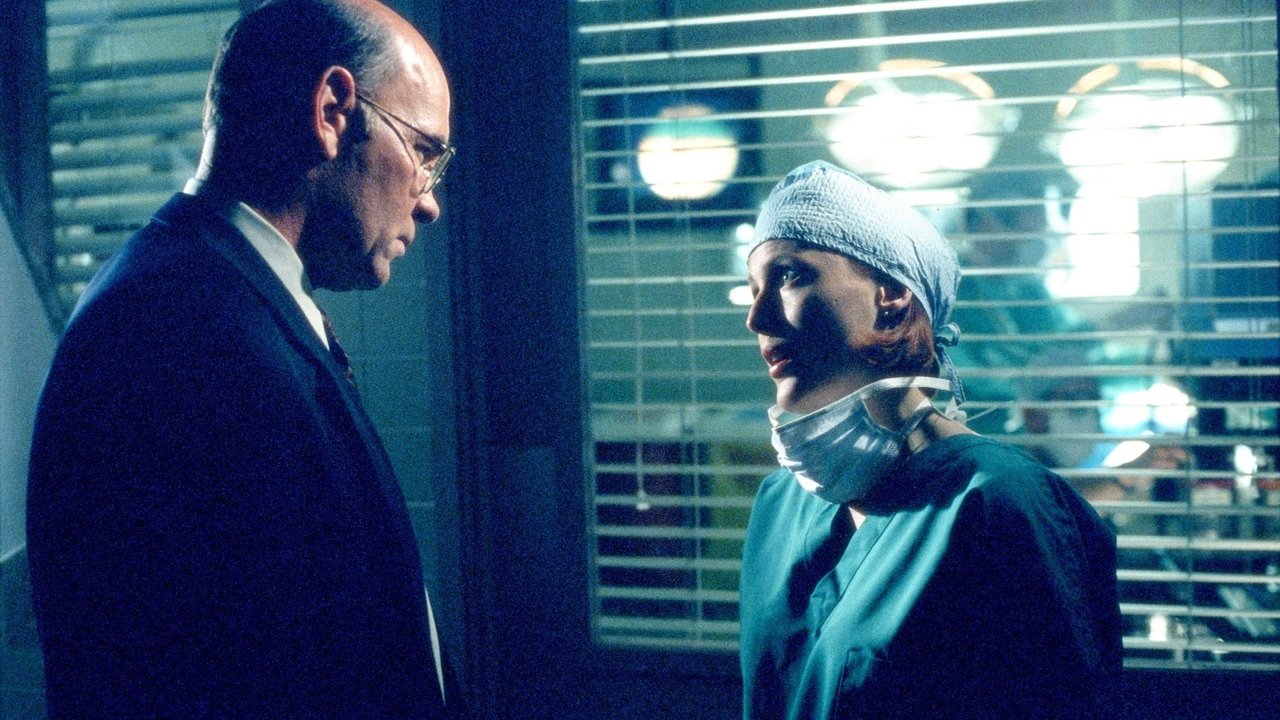
Voss tells Skinner about the tests. With Mulder too weak for chest surgery, Scully hunts for another way to save him while Skinner goes after Weaver.
Why it still matters
This is the rare X-Files story pulled from the news. Marc Shapiro, writing the show's official guide to the season, notes that the theme was "literally, torn from the headlines", which almost never happened on this series. The monster is a product, and the people who made it hide behind their lawyers while the bodies pile up.
Critics were divided, mostly on how much the script does with that idea once it's out. Kenneth Silber of Space.com liked that the tobacco company and its staff "display a degree of complexity, rather than merely serving as one-dimensional villains in a public-health morality play." Emily St. James gave it a C in The A.V. Club and called it a "hodge-podge of various elements that have worked in the past", though she singled out Tobin Bell, as Weaver, as "charismatic and interesting." Tom Kessenich, in his book Examination, shrugged: "Sometimes, just being entertained is enough."
The cure is the habit
At Weaver's apartment Skinner finds Morley's security chief bound and gagged; when he pulls the gag out, the man chokes and beetles crawl from his mouth. Weaver threatens to light up one of the test cigarettes and tries to walk out, so Skinner shoots him in the shoulder, through a pane of glass, and grinds the dropped cigarette under his shoe. At the hospital Scully works out why Weaver survived: the nicotine in his system kept the beetles from developing. She gives Mulder nicotine, and it works.
Mulder walks out with a sore throat and a small nicotine craving, enough that he buys a pack of Morleys. Scully scolds him and he throws them away, then stands looking at them after she's gone. Robert Shearman, in Wanting to Believe, gave the episode two and a half stars out of five and pinned its trouble on the middle: "halfway through, once the episode reveals what its concept is, the story is left with nowhere to go."
Challenge the DNA
Was Morley's research worth what it cost?
Or skip ahead to our reading
The beetles and the cover-up make Morley the villain. The episode is angry at the company and sorry for the people caught up in it.
Behind the scenes
- It started as a script about the horrors of overeating. Because "Hungry" had covered similar ground earlier in the season, the writers turned it toward the tobacco business; Maeda and Walker were both fans of The Insider and wanted a similar feel.
- David Duchovny and Gillian Anderson were both busy finishing episodes of their own, "Hollywood A.D." and "all things". Putting Mulder in a hospital bed for acts three and four freed Duchovny up: "It was easier to shoot a bunch of stuff of him in bed," Walker said.
- Production designer Corey Kaplan gave the whole episode a yellow and brown palette, so every scene had "a perpetually smoky look", and dressed Morley's offices with long hallways and gritty, textured sets.
- The beetles were real. More than 3,000 were filmed crawling over actor Mike Hungerford, and those brief shots took a full day; producer Harry Bring said "bugs don't take directions very well." Beetles leaving a mouth, or being sucked out of Mulder, mixed CGI with dummy bugs.
- It was nominated for an Environmental Media Award.
The thread
The real tobacco fight the writers were watching, and other stories where something tiny does the killing.
Came before
Shares DNA with
DNA strand
Technology Outpaces Ethics
Nothing supernatural happens here. A company bends biology to improve its product, and the danger comes from the people who signed off on it and then thought about the courtroom first.
Every great sci-fi story is built from a handful of strands like this one. Each strand page explains how it works and traces it across shows, books and films.
If this one stayed with you
Where to go next, and why.
Watch · Film
Thank You for Smoking (2005)
A tobacco lobbyist spins for a living, and the film lets him be charming while it skewers the business he defends.
Watch · Film
Michael Clayton (2007)
A law firm's fixer finds out what his corporate client's weedkiller really does and what the company will do to keep it quiet.
Read · Nonfiction
Merchants of Doubt by Naomi Oreskes and Erik M. Conway
Two historians trace how the tobacco industry paid to keep the science on smoking looking unsettled, the real version of Morley's lawyers.
Your next episode
Three directions to go from here, all on Sci-Fi DNA.

More of this feeling
The Green Death
Doctor Who
It has the same angry streak, with a company hiding the damage its products do.

Something completely different
X-Cops
The X-Files
For a complete change of style, watch a reality TV crew follow the agents on a werewolf hunt.