
More from the episode


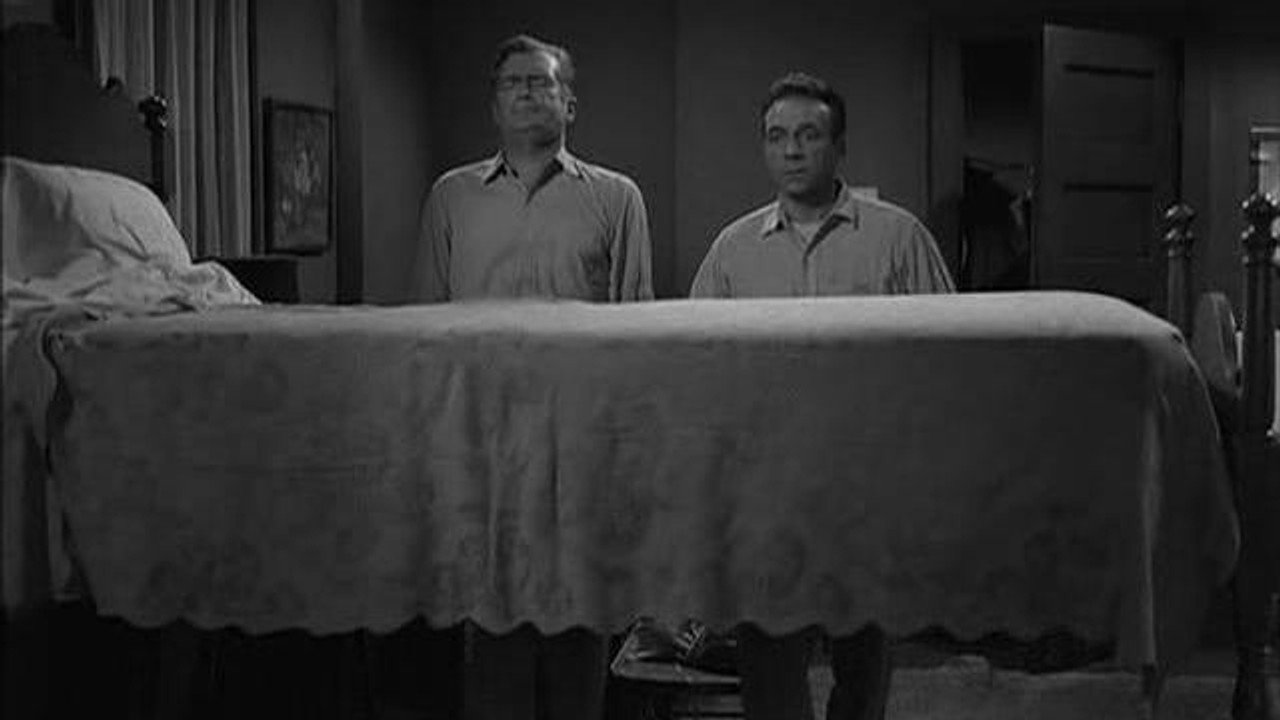
The story in 5 beats
- The wreck
A car crashes and flips over. Ace sees Jimbo move the wreck without laying a hand on it.
- Vegas
Ace takes Jimbo and Kitty to Las Vegas. With Jimbo nudging the dice, Ace wins every bet.
- The cost
Jimbo's headaches get worse. Kitty can't stand what the money is doing to Ace, and she leaves.
One rollSpoiler · tap to reveal
Ace sets up a private game with gangster Big Phil Nolan and bets everything. He loses. Jimbo says the power is gone.
The broomSpoiler · tap to reveal
Home again, Ace proposes to Kitty. As they embrace, Jimbo lifts a broom with his mind: the power was never gone.
Why it still matters
Ace Larsen is a hustler who never quite wins. His partner, Jimbo Cobb, is a kind, easygoing man who gets headaches. After a car crash, Ace watches Jimbo shift a wrecked car without touching it, and he does the math faster than anyone in the room. Telekinesis plus dice equals money. Ace packs up Jimbo and his own girlfriend, Kitty, and heads for Las Vegas.
It's a warm, low-stakes episode, and its charm is mostly Buddy Ebsen. He was a year or so away from The Beverly Hillbillies and had been a character actor for years, and he plays Jimbo with a patience that makes you like him immediately. Dane Clark's Ace is greedy without being a villain, which is the episode's strength and its limit: there's never much doubt he can be saved.
It plays as a fable about wanting too much, and the writing has fun with it. Charles Beaumont wrote the teleplay, though the idea came from George Clayton Johnson, who got no screen credit. The A.V. Club gave it a B, calling the script so-so and the performances the reason to stay.
The roll Jimbo threw
When Ace goes all in against Big Phil Nolan and the dice come up wrong, Jimbo tells him the power has failed. Wiped out and humbled, Ace laughs it off, goes home, wins Kitty back and asks her to marry him. She agrees on the toss of a coin he can't see.
Then the last shot: as they embrace, Jimbo makes a broom rise off the floor. He threw the big game on purpose, to cure his friend of a greed that was eating him. It's the gentlest kind of Twilight Zone ending, with the power still there and, for once, used to take something away. The A.V. Club's Zack Handlen found the lesson too mild, and he has a point, though the episode was never trying to be anything but kind.
Behind the scenes
- George Clayton Johnson wrote the original story and script; Charles Beaumont rewrote it and took the screen credit. Johnson said he was paid about $600 and got no credit.
- The car crash that sets the plot going is stock footage from the 1958 film Thunder Road.
- The slot machine in the opening last turned up in the season 1 episode "The Fever."
- Buddy Ebsen was a year or so away from starting The Beverly Hillbillies when he played Jimbo.
- Johnson's other Twilight Zone work includes the teleplays for "A Penny for Your Thoughts," "A Game of Pool," "Nothing in the Dark" and "Kick the Can."
The thread
Gamblers, sure things and the friend who knows when to stop.
Came before
Shares DNA with
DNA strand
Be Careful What You Wish For
Ace gets exactly what a gambler dreams of, a game he can't lose, and it nearly costs him the woman and the friend he has. The twist is generous: the wish gets taken away by the one person who could have kept granting it.
Every great sci-fi story is built from a handful of strands like this one. Each strand page explains how it works and traces it across shows, books and films.
If this one stayed with you
Where to go next, and why.
Watch · Twilight Zone
"The Fever"
The darker Vegas episode, about a man and a slot machine. You'll recognize the machine.
Watch · Twilight Zone
"A Nice Place to Visit"
If watching Ace win every roll made you nervous, here's a man who wins at everything and slowly works out what that means.
Watch · Film
Rain Man (1988)
A hustler takes the gifted man in his life to Las Vegas to cash in on his gift, and finds out what he actually values.
Read · Novel
The Gambler
Dostoevsky's short novel is the serious version of Ace's fever, written by a man who knew the roulette table well.