
More from the episode


The story in 5 beats
- The parlor TV
Ed Lindsay sulks while the boarding house watches commercials. He fetches his old radio from the basement.
- Only Ed can hear it
The radio plays dance bands and old shows. Everyone else hears static, and the station turns out to have closed years ago.
- Vinnie
Ed and Vinnie, who once planned to marry and never did, argue about the past. When she says you can't get it back, he throws her out.
Ten dollarsSpoiler · tap to reveal
The lodgers get rid of the radio. Ed buys it back for $10 and plays the song he and Vinnie once called theirs.
1940Spoiler · tap to reveal
Ed calls Vinnie to his room. She walks in young, and he is young too. It's 1940, and he means to get it right this time.
Why it still matters
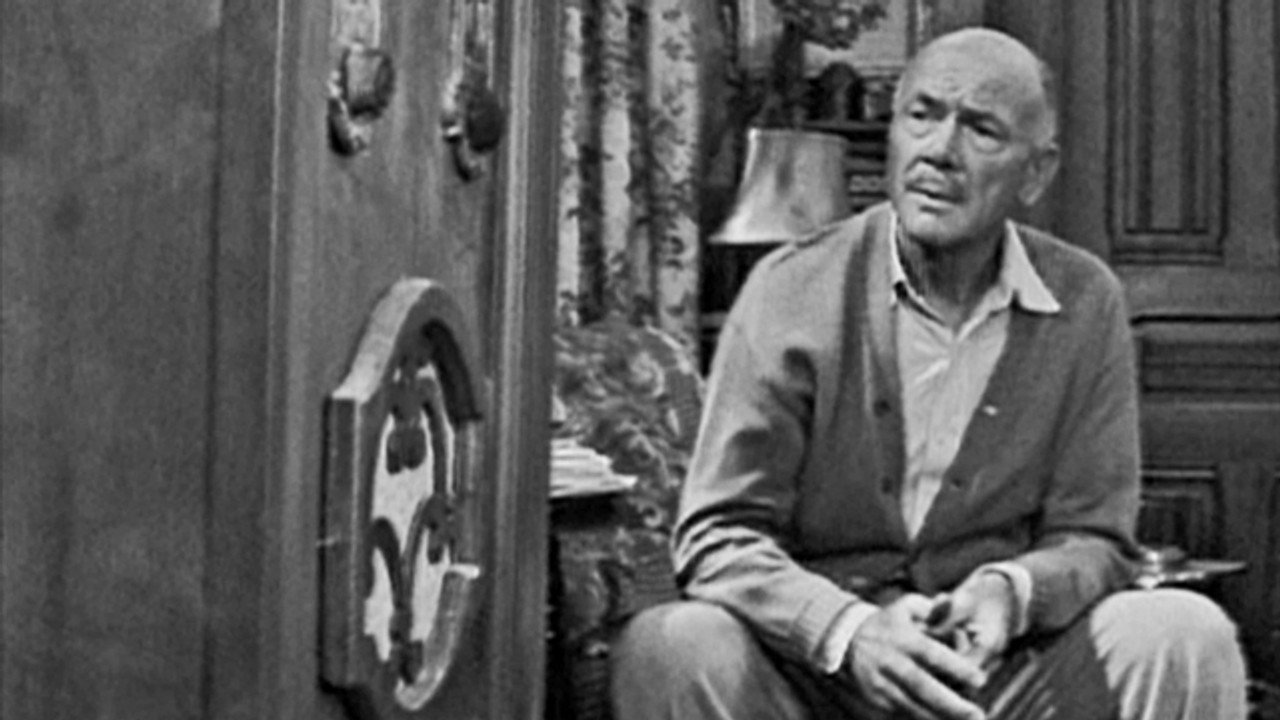
Ed Lindsay is in his late fifties and has lived in the same boarding house for about twenty years. So has Vinnie Broun, the woman he once meant to marry. Downstairs, the other lodgers sit in front of the TV, which keeps selling them things. Ed hauls his old radio up from the basement, switches it on and hears big-band music and programs from the 1930s and '40s. When the others listen, they hear static.
This is a television episode that doesn't think much of television, written by Charles Beaumont, who loved radio and said so in print. SlashFilm points to his 1963 essay collection Remember? Remember?, where he wrote that TV "does not thrill, transport, terrify or enchant. It only entertains." The fake commercials in the parlor, for a "chlorophyll cigarette" and a show called "Gunfire," are the episode's jokes at its own medium.
It's also one of the six second-season episodes shot on videotape, and it looks it, as flat and stagey as a live drama. That usually counts against an episode. Here it almost helps, because the story lives in two cramped rooms and in Dean Jagger's face. Underneath the nostalgia it's a quiet story about a man who let the important thing in his life wait too long.
Tuning in yesterday
Everyone in the house thinks Ed is losing his grip, and for most of the episode we're allowed to wonder too. Then he calls Vinnie up to his room while the old song plays, and the door opens on a young woman. Ed is young as well. The radio has carried him back to 1940, before the waiting went on too long.
It's one of the gentlest endings Beaumont wrote for the show. The A.V. Club's Emily St. James read Ed as someone mourning his own lost youth and the love he put off, more than any golden age, and that reading explains why the last scene works. Ed wants 1940 because it's the one place he still has a chance with Vinnie, and the show lets him have it.
Behind the scenes
- Charles Beaumont wrote the teleplay from "Tune In Yesterday," a story by his friend OCee Ritch, adding his own material to fill the half hour.
- It was one of six season-two episodes shot on videotape to save money. The savings came to about $30,000 across all six, the look was judged too flat, and the experiment was never repeated.
- Bob Crane has an uncredited part as a disc jockey.
- Among the things Ed's radio picks up is a 1940 address by Franklin D. Roosevelt.
The thread
Old radios, lost loves and the urge to go back and do it over.
Came before
Shares DNA with
DNA strand
Memory & Identity
Ed's radio is a memory machine. Everything it plays is something he once loved, and the only person it can't fool is the woman who lived through those years with him. The episode is about how a man becomes the sum of what he didn't do, and what he'd give to undo one of those things.
Every great sci-fi story is built from a handful of strands like this one. Each strand page explains how it works and traces it across shows, books and films.
If this one stayed with you
Where to go next, and why.
Watch · Twilight Zone
"Walking Distance"
Serling's own trip home to the past, about a man who finds his childhood town exactly as he left it.
Watch · Film
Frequency (2000)
A ham radio in a cupboard connects a man with someone thirty years back. If Ed's radio got to you, this one will too.
Watch · Film
Peggy Sue Got Married (1986)
A woman at a crossroads in middle age wakes up back in high school, facing the boy she married.
Read · Novel
Time and Again
Jack Finney's novel about a man who wills himself into 1880s New York, for anyone who shares Ed's suspicion that the past was the better place to live.