
More from the episode

The story in 5 beats
- The widow
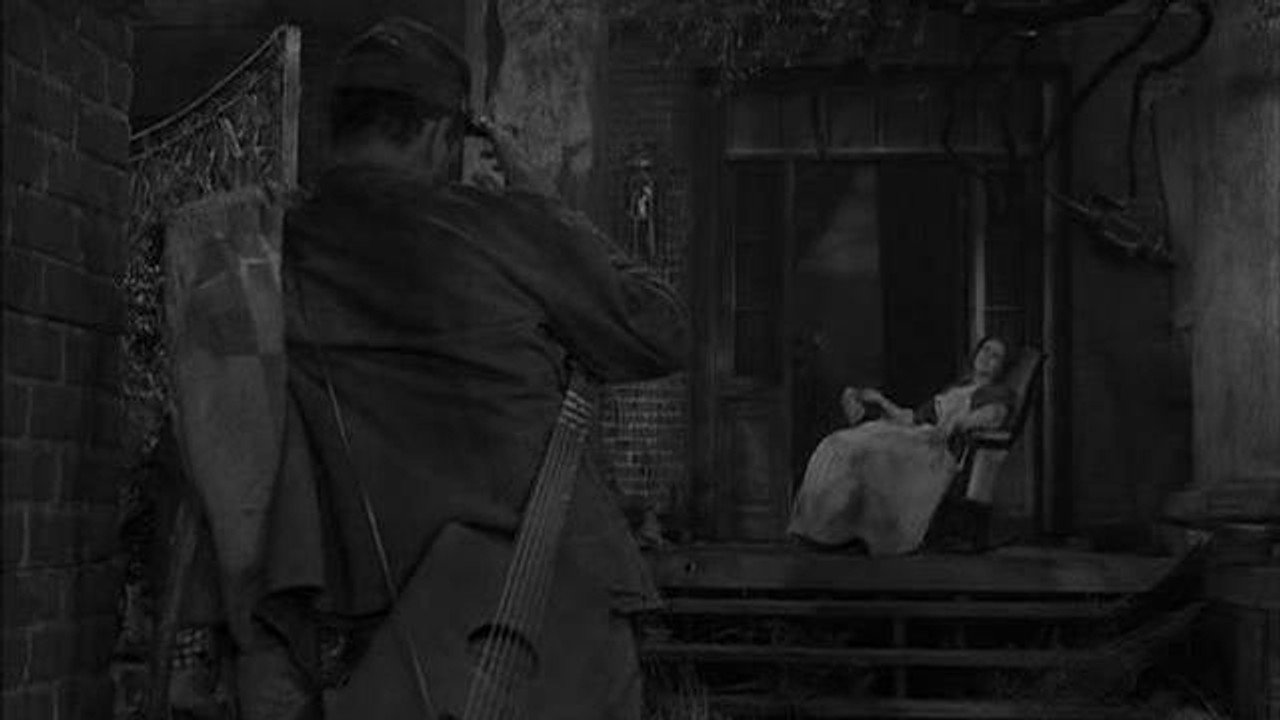
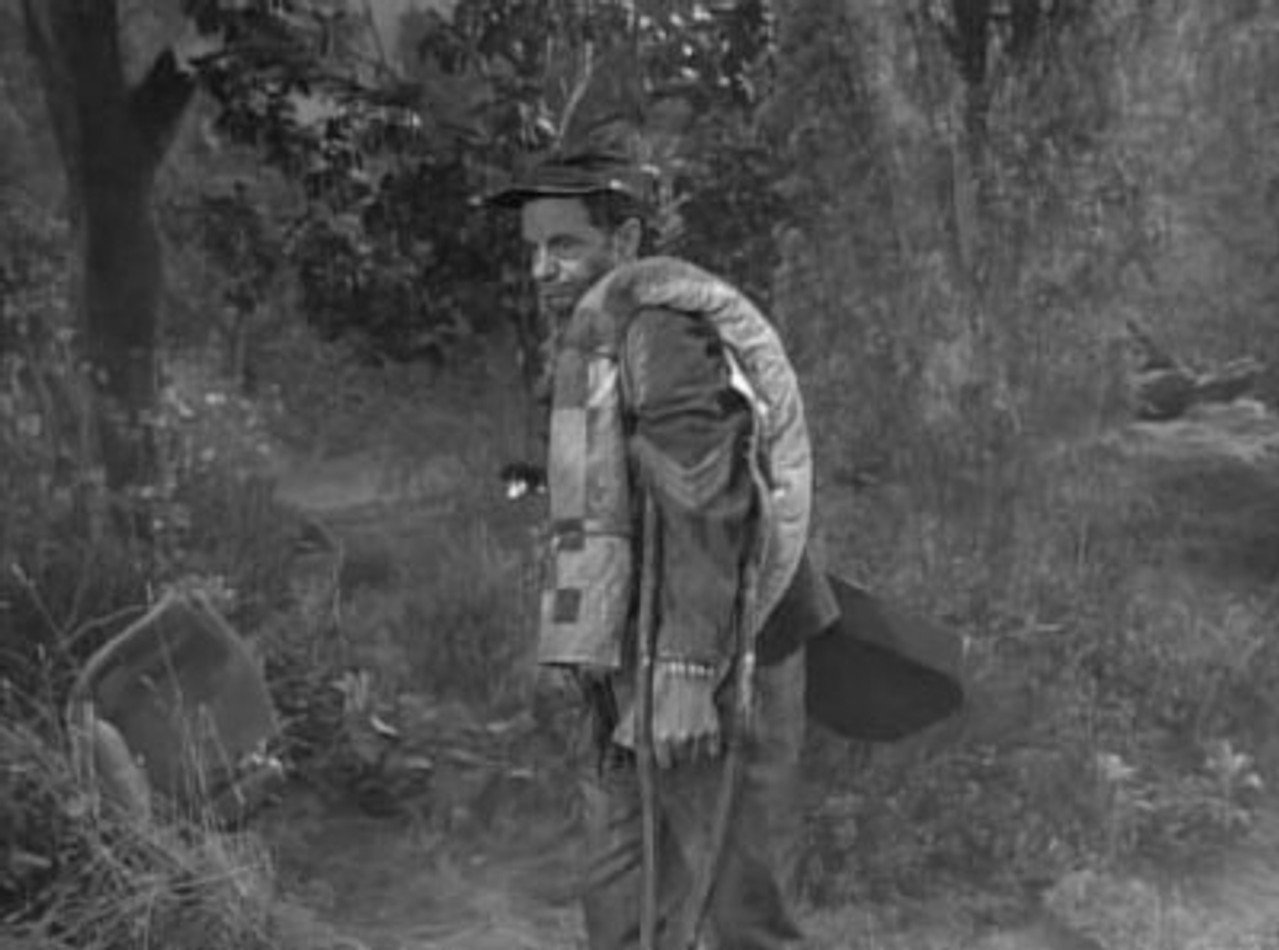
Lavinia Godwin keeps watch from her ruined mansion. A Confederate sergeant with a crutch and a homemade guitar asks to rest in her yard.
- The song
He plays a tune her late husband used to sing. Soldiers from both armies keep passing on the road, all walking the same direction.
The lieutenantSpoiler · tap to reveal
A Union officer stops for water. Lavinia fires at him, and nothing happens to him at all.
JudSpoiler · tap to reveal
Her husband comes up the road singing the same song. He tells her that everyone on the road is dead, and so is she.
The last oneSpoiler · tap to reveal
A tall, tired man in a famous hat comes last. He is Abraham Lincoln, and he talks her into following Jud.
Why it still matters
Serling's opening narration calls this road the afterwards of the Civil War, and for a while that's all it seems to be. Lavinia Godwin lives alone in what's left of her plantation house. Her husband was killed in the war, and she hasn't forgiven the Union for it. A limping Confederate sergeant asks to sit under the dead tree in her yard, and he plays a song her husband used to sing. Wounded men keep passing, Blue and Gray, all heading the same way.
It's one of the show's most beautiful-looking half hours. Elliot Silverstein, who had directed "The Obsolete Man" the season before, fills the road with fog and lantern light, and the soldiers come out of it like a slow procession. James Gregory, later Inspector Luger on Barney Miller, plays the sergeant, and the old folk song "Black Is the Color (Of My True Love's Hair)" threads through the whole episode. Emily St. James at The A.V. Club gave it an A- and singled out the image of that road.
It aired in October 1961, during the Civil War centennial, and the historian Matthew Christopher Hulbert reads it as part of that era's reconciliation story about the war: Union and Confederate side by side, the hard questions about why they fought left out. That makes it worth watching twice, once for the mood and once for what it chooses not to say.
Where the road goes
The gun is the giveaway. Lavinia fires at the Union lieutenant and the blast passes straight through him. He says nothing matters anymore. The sergeant remembers that this man once saved his life, and that he was killed. He gives him water from the well, and the lieutenant moves on. The sergeant understands now what the road is and decides to walk to the end of it. Then Jud comes along singing, and tells his wife what she's been refusing to see: everyone on the road is dead, including her. He won't stay in the house. He'll wait for her at the end of the road.
The last passerby is Lincoln, "the last casualty of the Civil War," who quotes Julius Caesar and gets Lavinia moving. St. James thought this was one step too far, a deus ex machina reaching for a brighter ending. Hulbert would say it's also the period talking: the war ends with North and South gathered onto one road by Lincoln himself, in the kind of reconciliation story that left slavery out of the picture. Whatever you make of that, the final image is lovely: Lavinia running toward her husband, and Lincoln, hat and all, walking slowly after.
Behind the scenes
- Rod Serling wrote it and Elliot Silverstein directed, a season after his "The Obsolete Man."
- The traditional folk song "Black Is the Color (Of My True Love's Hair)" runs through the episode, played on the sergeant's homemade guitar and sung by Jud.
- Austin Green plays Lincoln. Jamie Farr appears uncredited as a soldier.
- It aired in October 1961, a few weeks before the season's other Civil War episode, "Still Valley."
- The 2002 revival of The Twilight Zone reworked its ideas in "Homecoming," about a dead soldier who comes back from Iraq to mend things with his son.
- A radio adaptation starred Morgan Brittany as Lavinia.
The thread
The war's long goodbye, from Shakespeare's Rome to a road outside a burned-out house.
Came before
Shares DNA with
Left its mark on
DNA strand
Is Any of This Real?
The whole episode is a slow adjustment of what you're looking at. A road of wounded men becomes something else, one detail at a time, and the person last to see it is the one who most needs to. It works because the reveal is played as grief, with no shock in it.
Every great sci-fi story is built from a handful of strands like this one. Each strand page explains how it works and traces it across shows, books and films.
If this one stayed with you
Where to go next, and why.
Read · Novel
Lincoln in the Bardo, George Saunders
A night in a Washington graveyard crowded with souls who aren't ready to move on. If Lincoln's walk at the end moved you, this is a whole book in that key.
Watch · The Twilight Zone
"Back There"
Serling's other April 1865 story, about a man who finds himself in Washington on the night of Ford's Theatre and tries to change what happens.
Watch · Film
Cold Mountain (2003)
A Confederate deserter on a long walk home, and the woman holding on at a farm the war has wrecked: this episode's road, followed at full length.
Sources
- “The Passersby,” Wikipedia
- Emily St. James, “The Twilight Zone: "The Shelter"/"The Passersby",” The A.V. Club, 2013
- Matthew Christopher Hulbert, “The Centennial & The Twilight Zone,” The Civil War Monitor, 2024
- Joseph Mallozzi, “Our Twilight Zone rewatch continues with season 3, episodes 1-4,” Joseph Mallozzi's Weblog (via Goodreads), 2024